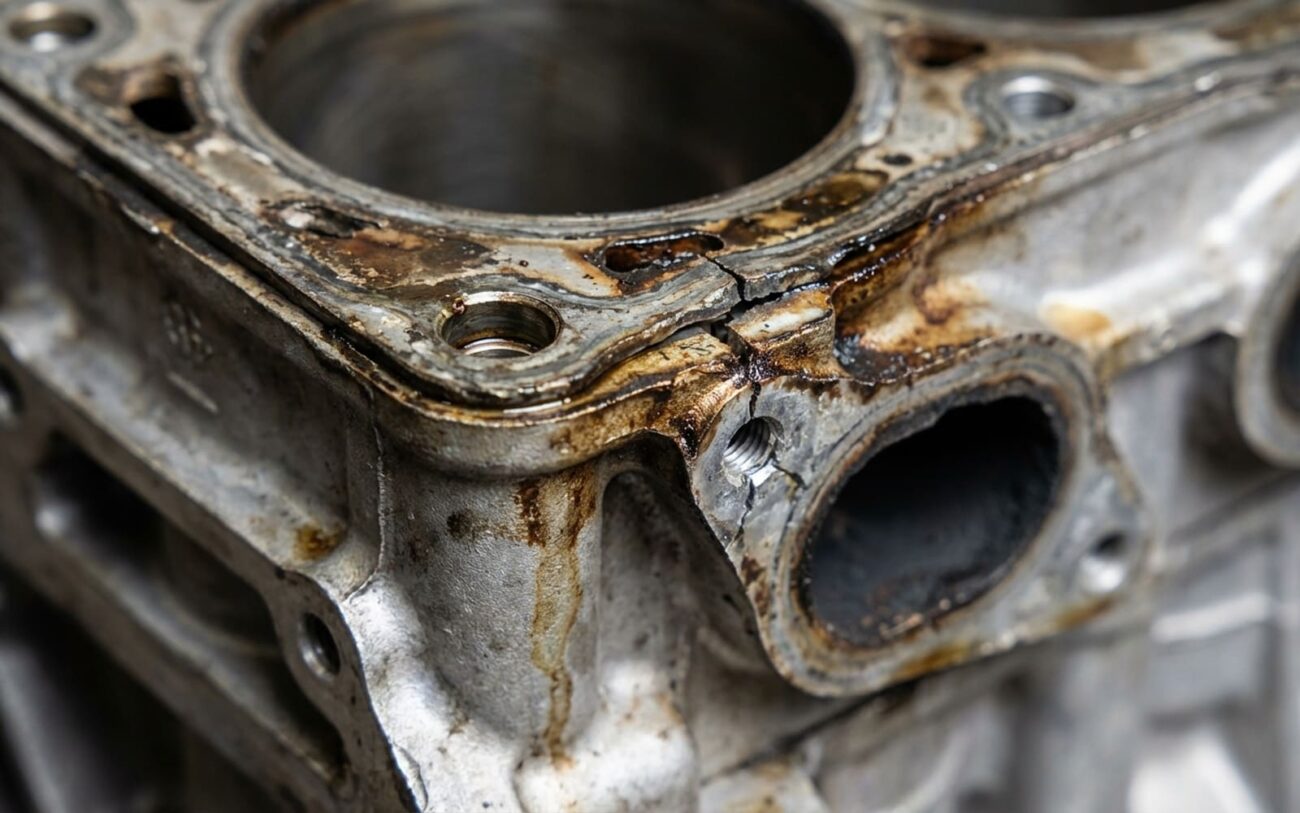
Alright, let’s talk about one of the most frustrating problems I see in the shop: the engine misfire that only shows up when things get hot. You know the one—car runs like a dream for 20 minutes, then starts shaking, stumbling, and losing power. Then you let it cool down, and it’s fine again. It’s a classic case of what we call a “heat-related misfire,” and after 25+ years turning wrenches, I can tell you it almost always boils down to two main culprits: either an ignition component failing under thermal stress, or the engine itself is overheating and messing with combustion.
First, Figure Out What’s Really Happening
When a car comes in with this complaint, my first job is to figure out if we’re dealing with a bad spark or a hot engine. They both cause misfires, but the diagnosis and fix are completely different. And trust me, you don’t want to guess on this one.
Is It an Ignition Problem?
If the problem is in the ignition system—things like your ignition coils, coil-on-plug units, or even spark plug boots—the misfire is usually pretty predictable. It only happens once the engine bay gets to full operating temperature, which, like you said, is typically after 20 minutes of driving, especially in stop-and-go traffic. It runs fine cold, stumbles when hot, and then clears up after sitting overnight. You’ll often see specific misfire codes like P0301 (cylinder 1 misfire), P0302, and so on. Sometimes these are just “pending” codes, meaning they haven’t triggered the Check Engine Light yet, but they’re still there.
What I typically see if you pull the coils after a hot misfire is carbon tracking. That’s those faint white or gray lightning-bolt patterns inside the boot. It tells me the spark is leaking to ground instead of firing the plug. You might also find cracking, melted insulation, or brittle rubber on the coil or boot. And here’s a big one: if you see oil or coolant inside the spark plug tube, that’s a red flag. That stuff eats away at insulation and will kill a coil fast. Don’t just replace the coil; find out what’s soaking it.
Or Is the Engine Overheating?
Now, if the engine itself is running too hot, the symptoms are usually broader and more serious. You might notice the temperature gauge creeping into the red, or you could get a P0128 (coolant temp below thermostat regulating temp) or P0117 (ECT sensor low input) code. But the real telltale sign I listen for is engine knock or detonation—that metallic pinging sound, especially under acceleration, when the engine is hot. That’s the air-fuel mixture igniting prematurely, not from the spark plug. It’s uncontrolled combustion, and the ECU logs it as a misfire because the timing is all wrong. This isn’t just a misfire; it’s a ticking time bomb for internal engine damage. If you suspect detonation from overheating, stop driving immediately. You can melt pistons, crack cylinder heads, or ruin bearings.
My Diagnostic Approach: Testing When It’s Failing
Because both ignition faults and overheating can cause these hot misfires, misdiagnosis is common. You can’t just throw parts at it and hope for the best. The key is to test when the symptoms are active—when the engine is hot and misfiring. Here’s how I break it down:
| What I See | Points to Ignition | Points to Overheating/Mechanical | How I Confirm It |
|---|---|---|---|
| Misfire only when hot | Internal resistance in a coil or wire increases with heat, causing spark to weaken or leak. | Loss of cylinder compression from a failing head gasket, warped head, or piston damage due to excessive heat. |
Perform a hot compression or leak-down test. I’m looking for more than a 15% variation between cylinders. Even readings usually mean it’s ignition or fuel, not mechanical. |
| High-temperature DTC present | Could be, but I always verify actual engine temp first. A faulty sensor can lie to the computer. | A genuine cooling system failure: low coolant, a stuck thermostat, or a dying water pump. |
Compare the OBD2 Engine Coolant Temperature (ECT) PID with an infrared thermometer on the radiator hoses. If the upper hose is hot and the lower hose is noticeably cooler (say, more than 20°F / 11°C difference), that often points to a stuck-closed thermostat. |
| Visible coolant or milky residue on spark plug | This isn’t an ignition failure. It’s a symptom of a much bigger problem. | A head gasket breach, cracked cylinder head, or even a cracked block allowing coolant into the combustion chamber. |
Do a block test (combustion gas detection) with the engine at full operating temperature. A color change in the test fluid confirms exhaust gases in the coolant. That’s a definite head gasket issue. |
For ignition issues, I always start with OBD2 live data. I’ll monitor misfire counts per cylinder while driving. When the engine starts to stumble, I note which cylinder(s) are misfiring. Then, I’ll swap the ignition coil from the problem cylinder with one from a healthy cylinder. If the misfire follows the coil, bingo—you’ve found your problem. If it stays on the same cylinder, then I’m looking at a failing fuel injector, a bad spark plug, or a mechanical fault in that cylinder. Don’t forget the basics, though: a faulty coolant temperature sensor can prevent the radiator fan from engaging, which leads to overheating that can easily mimic an ignition fault. Always verify the actual engine temperature with an infrared thermometer before you assume it’s just the coil.
Why These Parts Fail When Hot
Understanding why these components fail under heat helps with diagnosis and prevention.
Ignition Component Breakdown
An ignition coil is basically a high-voltage transformer. Inside, it’s packed with epoxy or some other potting compound to insulate the primary and secondary windings. Over years of thermal cycling—expanding when hot, contracting when cold—that material can develop tiny micro-cracks. When the coil is cold, those cracks are tight enough, and the spark jumps correctly. But as the temperature rises, those cracks widen, and the high-voltage current finds an easier path to ground inside the coil casing instead of traveling all the way to the spark plug. This is what we call thermal breakdown, and it’s probably the most common cause of heat-related misfires.
I’ve seen this repeatedly, especially on V6 engines where the coils are mounted under the intake manifold. That design traps heat, and it just bakes the coils. While I can’t rattle off specific TSB numbers from memory, I know GM and other manufacturers have issued service bulletins about premature coil failure on certain models due to this kind of under-hood heat soak. Often, these designs just don’t have proper heat shielding, and it accelerates the coil’s death.
Spark plug wires and boots suffer a similar fate. The silicone insulation just deteriorates over time from ozone exposure and engine heat. The internal carbon conductor can become resistive, and the boot’s insulation weakens. When that happens, the high-voltage spark can arc across the surface of the boot—especially if it’s damp or dirty—creating that carbon tracking I mentioned earlier. This was more common on older distributor-based systems, but it absolutely still happens on coil-on-plug setups if the boot seals poorly or if oil contaminates the spark plug tube.
Overheating and Detonation
On the overheating side, the ignition system isn’t the root cause; it’s the cooling system’s failure to regulate temperature. When the engine runs too hot, the combustion chamber temperatures climb high enough to cause pre-ignition or detonation. Hot spots—like carbon deposits on the piston or even a glowing spark plug electrode—can ignite the air-fuel mixture before the spark event. The ECM detects this as a misfire because the combustion timing is off. The real failure here is mechanical: a failing water pump, a clogged radiator, an air pocket trapped in the system, or a thermostat that’s stuck partially closed, restricting flow just enough to cause overheating under load.
How I Fix It (and How You Can Too)
Once you’ve nailed down the source, the repair path becomes clear. Some of this you can tackle yourself, some needs a pro.
Replacing a Faulty Ignition Coil
Cooling System Diagnosis and Repair
Emergency Coil Cooling (Last Resort Only)
Don’t Just Clear Codes: Validate the Repair
Clearing codes isn’t enough. For an ignition repair, you need to replicate the exact conditions that caused the failure. Drive the vehicle for at least 30 minutes, including some highway speeds, to really heat-soak the engine. Use your OBD2 scan tool to monitor live misfire counts on all cylinders. If you don’t see any misfires after two full heat cycles, then yeah, the repair was successful.
For cooling system repairs, validation is more comprehensive. After you’ve refilled and properly bled the system (critical!), monitor the ECT PID during a long drive. The temperature should stabilize right around the thermostat’s rated opening point (like 195°F / 90°C) and shouldn’t climb too high in traffic. Then, I always do a hot pressure test: with the engine at full operating temperature, pressurize the system to the cap’s spec and hold it for 30 minutes. Any pressure loss means you still have a leak. And if you did a head gasket or crack repair, recheck for exhaust gases in the coolant with a block tester after the repair to make sure everything’s sealed up tight.
The Money Talk: Cost, Risk, and Common Sense
Here’s a realistic cost breakdown. These are national averages, so your local prices might vary.
| Repair Type | DIY Cost (Parts) | Shop Cost (Est.) | Success Rate (My Experience) | What Happens if it Fails? |
|---|---|---|---|---|
| Replace one ignition coil | $80 – $150 | $250 – $400 | 95% if diagnosed correctly | Low risk. But if the spark plug was worn or incorrect, the new coil might fail prematurely too. |
| Replace all coils (preventive) | $400 – $600 | $700 – $1,000 | ~98% | Low. Only cost-effective if multiple coils are showing signs of age or resistance drift. Don’t just replace them all if only one is bad. |
| Repair overheating (e.g., head gasket) | $500+ (parts) | $2,000 – $3,500+ | 85% for a proper repair with machined surfaces | High risk. A failed head gasket repair can lead to coolant in the oil, hydrolock, or complete engine failure. This is serious. |
Here’s a reality check I give my customers: if the repair cost for a major issue like a head gasket exceeds 50% of the vehicle’s current market value, you’re in tough territory. Pouring $3,000 into a car that’s only worth $4,000 isn’t always smart money—especially if other systems (like the transmission or suspension) are also showing their age. At that point, you really need to consider a used long-block replacement or even just replacing the vehicle entirely. I’ve seen too many customers get emotionally attached to their cars and make financially unsound decisions. Be honest with yourself about the value and the risk.
Keeping It Running: Prevention and Monitoring
For ignition systems, prevention starts with using the correct spark plugs—both in heat range and gap. A plug that’s too hot can cause pre-ignition; one that’s gapped too wide forces the coil to generate higher voltage, increasing its internal heat. Always apply dielectric grease to the inside of the coil boot during installation. It repels moisture and significantly reduces the chance of carbon tracking. And if your engine has a history of oil leaks into the spark plug wells, fix that valve cover gasket—oil degrades boot insulation incredibly fast.
The best early warning tool you can have is real-time monitoring. A $20 Bluetooth OBD2 adapter paired with an app like Torque or OBD Fusion lets you watch live misfire counts. On your next highway drive, pull up that data. If you see cylinder #4’s misfire counter slowly climbing as the engine heats up, you’ve caught a thermal coil failure in its early stages—before it leaves you stranded on the side of the road.
For the cooling system, maintenance is absolutely everything. Change your coolant at the manufacturer’s interval—usually every 5 years or 100,000 miles, even if it looks fine. Old coolant loses its anti-corrosion and lubricating properties, which can lead to water pump seal failure or clogged heater cores. Once a year, take a few minutes to inspect hoses, connections, and the radiator for leaks or crusty deposits. Consider a coolant pH and freeze-point test to ensure proper protection and chemical balance. A few minutes of preventive work now can save you from catastrophic engine damage and a huge repair bill down the road.
