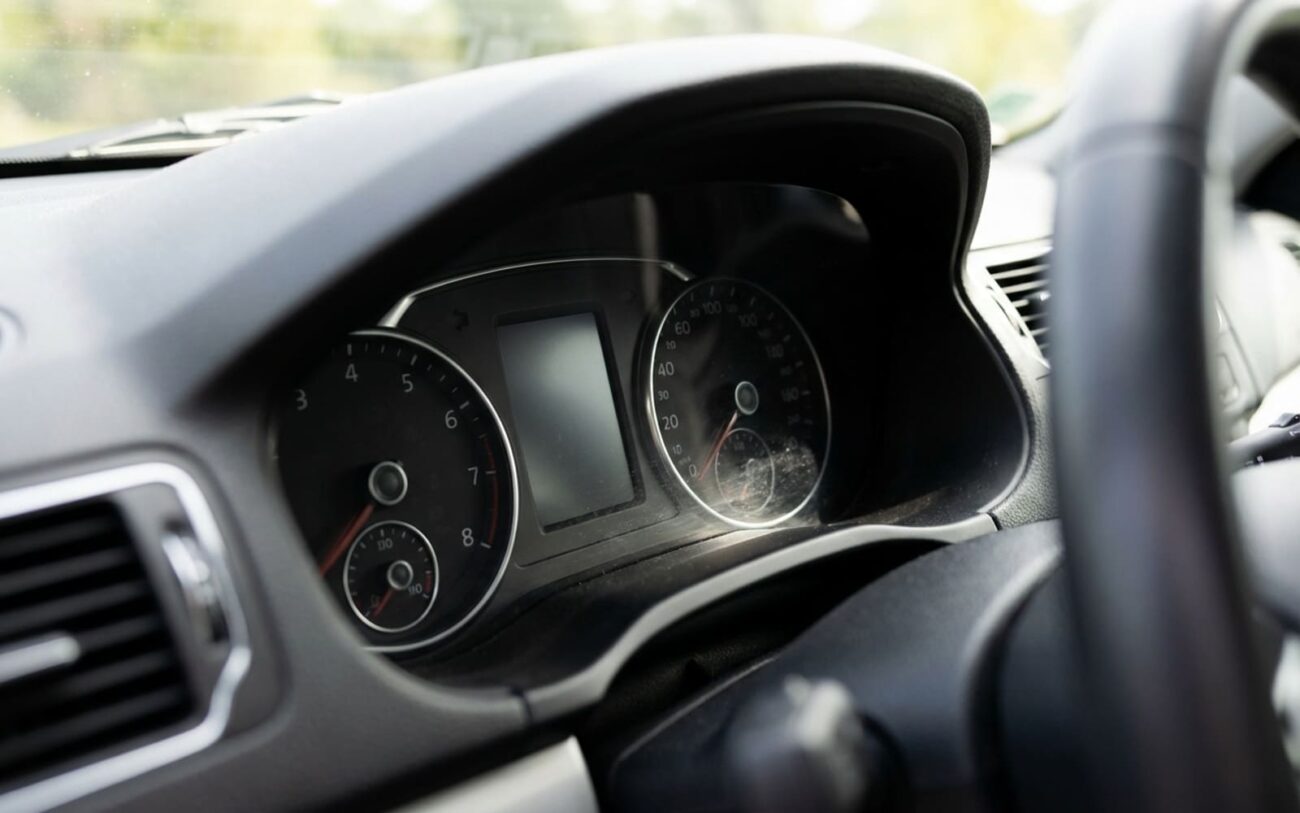
Alright, let’s talk about one of those head-scratchers that often gets misdiagnosed: a failed DC-DC converter in a hybrid or electric vehicle. I’ve been turning wrenches for over 25 years, and I’ve seen this play out countless times. You get a car towed in, completely dead. No dash lights, no radio, won’t even try to start. The owner usually says, “It’s just a dead 12-volt battery, right? Jump it, and it’ll be fine.”
And sure enough, you jump the 12-volt, the car fires up into “Ready” mode, and everything seems normal. But then, a few days later, sometimes even just hours, it’s dead again. That’s not a bad 12-volt battery, folks. That’s a dead DC-DC converter. A total blackout of the instrument cluster, paired with a no-crank, no-start condition, is the clearest indicator you’re dealing with this component.
What the DC-DC Converter Actually Does (and Why It Matters)
Think of the DC-DC converter as the alternator for your hybrid or EV. In a traditional gas car, the alternator charges the 12-volt battery and runs all the accessories once the engine is running. In a hybrid or EV, you don’t have a conventional alternator. Instead, the DC-DC converter takes the high-voltage (HV) energy from the big traction battery—we’re talking 200 to 400 volts, sometimes more—and steps it down to a manageable 14 volts or so. This 14 volts is what charges your smaller 12-volt auxiliary battery and powers every single low-voltage system in the car.
That 12-volt system is critical. It powers the body control module (BCM), the instrument cluster, the infotainment system, the power steering, the brake booster, and all the other control modules that make the car “boot up.” When the DC-DC converter fails, that 12-volt battery stops getting recharged. Over time, even small parasitic loads—like the radio memory, the alarm system, or the gateway module that’s always listening—will drain it completely. Once it drops too low, there’s just not enough voltage to power up the car’s computers. The result? No communication on the CAN bus, a black dashboard, and a car that won’t even try to start.
The Concept
“It’s like your computer needing power to the motherboard before the main hard drive even thinks about spinning up. No 12-volt, no boot.”
And don’t make the mistake of assuming the big high-voltage battery is the problem. In most of these cases, it’s fully charged. The issue is purely that the car can’t even get its systems online without that 12-volt power.
Diagnosing a Failed DC-DC Converter: My Process
Before you condemn a pricey converter, you’ve got to rule out the simple stuff. A blown fuse, a failed ignition switch, or a truly degraded 12-volt battery can all mimic a dead DC-DC converter. The key here is methodical testing with a good digital multimeter and a capable scan tool.
Here’s where I start:
- Check the 12-volt battery first: With the car completely off, measure the voltage at the 12-volt battery terminals. If it’s below 11.5V, that battery is too weak to power the control modules, period. But that doesn’t tell you why it’s dead.
- Charge and retest: Fully charge the 12-volt battery. Once it’s topped off, put the car into “Ready” mode (that’s the hybrid/EV equivalent of running). Now, check the battery voltage again. You should see a steady 13.5 to 15 volts. If it stays at 12.6V or lower, your DC-DC converter isn’t charging. That’s a strong indicator right there.
- Direct converter output test: For a definitive answer, measure the voltage directly at the DC-DC converter’s 12-volt output terminals. This bypasses any potential wiring or connection issues between the converter and the battery. If you see no output there, and you’ve confirmed the high-voltage battery has a decent state of charge (above 15% is usually enough), then you’ve confirmed the converter is dead.
- Scan tool check for DTCs: Low system voltage can crash multiple modules, flooding the system with “no communication” DTCs (Diagnostic Trouble Codes). It looks like a network failure, but it’s just voltage starvation. Pull up any codes. If you see a bunch of U-codes (communication errors) or B-codes (body electrical issues) along with low voltage, it points back to a charging issue.
The table below helps separate a true DC-DC failure from those common look-alikes I mentioned:
| Symptom I See | What It Usually Means (DC-DC) | Common Mimics (Don’t Get Fooled) | How I Confirm It |
|---|---|---|---|
| Complete instrument cluster blackout and no-start | DC-DC failure causing 12V system collapse | Blown main 12V fuse, failed ignition switch, faulty body control module (BCM) |
With the vehicle in “Ready” mode, measure DC voltage at the DC-DC converter’s 12V OUTPUT terminals. You should see 13.5V–15V. If it’s <12V or 0V, and the HV battery SOC is good (>15%), it’s the converter. |
| Repeatedly dead 12V battery (even after jumping) | DC-DC isn’t charging the 12V battery | Failed 12V battery (truly bad), excessive parasitic drain (e.g., trunk light stuck on, aftermarket alarm) |
Perform a parasitic draw test after the vehicle is fully asleep (wait 15–30 mins). It should be <50mA. If the draw is normal, with the car in “Ready” mode, use a clamp meter to verify current is flowing INTO the 12V battery. If not, the DC-DC isn’t sending power. |
| Multiple CAN bus communication DTCs | Low system voltage from failed charging, crashing modules | Faulty gateway module, damaged CAN bus wiring, failed instrument cluster (rarely all at once) |
Monitor 12V system voltage via a scan tool during a startup attempt. If voltage drops below 9.6V, modules can’t boot. Confirm by checking DC-DC output directly. |
What Actually Fails Inside These Things
These units are usually sealed up tight, so we don’t typically repair them in the shop. We swap them out. But based on bench testing and teardowns from specialty electronics shops, a few failure points come up repeatedly. It’s good to know why they fail.
The most common culprit is thermal damage. These converters handle a lot of current and generate a lot of heat. They rely on cooling—either air fins with a fan or a dedicated liquid cooling circuit. If airflow is blocked by debris, or if the coolant circuit gets restricted, those internal components like MOSFETs or IGBTs (power transistors) overheat and fry. I’ve pulled units from hybrids that were always parked under trees, and they were packed full of leaves in the intake, cooked themselves in a matter of months.
Another frequent issue is cracked solder joints. The constant thermal cycling—heating up when the car’s running, cooling down when it’s parked—puts a lot of stress on the circuit boards. Over time, solder on high-current traces can crack, creating an intermittent or open circuit. That’s why some drivers report the car starts after sitting for a while, but then dies again after being shut off. The joint cools and briefly reconnects, then separates again when it heats up.
Finally, large electrolytic capacitors are a weak point. They’re there to smooth out the converted voltage, but their electrolyte dries out over time, especially in hot engine compartments. Bulging or leaking caps lead to unstable output or total failure. And sometimes, a nasty voltage spike from the high-voltage system can just flat-out fry the sensitive control circuitry, especially if there’s a fault in the main battery or the contactor system.
Just to be clear:
A failed 12-volt battery is not the same as a failed DC-DC converter. And if the high-voltage battery disconnect is open or a fuse is blown in the HV circuit, the converter won’t work—but that’s not the converter’s fault. The issue we’re talking about here is an internal failure of the converter itself. Some manufacturers have even acknowledged this; there are known service bulletins for certain model years of vehicles like the Chrysler Pacifica Hybrid and Toyota Prius Plug-in addressing no-start and dead battery conditions linked directly to DC-DC converter failure.
Repair Options: This Isn’t a DIY Job
Professional Territory Only
Let’s be absolutely clear: the DC-DC converter is not user-serviceable. You can’t open it up, replace a transistor, and seal it back. The entire module has to be replaced as a unit. And because it’s directly tied into the high-voltage system, this is not a DIY job for your average home mechanic. One wrong move with the HV disconnect, or failing to wait for those big capacitors to discharge, can result in severe electrical shock or an arc flash. This is serious business.
The Professional Replacement Process Professional Only
Emergency Jump-Starting Temporary Fix ONLY
How I Verify the Repair Was Successful
Don’t just install the part and assume it’s fixed. You need to validate its performance, especially under load. Here’s my checklist:
- Voltage check: With the car in “Ready” mode, check the voltage at the 12-volt battery terminals. You should see a steady 13.5 to 15 volts.
- Scan tool PID monitoring: Pull up the “DC-DC Converter Output Voltage” PID on your scan tool. Turn on some heavy electrical loads—headlights, heated seats, HVAC on max, rear defroster—and watch that voltage. It should stay stable, ideally not dipping below 12.5V. If it sags significantly, something’s still wrong.
- Max-load test: Finally, perform a full max-load test. With the car running, turn on every electrical accessory you can. Use your multimeter to monitor the system voltage. If it holds above 12.5V, the converter is working as it should. If it sags, you could have a poor connection somewhere, undersized wiring, or even a defective replacement unit (it happens). All it takes is a good digital multimeter and an OEM-compatible scan tool—basic tools for any serious hybrid or EV repair.
Cost of Repair: Is It Worth It?
This is an expensive repair, and the numbers really matter here. Labor is high due to the specialized HV safety procedures, and the part itself can run anywhere from $600 to $1,500, sometimes more. Unless you’re a certified HV technician, this is a shop-only job. The table below gives you a breakdown of what you’re looking at.
| Repair Type | DIY Cost | Shop Cost | Success Rate | Secondary Risk if Failed |
|---|---|---|---|---|
| OEM Module Replacement | Not Recommended (HV Risk) | $800–$2,500 (parts & labor) | >95% if OEM part and properly programmed | Incorrect HV handling can cause severe shock or arc flash. Improper initialization may lead to CAN communication errors or module shutdown. |
| Used/Junkyard Module | $200–$600 | $500–$1,000 (labor + part) | 60–80% (latent defects, software mismatches, unknown history) | Used unit may have internal damage or outdated firmware, leading to repeat failure or system instability. You’re rolling the dice here. |
Here’s the hard reality: if the total repair cost—and don’t forget you’ll likely need a new 12-volt battery too if it’s been repeatedly drained—exceeds about 40% of your car’s current market value, you’re probably spending more than the car is worth. I’ve had customers pour $2,000 into a 10-year-old hybrid that was only worth $4,500. It’s a tough call, but sometimes it’s smarter to cut your losses and put that money towards a newer vehicle.
Prevention and Early Warning Signs
Most DC-DC failures, in my experience, start with heat. If your unit is air-cooled, you absolutely need to keep those intake vents and cooling fins clean. I’ve seen converters fail because a plastic bag or a wad of leaves completely blocked the airflow. For liquid-cooled versions, regular cooling system maintenance is key—flush and refill as the manufacturer recommends. Overheating is the number one killer of internal electronics.
My Maintenance Checklist for Hybrids/EVs
-
Keep intake vents and cooling fins clean. Seriously, check for leaves and road debris.
-
If liquid-cooled, maintain that cooling system. Don’t skip flushes and refills.
-
Monitor your 12-volt battery health. It should last 5–7 years or more if the DC-DC converter is doing its job. If you’re replacing it often, that’s a red flag.
-
Use an OBD2 scanner to check for early DTCs like U0100 (lost communication with ECM) or B1200 (low system voltage). These can pop up days or weeks before total failure, giving you a heads-up.
Staying ahead of these voltage issues is, in my experience, the best way to avoid getting stranded with a dead dash and a car that won’t start. Pay attention to those little signs, and you’ll save yourself a lot of headache and money down the road.
