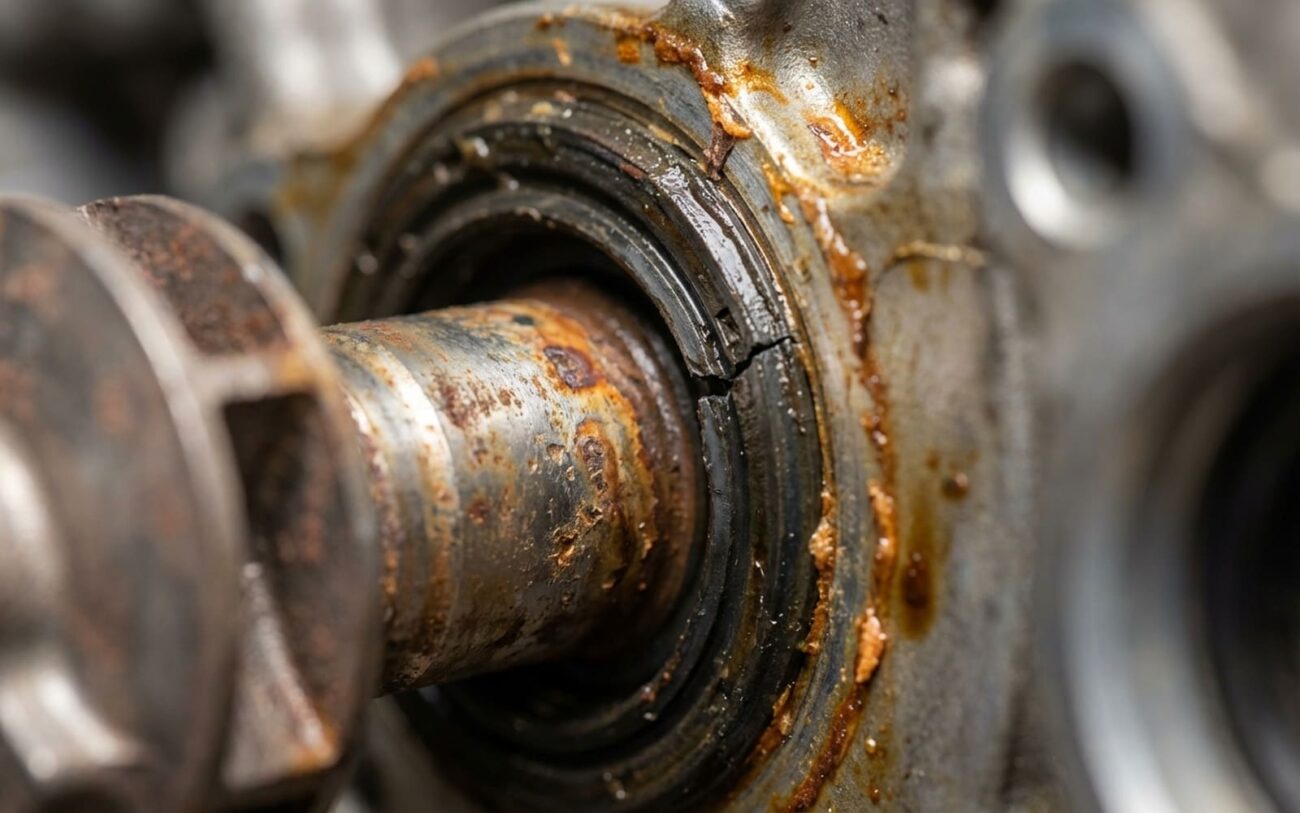
Alright, let’s talk about the Nissan Qashqai with the MR20DD engine. If you’re seeing coolant disappear and can’t find where it’s going, or you’re hearing a funny noise up front, chances are good you’ve got a water pump issue. Specifically, that pump seal. I’ve seen so many of these come through my bay over the last 25 years, it’s practically a routine fix. The trick is catching it before it turns into a real headache.
What to Look For: Symptoms of a Failing Water Pump
So, how do you know if your Qashqai’s pump is going south? I look for three main things. First, the obvious: visible leaks. Check the passenger side of the engine, right where the pump bolts to the timing chain cover, behind the serpentine belt. If you see pink or green crusty residue (that’s Nissan’s Long Life Coolant) or fresh drips coming from the little weep hole on the bottom of the pump housing, that’s your smoking gun. That weep hole isn’t a defect, by the way; it’s designed to let coolant escape before the bearing totally grenades and leaves you stranded.
But sometimes, the leak is more subtle. Maybe just a small weep that evaporates on the hot engine or belt. You won’t see a puddle, but your coolant reservoir will slowly drop over time. And don’t overlook noise. A failing water pump bearing often starts with a high-pitched whine or a gritty, grinding sound from the front of the engine. It might only be noticeable when you first start up or under light load. Don’t ignore it – that bearing wear leads directly to seal failure and bigger problems.
Pinpointing the Leak: My Diagnostic Approach
Now, just because you see coolant near the water pump doesn’t automatically mean the pump itself is leaking. This area is a bit of a crowded neighborhood. I’ve seen leaks from the thermostat housing, which sits right on top of the pump, or from the small O-ring on the coolant inlet pipe that connects to the side of the pump. Both of those can drip down and make the pump look like the culprit. That’s why you can’t just eyeball it and call it a day.
To really nail down the source, I always follow a systematic approach. First, clean the whole area thoroughly with brake cleaner and dry it completely. Then, I pressurize the cooling system. Hook up a cooling system pressure tester and pump it up to 16 psi (about 1.1 bar) – that’s what your radiator cap is rated for. If you’ve got UV dye in the coolant (and if you’re chasing a mysterious leak, you should), run the engine to operating temperature, then shut it down and hit it with a UV light. A true pump seal leak will show dye coming right from that weep hole or the pump-to-block interface. If it’s the thermostat housing or that inlet pipe O-ring, you’ll see the dye higher up.
And here’s a trick: if you’re suspecting bearing wear, take the serpentine belt off and spin the water pump pulley by hand. Any roughness, grinding, or side-to-side play? That confirms internal bearing wear, and that almost always means the seal is compromised. Don’t forget to spin all the idler and tensioner pulleys too, just to rule them out as noise sources.
If you’re losing coolant but seeing no external leaks at all, that’s a different ballgame. We’re talking potential internal head gasket leaks or a leaking heater core. For those, I’d still pressure test the cold system for at least 20 minutes, but I’d also use a combustion leak detector to check for exhaust gases in the coolant, and check the passenger footwell for dampness from the heater core.
Why These Pumps Fail: Root Causes
So, what actually goes wrong inside these pumps? Usually, it starts with the bearing. Over time, from age or poor lubrication, that bearing starts to wear out. When it does, the pump shaft develops a bit of radial play – a wobble. That wobble is what misaligns the mechanical seal faces. Think of it like two perfectly flat surfaces that are supposed to glide against each other. If one starts to wobble, it breaks that seal, coolant seeps out, and the wear accelerates. It’s a cascade failure: bad bearing leads to a bad seal.
The other big factor is coolant quality. The MR20DD is particular about its coolant. Using the wrong type, or mixing different chemistries (like an OAT coolant with an older inorganic one), can degrade those rubber seals and O-rings. Nissan specifies their Long Life Coolant (LLC) for a reason – it has the right additives to protect these components. Running old, degraded coolant or just topping off with tap water (which introduces minerals) is asking for trouble. It promotes corrosion and scaling, stressing the whole system. While rare, I’ve seen a porous pump housing once or twice, but bearing and seal wear from coolant neglect are far, far more common.
And let me be clear about something:
A leaking water pump seal is not a head gasket failure. It’s not a cracked block or a cracked head. Those are much more serious, engine-out type repairs. A water pump is a contained, component-level fix. Don’t let one symptom send you down the wrong diagnostic rabbit hole.
The Fix: Replacing the Water Pump
Professional Territory Only
Fixing a water pump is not a DIY job for everyone. Working on cooling systems demands specialized tools, safety knowledge, and proper procedures. There’s no safe shortcut if you lack experience.
For most folks, this is a job for a professional shop. But if you’re an experienced DIYer with the right tools and patience, it’s doable.
The Only Real Fix: A New Pump Professional Recommended
Parts and Tools I Recommend
Temporary Fixes? Not Really.
Making Sure It’s Done Right: Post-Repair Validation
Alright, you’ve done the work, or the shop has. But the job isn’t truly done until you’ve validated the repair. I’ve seen too many comebacks because people skip this step.
Post-Repair Validation Steps
-
First, let the engine cool completely. Then, perform a cold pressure test. Pump the system up to 16 psi (1.1 bar) and let it sit for at least 20 minutes. That gauge better not drop.
-
While it’s pressurized, inspect every single connection point: the new pump, the thermostat housing, the inlet pipe, and even the radiator cap. Use that UV light again if you used dye earlier. You’re looking for any hint of a leak.
-
Next, we do a thermal cycle test. Drive the car until it’s fully up to operating temperature, then let it cool down completely. Repeat this process at least three times. This stresses the system, allowing components to expand and contract, which can reveal leaks that a static test might miss.
-
After each cooldown, get under there with your flashlight and inspect the pump area. If it’s bone dry after three cycles, you’ve got a solid repair. If not, you’ve got more work to do.
Cost Analysis and Economic Decision-Making
Let’s talk money, because that’s always a factor. Here’s a realistic breakdown of what you’re looking at:
| Repair Type | DIY Parts Cost | Professional Shop Cost | Success Rate | Secondary Risk if Repair Fails |
|---|---|---|---|---|
| Complete Pump & Coolant Replacement | $120 – $250 (OEM pump, belt, coolant) | $450 – $750 | >98% when using OEM parts and correct torque | Coolant loss and overheating due to improper gasket seating, over/under-torqued bolts, or air pockets in system. |
| Temporary Sealant Use | $10 – $20 | Not Applicable | <50% chance of permanent fix; ~90% for short-term reduction of minor weep | Potential clogging of heater core or radiator, leading to overheating and costly flushing or replacement. |
Now, about that economic decision. I often tell customers that if a repair starts pushing 40% of the car’s market value, it’s time to really think. But here’s the kicker with a water pump: the alternative is almost always worse. A failed pump will destroy your engine. Even if your Qashqai isn’t worth a fortune, replacing the engine or buying a whole new car is going to cost you way more than fixing this pump. I’ve seen folks try to nickel-and-dime this repair, only to end up with a seized engine and a car that’s now worth scrap. It’s just not worth that gamble.
Prevention and Ongoing Monitoring
Keeping this from happening again boils down to two simple things: the right coolant and staying vigilant. Always use Genuine Nissan Long Life Coolant (LLC) or a verified equivalent that specifically meets their M.A. 325-0 spec. And always mix it 50/50 with distilled water – never tap water, seriously. Change it at the interval in your owner’s manual; typically, that’s every 5 years or 60,000 to 100,000 miles, depending on the model year. That coolant is designed to protect the pump’s seals and bearings.
For early detection, make it part of your routine. Every time you change the oil, pop the hood and shine a flashlight on that water pump area. Look for any crusty pink or green residue around the weep hole or where the pump meets the block. And listen. First thing in the morning, when the engine is cold, start it up and listen for the first 30 seconds. A faint whine or growl from the front of the engine, especially one that fades as it warms up, is often the earliest sign of bearing wear. I see this misdiagnosed constantly – people think it’s the belt or an idler pulley, but it’s the pump. Catch it then, and you’ll save yourself a lot of grief and money down the road.
