That Cold Start Knock? It’s Not Just Noise, It’s a Warning.
You fire up the engine on a chilly morning, and there it is: a sharp, rhythmic knock, tap, or rattle coming from deep inside the engine. It’s loudest right at startup, maybe softens a bit if you give it some light gas, and then, usually within a minute or two as things warm up, it just… disappears. I’ve seen this scenario play out hundreds of times over my 25+ years in the shop, and here’s the critical takeaway most drivers miss: just because that noise goes away doesn’t mean the problem is gone. Not by a long shot.
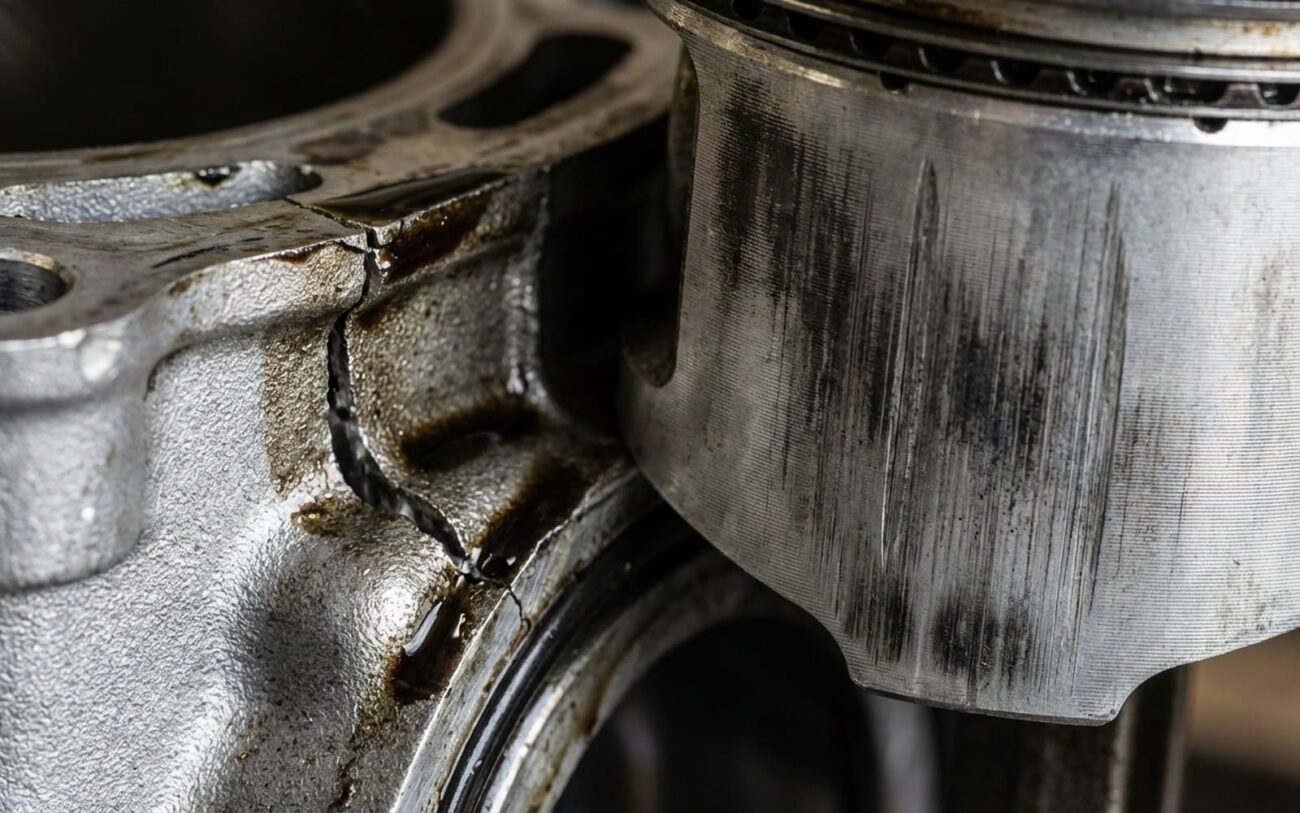
That transient knock is a classic symptom of excessive clearance in critical rotating parts. Every time you start that engine cold, those parts are banging around until the oil warms up and metal expands. And every single time that happens, you’re doing more damage. It’s progressive, and left unchecked, it can lead to spun bearings, cracked pistons, or a complete engine meltdown. Trust me, you don’t want to get to that point.
Why This Happens: The Cold Hard Physics
The reason these noises only show up when cold and then vanish is pretty straightforward physics. When your engine is cold, all the metal components—pistons, rods, crankshaft, block—are contracted. This means the clearances between moving parts are at their largest. Think of it like a cold bolt in a slightly oversized nut; there’s more wiggle room.
On top of that, cold engine oil is thick and sluggish. It takes longer for the oil pump to push it through the system and build up full pressure, especially to those critical bearing surfaces. So, you’ve got maximum clearances and minimum lubrication, which is a recipe for metal-on-metal contact and that tell-tale knock.
The Mechanic’s Rule
“A bearing clatter that quiets down isn’t fixed—it’s just hiding behind thermal expansion and better oil flow.”
As the engine warms up, two things happen: the metal components expand, reducing those clearances, and the oil thins out, flows faster, and builds a proper hydrodynamic wedge between the moving parts. The noise goes away because the gaps are smaller and the oil is doing its job. But the wear that caused those excessive clearances in the first place? That’s still there.
My Diagnostic Playbook: Don’t Guess, Test.
Pinpointing the exact source of an engine knock can be tricky. A lot of things can make similar noises, and misdiagnosing a simple lifter tick as a rod knock — or worse, dismissing a serious bearing issue as “normal cold noise” — is a costly mistake. Here’s the systematic approach I use in my shop to get to the bottom of it:
1. Check the Oil Pressure – This is Non-Negotiable.
Before anything else, I hook up a mechanical oil pressure gauge. The dash light is just a warning, not a precise measurement. If that oil pressure warning light flickers or stays on for more than 2-3 seconds at startup, that’s a massive red flag. It points directly to delayed oil pressure buildup, which is often a symptom of worn main or rod bearings, or a failing oil pump.
Pressure Specs:
A general rule of thumb: you want at least 10 psi of oil pressure for every 1,000 RPM. So, at a hot idle (around 700-800 RPM), I look for 20-25 psi. If it’s consistently below that, especially when hot, you’ve got bearing wear.
2. Get Out the Stethoscope.
This is your ears’ best friend. I’ll start the engine cold and carefully place the stethoscope on different parts of the block.
- Lower Block (near oil pan/main caps): A deep, rhythmic knock here, especially one that sounds like a hammer hitting an anvil, is classic rod or main bearing knock. If it fades as it warms, that’s your smoking gun.
- Mid-Block (cylinder walls): A duller, less metallic thud, often described as a “slap,” points to piston slap. This is the piston rocking in the bore. Some engines (like older GM 5.3L V8s) are notorious for this and it’s sometimes considered “normal” if minor, but persistent slap can lead to cylinder scoring.
- Upper Engine (valve covers): A sharp, rapid tapping or clicking is usually valve train noise – lifters, rocker arms, or cam issues. These can sound similar to a knock but are generally higher pitched and less “heavy.”
- Front of Engine (timing cover): A rattling or clattering that fades quickly can be a timing chain tensioner or guide issue.
3. Inspect the Oil.
Drain a little oil into a clean pan. Look for metal flakes. If you see a “silver glitter” effect, that’s bearing material. If it’s gold or brassy, it could be a different type of bearing or bushing. This is a definitive sign of internal destruction.
4. Scan for Codes.
Hook up an OBD2 scanner. Look for knock sensor codes (P0325–P0334). While these usually indicate combustion knock, a severely worn engine can trigger them. Also, check for cam/crank correlation issues (P0016/P0017), which might point to timing chain problems that mimic a knock.
5. Rule Out External Mimics.
Sometimes, what sounds like an engine knock is actually something external. I’ve been fooled before. Check things like a faulty AC compressor, a loose belt, a bad idler pulley, or even a failing water pump. These can create rhythmic noises that transmit through the block. Remove the accessory belt briefly (just for a few seconds, don’t let it overheat!) to see if the noise changes or disappears. If it does, you’re looking at an accessory, not internal engine damage.
Repair Options: What You’re Really Facing
If testing confirms internal engine damage, you’re looking at significant labor and cost. This isn’t a cheap fix, but it’s often cheaper than a new car. Before any internal engine repair, it’s absolutely critical to rule out a worn crankshaft journal. If the crank is damaged, new bearings will be destroyed almost immediately, and you’ll be right back where you started.
Internal Engine Work is Complex
These aren’t DIY jobs for most people. They require specialized tools, cleanroom conditions, and a deep understanding of engine tolerances and assembly procedures. Always consult a reputable engine builder or experienced mechanic.
Bearing Replacement (In-Situ)
Engine Rebuild (Full Tear-Down)
Short or Long Block Replacement
Validation: Did the Repair Actually Work?
After any significant internal engine repair, you can’t just start it up and call it good. There are crucial steps to validate the repair and ensure you don’t have a repeat failure:
- Prime the Oil System: Before the first startup, always prime the oil system. This means getting oil flowing to all critical areas before the engine turns over. This can be done by disabling ignition/fuel and cranking, or using a dedicated oil priming tool. You want immediate oil pressure, not a dry start.
- Monitor Oil Pressure Immediately: As soon as it fires, watch that mechanical oil pressure gauge. It should rise to normal operating pressure (e.g., 40-60 psi cold) within 2-3 seconds. If it’s slow or low, something is still wrong.
- Initial Idle & Listen: Let the engine idle for at least 15-20 minutes. Use your stethoscope at key block points. Listen for any lingering knocks, taps, or unusual noises.
- Cold Re-Test: After the engine has fully cooled down (overnight is best), perform another cold start. This is the ultimate test. The original knock must be gone.
- Check for Vibrations: Take it for a test drive. If you notice any engine vibration at high RPM, that could indicate balance issues, which means something wasn’t assembled correctly or the crankshaft wasn’t balanced properly.
Cost and Long-Term Economics
Let’s be real, engine work isn’t cheap. But catching a cold start knock early can save you from a complete engine replacement. Here’s what you can expect:
Professional Diagnosis
This includes mechanical oil pressure testing, using a stethoscope, visual inspection, and pulling codes. It’s money well spent to avoid guessing.
Bearing Replacement (In-Situ)
This is for replacing rod and/or main bearings without removing the engine. It’s labor-intensive, but significantly less than a full rebuild, assuming the crankshaft is still good.
Full Engine Rebuild or Replacement
This covers a full engine rebuild (machining, new parts) or installing a remanufactured short/long block. The price varies wildly based on engine complexity and vehicle type. This is your best bet for long-term reliability once significant damage has occurred.
Prevention: Slowing the Wear
-
Use the Correct Oil Viscosity: Always follow your manufacturer’s recommendation. In colder climates, a thinner oil (like 0W-20 or 5W-30) will flow faster at startup, reducing that critical dry-start period.
-
Warm Up Gently: Avoid hard acceleration for the first few minutes of driving, especially when it’s cold. Let the oil circulate and the metal expand naturally.
-
Regular Oil Changes: This sounds obvious, but using quality oil and changing it on schedule is the single best thing you can do for your engine’s longevity. Dirty, broken-down oil offers less protection.
-
Address Overheating Immediately: Overheating can warp engine components, leading to increased clearances and loss of compression. Don’t ignore it.
