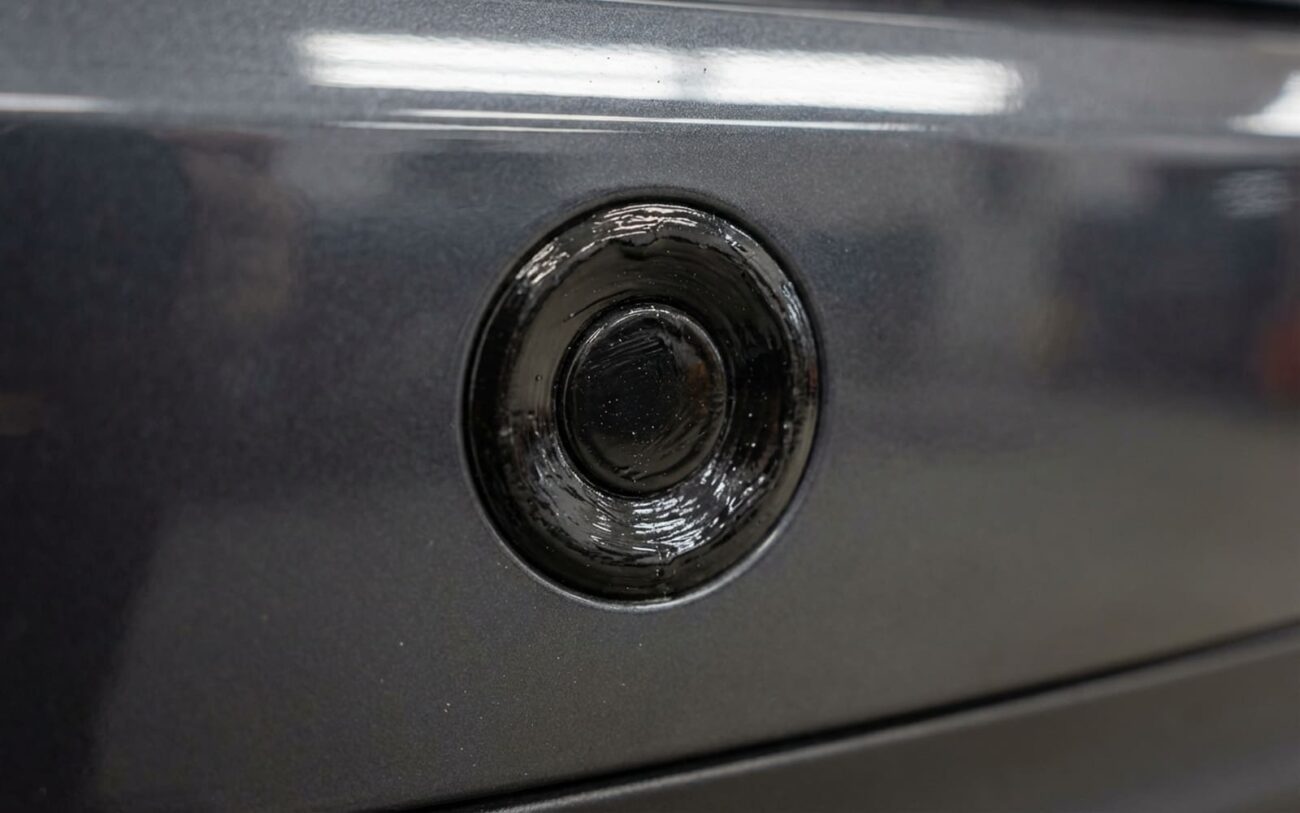
You bring your car in with a fresh paint job, and now the parking sensors are screaming at you for no reason—or worse, they’re dead silent when they shouldn’t be. I’ve seen this a dozen times a month, especially on German and Japanese models where the sensors are flush-mounted and easy to overlook during refinishing. Let me tell you straight: if the system worked before the paint and doesn’t now, the odds are very high the paint caused it. But you don’t just assume—especially if the shop’s pointing fingers elsewhere. You test.
What You’re Actually Dealing With
The core issue? Ultrasonic sensors don’t like anything on their face. These things emit a 40–50 kHz pulse and listen for the echo. Add even a thin layer of paint—especially primer or clear coat—and you’re changing the acoustic impedance. That means part of the signal bounces back immediately, creating a false “wall” a few inches from the bumper. Or the output gets muffled, so it can’t detect a real obstacle until you’re practically touching it.
I’ve measured paint thickness on failed sensors—some had over 0.5 mm buildup. OEM spec? Less than 0.3 mm. Exceed that, and performance degrades fast. On a 2020–2023 Toyota RAV4, I tested one with 0.35 mm overspray: detection range dropped from 5 feet to 2. On BMWs, I’ve seen hydrophobic mesh completely sealed shut by overspray. Once that mesh is clogged, it’s game over—the sensor might as well be unplugged.
Symptoms and How to Test Them
False alarms in an open space? That’s classic paint interference. But before you start scraping, rule out other causes. Ice, mud, misalignment—those can mimic the same behavior. Here’s how I break it down:
| Symptom | Test | What a Pass Looks Like |
|---|---|---|
| False Positive Detection | Visually inspect sensor face. Use a digital depth gauge to measure paint thickness. Clean with 99% isopropyl alcohol and retest. | No more chimes in open space. OEM allows <0.3 mm—anything over and you’re in trouble. |
| Reduced Detection Range | Use a scan tool to read live sensor “quality” or signal strength. Compare to known-good side. | Signal strength within 10% of other sensors. If it’s low despite good voltage and ground, it’s acoustic blockage—not electrical. |
| System Disabled (“Park Assist Unavailable”) | Scan for fault codes. Check for “Signal Implausible” or “Open Circuit” on multiple sensors. | If codes clear after cleaning but return quickly, paint is still interfering. If wiring and power are good, it’s not a harness issue. |
And don’t forget the bumper contour. I had a 2022 Honda Civic come in—sensors were clean, but there was a 1 mm ridge of paint built up around the sensor hole. That lip was deflecting the beam sideways. No code, no fault—just bad physics. You won’t catch that unless you look closely.
Fix It Right: Three Paths
Careful Cleaning (If You’re Lucky)
This only works if the overspray is thin and hasn’t cured into a hard shell. Use a plastic razor blade—never metal—and work at a shallow angle. Soak a microfiber with 99% isopropyl alcohol and wipe as you go. I’ve saved sensors this way on Audis where the painter just feathered a little too close.
But if the paint is thick or has runs? Stop. You’ll gouge the diaphragm. And once that’s scratched, water gets in, and you’re buying a new sensor anyway.
Sensor Replacement (Most Common Fix)
When the mesh is clogged or the face is sealed under paint, replacement is the only real fix. Use OEM—aftermarket units often run at slightly wrong frequencies, and that throws off calibration. On VWs, I’ve seen cheap sensors cause “phantom” alerts because the pulse timing was off by microseconds.
Remove the bumper carefully. Use a proper plastic trim tool—don’t pry against the sensor housing. Torque bumper bolts to 22 Nm (about 16 lb-ft); over-tightening cracks the mounting points. And seal the gasket with a dab of dielectric grease. Prevents corrosion and keeps water out.
Bumper Contour Correction (Body Shop Work)
If the paint built up around the sensor opening, you need sanding and feathering. This isn’t a mechanical repair—it’s bodywork. The ridge has to be blended smoothly so it doesn’t reflect or distort the ultrasonic beam.
Yes, it’s a pain. But driving with impaired sensors in tight spots? That’s how you back into a curb and crack a wheel. I don’t care how good your camera is—park assist is a real safety layer at low speeds.
Verify It’s Fixed—Don’t Guess
After any repair, test like you mean it. Not just a quick reverse in the driveway. Here’s my checklist:
- System chirps on startup when you shift to reverse.
- No false alarms in an open area.
- Detects a traffic cone or trash can at 4–5 feet (OEM standard).
- Scan tool shows no codes and live data is consistent across all sensors.
On some BMWs and Mercedes, you have to code the new sensor ID via the scan tool. Skip that, and the system might run in “default mode” with reduced sensitivity. I’ve seen techs miss that step and wonder why the customer came back complaining.
And if you sanded the bumper contour? Walk a cone laterally across the rear while watching sensor response. Any dropouts or spikes mean the beam is still being disrupted.
Cost vs. Value: When Not to Fix It
Let’s be real: if you’re working on a 12-year-old Camry with $3,000 value and three sensors need replacing, it’s not worth it. Labor alone—bumper off, replace, recalibrate—can hit $400. Total repair over $500? That’s 15–20% of the car’s worth.
In those cases, I tell customers: disable the system. Either pull the fuse or turn it off in the menu (if available). Just make sure they understand—they’ve lost a safety feature. They’ll need to rely more on mirrors, cameras, and good old-fashioned looking behind them.
Prevention: Do This Every Time
I don’t care if it’s a fender bender repair or a full respray—every parking sensor gets taped. High-temp painter’s tape, or better yet, OEM plastic caps. I keep a box of them in my bodywork bay. Takes 30 seconds per car. Saves hours of diagnostics later.
And tell the painter: no undercoating near the sensors. Some rubberized coatings swell the bumper plastic or chemically attack the housing. Water-based primers are safer.
After reassembly, test before the customer leaves. Have someone walk around the car while you’re in reverse. If one sensor doesn’t ping, catch it now—not three days later when they’ve already scraped the bumper.
For related topics, see: Can a Tow Hitch Block Blind Spot Monitoring Sensors? and Why do VW/Audi Side Assist radar sensors fail from moisture?
