You’re Not Crazy — That Beeping Is a Bad Sensor (Usually)
I’ve been fixing these parking sensor gremlins since the early 2000s. Seen it all: luxury sedans, crossovers, even work vans. And when a customer says, “It beeps like there’s a wall behind me — but there’s nothing there,” I already know where to start. Nine times out of ten, it’s not the control module. It’s not a software glitch. It’s one dead ultrasonic sensor feeding garbage data to the system.
These sensors work by sending out a high-frequency ping — around 40–50 kHz — and timing how long it takes to bounce back. When one fails internally (and they do, especially after 5+ years), it might report “0 cm” constantly. That tells the control module, “Obstacle detected — panic.” So it screams at you the second you shift into reverse. And because the system trusts its inputs, it doesn’t question it.
Here’s what you’re probably seeing: the beeping starts immediately in reverse, it’s tied to one corner, and it doesn’t matter if you’re in a parking lot or your garage. That’s not random noise — that’s a sensor screaming “I’m broken!”
Don’t Guess — Diagnose
I’ve had customers replace all four rear sensors because “maybe they’re all worn.” Wasted money. These systems are designed so one bad sensor can fake a full obstacle array. So before you unscrew a single bolt, test.
Start simple: put the car in reverse (brake on), walk around, and listen. Get your ear close to each sensor. A failing one might buzz faintly or click erratically. Not always — but when it does, it’s a red flag. I’ve caught more than a few just by doing that.
But here’s the truth: if you don’t have a scan tool that can talk to the parking aid module, you’re working blind. Full stop. You need live data. On the 2010–2016 BMW X5s I see weekly, the ISTA system shows exact distance readings per sensor. If three say “150 cm” and one says “0 cm,” you’ve found your culprit. No guessing.
| Symptom | Likely in Sensor | Could Be (But Less Likely) | Definitive Test |
|---|---|---|---|
| Constant alert from one corner | Internal short or open piezo element | Wiring short to ground, control module fault |
Unplug the sensor. Measure resistance across terminals. Should be 5–15 MΩ. Near 0 Ω = short. Infinite = open. Swap it with the opposite side. If the fault moves, the sensor is bad. |
| Intermittent beeping at idle or low speed | Cracked piezo element or resonance issue | Loose bumper, bad harness connection |
Use scan tool to monitor live readings. Bad sensor jumps from 0 to 200 cm randomly. Gently press the sensor face with your finger. If beeping stops, mechanical failure (crack or loose mount). |
| Only acts up in rain or after a wash | Failed internal seal, water ingress | Wet connector, condensation in harness |
Unplug sensor right after failure. If connector is dry but sensor face is wet inside, seal is blown. Test resistance while wet. Below 5 MΩ? Corrosion or internal short. |
And yes — wiring can mimic this. I’ve seen a chafed harness behind the left rear bumper on a 2018 Audi Q5 cause the same exact symptom. But again: scan tool first. Don’t start pulling trim until you’ve ruled out the sensor.
Why Sensors Die (And It’s Not Just Age)
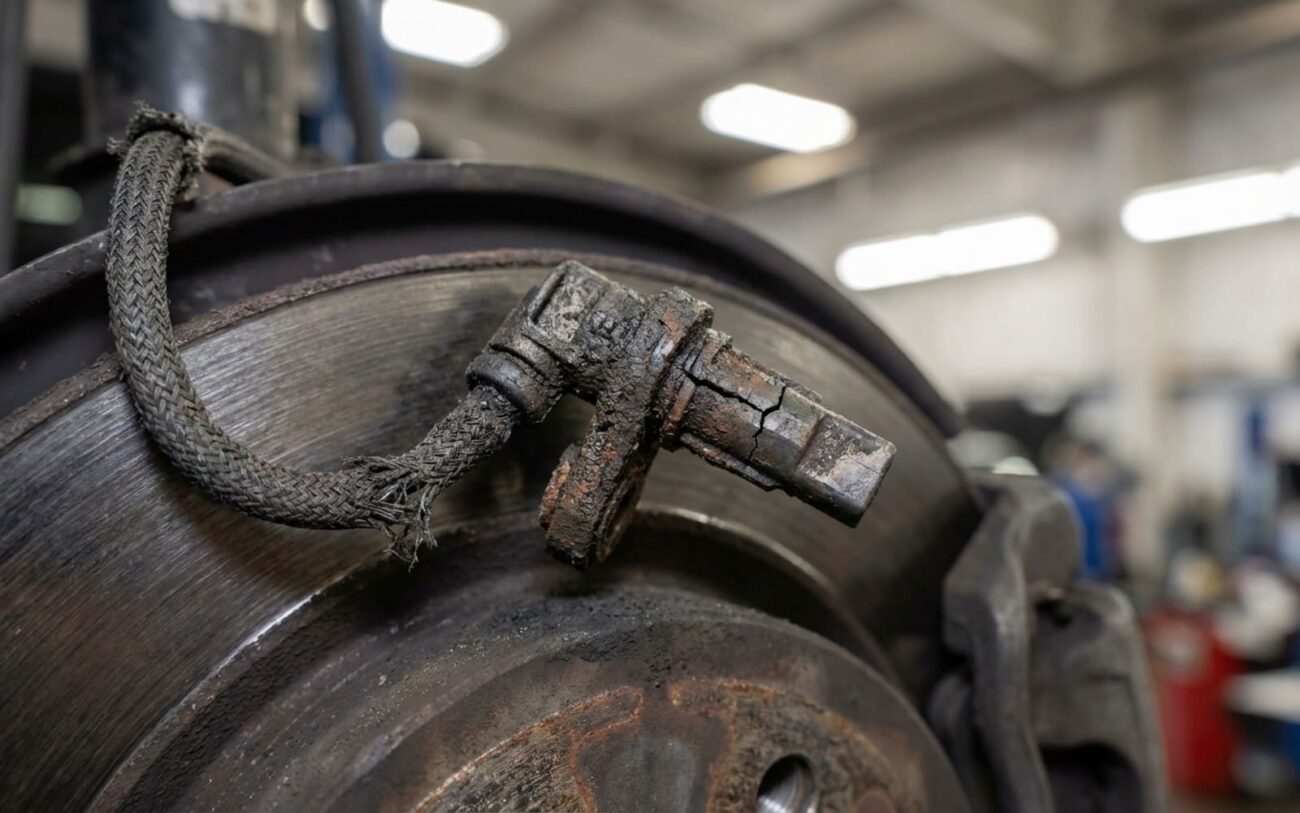
These aren’t delicate — but they’re not indestructible. They take abuse: road salt, UV exposure, pressure washing, rock chips. The most common killer? A cracked piezoelectric crystal. It’s the part that generates and receives the ultrasonic pulse. Hit it with a stone or flex the bumper too hard during a car wash, and it can develop a hairline fracture. After that, it sends back garbage signals.
Seal failure is next. Most sensors use a rubber O-ring or epoxy seal. On Toyotas from 2012–2016, I’ve seen the epoxy degrade and let moisture in by year 7. Water gets on the circuit board, corrodes the traces, and boom — short circuit. And you won’t see it from the outside. The face looks fine. But inside? Fried.
I’ve also traced cold-weather failures to cheap capacitors in aftermarket sensors. On a 2015 BMW 328i, the front left sensor would go nuts below 50°F. Swapped it with OEM — problem gone. Turns out the aftermarket unit had a batch of caps that drifted out of spec when cold. (Yes, this matters.)
How to Fix It (And What Not to Waste Time On)
Replace the Sensor — It’s Not Repairable
These sensors are potted in epoxy. No serviceable parts inside. If the piezo crystal is cracked or the board is corroded, it’s done. Don’t bother with “repair kits” — they don’t reseal or restore function. I’ve tried. Wasted an afternoon once on a 2013 Lexus. Just replace it.
DIY Steps (If You’re Careful)
You’ll need: T20 or T25 Torx, trim tools, OEM-matched sensor (color, frequency, part # — don’t guess), dielectric grease. Steps:
- Disconnect negative battery terminal.
- Remove bumper cover — usually means taking off wheel well liners, underbody clips, and 4–6 bolts. Be gentle. These plastics get brittle.
- From behind, disconnect the harness and twist or pull the sensor out (varies by model).
- Apply dielectric grease to the new connector, plug it in, seat it firmly.
- Reinstall bumper. Torque bolts to 8–12 Nm (7–9 lb-ft). Over-tightening cracks the mounts.
- Reconnect battery.
Disabling the System — Last Resort
Some cars let you disable parking sensors in the menu. Or you can unplug the bad sensor. But here’s the catch: most systems disable the entire array when one sensor faults. So you lose all rear alerts. And in places like Germany or California, disabling a factory safety feature can affect inspections or resale. Use this only if you’re planning to sell soon — not as a permanent fix.
Did It Actually Work? Test It.
Don’t just drive away because the beeping stopped. Test it.
First, functional check: shift into reverse. You should hear a single “beep” — system active — then silence. Slowly back toward a wall. Beeps should start around 5 feet, increase in frequency, and go solid at about 12 inches. If it’s erratic, something’s still wrong.
Then, scan tool check: clear codes, cycle ignition, scan again. No codes should return. Monitor live data. The new sensor should match its neighbors within a few centimeters. If it reads “0” or “N/A,” check the connection. Or the part might be DOA — especially if it’s aftermarket.
Is It Worth Fixing?
| Repair Type | DIY Cost | Shop Cost | Success Rate | Risks |
|---|---|---|---|---|
| Single Sensor Replacement | $50–$150 (OEM or quality aftermarket) | $200–$400 (includes bumper work) | 95%+ with correct part | Improper bumper install → wind noise, misalignment, future damage |
| Full Array Replacement | $200–$600 | $600–$1,000 | 95%+ if all failing | Expensive overkill if only one bad; risk of introducing new issues |
My rule after 25 years: if the repair costs more than 40% of the car’s value, and you don’t park in tight spots daily, just disable it. Putting $800 into sensors on a $3,000 Corolla? Doesn’t make sense. But if you’re in a city, backing into tight garages, or towing trailers, keep it working. That beep might save your bumper — or someone else’s.
How to Make It Last
Prevention beats repair. I tell every customer: don’t blast the sensors with a pressure washer. Hold the wand 12–18 inches back. Direct spray can force water past seals or crack the diaphragm.
Use pH-neutral soap. Tar removers and degreasers eat the plastic over time. And inspect them monthly. Look for chips, cracks, or wax buildup. A clogged sensor won’t work — same as a dirty blind-spot radar.
And pay attention to behavior. If your sensors start triggering earlier than normal, or the tone sounds “off,” one might be drifting. Catch it early, replace it, and you’ll avoid the constant beeping that makes drivers ignore the system entirely.
