Front parking sensors go out more often than you’d think — but here’s the thing: it’s almost never all the sensors failing at once. I’ve torn into hundreds of these systems over the last 25 years, from F-150s to Camrys to A4s, and the real culprit is usually a single wiring fault or a module issue hiding behind a misleading code. Let me walk you through how I actually diagnose this — not the textbook way, but the way that saves time and money in the bay.
Symptom First: What the System Tells You
If your rear sensors work fine but the front ones are dead — no beeps, no display, maybe a “Front Park Assist Off” message — that’s not a random failure. That’s a circuit-level issue isolated to the front. The Parking Assist Module (PAM) is alive. It’s talking to the network. The rear sensors confirm that. So we’re not dealing with a dead module or a blown main fuse.
Now watch what happens when you start the car. On most vehicles, there’s a system self-check — a quick chime or a flash of the park assist light. If you hear or see that, the PAM detected a fault and stored a code. That’s good. That gives us a starting point.
But if there’s nothing — no chime, no flash — that’s actually more suspicious. I’ve seen too many cases where a connector behind the bumper got knocked loose during a car wash or bumper cleaning. The module doesn’t always log a hard fault for an open circuit like that. So silence doesn’t mean “okay.” It might mean “disconnected.”
Diagnosis: Cut Through the Noise
Scan tool first. Always. I don’t care how experienced you are — guessing on modern park assist systems is expensive. Plug in a capable scan tool that can talk to the PAM. Pull the codes. Look for B-codes (circuit faults) or U-codes (communication issues). That tells you what the system actually sees, not what you think is wrong.
If you’re getting open-circuit codes for all four front sensors, don’t replace all four. That’s not how these fail. It’s like finding four flat tires at once — possible, but far more likely you drove over a spike strip. In this case, the “spike strip” is a shared power feed, ground, or data line that’s broken or shorted.
Common culprits?
- A disconnected harness under the front bumper (especially after a car wash or minor front-end ding).
- A pinched wire at the bumper mounting point — I see this on Accords where the harness gets crushed between the bumper and fender liner.
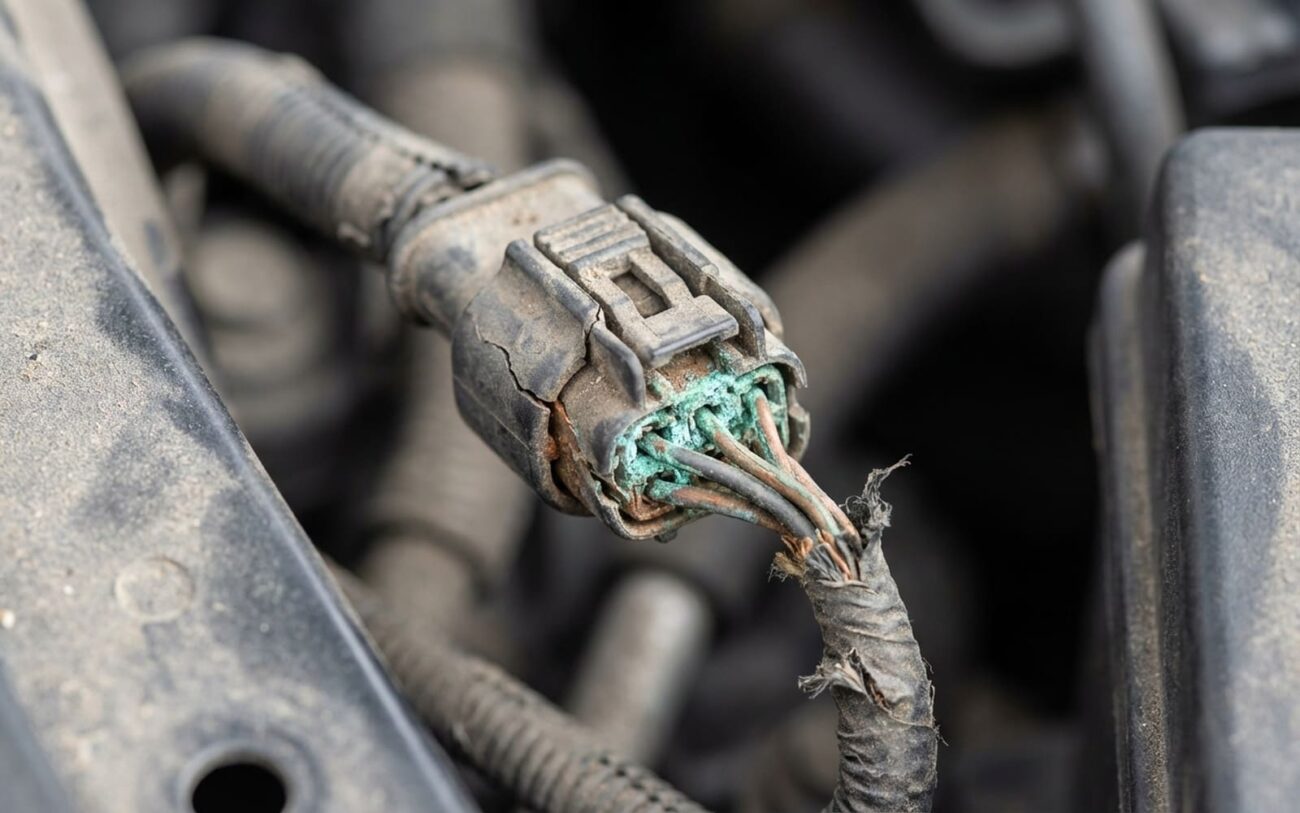
- Corrosion in the connector — salt and road grime love these spots.
So after scanning, do this: check for power and ground at the front sensor connector closest to the PAM. Use a wiring diagram. On most Toyotas, it’s a 4-pin connector — one power (usually 12V switched), one ground, one data line, and one trigger. If you’ve got power and ground but no communication, the break is likely downstream. If you’ve got neither, the issue is upstream — possibly at the PAM or a junction block.
Root Cause: Sensor, Wiring, or Module?
Let’s break it down.
If it’s a sensor: Usually one fails, not all. And the system often throws a specific code — B1234: “Front Left Sensor Open,” for example. Swap it with a known-good one (same position, opposite side) and see if the code follows. If it does, you’ve got your answer. OEM sensor only — I’ve seen aftermarket units cause communication dropouts on BMWs and Acuras.
If it’s wiring: This is the most common. Look for chafing at connector exits, especially near the bumper mounts. I’ve found wires rubbed through by plastic clips that weren’t seated right. Use a multimeter to check continuity and resistance. Look for shorts to ground — even 2–3 ohms of resistance on a ground line can kill the signal.
If it’s the PAM: That’s trickier. If you’ve got power and ground at the connector but no output, and no communication with the scan tool, the module might be dead. But — and this is critical — don’t replace it until you’ve ruled out a short in the wiring. I’ve replaced two PAMs in one month on the same customer’s Audi because the shop didn’t fix the chafed wire first. The second module fried in a week. The wiring was the root cause. The module failure was just a symptom.
And sometimes? It’s not hardware at all. On certain Fords and Toyotas, there’s a known software glitch where the PAM misreads sensor data and throws false codes. Check for open service bulletins. A simple reflash might fix it — no parts needed.
Fix It Right: Repair Paths That Last
One dead sensor? DIY-FEASIBLE
Wiring damage in bumper harness? DIY-FEASIBLE TO PROFESSIONAL-ONLY
Break in main body harness? Professional Only
PAM is dead? Professional Only
Need a temporary fix? Temporary / Last-Resort
Test It Like You Mean It
Clear the codes. Then test.
If you fixed a sensor or wiring issue: use the scan tool’s active test to trigger each front sensor. You should see a response. Then drive toward a wall at 2–3 mph. Beeps should start around 30–36 inches out and increase in frequency. The display should match.
If you replaced the PAM: the programming must complete with no errors. Then run the calibration — don’t skip it. Cycle the ignition, scan again, and check for stored codes. Test both front and rear systems. A bad flash can mess with other ADAS features.
Is It Worth Fixing?
Be honest. On a car worth $3,000 with 180,000 miles, a $1,000 PAM replacement doesn’t make sense. But you don’t have to live with blind spots.
I’ve used scan tools to disable the front system while keeping the rear sensors active. It’s not perfect, but it stops the warning messages and lets the driver use what still works. Safer than ignoring it — and cheaper than replacing parts.
And remember: park assist is a backup. If you’re relying on beeps to avoid hitting things, you’re not paying attention. Use your mirrors. Turn your head. The system helps — it doesn’t drive for you.
Prevention: Keep It Working
After any front-end work — even just cleaning the bumper — check the harness routing. It should be clipped away from sharp edges and moving parts. I’ve seen harnesses zip-tied to control arms — that’s a failure waiting to happen.
During washes, look at the sensors. Are they cracked? Clogged with bugs or ice? A dirty sensor can mimic a failure. Clean them with soapy water and a soft brush. And if the beeping starts later than it used to, that’s often the first sign of a failing sensor — catch it early.
And one last thing: don’t let the system lull you into complacency. I’ve pulled dashcams on too many “minor” fender benders where the driver never looked — they just listened for the beep. That’s not how this works. Use your eyes first. The tech is there to help, not replace you.
