Locked Out? Car Won’t Start? It’s Probably Your Key Fob.
I’ve seen it a thousand times in my bays: a customer comes in, frustrated, saying their car just won’t unlock or start. They’ll tell me they walked up, grabbed the door handle, and nothing happened. No click, no lights, just dead silence. Then they tried the buttons on the fob, and it felt like a brick in their hand. No response at all. This is, without a doubt, the most common sign of a dead key fob battery.
See, your remote keyless entry system, and especially that fancy passive entry (touch-to-open) feature, relies on that tiny battery to send a signal to the car. When that battery’s flat, the fob can’t talk to the car, and you’re locked out. Simple as that, usually.
Now, while a weak fob battery is the prime suspect, don’t just assume it’s that easy. A completely dead 12-volt battery in the car itself, or even a fault in the vehicle’s radio frequency (RF) receiver, can mimic these exact symptoms. But honestly, in my 25+ years, especially on anything built in the last 15 years, it almost always starts with the fob.
If you do manage to get inside and hit the start button, you’ll likely see a “Key Not Detected” warning pop up on the dash. That’s your car’s immobilizer system telling you it can’t verify the fob’s presence. But here’s the good news: even with a totally dead battery, most modern fobs still have a backup transponder chip. It works using NFC (Near Field Communication), which means the car can still read it—but only if you put the fob in just the right spot. First, though, we need to get you in the door without breaking anything.
Step 1: Get Back Inside (The Mechanical Key)
Don’t Force It!
This is where people mess up. Forcing that mechanical key into the door handle can lead to some seriously expensive repairs. If you pry at the plastic cover with a metal screwdriver, or just jam the key in blindly, you risk snapping the plastic cap or damaging the lock cylinder itself. That turns what should be a free entry into a $500+ repair for a new door handle assembly. Take a breath. Use the right tools and technique.
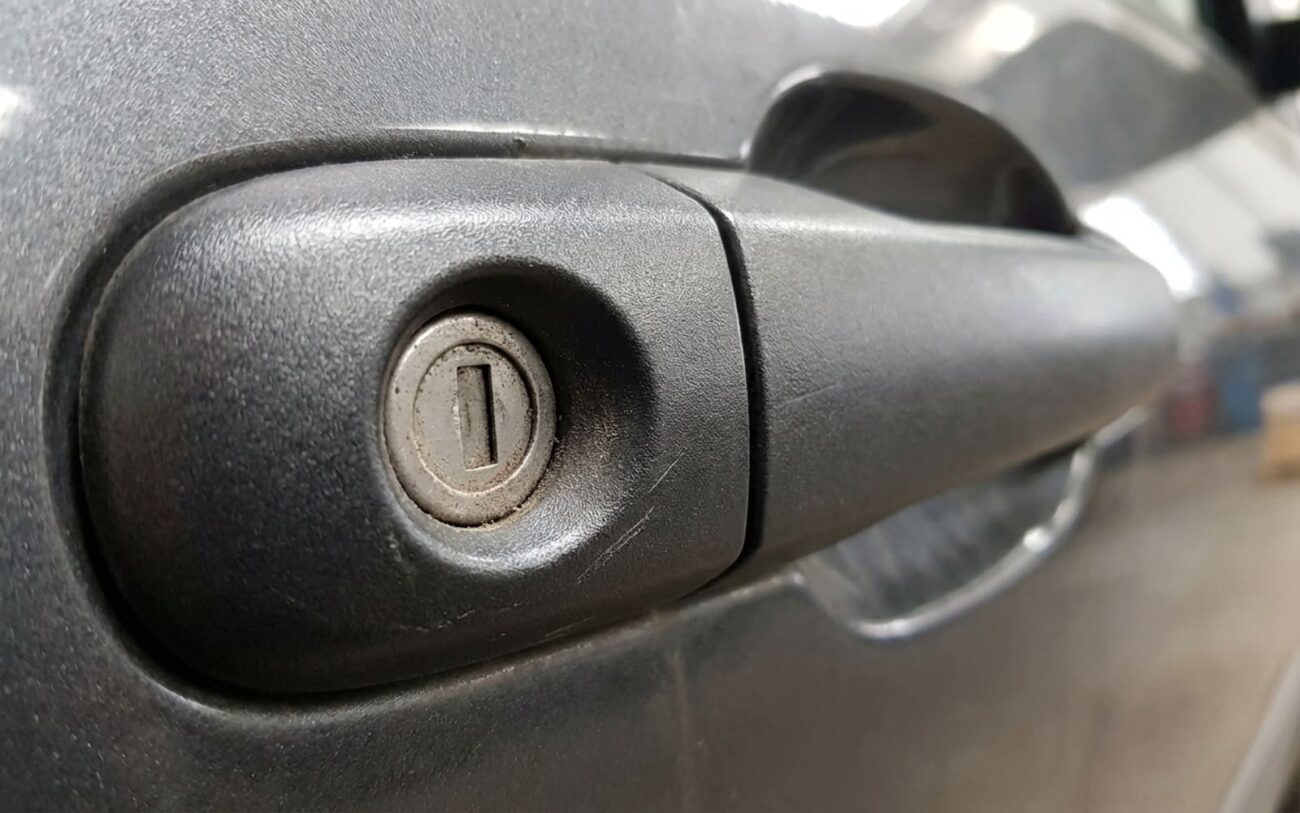
Okay, so you’re locked out. Your first move is to find the hidden mechanical key blade inside your fob. Most fobs have a small button or switch on the side—press it, and the metal key blade will pop out. Now, look at your driver’s door handle. There’s usually a small plastic cap covering the keyhole. It’ll have a faint seam or a tiny slot on one end.
Use the tip of your mechanical key blade to gently pry off this cap. I mean gently. Never use a metal screwdriver here; it’ll scratch or crack the plastic. Once that cap is off, you’ll see the actual lock cylinder. These mechanical locks are rarely used on modern cars, so they can be stiff. I always recommend applying a bit of penetrating lubricant—something like WD-40 Specialist Silicone—to the key blade itself, not directly into the cylinder. Work the key in slowly, wiggling it gently. It should turn. This will only unlock the door; it won’t start the car.
Step 2: Get the Car Started (Emergency NFC)
Alright, you’re in. Now you need to get the engine running. Even with a dead fob battery, your car has a failsafe: the backup NFC (Near Field Communication) system. This lets the car power up the fob’s internal transponder chip just enough to complete the immobilizer handshake.
The trick is knowing where to put the fob. It varies a lot by manufacturer and model. Some cars want you to hold the fob right against the push-button start itself. Others have a specific recess in the center console, or you might need to hold it near the steering column. Your best bet is to check your owner’s manual for the exact spot. When you do it right, the car will recognize the fob, and you’ll be able to start it up. This is a temporary solution to get you home or to the shop, not a permanent fix.
Step 3: Figure Out What’s Really Dead – Fob or Car?
Now that you’re not stranded, it’s time to diagnose the actual problem. Misdiagnosing this can lead to throwing money at parts you don’t need. Here’s how I break it down in the shop:
| Symptom | Most Likely Fob Issue | Common Vehicle Issue | My Definitive Test |
|---|---|---|---|
| No response from remote buttons or door handle touch. | Fob battery is low or dead (typically below 2.7V). | Dead 12V car battery, faulty RF receiver, damaged fob circuit. |
Grab a multimeter. Open the fob and measure the battery voltage while pressing a button (that puts it under a light load). If it drops below 2.7V, it’s weak. Also, check your car’s 12V battery with a load tester; it should stay above 9.6V during a cranking simulation. |
| “Key Not Detected” at push-button start. | Fob’s main battery is dead, but the backup NFC/LF transponder still works. | Failed low-frequency antenna (often in steering column/dash), weak 12V system, electrical interference. |
Perform the emergency start procedure (holding the fob against the start button or steering column). If the engine starts, you’ve confirmed the fob’s internal chip is alive and the car’s reader system works. That means it’s just the fob battery. If it still won’t start, then I’d pull out my scan tool and check for immobilizer module codes. |
My Go-To Diagnostic Shortcut
That emergency start test? That’s your best friend for quick diagnosis. If holding the “dead” fob in the correct spot allows the car to fire up, you’ve just confirmed the critical transponder chip is alive and the vehicle’s reader system is working. That immediately eliminates the need for expensive reprogramming or replacing modules. I see techs skip this step all the time and go straight to costly solutions. Don’t be that guy.
Why These Little Batteries Die So Soon
Most key fob batteries—we’re talking CR2032s or CR2025s—are rated to last 2 to 5 years under normal use. But in my experience, I see premature failure more often than you’d think. The biggest culprit? Where you store the fob.
If you leave your keys near the vehicle—say, on a hook in the garage or in a bowl by the front door—the car and fob maintain a constant, low-power “handshake.” This keeps the fob in a semi-awake state, always listening, and slowly draining its battery. Some manufacturers, like Toyota and Honda, have even put out service advisories about this: fobs stored within 6 feet of the vehicle can lose charge significantly faster. I’ve had customers double their fob battery life just by moving their keys to a kitchen drawer instead of the entryway bowl.
Another common issue is accidental button presses. You toss the fob in your pocket or a bag, and it might accidentally activate the unlock, lock, or panic button repeatedly. Each press uses a small amount of juice, and over time, that adds up. Rarely, you’ll have an internal circuit fault—like a tiny short on the circuit board—that causes a parasitic drain. But honestly, in my shop, less than 5% of “dead” fobs actually have a hardware failure. Most are just low on power.
Here’s my rule of thumb: if replacing the battery doesn’t restore full function, and the emergency start doesn’t work, then the problem has moved from the fob to the car. At that point, you’re looking at the keyless entry module, an antenna loop, or the immobilizer system—and that’s a whole different diagnostic ballgame.
The Fixes: From DIY to Dealer
[DIY-FEASIBLE] Replace the Key Fob Battery
[PROFESSIONAL ONLY] Internal Fob Failure or Reprogramming Professional Only
Confirming the Fix Actually Worked
After you’ve done any repair—whether it’s just a battery swap or a full fob replacement and reprogramming—you need to make sure everything’s working properly. Don’t just assume. Lock and unlock the car from a distance, then try starting it normally. If you replaced the battery, check the range. If it was reprogrammed, make sure both locking/unlocking and starting work reliably. If you still get a “Key Not Detected” message, or the remote functions are intermittent, then the root cause wasn’t fully addressed. It might be a secondary issue with the car’s receiver or antenna, or perhaps the new fob wasn’t programmed correctly.
What This Is Going to Cost You
Here’s the reality: the cost difference between a dead battery and a dead fob is huge. That’s why proper diagnosis is so important.
Key Fob Battery Replacement
DIY cost for a new battery. If you have a shop do it, expect $10–$50 (labor + battery).
Key Fob Replacement/Reprogramming
This is for a new OEM or quality aftermarket fob and professional programming. It can go higher for luxury brands.
Door Handle/Lock Cylinder Repair
This is what happens if you force the mechanical key or damage the handle trying to get in. It’s an unnecessary expense.
See that cost jump? From a few bucks for a battery to hundreds for a new fob or even more for a damaged door handle. That’s precisely why confirming the fob’s transponder is still alive—via that emergency start procedure—is so critical. Don’t spend $600 until you’ve absolutely ruled out a $5 battery.
How to Avoid This Headache Next Time
Prevention here is simple, and it’s incredibly effective. Treat your key fob battery like any other maintenance item on your car—replace it every three years, even if it seems fine. Use high-quality lithium cells from reputable brands; those cheap knock-offs can drop voltage prematurely. And pay attention to early warnings: when your dash displays “Low Key Fob Battery,” act on it. Don’t wait until you’re stranded in a parking lot.
My Top Prevention Tips
-
Do a monthly range check: stand about 30 feet from your car and try to lock it. If it fails or hesitates, that battery is starting to fade.
-
Store the fob away from the vehicle overnight—ideally more than 10 feet. This breaks that constant wake-up signal and will significantly extend battery life.
