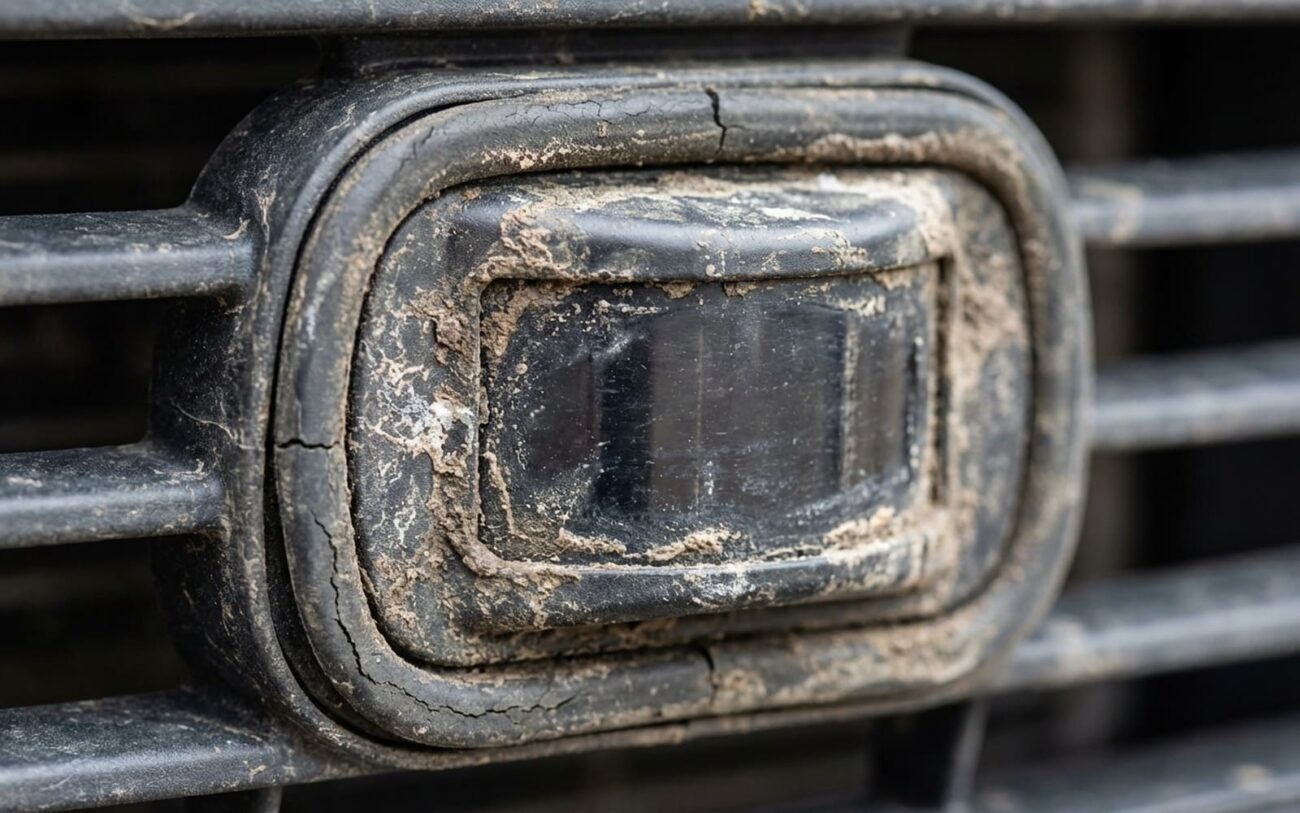
Adaptive headlights failing? Don’t panic. I’ve seen this a hundred times—on BMWs, Mercedes, Audis, even newer F-150s and Highlanders. The car throws a warning like “Headlight Malfunction” or “Front Sensor Blocked,” and the driver thinks the whole system’s dead. Nine times out of ten, it’s not the headlights at all. It’s the eyes feeding them data—the camera behind the windshield or the radar in the grille. And more often than not, they’re just dirty.
What the Warning Lights Actually Mean
When you get that “Adaptive Headlights Temporarily Unavailable” message, the system hasn’t failed—it’s protecting itself. These aren’t dumb bulbs; they’re part of a network. The headlight control module pulls data from the front camera and radar to decide when to swivel, dim, or cut out high beams. If that data looks wrong—or missing—the module shuts down the smart functions. You’re left with basic low beams. The lights still work, but they don’t adapt.
I’ve had customers come in furious, convinced their $1,200 headlight assembly is junk. I scan the car, pull a “front camera signal lost” code, wipe the windshield, and the system comes back online. No parts. No labor. Just a $5 microfiber cloth.
Erratic behavior—like beams pulsing, dark spots in the road, or high beams refusing to turn on—isn’t always a bad sensor. On a 2018–2020 Volvo XC90, for example, bird droppings on the upper windshield will mess with the camera’s ability to detect oncoming traffic. Same with road salt buildup on the radar cover of a Subaru Outback after a winter storm. The system doesn’t “guess.” It disables.
Diagnosis: Start Here, Not at the Parts Counter
Before you spend a dime, ask: what changed recently? Did you drive through mud? Get caught in a snowstorm? Park under a pine tree? If yes, contamination is the likely culprit. Jumping straight to sensor replacement is how people waste money.
Here’s how I break it down in the shop:
| Symptom | Contamination Clue | What Else It Could Be | How I Confirm |
|---|---|---|---|
| System disabled, warning on dash | Dirt, ice, or salt film on camera lens (inside or outside windshield) or radar cover (grille) | Faulty control module, wiring damage, low voltage |
Visual check of lens and radar cover. Scan for DTCs—look for “sensor blocked,” “no signal,” or “implausible data.” Check live data: is the camera reporting visibility? Is radar signal strength normal? |
| Beam flickers or misdirects | Partial obstruction—tree sap, bug splatter, water spots | Failed leveling motor, impact damage, lost calibration |
Clean thoroughly and retest. Perform static and dynamic ADAS calibration. If issue remains, dig into internal components. |
| Auto high-beam won’t engage | Camera lens fogged or dirty—blocks detection of other vehicles’ lights | Failed ambient light sensor, windshield delamination, misaligned camera |
Clean both sides of windshield in camera’s field of view. Verify ambient light sensor via scan tool. Check calibration status; recalibrate if needed. |
And don’t bother with a cheap OBD2 scanner. If it can’t access the front camera module or radar unit, it’s useless. I use a Snap-on VERUS or Autel MaxiCOM—tools that read ADAS-specific codes and live data. A “blocked sensor” code after a snowstorm? That’s ice. A “no communication” fault with a clean sensor? That’s wiring or module failure. The difference matters.
Why Dirt Shuts Down the System
Because these systems don’t cut corners. The camera uses optical imaging to detect vehicles, lane lines, and signs. Even a greasy film on the inside of the windshield can scatter light and corrupt the image. The system sees noise, not data. So it shuts down adaptive lighting to avoid making a dangerous mistake—like blinding an oncoming driver with high beams.
The radar? It sends out radio waves. Mud, ice, or salt on the cover absorbs or reflects those waves. High-salt slush is worse than water—it’s conductive, so it blocks radar like a shield. Tree sap and road tar stick around and degrade signal over time. I’ve seen a 2019 A6 come in with chronic faults because someone waxed over the radar cover. The wax wasn’t even visible—just a thin layer—but it killed the signal.
Manufacturers know this. There are TSBs—technical service bulletins—for models in cold climates that list “sensor cleaning” as step one for adaptive headlight warnings. It’s not a guess. It’s procedure.
But—and this is critical—if the camera housing is cracked, the radar bracket is bent, or there’s internal condensation, cleaning won’t help. A fogged lens from a failed seal means moisture got inside. That’s not contamination. That’s failure. The unit needs replacement and full recalibration.
How I Fix It: Three Scenarios
[DIY-FEASIBLE] Surface Contamination
[PROFESSIONAL] Stubborn Buildup
[REPLACE] Internal Contamination
One note: some cars (like newer Audis) have washer jets aimed at the camera lens. Use them in snow or dust—but not in freezing temps. The fluid can ice over and make things worse. It’s a temporary aid, not a fix.
Did It Actually Work? Prove It.
You can’t just clean it and drive off. I’ve seen too many “fixed” cars come back because someone skipped validation. Here’s what I do:
Validation Steps
-
1. Visual Inspection: Check the camera lens from inside—no streaks, no haze. Inspect the radar cover—no scratches, no residue. It should look like new.
-
2. Electronic Verification: Clear codes, cycle ignition, take a short drive. The warning should stay off. Look for the adaptive headlight indicator on the dash—it should light up when conditions allow.
-
3. Calibration Confirmation: Run static calibration with targets. Then complete dynamic calibration—a test drive on a straight road with clear lane markings. The scan tool must confirm pass. Without this, the system might work today and fail tomorrow.
Cost vs. Risk: Make the Smart Move
Replacing a radar sensor and calibrating it can run $2,000–$3,000. That’s why diagnosis is everything. Here’s the breakdown:
| Repair Type | DIY Cost | Shop Cost | Success Rate | Secondary Risk |
|---|---|---|---|---|
| Basic Cleaning (DIY) | <$20 | $50–$150 | High (if recent contamination) | Minimal. If it fails, you’re out a little time and money. |
| Professional Cleaning + Calibration | N/A | $200–$600 | High (unless internal damage) | Can prevent unnecessary sensor replacement. Worth every penny. |
| Sensor Replacement + Calibration | N/A | $1,000–$3,000+ | ~100% (if fault confirmed) | Calibration can fail due to poor floor, wind, or bad targets. New sensor could be DOA. |
The logic is simple: rule out the cheap fix first. Spend $20 and 10 minutes cleaning. If that doesn’t work, pay a shop to clean and scan. Only after that fails do you replace the sensor. I’ve saved customers thousands by following this path.
Prevention: Treat Sensors Like Prescription Glasses
These systems are precise. A little maintenance goes a long way.
When you wash the car, don’t ignore the lower grille. That’s where most radar sensors live. Use a soft brush. And be careful with waxes and ceramic coatings—some leave a film that blocks radar. If the product doesn’t say “sensor-safe,” don’t use it near the sensor.
Keep both sides of the windshield clean. Interior film from smoking or oily dash sprays scatters light just like exterior dirt. Clean it regularly.
After winter driving or off-road trips, give the front end a quick visual. If you get a “sensor blocked” warning, don’t ignore it. Salt and sap left for weeks can etch surfaces and cause permanent damage.
I tell my customers: treat your ADAS sensors like glasses. A quick wipe restores clarity. Ignoring it leads to bigger problems. And a few minutes of attention keeps your adaptive lighting, pre-collision system, and auto high-beam functions working the way they should—safely, and without surprises.
