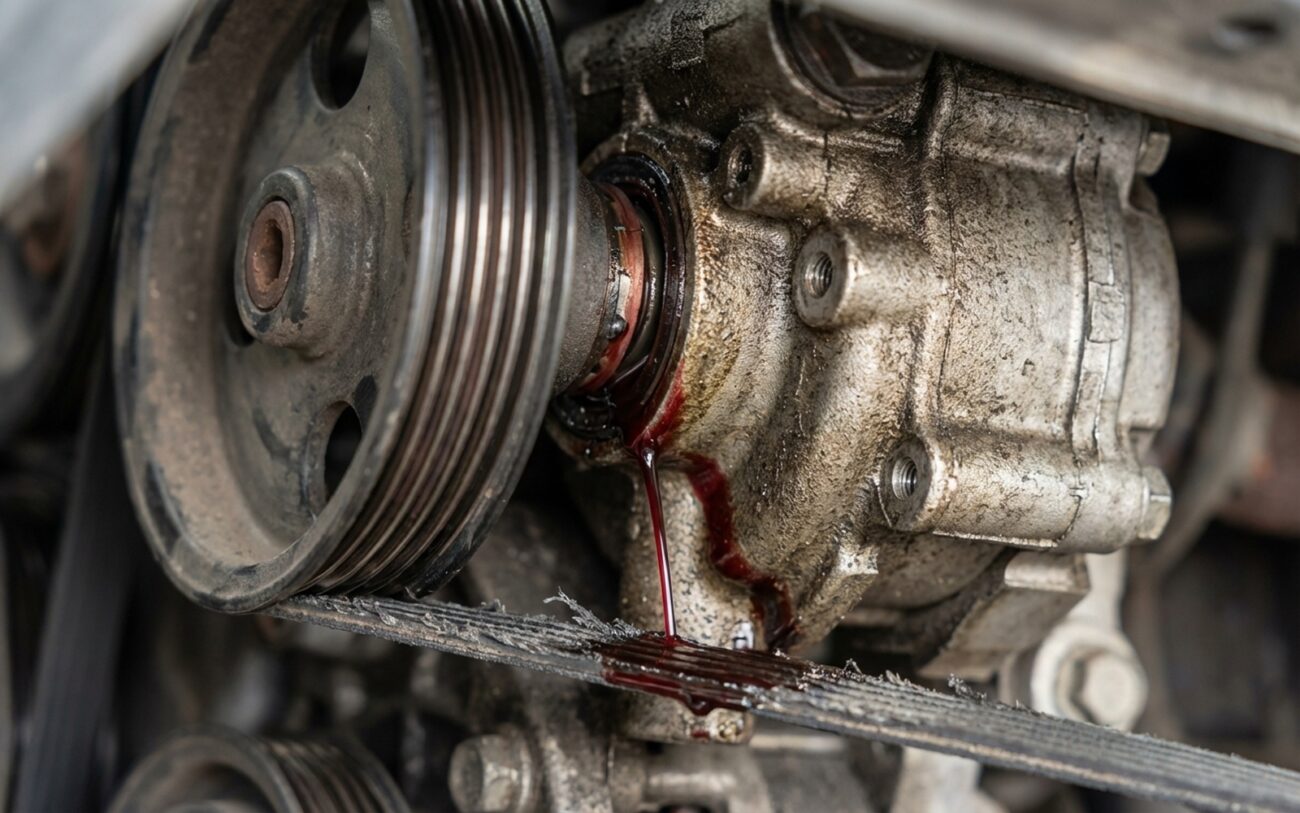
Alright, let’s talk about that high-pitched whine you’re hearing when you turn the wheel. In my 25+ years under the hood, I’ve heard it thousands of times, and almost every single time, it’s screaming one thing: trouble in your power steering system. Usually, it’s a sign you’re running low on fluid, and that almost always means you’ve got a leak somewhere.
Why Your Steering is Whining (The Mechanics)
When your power steering fluid level drops, the pump starts sucking in air along with whatever fluid is left. Think of it like a blender trying to mix mostly air with a little bit of liquid – it gets noisy, right? That air gets churned up inside the pump, creating that classic whine. You’ll notice it gets louder and changes pitch when you rev the engine or turn the wheel, especially at low speeds like when you’re parking. That’s your pump struggling.
And it’s not just noise. That aerated fluid doesn’t transmit hydraulic pressure worth a darn. Your pump can’t build the force it needs, so you’ll feel the steering get heavier, particularly at slow speeds. If you’re seeing red, amber, or even greenish puddles under your car, that’s a dead giveaway you’ve got a leak.
First Steps: Checking the Fluid (and What it Tells You)
Before you panic, let’s start with the easiest thing: checking the power steering fluid level. But you gotta do it right. Some cars want you to check it cold, others when the engine’s warm and running. Always follow what your manufacturer says, usually printed right on the dipstick or reservoir cap. If you just guess, you might get a false reading.
If it’s low, top it off. And this is critical: use the exact fluid specified in your owner’s manual. I can’t stress this enough. Using the wrong fluid – say, ATF in a system that needs synthetic CHF – can swell or shrink your seals and cause new leaks, sometimes in less than 500 miles. I’ve seen customers destroy entire systems doing this.
Now, if that whine disappears after you top it off, congratulations, you’ve confirmed a fluid loss issue. That means you’ve almost certainly got a leak. But if the noise sticks around, even with a full reservoir, then we’re looking at something internal.
If Fluid’s Fine, What’s the Whine? (Deeper Diagnostics)
If your fluid level is good and the whine persists, or if the steering is still heavy, then we need to dig deeper. This usually points to internal wear or damage. Here’s what I typically look for:
- Worn Pump Bearings or Vanes: The pump itself can wear out. Bearings get noisy, and the internal vanes (which create the pressure) can get damaged, leading to inefficient operation and, you guessed it, noise.
- Clogged Inlet Filter/Hose: Some pumps have an inlet screen in the reservoir or a hose that can collapse internally. This restricts fluid flow to the pump, starving it and causing cavitation.
- Failed Rack Valve: Inside the steering rack, there’s a control valve that directs fluid. If it’s sticking or worn, you might get heavy steering or inconsistent assist without a clear leak.
- Mechanical Binding: Sometimes the problem isn’t hydraulic at all. A binding steering column, worn universal joints, or even rusted tie rod ends can make the steering feel heavy and sometimes mimic a power steering issue.
To really nail down these internal issues, especially pressure problems, a professional pressure test is essential. We hook up a gauge to the system and measure the actual output of the pump and the pressure drop across the rack. That tells us if the pump is weak or if the rack is leaking internally.
If Fluid’s Low, Where’d It Go? (Common Leak Points)
Power steering systems are under high pressure, so when something fails, the fluid finds a way out. Here’s where I typically find the leaks:
- Hoses: Both the high-pressure and low-pressure hoses are common culprits. They’re usually rubber or reinforced thermoplastic, and they degrade over time from heat cycles and age. You’ll see small cracks on the outside, or sometimes the inner liner separates, causing a flow restriction and, eventually, a leak. On older vehicles, the crimped fittings are often the first to go.
- Steel Hard Lines: These are particularly vulnerable in areas with road salt. Corrosion eats through the metal, creating pinhole leaks that spray fluid under pressure. These can be tough to spot sometimes.
- Seals: When we talk about a “pump leak” or a “rack leak,” we’re almost always talking about a failed seal. The pump shaft seal, the input shaft seal on the rack, or the internal rack seals all wear out. If fluid is disappearing but you don’t see any external puddles, it might be leaking internally past worn seals into the rack’s bellows or even into the engine bay where it burns off on a hot exhaust.
- Pump Housing/Rack Bores: While rare, a pump housing can crack from thermal shock, or the rack’s internal bores can get scored. These are usually catastrophic failures and not something you’ll typically see just “start leaking.”
Getting It Fixed: DIY or Professional?
Some power steering repairs are pretty straightforward, but others require specialized tools, a lift, and a good understanding of hydraulic systems. Here’s my take on what you can tackle and when to call in the pros.
External, Accessible Hoses DIY-FEASIBLE
Hard-to-Reach Leaks & Component Replacement Professional Only
Internal Component Damage Non-Repairable
Making Sure the Job is Done Right
A repair isn’t finished until it’s properly verified. After replacing a hose or line, I always perform a static pressure test using a power steering tester. You hold the system pressure for several minutes to make sure there’s no drop-off. Then, I’ll drive the vehicle through a full operating cycle – cold start, full heat soak, cooldown – and recheck for any seepage.
If you’ve replaced the pump or rack, retest the system pressure against the OEM specifications. After aggressive turning, check the reservoir: if the fluid is foamy, you still have air trapped. Repeat the bleeding process until it’s clear. The steering effort should feel smooth and equal in both directions. And here’s a pro tip: after any rack work, I always recommend a short alignment check. Even minor changes can lead to rapid tire wear, and nobody wants that.
What This is Going to Cost You
Here’s a general idea of what you can expect to pay, both if you DIY (for parts) or take it to a shop. Keep in mind, these are averages and can vary wildly by vehicle make/model and shop labor rates.
| Repair Type | DIY Cost (Parts) | Shop Cost | Success Rate | Secondary Risk |
|---|---|---|---|---|
| High-Pressure Hose | $50 – $150 | $250 – $400 | 98% | Sudden loss of pressure. |
| Power Steering Pump | $150 – $400 | $500 – $900 | 95% | Improper bleeding leaves whine. |
| Steering Rack | $300 – $800 | $1000 – $2000 | 90% | Alignment issues, tire wear. |
| Complete Flush | $30 | $150 | 80% | May not resolve existing damage. |
A hard truth I tell my customers: if the repair cost – especially for a steering rack – starts pushing 40% or more of your car’s market value, you really need to consider if it makes financial sense. I’ve seen too many owners sink money into an old car only to face cascading failures, like worn ball joints or suspension issues, shortly after.
Keep It Running Smooth: Prevention
-
Use the Correct Fluid: This is non-negotiable. As I said before, using the wrong fluid will degrade your seals and cause problems down the road.
-
Flush the System: I recommend flushing your power steering fluid every 60,000 miles, or according to your manufacturer’s schedule. Old fluid becomes acidic and forms varnish, which wears down pump vanes and clogs passages. It’s cheap insurance.
-
Monthly Fluid Checks: Make checking your power steering fluid a part of your regular monthly routine. The fluid should be clear and amber, not dark brown or burnt-smelling. If it looks nasty, change it.
-
Inspect Hoses: Twice a year, take a peek at your power steering hoses for any visible cracks, chafing, or oily residue. Catching a small seep early can save you from a major leak and a much more expensive pump replacement later.
