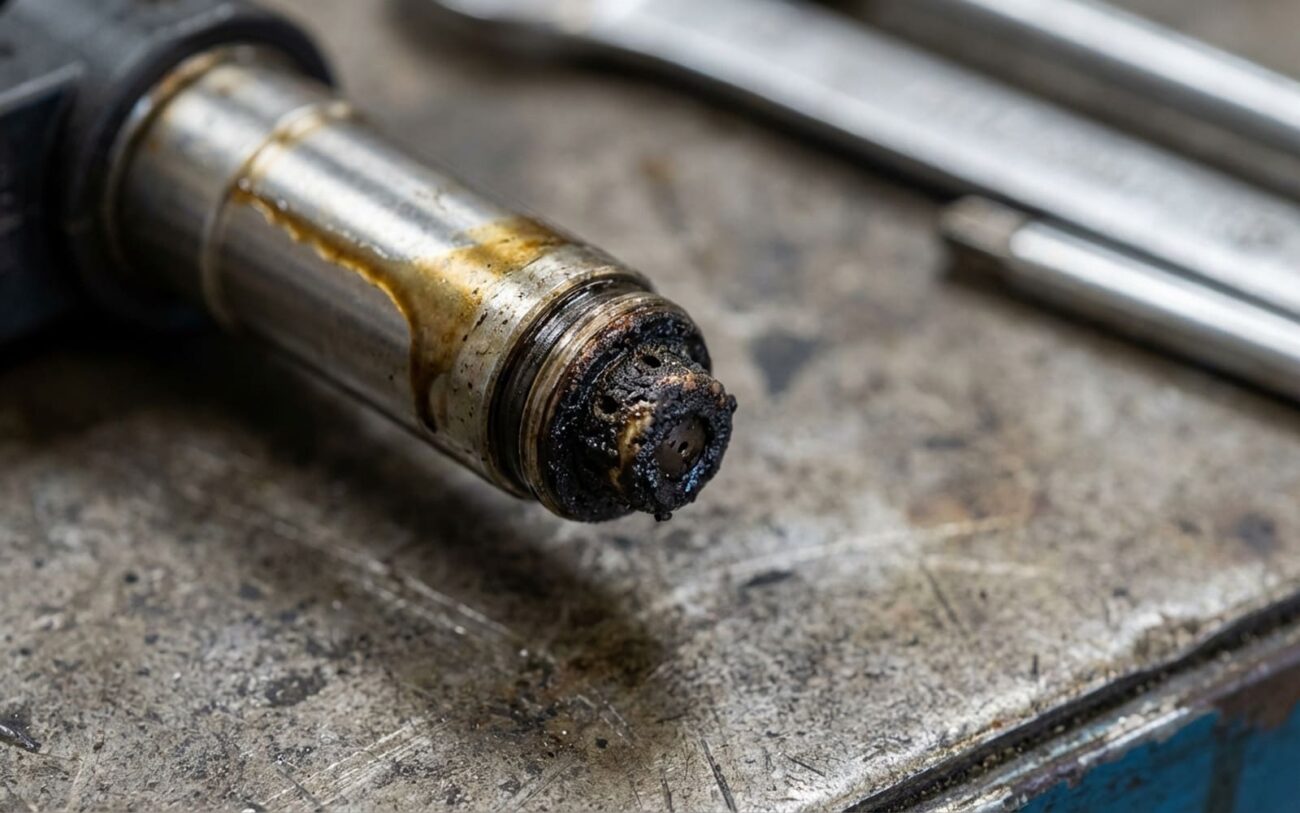
Alright, let’s talk about fuel injectors. If your engine’s running rough, especially with a check engine light flashing a P030X code – that’s a cylinder-specific misfire – your mind probably jumps to spark plugs or ignition coils first. And you’re not wrong, those are often the culprits. But after 25 years of turning wrenches, I can tell you a bad fuel injector is right up there, easily in the top three suspects. The trick isn’t just seeing the code; it’s understanding how the misfire acts and what other clues the engine is giving you.
Recognizing the Symptoms: What a Bad Injector Feels Like
When an injector starts acting up, it usually causes a misfire that’s pretty consistent. I’m talking about a stumble or shake that doesn’t really go away, whether you’re idling, cruising down the highway, or stomping on the gas. It’s tied to that one cylinder, all the time. That steady, unwavering misfire on a specific cylinder (P0301 for cylinder 1, for example) should definitely put the injector high on your suspect list.
But here’s the kicker: a failing coil, a fouled plug, or even internal engine problems like low compression from a burned valve can feel pretty similar. So, while the OBD2 code tells you where the problem is, it doesn’t tell you what it is. That’s where the real diagnostic work begins.
Beyond the Misfire: Other Key Indicators
I always tell my apprentices to use all their senses. If you’ve got a strong smell of raw gasoline coming from the tailpipe, especially when the engine’s cold or idling, that’s a classic sign of an injector stuck open, just dripping fuel into the cylinder. That’s a serious issue, and it can lead to bigger problems.
The Fuel Trim Clue
One of the first things I check on the scanner are the fuel trims. If you’ve got a high positive fuel trim for that cylinder, it usually means the engine’s trying to add more fuel because the injector is clogged or not delivering enough. A negative trim, on the other hand, often points to an injector that’s leaking or stuck open, making the cylinder run rich.
Differential Diagnosis: My Step-by-Step Approach to Pinpointing the Problem
So, you’ve got a P030X code and some suspicious symptoms. Now it’s time to confirm that the fuel injector is truly the problem. I’ve seen countless DIYers and even some less-experienced techs just start swapping parts based on a code, and that’s a surefire way to waste time and money. My approach is always methodical: isolate, test, and verify. We’re not guessing here.
The Injector Swap Test: My Go-To Move
This is probably the most reliable diagnostic trick in my book for a misfire. If you’ve got a suspect injector in, say, cylinder #4, pull it out and swap it with a known-good injector from another cylinder – let’s say #1. Clear the codes, take the car for a drive, and then scan it again. If the misfire code moves from P0304 to P0301, you’ve found your bad injector. Simple, effective, and it costs you nothing but a little time and a new set of O-rings (which you should always replace when pulling injectors anyway).
For more on interpreting OBD2 data, check Most Common OBD2 Trouble Codes for 2010–2025 Engines.
Beyond the Swap: Other Essential Tests
If the swap test isn’t definitive, or if you suspect other issues, here’s what else I’d be looking at:
-
Electrical Pulse Check: Grab a noid light or an amp clamp. A noid light plugs into the injector connector; if it flashes, the PCM is sending a pulse. If it doesn’t, you’re looking at wiring, the connector, or a bad PCM driver. An amp clamp can show you the current waveform, which tells you if the injector’s internal solenoid is actually opening and closing correctly.
-
Resistance Test: With the injector unplugged, measure the resistance across its terminals. You’ll need to look up the OEM specification for your vehicle, but typically, they’re low resistance (around 10-16 ohms for high-impedance injectors). If it’s open (infinite resistance) or way off spec, the internal coil is bad.
-
Fuel Pressure & Leak-Down: A fuel pressure gauge can tell you if the system pressure is adequate. If pressure drops rapidly after the engine is shut off, it could be a leaking injector (or a bad check valve in the fuel pump).
-
Compression Test: Always rule out mechanical engine issues. If a cylinder has low compression, it doesn’t matter how much fuel or spark you throw at it – it’s still going to misfire. This is a crucial step before you start replacing fuel system components.
-
Bench Testing (Shop Level): For serious diagnostics, we’ll pull the injectors and send them to a specialized shop for flow and leak-down testing. They can accurately measure how much fuel each injector delivers at different pressures and check for leaks. This is the definitive test for flow rate issues.
What Goes Wrong: Common Injector Failure Modes
When an injector fails, the problem usually starts right inside the unit itself. It’s rarely the fuel system or wiring causing the injector to fail, though those can certainly mimic an injector problem. Here’s what I typically see:
-
Electrical Failure: This is common, especially in engines that run hot, like turbocharged setups. The solenoid coil inside the injector, which is basically an electromagnet that opens and closes the pintle, can develop an open circuit. Repeated heating and cooling cycles, plus engine vibration, just wear it out. If the coil is dead, the injector won’t spray.
-
Mechanical Issues (Clogging/Sticking): Over time, varnish from degraded fuel or carbon buildup (especially in direct injection engines) can gum up the pintle mechanism. This can cause the injector to stick open, stick closed, or just not spray correctly. A partially clogged injector will deliver less fuel, causing a lean misfire. A stuck-open injector will flood the cylinder, causing a rich misfire and that raw fuel smell.
-
Injector Seal Degradation: The O-rings and tip seals are critical. They can break down due to age, heat, or the ethanol content in modern fuels. A leaking O-ring at the fuel rail can cause external fuel leaks and vapor smells. A leaking tip seal can allow fuel to drip into the combustion chamber even when the injector is supposed to be closed, leading to hard starts, fuel odor, and fuel dilution of the oil.
Real-World Case Study:
I’ve seen this play out many times, especially with direct injection. Ford, for instance, issued a technical service bulletin (TSB) for certain EcoBoost engines where carbon buildup on the direct-injection injectors was a known cause of misfires and P0300 codes. The fix wasn’t just cleaning; it was often injector replacement with an updated design. This shows you that sometimes, even with good maintenance, design flaws or specific engine characteristics can lead to premature failure. For help separating engine issues from other systems, refer to How to Tell if It’s an Engine Problem or a Hybrid System Issue.
Getting It Fixed: Resolution Pathways
Safety First, Always!
Before you touch anything on the fuel system, you must relieve the fuel pressure. Seriously, fuel spray can cause severe injury or fire. Use the proper fuel line disconnect tools, and for crying out loud, never reuse old O-rings. They’re cheap, and your safety isn’t.
O-Ring & Seal Replacement DIY Friendly
Full Injector Replacement Advanced DIY
Cleaning & Maintenance
Post-Repair Validation: Don’t Just Clear the Code
Never, ever assume a repair is good just because the check engine light is off. That’s a rookie mistake. After an O-ring replacement, pressurize the system and visually check for any leaks or fuel odor. For a full injector replacement, you need to drive the car and use a scan tool. Monitor the misfire counters – they should ideally read zero at idle and under load. Also, keep an eye on your long-term fuel trims; they should stabilize between -5% and +5%. If they’re still way off, you might have another issue or a problem with the new injector.
Cost, Risk & Prevention: Making Smart Decisions
When it comes to fuel injectors, you’ve got to weigh the cost against the risk. Sometimes, a cheap fix can lead to bigger problems down the road. Here’s a breakdown of what you’re looking at, both in terms of money and potential headaches:
| Repair Type | DIY Cost (Parts) | Shop Cost (Parts & Labor) | My Expected Success Rate | Secondary Risk |
|---|---|---|---|---|
| Upper O-ring replacement | $20–$50 | $150–$300 | >95% (if done right) | Fire hazard (if not sealed) |
| Single OEM Injector | $100–$400 | $400–$800 | >98% | Contamination, mis-matched flow |
| Full Set Replacement | $500–$2000 | $1500–$3000 | >99% | High initial cost |
| Cleaning Service (Off-car) | $50–$150 | $100–$250 | 30–60% | Recurrence, wasted money |
How I Keep Injectors Healthy (Prevention)
-
Use Top Tier Detergent Gasoline: This isn’t just marketing hype. These fuels have additives that really do help prevent carbon buildup on injector tips and keep them spraying efficiently.
-
Replace Your Fuel Filter on Schedule: A clogged fuel filter starves the injectors and can send debris downstream. It’s cheap insurance against injector damage.
-
Monitor Fuel Trims: If you’ve got a basic OBD2 scanner (and you should!), get in the habit of checking your fuel trims every few fill-ups. Sudden changes can be an early warning sign of an injector starting to clog or leak.
-
Add a Fuel Stabilizer for Storage: If you’re parking a vehicle for weeks or months, a good fuel stabilizer prevents fuel degradation and varnish formation, which is a killer for injectors.
