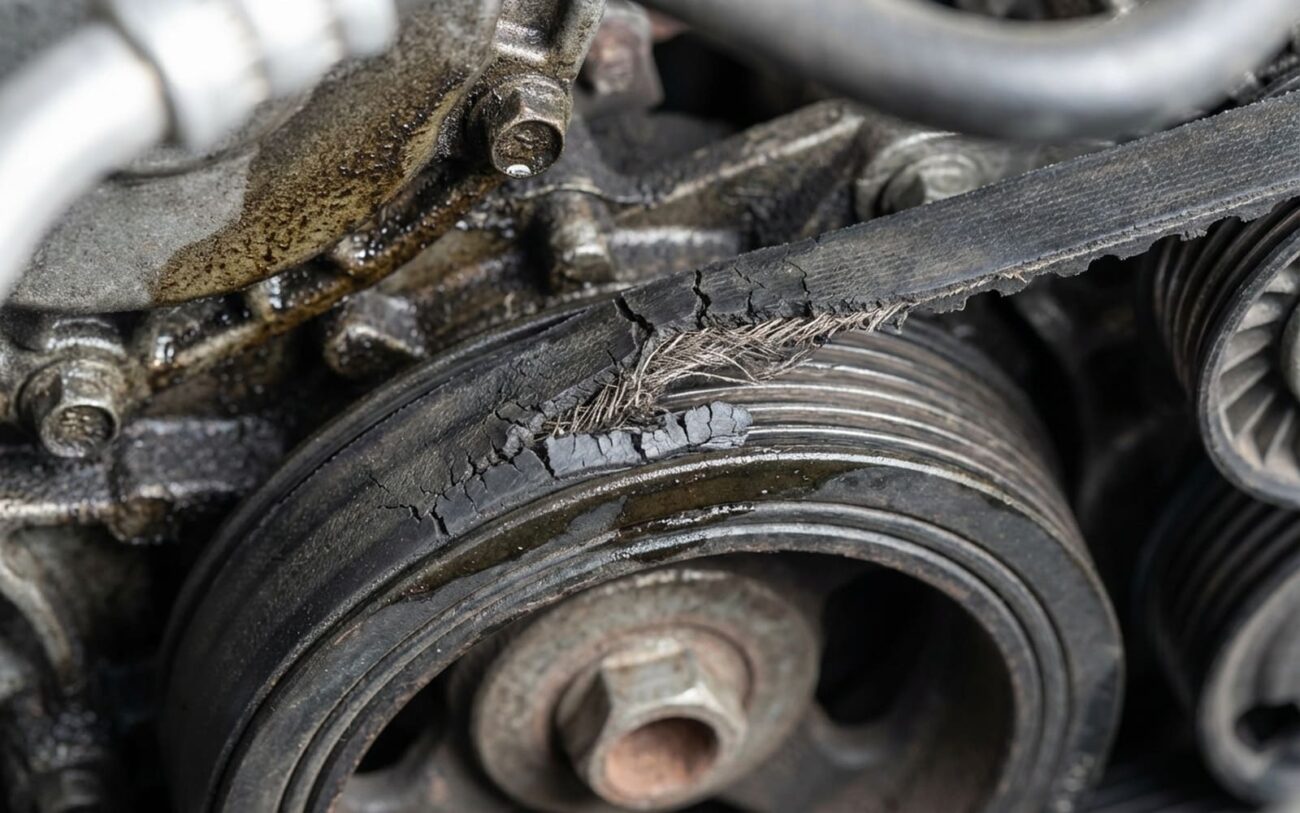
Look, hybrids are great, but when they start acting up, you’ve got two major systems – the good old gas engine and the high-voltage hybrid setup – that can go wrong. Pinpointing which one is the culprit is step one, and it’s where a lot of folks get tripped up. Misdiagnose it, and you’re just throwing time and money down the drain, and sometimes, even risking safety.
Engine Trouble: The “Bad News” Signs
First off, if you hear a deep, metallic knock or a low-frequency rattle, especially when the engine’s working hard – like climbing a hill – that’s almost always the gas engine crying for help. We’re talking metal-on-metal contact where it shouldn’t be. Worn rod bearings, piston slap, bad valvetrain components – I’ve seen them all. And trust me, if you ignore that knock, it escalates fast. I’ve had cars towed in with holes punched clean through the block because someone kept driving on a persistent knock. Don’t be that guy.
Then there’s the smoke. Blue smoke? That’s oil burning – usually worn valve seals, piston rings, or a turbo problem. White smoke that smells sweet and hangs around, not dissipating like normal condensation? That’s coolant hitting the combustion chamber. Classic blown head gasket, cracked head, or even a cracked block. Now, in a hybrid, the gas engine isn’t always running, but if you see this smoke consistently when it is running, especially after it’s been forced on, that’s a dead giveaway for internal engine damage. The hybrid system itself won’t be puffing smoke like this, not unless you’ve got some super rare, isolated issue like a failed coolant heater, but those are outliers.
And if you’re losing coolant or oil but can’t find a single drip on the ground – you’ve cleaned the engine bay, checked everywhere – it’s going somewhere internal. Coolant in the oil gives you that milky, frothy residue on the dipstick or under the oil filler cap. Oil in the coolant? That’s a nasty, mayonnaise-like sludge in the reservoir. Either way, fluids are crossing barriers they shouldn’t, and that points to a failed head gasket, cracked head, or block. I’ve seen a few rare cases where coolant might leak into a hybrid battery’s cooling loop, but that’s far less common than engine trouble.
Hybrid System Warnings: The Electronic Side
Now, on the hybrid side, things get more electronic. You’ll usually see a “Check Hybrid System,” “Hybrid System Malfunction,” or that dreaded red triangle warning light pop up. That’s the computer telling you there’s a problem in the high-voltage system – battery, inverter, motor-generators, or one of the control modules. You’ll often feel it too: reduced power, maybe it won’t even go into “Ready” mode, or it just won’t drive on electric power even with a full battery. That’s the car’s safety protocols kicking in, trying to protect itself and you.
Listen up for new, weird sounds too: a high-pitched whine from the power inverter, a constant buzz from the DC-DC converter under the hood, or that cooling fan in the back (where the hybrid battery lives) running loud and constantly. These aren’t engine noises; they’re signs of high-voltage components overheating or on their way out. Unlike engine issues, hybrid faults can be silent until that light hits, so paying attention to how the car feels and sounds is critical.
The Tricky Part: Separating Real Problems from Mimics
Alright, here’s where it gets tricky. A lot of symptoms can overlap between the gas engine and the hybrid system. A loose heat shield can sound just like a rod knock. A weak 12-volt battery – yeah, the little one – can throw a “Check Hybrid System” warning that makes you think the big battery is toast. You’ve got to isolate the problem before you start throwing parts at it. That’s just wasting money. Here’s how I typically break it down:
| Symptom | Likely ICE Component | Common Mimics | My Definitive Test to Confirm |
|---|---|---|---|
| Engine knocking noise | Worn connecting rod bearings, piston slap, or valvetrain damage. | Loose heat shield, failing A/C compressor clutch, or hybrid generator bearing noise. |
Grab your mechanic’s stethoscope. Pinpoint the loudest spot. If it’s booming from the oil pan, you’ve got internal engine damage. If your car can, try forcing it into EV-only mode. If the noise vanishes, it’s definitely the engine. |
| “Check Hybrid System” warning with no start | High-voltage battery fault, inverter failure, or hybrid control module error. | Failed 12-volt battery, severe engine mechanical seizure, or CAN bus communication fault. |
First, scan for diagnostic trouble codes (DTCs) – look for those high-voltage P0A80 codes. Then, check the 12-volt battery; a weak one causes all sorts of weirdness. If the engine won’t even turn over, try a breaker bar on the crank pulley to see if it’s mechanically seized. |
| Loss of coolant with no external leak | Internal head gasket failure, cracked cylinder head, or porous/cracked engine block. | Coolant leak into hybrid battery cooling loop or transmission cooler inside radiator. |
Time for a combustion leak test. You know, the chemical block tester. If that fluid changes color, you’ve got combustion gases in the coolant, which means a bad head gasket or worse. If you can, pressure test the engine’s cooling system and the hybrid battery’s cooling loop separately. |
Digging Deeper: What Actually Broke Inside?
So, you’ve figured out which system is the problem. Now, you gotta dig deeper: why did it fail? This isn’t about just replacing a part; it’s about understanding the mechanical, thermal, or electrical breakdown that started the whole mess. If you don’t fix the root cause, you’ll be doing the same repair again soon enough.
On the gas engine side, failures usually boil down to material integrity, thermal stress, or plain old mechanical fatigue. I’ve seen aluminum blocks with casting porosity, especially in high-heat zones like around cylinder #4 on some four-bangers. That’s not a gasket problem; that’s the block itself. Repeated overheating? That’ll cook a cylinder head, often cracking it right between the valve seats. And detonation – that’s pre-ignition, folks – will hammer connecting rods and bearings until they just give up. Remember, a head gasket failure is a sealing issue, not the block or head itself failing, and a water pump leak is an accessory problem, not a core engine breakdown.
Case Study: Material Defects (Toyota 2AZ-FE)
I’ve seen this firsthand on some mid-2000s Toyota 2AZ-FE engines. They’re notorious for developing block porosity, particularly near cylinder #4, which lets coolant seep into the crankcase. You can replace the head gasket all day long, but if the block’s flawed, you’re just wasting time and money. It’s a material defect, not a sealing issue.
For the hybrid system, we’re usually looking at electrical, thermal, or chemical issues. The high-voltage battery naturally degrades over time – cell imbalance, internal resistance building up. That means less capacity, those common P0A80 codes, and your car just won’t stay in EV mode. Inverter IGBT modules are super sensitive to thermal cycling; constant heating and cooling can crack solder joints, leading to intermittent or total failure. And yes, I’ve seen electric motor windings short out because coolant leaked into the motor housing from its own cooling circuit.
Don’t forget software. Some 2014-2015 Honda Accord Hybrids, for example, had inverter software glitches that caused false current sensor readings, throwing all sorts of hybrid warnings. A simple software update fixed it – no hardware needed. And I’ll say it again: a dead 12-volt battery can make the whole hybrid system look like it’s failing because it messes with communication between modules. Always, always check the simple stuff first.
The Fix: Resolution Pathways (and Safety First)
HIGH-VOLTAGE SAFETY IS NON-NEGOTIABLE
Before we talk about fixing anything on the hybrid side, let’s get one thing straight: you must follow the OEM high-voltage disable procedure every single time before you touch anything orange. That means disconnecting the 12-volt battery, putting the system in service mode, and verifying zero voltage in those orange cables. I’m not kidding. Skip this, and you’re risking serious injury or worse. This isn’t like working on a regular gas car.
External Block Porosity Repair Professional Only
Coolant Sealants Temporary
Internal Engine Failure Non-Repairable → Replace
Hybrid Component Service Professional Only with HV Certification
Proving the Fix: Post-Repair Validation
A repair isn’t finished until you’ve proven it’s fixed. You can’t just slap a part on, refill some fluid, clear a code, and call it a day. You need to test it under real-world conditions, just like a customer would drive it.
For an external block repair, the test is simple: no seepage after three full heat cycles – cold to operating temp and back. I always use UV dye in the coolant and inspect it with a black light. Any glow? The repair failed.
For internal engine work – a head gasket, a new engine – you absolutely need to do a compression test. All cylinders should be within 10% of each other. A leak-down test will tell you exactly where pressure is escaping. And use that chemical block tester on the coolant again: after an hour of running, there should be no color change. Also, grab an infrared thermometer and check for hot spots around the engine, which could signal cooling issues.
For hybrid repairs, validation is all about the data. After replacing a battery cooling fan, I use a scan tool to command it at different speeds and confirm it’s responding. Clear all codes, then do a full drive cycle – city, highway – to make sure nothing comes back.
If you’ve replaced HV battery modules, you must verify the State of Health (SOH) with an OEM or a high-end aftermarket scan tool. You want SOH above 80% and cell voltage spread under 0.2 volts after a full charge/discharge cycle. You might also need an insulation tester to check for ground faults in the pack. Without these steps, you’re just guessing, and that’s not how we do things.
Cost, Risk, and the Tough Decision
Alright, let’s talk brass tacks: cost, risk, and when it’s just time to walk away. Some repairs are absolutely worth the investment. Others? Well, they’re just a money pit.
| Repair Type | DIY Cost | Shop Cost | Success Rate | Secondary Risk if Failed |
|---|---|---|---|---|
| ICE – Replace engine long block (remanufactured) | $3000–$6000 | $7000–$12,000+ | High (95%+) | Catastrophic engine failure if installation or alignment is incorrect. Seen it happen. |
| Hybrid – Refurbish HV battery pack | $1000–$3000 (Discouraged) | $2000–$5000 | Medium-High | Incorrect fault detection, persistent “Check Hybrid System” light, or thermal runaway risk. It’s a gamble if you DIY. |
| ICE – External block porosity repair | <$50 | $500–$1000 | Low-Medium | Coolant loss leading to overheating and major engine damage. It’s a temporary fix at best. |
When you’re weighing a repair, I always tell people to compare the cost to the car’s market value. My rule of thumb: if the repair bill is going to be more than 60% of what that car is worth, running, according to Kelley Blue Book, it’s time to seriously reconsider. Spending $9,000 to fix a $10,000 car? You’re left with a mechanically sound car, sure, but you just took a huge financial hit. A lot of times, replacing the whole powertrain or even the whole car makes more financial sense.
Keeping it Running: Prevention and Monitoring
The best repair? The one you never have to make. Period. For the gas engine in your hybrid, that means sticking to the basics: use only the manufacturer-specified coolant – don’t cheap out – and change it on schedule. Honda’s Earth Dreams engines, for example, need Type 2 coolant to prevent liner cavitation. Check your coolant levels monthly, and always eyeball that oil dipstick for milky residue.
My Proactive Maintenance Checklist
-
Keep an eye on your engine coolant temperature via an OBD2 scanner. A sticky thermostat can cause chronic overheating, which leads straight to cracked heads or blown gaskets.
-
If you feel hesitation, check for things like a clogged EGR valve or sludge buildup. These can cause all sorts of headaches. (You can find more info on these specific issues in other articles, but they’re worth checking.)
-
Clean those high-voltage battery cooling vents regularly. Vacuum them out every few months. Heat is the enemy of batteries, and keeping those vents clear prevents degradation.
-
Watch your hybrid system display for erratic state-of-charge readings or if that battery cooling fan is constantly running on high. Those are early warning signs of battery degradation.
Staying proactive – watching, listening, and using some basic diagnostic tools – can catch problems early, before they turn into a nightmare repair bill.
