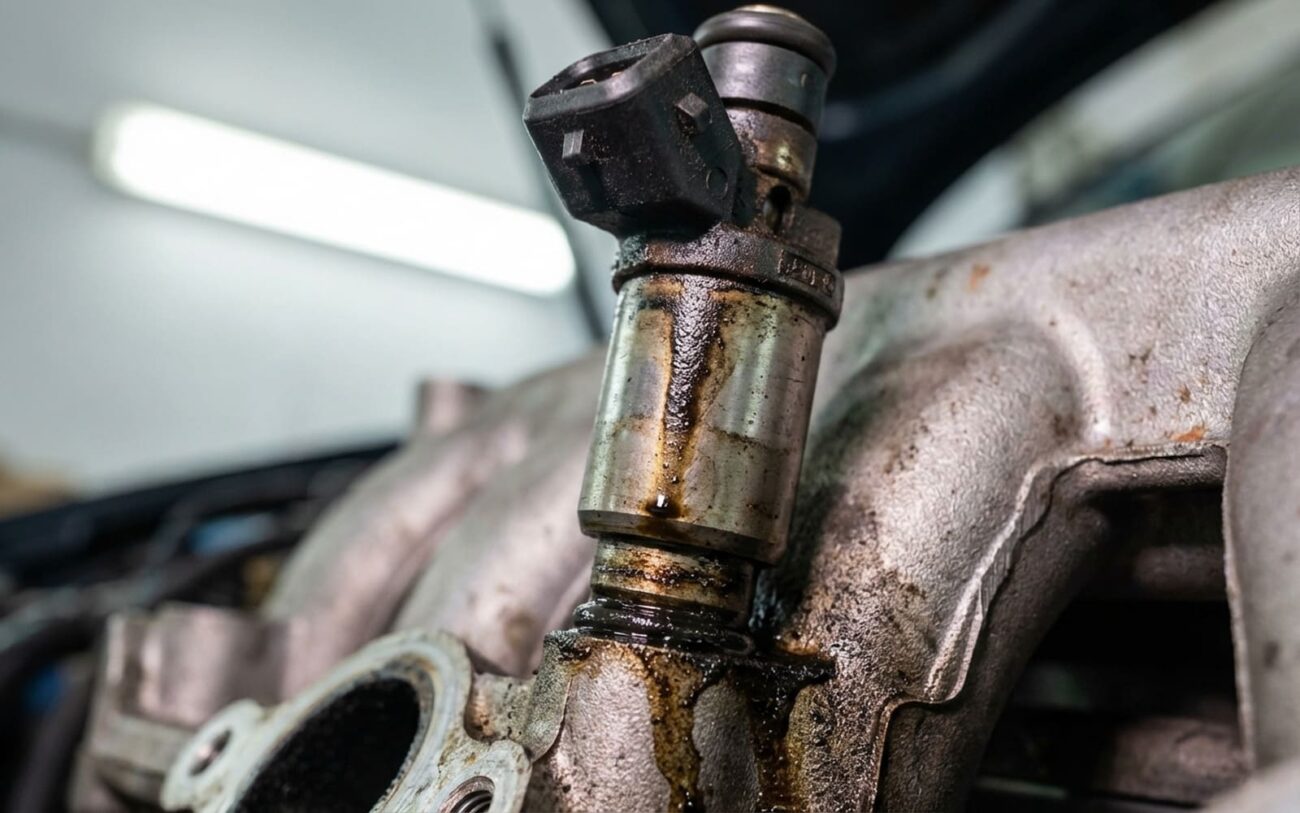
Spotting a Bad Injector: What I Look For
Listen, after 25+ years under the hood, I can tell you this much: a failing fuel injector is almost never a sudden, quiet death. They usually give you plenty of warning, if you know what to look for. We’re talking anything from a weird smell to a rough idle, or just plain lousy performance. The trick? Catching it early. Because if you don’t, a simple injector problem can quickly snowball into something that’ll cost you thousands – think melted pistons or a trashed catalytic converter. So, here’s how I typically break down the symptoms and figure out if an injector is truly the culprit.
The Hard Start After Sitting
This is a classic one. You hop in the car after it’s been parked overnight, turn the key, and it just cranks and cranks before finally sputtering to life. Or maybe it fires up, then immediately dies. What’s happening? Usually, an injector is leaking fuel into a cylinder or the intake manifold while the engine’s off. That cylinder gets flooded, and it takes a few extra turns of the engine to clear it out and get a proper spark. Now, don’t jump to conclusions—a weak fuel pump or a faulty pressure regulator can cause this too. But a leaking injector is high on my suspect list.
To confirm, I run a fuel pressure leak-down test. I hook up a gauge, cycle the key to prime the system, then shut it off and watch the pressure. If it drops more than, say, 5-10 PSI over 5-10 minutes, you’ve got a leak somewhere in the system. Then it’s about isolating where that leak is. Sometimes, you can even hear a faint hiss if it’s a really bad one.
Rough Idle or Persistent Misfire
This is probably the most common complaint I hear. The engine shakes, especially when it’s cold, or you feel a noticeable stumble while driving. Your Check Engine Light is probably on, and you’ve got codes like P0300 (random misfire) or specific cylinder misfires (P0301, P0302, etc.). An injector can cause a misfire in a couple of ways: if it’s clogged or stuck closed, that cylinder runs lean (too much air, not enough fuel). If it’s stuck open or leaking, it floods the cylinder, causing a rich misfire. Both are bad news.
But here’s the kicker: ignition issues—like a bad coil pack or a worn-out spark plug—will give you the exact same symptoms and codes. So, how do I tell the difference? I start with a power balance test on my scan tool to identify the weak cylinder. Then, I’ll often do an injector swap test. I’ll take the suspect injector from cylinder #1, for example, and swap it with a known-good one from cylinder #2. If the misfire moves from #1 to #2, then bingo, it’s the injector. If it stays on #1, I start looking at ignition or compression. It’s a simple, effective way to rule things out without throwing parts at it.
That Distinct Fuel Odor
This one’s pretty straightforward, but it’s also the most dangerous. If you’re smelling raw gasoline, especially after the engine has run for a bit, you’ve got a leak. It could be an injector’s upper O-ring, the lower seal, or a cracked pintle cap at the tip. But it could also be a leaking fuel line, a stuck-open EVAP purge valve, or even a ruptured fuel pressure regulator diaphragm. I’ve seen all of them.
My go-to here is a visual inspection under pressure. I’ll carefully check the fuel rail area, looking for any wet spots or residue. If it’s not obvious, I’ll add some UV dye to the fuel tank, run the engine for a while, and then come back with a UV light. That dye will glow bright yellow-green right where the leak is. It’s usually pretty definitive.
Failing the Smog Test
If your car fails emissions with high hydrocarbons (HC) but normal or only slightly elevated carbon monoxide (CO), that often points to misfires or incomplete combustion. A faulty injector is a common cause, just like a weak spark plug or coil. The emissions report gives me a clue, but it’s usually a secondary indicator that sends me back to perform the misfire diagnostic tests I just mentioned.
Don’t Ignore These Signs:
I can’t stress this enough. A leaking injector doesn’t just waste gas; it can dilute your engine oil with gasoline. Gasoline is a solvent, not a lubricant. When it mixes with oil, it thins it out, and your engine bearings start to wear prematurely. I’ve seen spun crankshaft bearings and camshaft damage from this. On the flip side, a lean-running cylinder from a clogged injector burns super hot, inviting detonation and pre-ignition. That can melt a piston, crack a ring land, or damage the cylinder head. These aren’t cheap fixes; we’re talking engine rebuilds or replacements. So, take these warnings seriously.
Why Injectors Fail: The Nitty-Gritty
Alright, so you’ve got a bad injector. But what actually failed? These aren’t just simple nozzles; they’re precision electro-mechanical devices, constantly cycling under extreme heat, pressure, and chemical attack. Knowing the root cause helps you fix it right and prevent it from happening again. Here’s what I typically see:
Seal and O-Ring Degradation
This is probably the most common cause of external fuel leaks. The O-rings that seal the injector to the fuel rail (upper) and the intake manifold (lower) are made of special rubber compounds. Over time, all the heat cycles, plus exposure to ethanol in modern fuels, makes them harden, crack, or shrink. That’s when you get that tell-tale fuel smell. Sometimes, the little plastic pintle cap at the tip of the injector can also crack, causing fuel to pool around the nozzle.
Internal Coil Failure
Inside every injector is a tiny solenoid coil. When the engine’s computer (ECU) sends a signal, this coil creates a magnetic field that opens the injector. If that coil develops an open circuit (a break in the wire) or a short circuit, it’s game over. An open circuit means no magnetic field, no fuel pulse, and a dead cylinder. A short can actually overload the ECU’s driver circuit, sometimes blowing a fuse or setting specific injector circuit codes (P0201-P0208). I always check the resistance with an ohmmeter—compare the suspect injector to a known good one. A big difference tells you something’s wrong internally.
Mechanical Sticking or Clogging
This is usually caused by varnish or carbon deposits building up. When the engine shuts down, residual heat bakes fuel residues onto the pintle needle or armature inside the injector. This can cause the injector to stick open (leading to a leak and a rich condition) or, more commonly, stick closed (causing a lean misfire). This is what people hope to fix with those “fuel injector cleaner” additives, but honestly, for severe deposits, their effectiveness is pretty limited.
Internal Filter Clogging
Every injector has a tiny, almost invisible, inlet screen designed to catch debris before it gets to the super-fine nozzle. If your main fuel filter is neglected, or if your in-tank fuel pump starts to disintegrate and sends crud down the line, these tiny screens can get clogged. When that happens, the injector can’t deliver enough fuel, mimicking a dead or restricted injector. The real problem, though, is upstream contamination, not the injector itself.
Tech Tip:
I see a lot of carbon buildup issues on direct injection (GDI) engines, especially on certain Ford 3.5L EcoBoosts (think F-150s, Explorers from 2015-2017). They’re notorious for cold-start misfires due to gunked-up injectors. It’s a common pattern with many high-pressure GDI systems, so keep that in mind if you’re working on one.
How to Fix It: Your Options
Alright, you’ve diagnosed the problem. Now, what are your options? It’s not always a full replacement, but sometimes it is. Here’s how I approach repairs:
External Leak at Injector Seals DIY-FEASIBLE
Internal Injector Failure Professional Only
Temporary / Last-Resort Treatment
Don’t Guess: Verify the Fix
I tell every tech in my shop: never, ever assume the job is done just because the new parts are in. You HAVE to verify the repair worked. Otherwise, you’re just guessing, and that’s how comebacks happen. Here’s my checklist:
My Validation Checklist:
- For Leaks: No fuel odor, no visible seepage, and no UV dye glow after you’ve run the engine through several heat cycles. The fuel pressure leak-down test needs to hold within spec—that’s typically less than a 5-10 PSI drop over 10 minutes.
- For Misfires/Performance: Check your fuel trims (Long Term Fuel Trim / Short Term Fuel Trim) with a scan tool. They should be within ±10%, ideally closer to ±5%. No more misfire codes, of course.
- Road Test: Take the vehicle for a good, long drive. Make sure it performs flawlessly under all conditions—idle, acceleration, highway speeds.
If you’re still seeing persistent misfires, abnormal fuel trims, or any hint of fuel residue or smell, something’s still wrong. Often, it’s a pinched O-ring or an injector that wasn’t seated properly. Go back and re-check your work.
And hey, if you’re working on a hybrid or a start-stop vehicle and you’re scratching your head, wondering if it’s an engine problem or something with the fancy hybrid system, I’ve got a guide for that too: How to Tell if It’s an Engine Problem or a Hybrid System Issue.
The Bottom Line: Is This Repair Worth It?
Alright, let’s talk money. Because at the end of the day, you’ve got to decide if this repair makes financial sense. Here’s a general breakdown of what you’re looking at, both DIY and shop prices, and the risks involved:
| Repair Type | DIY Cost (Parts) | Shop Cost | Success Rate | Secondary Risk if Failed |
|---|---|---|---|---|
| Seal Kit Replacement | $20–$50 | $200–$400 | 95% | An unrepaired fuel leak is a serious fire hazard. |
| Single Injector Replacement | $150–$400 | $500–$1,000+ | 98% | Incorrect calibration can damage the catalytic converter. |
| Full Set Replacement | $600–$2,000 | $1,500–$3,500+ | 99% | High financial loss if the original diagnosis was incorrect. |
This table gives you a rough idea, but it brings up a critical question: is this repair worth it for your specific vehicle? My rule of thumb, and I’ve seen it hold true for decades, is this: if the repair cost is going to exceed 50% of your vehicle’s current market value, you need to seriously consider whether replacing the car is a smarter move. Spending $3,000 to fix a car that’s only worth $4,000 means you’ve got a functional vehicle, sure, but you’ve also sunk a huge percentage of its value into a repair. Think long-term here.
Keeping Your Injectors Healthy (and Your Wallet Happy)
Prevention is always cheaper than repair, especially with fuel injectors. Here’s what I recommend to my customers to keep their fuel system happy and avoid these headaches down the road:
My Prevention Checklist:
-
Use Top Tier Gasoline: This isn’t just marketing hype. These fuels actually contain higher levels of deposit-control additives that really do help keep your injectors and intake valves cleaner. It’s a cheap insurance policy.
-
Replace Your Fuel Filter on Schedule: If your vehicle has one, don’t neglect it. This is your first line of defense against debris reaching those tiny injector screens. Check your owner’s manual for the recommended interval.
-
Keep an Eye on Fuel Trims: If you have an OBD2 scanner, periodically check your short-term and long-term fuel trims. Consistently negative trims can hint at a leaking injector (too much fuel), while consistently positive trims might suggest a lean condition or restriction. It’s an early warning system.
-
NEVER Ignore a Fuel Smell: I’m repeating myself, but it’s that important. A small leak today can become a major fire hazard tomorrow. Address it immediately.
