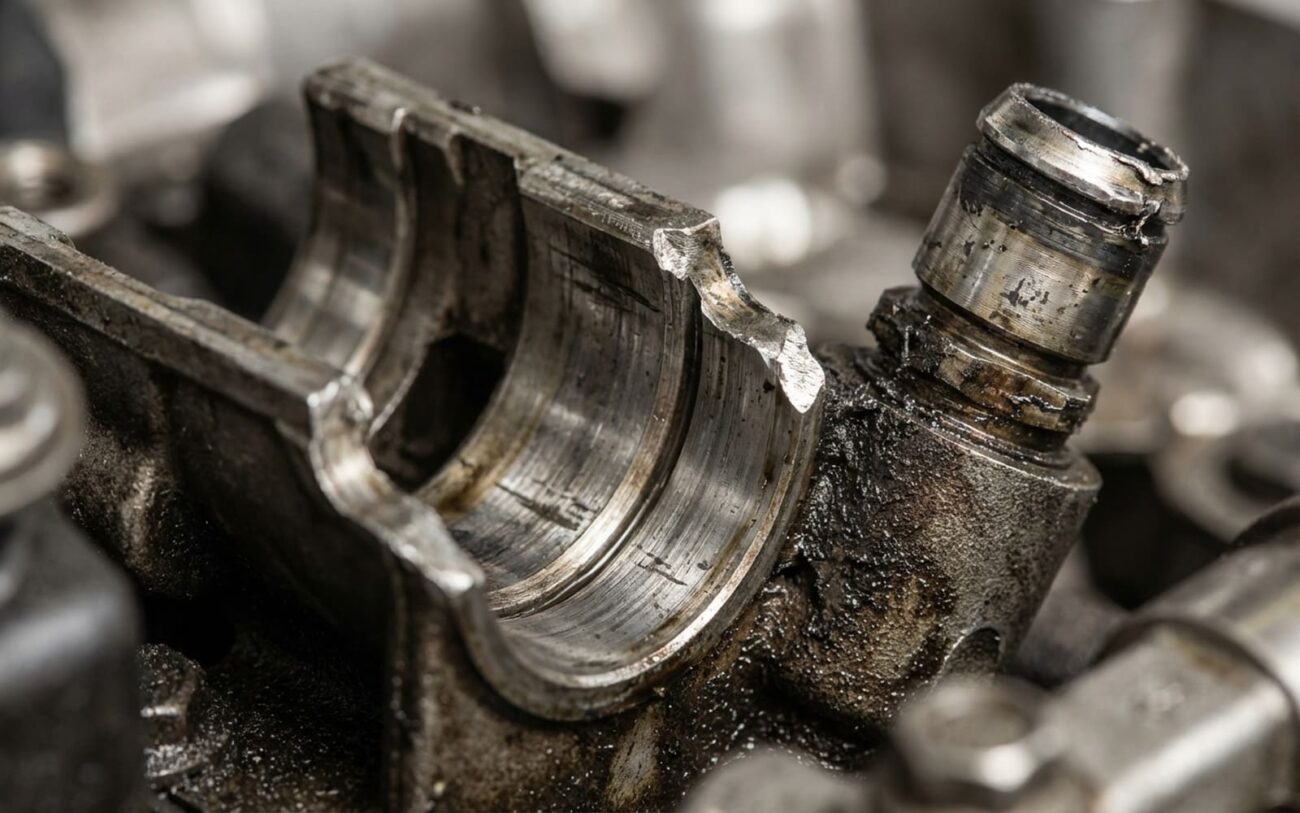
When a VW or Audi 2.0T TSI engine starts acting up with fuel pressure issues, my mind immediately goes to two things: the high-pressure fuel pump (HPFP) itself, and more often than not, the little part that drives it – the cam follower. After 25+ years under the hood, I can tell you, this isn’t just about a pump; it’s about understanding a system that can chew itself to pieces if you ignore the early warnings.
What I See: Recognizing the Symptoms
You’ll notice it right away when an HPFP starts failing. This isn’t some vague performance complaint; these are real drivability problems. The most consistent symptom I see is a long crank before the engine fires, especially when it’s cold. The pump just can’t build enough fuel rail pressure (FRP) on the first go. The engine control module (ECM) might let it crank a few times, but eventually, once enough pressure builds, it’ll sputter to life.
Under load, the car feels gutless. You step on the throttle to pass or merge, and instead of responding, it hesitates, sputters, or even misfires. That’s because direct injection systems need extremely high fuel pressure—we’re talking 1,000 to 2,500 psi—to atomize the fuel properly. When the pump can’t keep up, the engine runs lean, and your check engine light will pop on. The two diagnostic trouble codes (DTCs) I see most often are P0087 — “Fuel Rail/System Pressure Too Low” — and sometimes P2293 or P2294, which point to issues with the fuel pressure regulator, often integrated into the HPFP.
And then there’s the noise. A failing HPFP often produces a sharp, metallic ticking or tapping sound. It’s usually coming from the top rear of the engine, right near the firewall, where the pump mounts. It increases with RPM, and it’s easy to mistake for a lifter tick or cam adjuster rattle. But its location—right at the HPFP—is a huge clue. I’ve seen too many cases where this noise was dismissed as “normal for a TSI,” only to find a destroyed cam follower and a chewed-up camshaft lobe after the fact.
My Diagnostic Approach: Isolating the Real Problem
The challenge with HPFP issues is that a lot of other components can mimic the same symptoms. A P0087 code doesn’t automatically mean your HPFP is shot. In fact, I see misdiagnoses all the time—pumps replaced without checking upstream causes, only for the same code to return weeks later. You’ve got to be methodical.
The real culprits hiding behind HPFP-like symptoms include a weak in-tank lift pump, a clogged fuel filter, a faulty fuel pressure sensor, or even an ECM software glitch—especially if the car has had an aftermarket tune or ECU flash. (I’ve seen some real head-scratchers from bad tunes, believe me.)
Before you even think about the HPFP, you need to confirm the low-pressure side of the fuel system is healthy. I always start there. Grab a capable scan tool and command the in-tank lift pump. You should see it deliver at least 72 psi (5 bar) up to the HPFP. If it’s weak, or if the fuel filter is clogged, the HPFP will starve and show the same symptoms as if it were failing internally.
Once I’ve confirmed the low-pressure side is good, then I’ll move on to the HPFP itself. With the engine running, I monitor actual versus commanded fuel rail pressure. If the actual pressure consistently lags the commanded by more than 200 psi, or if it fluctuates erratically under load, that’s when I start suspecting the HPFP is weak.
For that metallic ticking noise, there’s no substitute for a mechanic’s stethoscope. Pinpoint that sound to the HPFP housing. If it’s definitely coming from there, the next step is to pull the pump. That’s when you inspect the cam follower. If the backing plate is exposed or the lobe contact surface is concave, the follower is failed. And while you’re in there, always check the camshaft lobe for scoring. If it’s damaged, you’re looking at a bigger job than just a pump or follower.
Root Causes: What Actually Fails (and Why)
So what actually fails inside the HPFP? It’s a compact, high-stress component driven directly off the camshaft, and its internal parts operate under extreme pressure. The most common mechanical failure is wear between the plunger and its cylinder barrel. Over time, this clearance increases, reducing pumping efficiency and preventing the system from reaching target pressure—especially at higher loads.
The inlet metering valve—a solenoid-controlled valve that meters low-pressure fuel into the pump chamber—can also fail. If it sticks closed or doesn’t respond to ECM commands, the pump starves. Electrical failure in the valve’s coil or control circuit can set P2293 or P2294 codes. There’s also a mechanical pressure relief valve inside the pump that can get stuck open, dumping pressure back to return and causing a persistent low-pressure condition.
But here’s the critical point, and I can’t stress this enough:
While those are internal HPFP failures, the most common cause of HPFP damage on 2.0T TSI engines isn’t the pump failing on its own—it’s the cam follower. This small, hardened bucket sits between the camshaft lobe and the HPFP plunger. On certain EA888 engines (particularly early Gen 3 units, think 2009-2014 models), these followers are prone to accelerated wear due to metallurgy and oil flow design. Once the follower’s wear pad erodes, metal-on-metal contact begins, rapidly destroying both the follower and the camshaft lobe.
There are known service bulletins from VW/Audi addressing this issue, advising inspection of the cam follower during HPFP replacement. This isn’t a random failure—it’s a documented weakness. The follower itself costs under $100, but letting it go can destroy a $700+ pump and require a $1,000+ camshaft replacement. Diagnosing the root cause correctly—whether it’s the pump, the follower, or something upstream—means avoiding repeat repairs and unnecessary expense.
How I Fix It: Your Repair Options Explained
Resolution Pathways (Based on Diagnosis)
How you fix it depends entirely on what you find during diagnosis. There are three possible paths, but only two are practical in my shop.
Complete HPFP Replacement Professional Only
Cam Follower Replacement DIY-Feasible
Internal HPFP Repair Not Recommended
Post-Repair Validation: Proving the Fix
Replacement isn’t the end—it’s just the beginning of verification. You have to prove the repair worked and that no new issues were introduced. This is where a lot of DIYers, and even some less experienced shops, fall short.
First, use a capable scan tool to monitor fuel rail pressure in real time. At idle, commanded and actual pressure should match within ±50 psi. Under acceleration or load, the system should ramp up quickly and hold steady. If pressure fluctuates or lags, check for air in the system (you might need to bleed it), electrical issues with the metering valve, or even a faulty sensor that got jostled during the repair.
Next, perform a visual leak inspection. High-pressure fuel leaks are a serious fire hazard. After the engine reaches operating temperature and cools down a few times, examine the HPFP seal, fuel lines, and all connections for any sign of seepage. I usually run my finger around the connections; if it’s wet, it’s a problem.
Finally, listen. Use a stethoscope or a long screwdriver (carefully!) to check for any residual ticking from the pump area. That noise should be completely gone. If it’s not, the cam follower may still be an issue, the camshaft lobe might be more damaged than you thought, or the pump wasn’t seated properly. Don’t ignore it.
Essential Tools (No Shortcuts Here)
You absolutely need a quality OBD2 scanner with live data capabilities, safety glasses (fuel under pressure is no joke), and a mechanic’s stethoscope. These aren’t optional—they’re the difference between a guess and a verified, safe repair.
Cost, Risk & When to Walk Away
Let’s be realistic about the numbers. HPFP repairs aren’t cheap, and the total cost depends heavily on what else is damaged. Here’s how I break it down for customers:
| Repair Type | DIY Cost (Parts Only) | Shop Cost (Est.) | My Success Rate | Secondary Risk if Not Done Right |
|---|---|---|---|---|
| Cam Follower Replacement (Preventive) | $50 – $150 | $200 – $400 | 99% (if lobe is good) | Failure to replace a worn lobe will destroy the new follower quickly. Always inspect both. |
| Complete HPFP Replacement | $400 – $800 | $1000 – $1800 | 95% (if diagnosed correctly) | Incorrect torque or TDC misalignment can cause immediate failure. Fuel leaks from improper sealing pose a fire risk. |
The real financial risk comes when you remove the pump and find a damaged camshaft lobe. At that point, you’re looking at significantly more labor—possibly cylinder head removal—and a $500–$1,000 camshaft. Suddenly, a $1,500 repair becomes $3,000 or more. I’ve had to give that news too many times.
Before proceeding, you’ve got to ask yourself: is this repair economically sound for this car? If the total cost exceeds 50% of the car’s market value in running condition, it’s time to seriously reconsider. Dropping $2,500 into a car worth $4,000 may not make sense unless you’re deeply attached or planning to sell it immediately after the fix.
Prevention: The Best Kind of Repair
The best HPFP repair is the one you never have to do. These failures are largely preventable with proper maintenance and vigilance. Trust me, an ounce of prevention is worth a pound of cure here.
My Maintenance Protocol
-
First, use Top Tier detergent gasoline. It contains better detergents and lubricity additives that help protect high-pressure components. Avoid discount gas stations with unknown fuel sources—contaminated or low-lubricity fuel accelerates pump wear. It’s just not worth saving a few cents a gallon.
-
Second, follow the factory fuel filter replacement interval—usually every 60,000 miles. A clogged filter forces the HPFP to work harder, increasing heat and wear. It also contributes to low-pressure conditions that mimic pump failure.
-
Most importantly, inspect the cam follower early and often. On engines with known issues (e.g., 2009–2014 2.0T TSI), pull the HPFP and check the follower every 20,000 miles or 2 years. It’s a minor job that takes about an hour and can save thousands in future repairs. Seriously, this is the big one.
Always monitor for early signs: slightly longer cranking, hesitation on acceleration, or that faint tick. Use a scan tool to check live fuel pressure data—if actual pressure consistently lags commanded pressure, investigate immediately. Don’t wait for a check engine light or a breakdown.
