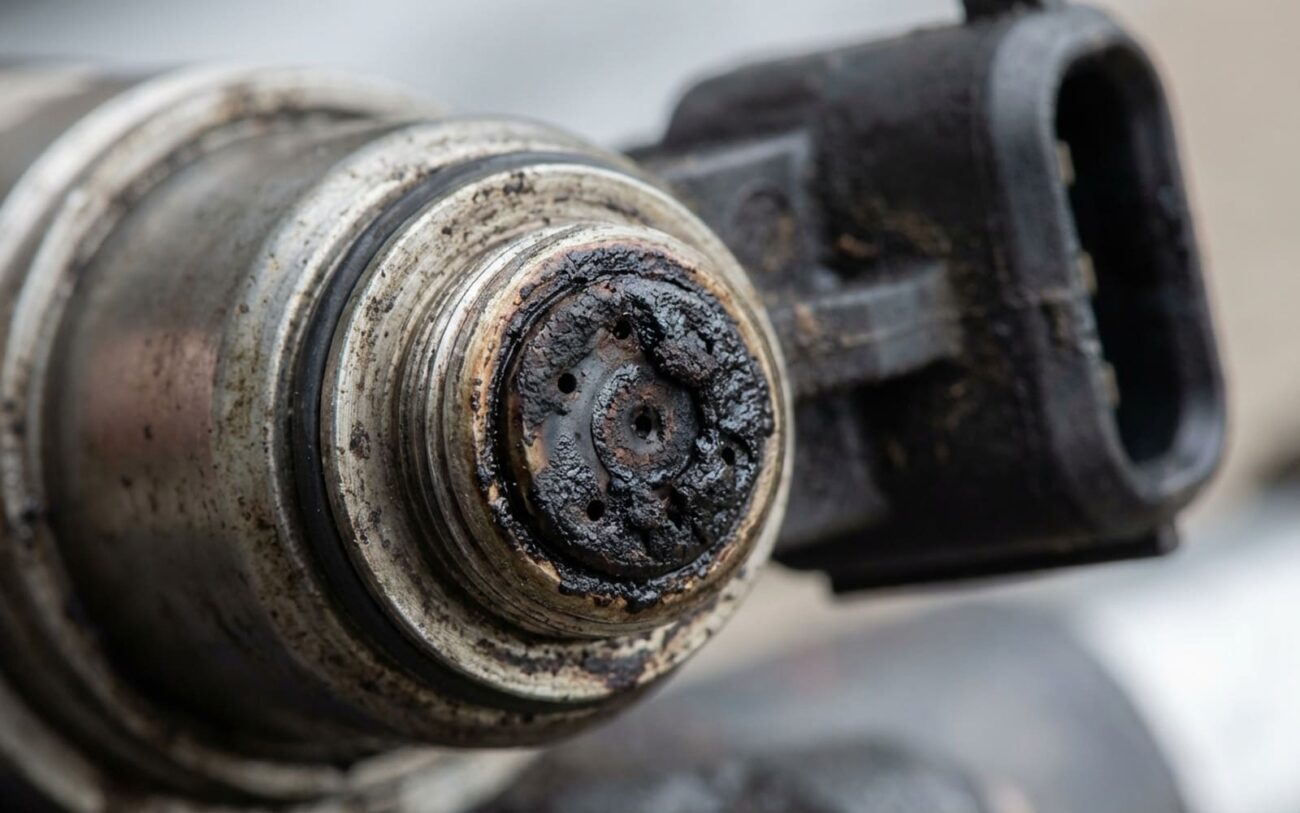
GDI Injector Coking: What Your Engine’s Really Telling You
After 25 years turning wrenches, I can tell you that direct injection (GDI) engines brought a whole new set of headaches to the shop, and carbon buildup on the fuel injectors—what we call “coking”—is right at the top of the list. It’s a common problem, and it’ll make your engine act like it’s got a bad case of the flu. Drivers often misread the signs, and frankly, so do a lot of less experienced shops.
Here’s the deal: In a GDI engine, the fuel is blasted directly into the combustion chamber at insane pressures, often 2,000 to 3,000 psi. That’s a lot of force. But unlike the old port injection systems where fuel washed over the back of the intake valves, keeping them clean, GDI injectors sit right in the inferno. They’re exposed to combustion temperatures over 1,000°F and pressures exceeding 1,500 psi. Over time, little bits of fuel residue, oil vapor from the PCV system, and incomplete combustion byproducts bake onto the injector tip. This forms a hard carbon crust that totally messes up the precise fuel spray pattern the engine needs to run right.
The Symptoms: Your Engine’s Crying for Help
When those injector tips get coked up, the engine can’t atomize fuel properly. Instead of a fine mist, you get streams or drips. And that’s when the trouble starts. I’ve seen these symptoms hundreds of times, and they’re pretty consistent:
Cold starts are usually the worst because metal tolerances are tighter. Once the engine warms up, things might smooth out a bit as the metal expands and the ECU tries to compensate with fuel trim adjustments. But don’t be fooled—the problem is still there, just hiding.
You’ll also notice a rough idle, especially when cold. This often triggers a check engine light and misfire codes like P0300 (random misfire) or cylinder-specific codes (P0301–P0308). On top of that, you’ll feel a definite loss of power, particularly when you try to accelerate or climb a hill. The engine just feels sluggish, down on torque, and if it’s turbocharged, it might struggle to maintain boost. This can even throw more codes related to air-fuel ratio or boost control.
And, of course, your fuel economy will take a hit. Emissions usually go up too, especially hydrocarbons (HC), because the fuel isn’t burning completely. I’ve had plenty of customers come in after failing an emissions test, only to find out it was clogged GDI injectors all along.
Don’t Let It Go Too Long:
Ignoring these symptoms isn’t just annoying; it can cause serious secondary damage. Poorly atomized fuel can wash past the piston rings, diluting your engine oil. That means less lubrication, accelerated wear, and in the worst cases, scored pistons. Even worse, raw fuel hitting the exhaust can overheat and destroy your catalytic converter. What could have been a $600 repair quickly escalates to $2,500 or more. Trust me, you don’t want that.
Diagnosis: Don’t Just Guess, Test!
Here’s the reality: GDI injector symptoms mimic a lot of other, cheaper problems. Before you spend big money on injectors, you absolutely have to rule out the usual suspects. I’ve seen too many shops jump straight to injector replacement when a $40 spark plug or a small vacuum leak was the real culprit. A disciplined diagnostic process saves everyone time, money, and a lot of frustration.
Modern diagnostics live and die by the scan tool. You’re not just pulling codes; you’re interpreting what the engine control unit (ECU) is trying to compensate for. Here’s how I approach it:
| Symptom | Likely GDI Injector Issue | Common Misdiagnoses | My Diagnostic Approach |
|---|---|---|---|
| Hard Cold Start with Misfires | Carbon buildup distorts the spray pattern; fuel streams instead of atomizing. | Weak 12V battery, failing high-pressure fuel pump (HPFP), faulty fuel pressure sensor. |
First, check battery voltage and cranking RPM. Then, perform a fuel rail pressure leak-down test with a good scan tool. If pressure holds after shutdown but you still have cold misfires, it points strongly to the injectors. |
| Rough Idle with Misfire Codes | Uneven fuel distribution due to altered spray patterns, causing lean or rich conditions. | Fouled spark plugs, failed ignition coils, vacuum leaks, low compression. |
Always start by swapping ignition coils and spark plugs to another cylinder to rule out ignition issues. If the misfire follows, you found your problem. If it stays, then I run a power balance test; a clogged injector will show minimal RPM drop when disabled. |
| Loss of Power at High RPM | Restricted flow from deposits; injectors can’t keep up with fuel demand. | Failing in-tank fuel pump, restricted catalytic converter, boost leak, air filter blockage. |
Monitor desired vs. actual fuel rail pressure under wide-open throttle (WOT). If actual pressure is normal or even high, but the engine is starved for power, it means the injectors aren’t flowing enough fuel despite adequate pressure. |
| High Fuel Consumption & Emissions | Poor atomization leads to incomplete combustion; ECU adds extra fuel to compensate. | Stuck-open thermostat, faulty oxygen sensors, dragging brakes, underinflated tires. |
Review your fuel trims. Positive long-term fuel trims (e.g., +15% or higher) are a big indicator the ECU is adding a lot of fuel to compensate for a lean condition caused by restricted injectors. Verify HC levels with an emissions test if you can. |
A quick note on hybrids: if you’re working on one, the diagnostic approach for the internal combustion engine is similar, but you’ll need to pay extra attention to how the engine integrates with the hybrid system. Sometimes a perceived engine issue is actually a hybrid system fault. For general code reference, I often refer to resources like Most Common OBD2 Trouble Codes for 2010–2025 Engines to contextualize what I’m seeing.
GDI Injector Coking vs. Intake Valve Carbon: Two Different Problems
It’s important to understand that injector coking is separate from, but often confused with, intake valve carbon buildup. In GDI engines, since fuel no longer washes over the back of the intake valves, oil vapor and combustion byproducts accumulate there, causing airflow restrictions and poor idle. While a “walnut blasting” service can clean those valves, it does absolutely nothing for the injector tips. Both issues can happen at the same time, but they require different fixes.
It’s Not Just You:
This isn’t some niche problem. Ford issued service information for 2.7L EcoBoost engines (2017–2019) specifically mentioning carbon deposits on injector tips causing cold start misfires. BMW has acknowledged similar behavior in many of their GDI models, stating that these deposits are an expected byproduct of the technology.
These deposits don’t just restrict flow; they can deflect the fuel spray, causing it to hit the piston crown or cylinder wall instead of mixing evenly. That leads to hot spots, misfires, and incomplete combustion. In severe cases, the carbon can even cause the injector’s internal needle to stick—either open (leading to a fuel leak and flooding) or closed (resulting in a dead cylinder).
Repair Options: What Actually Works
How you fix clogged GDI injectors depends on how bad they are, your budget, and your skill level. There’s no magic bullet, and I’ve seen too many people waste money on chemical treatments when a mechanical cleaning was clearly needed.
Chemical Cleaning (Preventative Only)
In-Vehicle Cleaning (Mild External Deposits)
Professional Bench Cleaning Professional Only
Injector Replacement Professional Only
Validating the Repair: Did It Actually Work?
Most importantly, your long-term fuel trims need to return to normal—ideally between -5% and +5%. If they’re still showing positive numbers, the ECU is still adding fuel, meaning the injectors aren’t fully restored. For bench cleaning or replacement, validation starts before you even reinstall them. The service report should document flow rates and spray patterns. After installation, perform any required injector adaptation or reset procedures with a bi-directional scan tool.
Once the engine’s running, carefully inspect all high-pressure fuel connections for leaks. I often use a UV dye and black light if I want to be absolutely thorough. Monitor fuel rail pressure for stability and confirm no misfires occur across multiple drive cycles. Drive it like you own it, then check it again.
Cost, Risk, and When to Walk Away
Let’s be realistic about cost and value. GDI injector work isn’t cheap, and the repair needs to make financial sense relative to your vehicle’s worth. Here’s a general breakdown:
| Repair Type | DIY Cost (Parts) | Shop Cost (Labor+Parts) | Success Rate | Secondary Risk |
|---|---|---|---|---|
| Chemical Cleaning | $50–$100 | $150–$300 | Low to Moderate (for mild cases) | Minimal; potential hydro-lock if over-applied. |
| In-Vehicle Cleaning | N/A (Labor-intensive for DIY) | $400–$800 | Moderate to High (if done right) | Damaged seals leading to dangerous fuel leaks. |
| Bench Service | $300 (for sending out) | $600–$1,200 | High | Incorrect coding or installation issues after service. |
| Replace One Injector | $300–$600 | $800–$1,500 | Very High | Mismatched flow if other injectors are also worn. |
| Replace All Injectors | $1,200–$3,000 | $2,500–$5,000+ | Very High | High financial outlay; may exceed vehicle value. |
My Rule of Thumb
If the repair cost starts creeping past 40% of the car’s current market value, you really need to weigh that investment carefully. Is this a car you plan to keep for several more years, or is it time to cut your losses?
Prevention: Keeping Your GDI Healthy
Once you’ve fixed the issue—or better yet, before it even starts—there are definitely steps you can take to extend injector life and keep your GDI engine running smoothly.
-
Always use Top Tier detergent gasoline. This isn’t just marketing hype. Top Tier fuels contain higher concentrations of cleaning additives that are proven to reduce deposits in GDI systems. It won’t eliminate coking completely, but it slows it down significantly.
-
Monitor your fuel trims. If you have an OBD-II scanner, regularly watch for a gradual positive drift in your long-term fuel trims. Especially if it’s on one bank more than the other, it can be an early warning sign that injectors are starting to clog up.
-
Don’t ignore subtle changes. That slight shudder on a cold morning, a tiny drop in idle quality, or a barely noticeable hesitation under acceleration—these are often the very first signs of carbon buildup. Catch it early, and you might save yourself a lot of grief.
Pro Maintenance Tip
As preventative maintenance, I often recommend a professional GDI cleaning service every 50,000 to 75,000 miles. It’s not a cure-all, but it helps. For engines with higher oil consumption or strong PCV flow, an OEM-approved oil catch can can significantly reduce the amount of oil vapor entering the intake. This is a major contributor to carbon buildup on both injectors and intake valves, especially on turbocharged GDI engines with their high heat loads. I’ve seen it make a measurable difference.
