Is It a Dirty Injector? What Your Car’s Telling You
After more than two decades under the hood, I’ve seen just about every kind of driveability issue. When a customer tells me their car feels “tired”—hesitating, stumbling, or just vibrating more than it should, especially at idle—my mind often goes straight to the fuel injectors. It’s easy to think the engine’s just worn out, but more often than not, it’s a problem with how the fuel is getting into the cylinders.
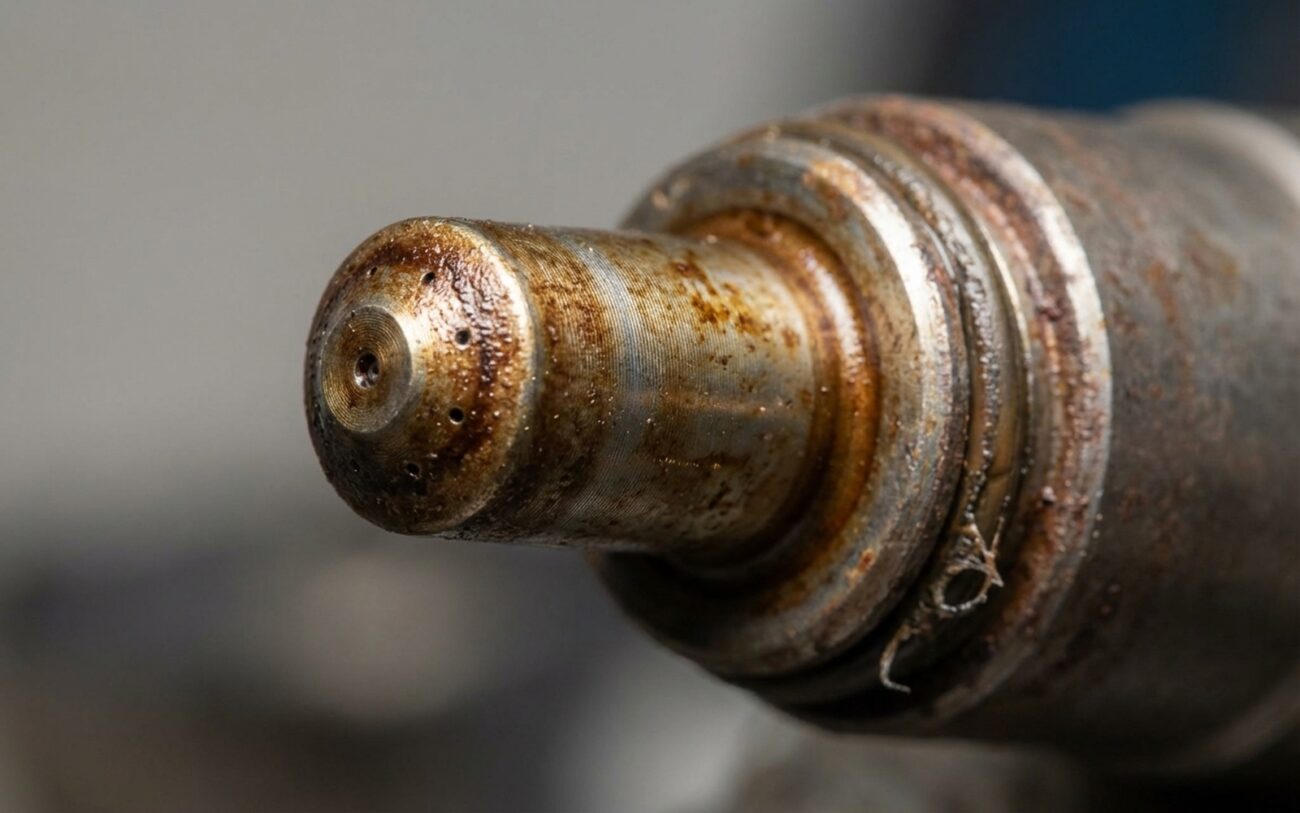
Now, when I say “dirty,” I don’t always mean literal grit. Modern gasoline, especially with ethanol in the mix, leaves behind varnish and carbon deposits. These build up over time, particularly around the injector’s nozzle tip and pintle. Think of it like a showerhead getting clogged—the precise spray pattern gets messed up, turning into a dribble or an uneven mist. And that throws off the whole combustion process.
Common Symptoms I Look For
The first thing you’ll probably notice is a rough or unstable idle, especially when the engine’s cold. That’s because the engine computer (ECU) runs on a pretty basic fuel map during warm-up. It can’t really compensate for an injector that’s not doing its job right. Once things warm up, the ECU tries harder to adapt, and you might feel a slight improvement, but the underlying problem is still there.
You might also feel a hesitation when you’re just lightly pressing the gas—like trying to maintain speed on the highway. That’s a big red flag. The ECU is fighting to keep the air-fuel mixture balanced, but one or more injectors just aren’t delivering the right amount of fuel.
A critical clue for me shows up on the scan tool: elevated Long-Term Fuel Trim (LTFT). If I see one bank consistently reading +10% or higher, that tells me the ECU is adding a lot of extra fuel to correct a lean condition. In my experience, restricted injectors are a very common cause of this.
And yes, misfires are a big one. But don’t just assume it’s an ignition coil or spark plug. I’ve seen countless times where techs (and DIYers) replace coils and plugs, only to have the misfire come right back. If you can swap the suspect injector to another cylinder and the misfire code follows it, then you’ve found your culprit.
Before You Blame the Injector: Rule Out the Mimics
Look, rough idle and misfires aren’t exclusive to fuel injectors. A lot of other systems can throw the same symptoms. Jumping straight to injector cleaning without ruling out other causes is just a waste of your time and money. You need a systematic approach, and in my shop, we always start by eliminating the easy stuff.
For example, a faulty coolant temperature (ECT) sensor can trick the ECU into thinking the engine is always cold. That means it’ll run rich, leading to an unstable idle. Vacuum leaks, especially after the MAF or MAP sensor, let in unmetered air, making the engine run lean. And on modern direct injection (DI) engines, carbon buildup on the intake valves can cause misfires that look exactly like an injector problem, but it’s not the injector at all.
Here’s how I typically differentiate some of the common scenarios:
| Symptom | Points to Fuel Injector | Common External Mimics | My Go-To Test |
|---|---|---|---|
| Persistent single-cylinder misfire | Internal nozzle coking, solenoid failure, or mechanical sticking due to varnish. | Faulty ignition coil, worn spark plug, low compression, intake valve carbon deposit, or wiring issue. |
Swap the suspect injector to another cylinder. If the misfire code moves, you’ve found your problem. |
| High Long-Term Fuel Trim (+LTFT) on all cylinders | Uniform flow restriction across multiple injectors due to generalized deposit buildup. | Failing fuel pump, clogged fuel filter, vacuum leak, or faulty MAF sensor. |
Perform a mechanical fuel pressure and volume test. Monitor pressure at idle and under load. |
| Rough cold idle that improves when warm | Deposit interference with spray pattern at low pulse widths, common in port fuel injectors. | Faulty ECT sensor, leaking intake manifold gasket, or failing VVT solenoid. |
Use a scan tool to verify ECT readings. Conduct a smoke test to detect vacuum leaks. |
The Real Problem: What Fails Inside the Injector
Once you’ve systematically ruled out ignition, compression, and air intake issues, then it’s time to zero in on the injector itself. The thing is, it’s rarely the entire unit that just “dies.” It’s usually specific internal mechanisms that go bad.
The most common failure I see is what we call nozzle coking. After the fuel gets injected, residual heat from the engine soaks back into the fuel rail. This bakes hydrocarbons onto the injector’s pintle and seat. When that happens, the fine, conical spray pattern it’s supposed to make turns into a weak dribble or a messy stream. Poor atomization means incomplete combustion, misfires, and higher emissions. This is a huge problem in direct injection (DI) systems because the fuel doesn’t wash over the intake valves like it does in port injection, so deposits build up much more aggressively.
Another major issue is solenoid failure. Every injector relies on an electromagnetic coil to open and close its valve with incredible precision. Over years of heat cycles, occasional voltage spikes, or sometimes just a manufacturing defect, that coil can go open or short out. When that happens, the injector simply stops firing altogether. That’s a dead cylinder and a hard misfire you’ll definitely feel.
Mechanical sticking is also pretty common. Varnish buildup on those tiny internal moving parts can cause the pintle to stick open—which means too much fuel, a rich condition, and potentially even hydrolock if it’s bad enough. Or it can stick closed, leading to a lean misfire. I see this more often in vehicles that do a lot of short trips or have long idle times, where the fuel doesn’t get a chance to fully circulate and clean things out.
It’s important not to confuse these internal injector flow issues with general fuel system problems. A weak fuel pump or a clogged fuel filter, for example, will affect all injectors pretty uniformly and will show up clearly in your fuel pressure readings. Likewise, external leaks from degraded O-rings are sealing failures, not flow problems. True injector failure is an internal battle: it’s all about how well that little valve opens, sprays, and closes.
A Quick Note on Direct Injection:
I’ve seen my share of Ford EcoBoost engines come in with cold-start misfires and P0300 codes, and often it’s carbon buildup on those direct injectors. While an early cleaning might help, Ford’s own service guidance for some model years actually recommends replacement for severe cases. That tells you not all injector issues are reversible, especially with DI.
Getting It Fixed: Your Options
Ultrasonic Cleaning & Flow Testing Professional / Advanced DIY
In-Vehicle Pressurized Cleaning Professional Only
Fuel Additives and TOP-TIER Gasoline
Replacement DI: Professional Only
Proof It’s Fixed: Post-Repair Validation
A repair isn’t done just because the engine starts up. It’s done when you’ve verified it’s fixed. First, confirm the engine starts without extended cranking. The idle should be rock-solid, within 50 RPM of the target value.
Always connect your scan tool and monitor those Long-Term Fuel Trims again. After a proper repair, they should settle back to within ±5% at idle and under load. Any active misfire counters should reset to zero and stay there after you’ve completed a full drive cycle.
For direct injection vehicles, if your scan tool supports it, check the injection quantity adaptation values. These numbers tell you exactly how much the ECU is adjusting fuel delivery for each individual cylinder. Values outside the manufacturer’s specified range (often around ±1.5 mg/stroke) indicate an imbalance, which could be due to improper coding or even a faulty replacement injector.
My Field Test Tip
Grab an infrared thermometer and measure the exhaust manifold temperatures at each cylinder runner. They should all be pretty close, within 30–50°F of each other. If you’ve got a cylinder that’s significantly cooler, that cylinder isn’t contributing properly. It points directly to a lingering injector or ignition issue.
The Bottom Line: Cost, Risk, and Making the Right Call
Let’s be real, repairs cost money. You’ve got to weigh the repair cost against what your vehicle is actually worth.
| Repair Type | DIY Cost (Parts) | Shop Cost (Est.) | Success Rate I See | Secondary Risk |
|---|---|---|---|---|
| In-tank cleaner additive | $15–$25 | N/A | Low (<30%) | Minimal; might dislodge debris that clogs things worse. |
| Pressurized cleaning (in-vehicle) | N/A | $150–$300 | Moderate-High (60–80%) | Wasted money if deposits are too severe. |
| Ultrasonic cleaning (off-vehicle) | $40–$60 (for kit) | $200–$400 | High (>85%) | Potential handling damage to delicate pintles. |
| Replace Port Injector | $100–$250 | $400–$600 | 100% (if done right) | Fuel leak from poor seal, especially if O-rings aren’t replaced or lubricated. |
| Replace Direct Injector | N/A | $500–$1,200 | 100% (if done right) | Incorrect coding issues, leading to further problems. |
Here’s my rule of thumb: if the total cost of an injector repair starts climbing past, say, 35% of your vehicle’s current market value, you need to take a step back and think. Throwing $1,500 at a car that’s only worth $3,500 might not make financial sense, especially if you know other big-ticket items (like a timing belt or transmission service) are looming. But if the car is otherwise solid and you plan on keeping it for a while, fixing those injectors can absolutely restore performance and fuel economy for years to come.
Keeping Them Clean: Prevention & Monitoring
How often should you clean fuel injectors? Honestly, there’s no universal “injector cleaning interval” that I follow. Modern injectors are designed to last the life of the engine under what we call “normal conditions.” But “normal” really depends on how you drive and the quality of fuel you’re putting in.
My Best Practices for Longevity
-
Always use TOP-TIER detergent gasoline. These fuels meet higher additive standards, and they really do help prevent carbon buildup, especially on direct injection valves and injectors.
-
Invest in a basic OBD2 scanner. Check your fuel trim numbers every few months. If you see a gradual increase beyond ±8%, that’s an early warning sign that something’s starting to go lean.
-
Don’t rely on “miracle” fuel additives unless you’re actually seeing mild symptoms. Routine cleaner use isn’t really necessary if you’re already using TOP-TIER gas.
-
Catching these issues early can prevent those annoying misfires and OBD2 codes like P0171 (system lean) or P0300 (random misfire).
That stumble you feel? That’s your car trying to tell you something’s off. Don’t ignore it. But also, don’t automatically assume it’s the injectors—other systems, even hybrid components, can mimic these issues. If you’re unsure whether you’re dealing with an engine or hybrid system fault, I’ve got more info here.
