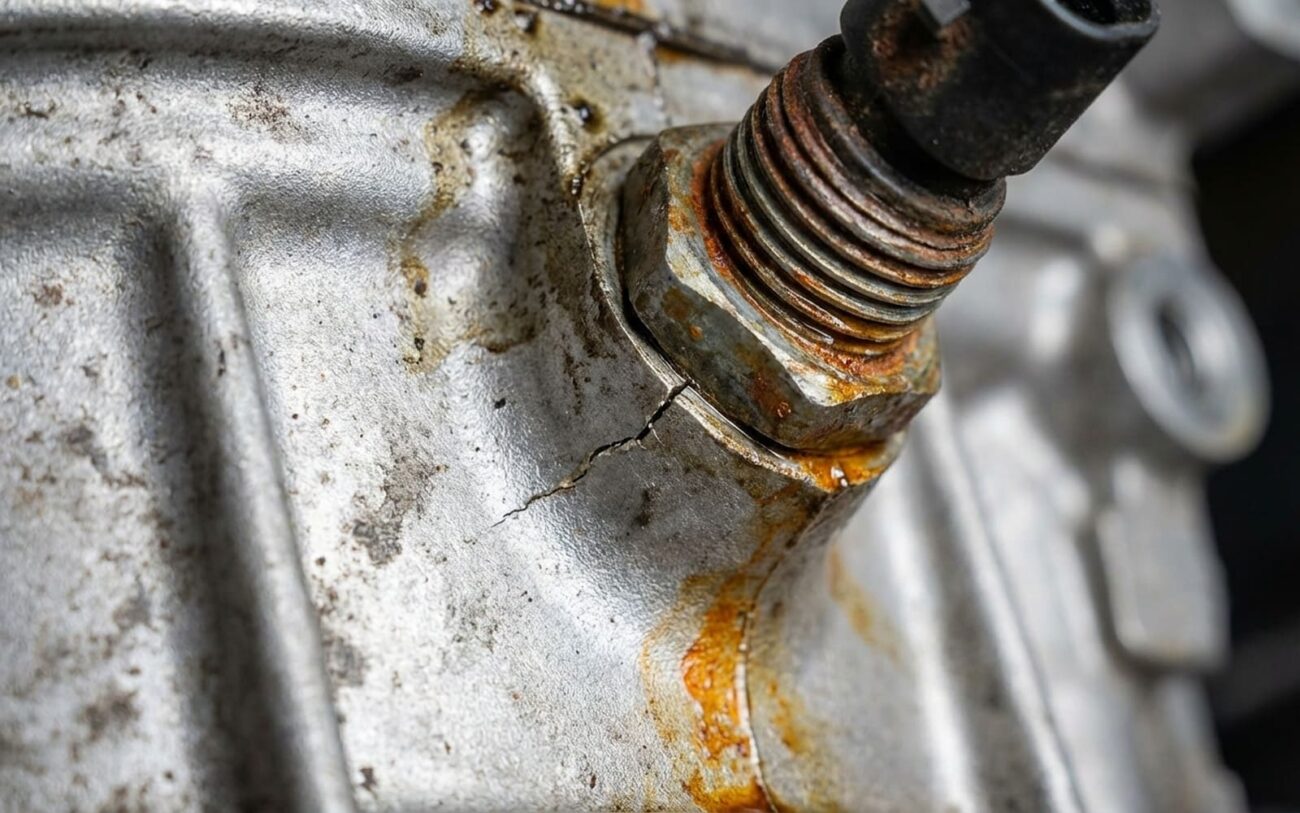
Your Check Engine Light: What the Codes Really Tell Me
Alright, let’s cut to the chase. That check engine light comes on, you grab your scanner, and it spits out a code: P0300, P0171, P0420. Now, I’ve been turning wrenches for over 25 years, and I can tell you straight up: that code isn’t a diagnosis. It’s just the engine computer (ECM) flagging a system where it noticed something’s not quite right. Think of it like a smoke detector going off – it tells you there’s smoke, but it doesn’t tell you if it’s burnt toast or a house fire, does it?
I’ve seen too many folks, and even some younger techs, blindly replace parts based solely on a code. New O2 sensors for a P0420, coils for a P0300. More often than not, the light just comes right back on because they never fixed the actual problem. The code points to a symptom, a clue, not necessarily the failed part itself. My job here is to walk you through what these common trouble codes are actually trying to tell you, how I go about finding the real culprit, and how you can avoid throwing good money after bad guesses.
Starting the Hunt: Symptoms & Initial Checks
The scanner gives us a starting point, sure, but your eyes, ears, and hands are just as important. A code without context is a recipe for wasted time and money. Here’s what these common codes usually mean and what you might actually feel or see.
P0300: Random/Multiple Cylinder Misfire
This one means the ECM is seeing misfires across several cylinders, and it can’t pin it down to just one. You’ll definitely feel this: a rough idle, hesitation when you hit the gas, or a noticeable shudder at stoplights. On the scan tool, I’ll see misfire counters jumping around on different cylinders.
Most of the time, P0300 starts with the basics: worn spark plugs, failing ignition coils, or maybe a clogged fuel injector or two. Those are the low-hanging fruit, and often the fix. But if you’ve already swapped plugs and coils and the misfires keep popping up – especially if they’re not on adjacent cylinders – then we’ve got to dig deeper. That’s when I start thinking about potential internal engine issues: a crack in the cylinder head or block between bores, a blown head gasket allowing compression to leak between cylinders, or even severe cylinder wall wear. I’ve seen it.
P0171 / P0174: System Too Lean (Bank 1 / Bank 2)
These codes tell me the engine is running lean – too much air, not enough fuel. The O2 sensors pick this up, and the ECM tries to compensate by adding more fuel, which you’ll see as high positive fuel trims on the scanner. You might notice a rough idle, hesitation when you accelerate, or even a slight drop in power.
The most common culprit? A vacuum leak. That’s unmetered air sneaking into the intake system after the mass airflow (MAF) sensor. Could be a cracked hose, a loose PCV line, or even a failing brake booster. But don’t just stop there. On newer engines, especially those with plastic or thin-wall aluminum intake manifolds, the manifold itself can crack from heat cycles or vibration. I’ve pulled manifolds off engines where the crack was practically invisible until we did a smoke test.
P0420 / P0430: Catalyst Efficiency Below Threshold
This code means your catalytic converter isn’t doing its job efficiently. It’s not storing oxygen or cleaning up emissions like it should. You might not feel a huge difference in how the car drives, but your fuel economy will likely take a hit, and you’ll definitely fail an emissions test.
Before you jump to replacing the cat, which is usually expensive, I always rule out the common mimics: Is there an exhaust leak before the front O2 sensor? Is the upstream O2 sensor itself sluggish or contaminated? Is the engine burning oil or coolant? Any of these can make a perfectly good converter look bad.
But if those checks come up clean, then yeah, the converter itself has probably failed. The ceramic honeycomb inside can melt from excessive heat – often caused by those chronic misfires or a rich fuel condition we talked about earlier. It can also break apart from thermal shock or just plain impact damage (hitting a pothole hard, for instance). A collapsed substrate creates exhaust backpressure, which chokes the engine, causing power loss and a lot of extra heat under the hood. If you want to dive deeper into backpressure, I’ve got more info here.
And remember this: a failing cat is often a symptom, not the root cause. If your engine has been misfiring or leaking oil into the combustion chamber, that catalyst gets poisoned. You’ve got to fix the engine problem first, or that brand-new converter won’t last a year.
P0128: Coolant Thermostat Rationality
This code pops up when the engine coolant temperature (ECT) doesn’t climb up to operating temp fast enough after a cold start, or it stays too low while you’re driving. You’ll definitely notice the temperature gauge sitting below normal, your cabin heater will take forever to warm up, and your fuel economy will drop.
Nine times out of ten, this is a thermostat stuck open. It’s letting coolant circulate through the radiator too early, preventing the engine from reaching its optimal operating temperature, which is usually somewhere between 195–206°F.
Some drivers think “cooler is better” for an engine. That’s a myth.
Engines are designed to run hot for very specific reasons: efficient fuel vaporization, lower emissions, and maintaining proper oil viscosity. Running too cool actually increases internal engine wear, encourages sludge buildup, and keeps your catalytic converter from working properly since it needs heat to “light off” and clean exhaust gases. It’s not just about how warm your feet are; it’s about engine longevity.
P0455 / P0456: EVAP System Large / Small Leak Detected
These codes point to issues with the evaporative emissions (EVAP) system. This system captures fuel vapors from your gas tank and sends them to the engine to be burned, rather than letting them escape into the atmosphere. P0455 is a “large” leak, and P0456 is a “very small” one.
Always start with the simplest thing: check your gas cap. A loose, cracked, or worn-out cap is the most common cause, hands down. But if the cap’s fine, the leak could be anywhere in the system: a cracked fuel filler neck, a damaged vapor line, a ruptured charcoal canister, or even a porous fuel tank, especially on older vehicles. I’ve seen some rusty tanks that just start weeping vapor.
The Real Diagnostics: How I Pinpoint the Problem
Now that we’ve talked symptoms, let’s get into how I actually confirm what’s broken. This is where real diagnostics separate the pros from the parts-swappers. The code tells me where to start looking, but proper testing tells me what’s actually failed. This table lays out the definitive tests I use in my shop, based on years of experience.
| Code / Scenario | What I Suspect (Beyond the Obvious) | Common Misdiagnoses / Mimics | My Go-To Test to Confirm |
|---|---|---|---|
| P0300: Misfire still there after new plugs and coils. | Internal engine damage: crack in block or head between cylinders, head gasket breach. | Fuel pressure issues, dirty injectors, camshaft timing problems, minor vacuum leaks. |
Cylinder Leak-Down Test. I pump compressed air into each cylinder at TDC. If I hear air escaping into an adjacent spark plug hole, the intake, or the exhaust, that tells me exactly where the internal breach is. A borescope through the spark plug hole can often give a visual confirmation of cracks or piston damage. |
| P0171/P0174: Long-Term Fuel Trim is high (>+10%) at idle. | Cracked intake manifold (especially plastic or thin-wall aluminum), internal casting porosity. | Faulty MAF sensor, leaking brake booster diaphragm, clogged fuel filter, weak fuel pump. |
Smoke Test. I introduce smoke into the intake system under slight pressure. If I see smoke escaping from the manifold body itself (not just the gaskets), that confirms an internal crack. Sometimes, I’ll use propane enrichment – feeding propane into suspected leak areas; if the fuel trims drop, I’ve found my leak. |
| P0420/P0430: Code won’t clear after checking O2 sensors and exhaust for leaks. | Catalytic converter substrate failure (melted, broken apart, or poisoned). | Engine burning oil/coolant, exhaust leak before upstream O2 sensor, faulty O2 sensor (even if new). |
O2 Sensor Waveform Analysis. Using a good scan tool, I graph the pre-cat and post-cat O2 sensors. A healthy cat will “dampen” the post-cat sensor’s signal, making it relatively flat. If the post-cat sensor’s waveform starts mimicking the pre-cat sensor’s (lots of up-and-down), the catalyst isn’t working. I also confirm with an infrared thermometer: the cat’s outlet should be 20–50°F hotter than its inlet. |
| P0128: ECT sensor reads 10–20°F below thermostat rating after warm-up. | Thermostat stuck open (or wrong temperature rating installed). | Faulty ECT sensor, low coolant level, incorrect coolant type (though rare for this code). |
Infrared Thermometer Test. On a cold start, I monitor the thermostat housing outlet. It should stay cool until the engine reaches its operating temperature, then rapidly heat up as the thermostat opens. If that hose starts getting warm too early, or the temperature never stabilizes at the correct spec, it confirms a stuck-open thermostat. |
| P0455/P0456: EVAP leak persists after a new gas cap. | Cracked fuel tank, damaged vapor line, ruptured charcoal canister. | Faulty purge or vent valve, leaking fuel filler neck, overfilled tank. |
EVAP Smoke Test. This is the only way to find most EVAP leaks reliably. I use a dedicated EVAP smoke machine to inject smoke into the system. Visible smoke escaping from anywhere other than the vent confirms the leak. For those super tiny P0456 leaks, a nitrogen pressure decay test with a sensitive gauge gives the most accurate diagnosis. |
Why It Failed: Getting to the Root Cause
Once we’ve confirmed a component is bad, the next question is always: why did it fail? Understanding the root cause is critical if you want to prevent the problem from coming back. Just replacing a part without knowing why it broke is a waste of time and money.
For those internal misfires (P0300) that aren’t just plugs or coils, it’s rarely just “age.” On modern aluminum engines, especially the turbocharged ones, I’ve seen manufacturing defects like core shift in the cylinder block casting. This can create thin walls or porosity between cylinders or into coolant passages. Over time, repeated thermal cycling causes micro-cracks that grow. Some manufacturers have even issued service bulletins for specific models. If you’re finding coolant in the oil or blow-by into adjacent cylinders, it’s often a material or casting flaw, not just general wear and tear.
When an intake manifold is causing a P0171, the reason for failure depends on the material. Plastic manifolds crack from thermal stress and vibration, especially near hot spots like EGR ports or throttle bodies. Aluminum manifolds, on the other hand, can suffer from electrolytic corrosion if the wrong coolant is used or if the engine’s ground is poor. This type of corrosion eats through the metal from the inside, creating pinhole leaks that are incredibly tough to spot without a smoke test.
A failed catalytic converter (P0420) is almost always a victim, not the aggressor. The most common killer? Chronic engine misfires that dump raw fuel into the exhaust. That fuel ignites inside the hot cat, spiking temperatures past 2,000°F – that’s enough to melt the ceramic substrate into a solid blob. Oil or coolant getting into the exhaust (from worn rings or a blown head gasket) will coat the catalyst in contaminants, effectively “poisoning” it. Road debris can also shatter the core. So, if your cat failed, the first thing I look for is an engine problem that caused it.
The Fix: Your Repair Options Explained
Okay, you know what’s broken and why. Now, let’s talk about getting it fixed. Here’s how I approach these repairs, realistically.
Engine Block Replacement NON-REPAIRABLE → REPLACE ASSEMBLY
Intake Manifold Replacement DIY-FEASIBLE
Catalytic Converter Replacement DIY-FEASIBLE
Thermostat Replacement DIY-FEASIBLE
Post-Repair Validation: Did We Actually Fix It?
Replacing parts is only half the battle. You absolutely have to verify that your repair actually worked. Don’t just clear the code and hope for the best.
After an engine block or long-block replacement, I test everything thoroughly. Success means: a cooling system pressure test holds steady (I look for less than a 1 psi drop over 20 minutes at 16 psi), a cylinder leak-down test shows less than 10% leakage on all cylinders, and no pending or confirmed misfire codes after a full drive cycle. You’ll need a cooling system pressure tester, a leak-down tester, and a good scan tool for this.
For a new intake manifold (P0171), validation is all about the fuel trims. With your scan tool, check the Long-Term Fuel Trim (LTFT). It should be within ±5% at idle and during steady cruise. I’ll also do a follow-up smoke test just to be sure there are no new leaks. If those trims are still high, you missed something, or there’s another issue.
After replacing a catalytic converter (P0420), the best proof is a “pass” on the catalyst monitor in Mode $06 data on your scan tool. If you can’t access that, drive the car for 50–100 miles under varied conditions (city, highway, cold starts). If the code doesn’t return and your O2 waveforms look stable, then the repair held.
For a thermostat (P0128), validation is simple: on a cold start, watch the ECT on your scan tool. It should climb steadily to the thermostat’s rated temperature (e.g., 195°F) and then stabilize. At that point, the upper radiator hose should get hot. Confirm this with an infrared thermometer on the thermostat housing outlet.
The Bottom Line: Cost, Risk, & When to Walk Away
Let’s be realistic. Car repairs cost money, and sometimes, they cost more than the car is worth. Here’s a practical breakdown based on what I see in the shop, including parts and labor, and what you should consider when making a decision.
| Repair Type | DIY Cost (Parts Only) | Shop Cost (Parts & Labor) | My Expected Success Rate | Secondary Risk if Repair Fails |
|---|---|---|---|---|
| Engine Block Replacement (Long Block) | $4,000 – $8,000 | $8,000 – $15,000+ | 95% (if done by a competent professional) | Catastrophic engine failure, usually due to incorrect assembly, overlooked issues, or improper break-in. |
| Intake Manifold Replacement | $300 – $800 | $900 – $1,500 | 98% | Persistent vacuum leaks, poor idle, or repeat code if gaskets are pinched, bolts are over-torqued, or the underlying issue (e.g., PCV) isn’t addressed. |
| Catalytic Converter Replacement (Bolt-in, CARB-compliant) | $400 – $1,200 | $1,200 – $2,500 | 99% | Exhaust leaks, emissions failure, or rapid re-failure if the original cause (like misfires or oil burning) isn’t fixed first. |
