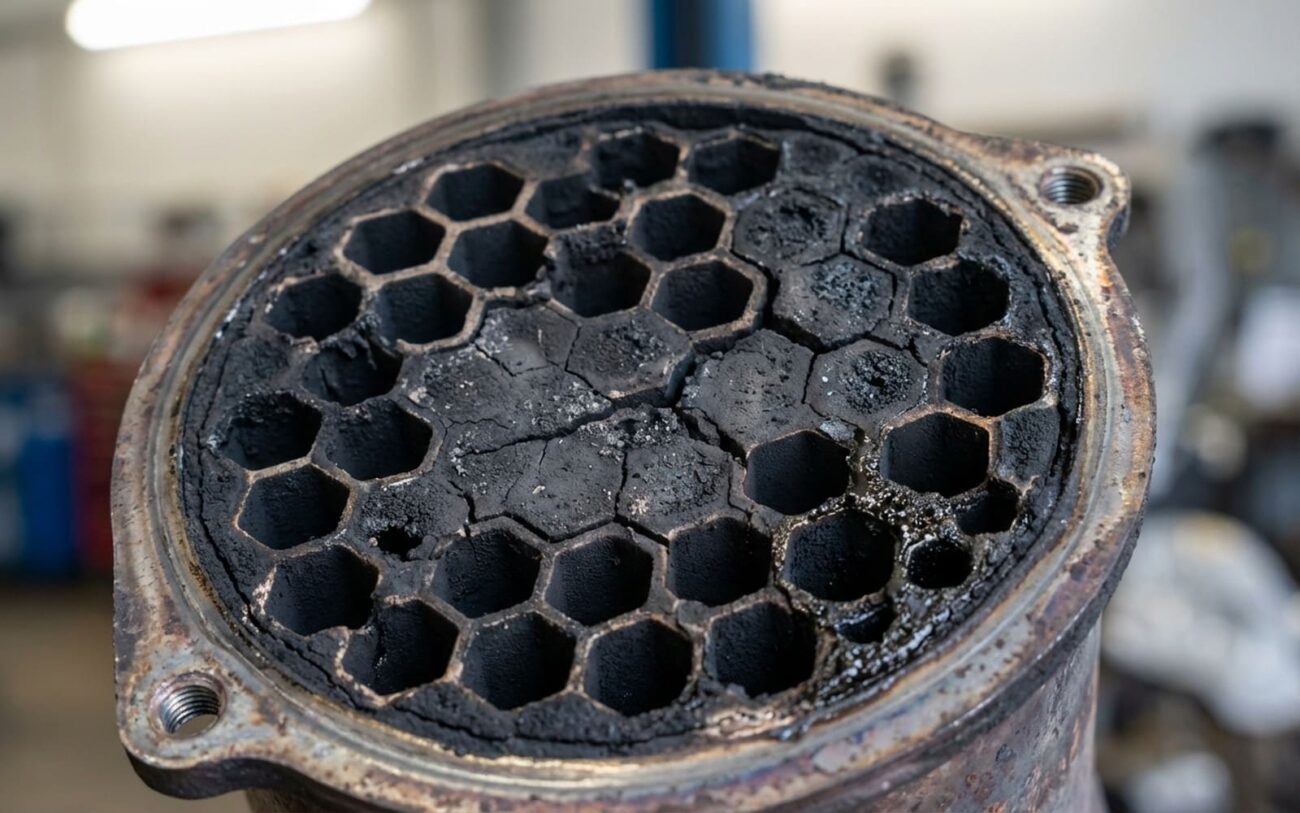
Alright, let’s talk modern diesels, especially anything built after 2007. If you’re chasing drivability issues, nine times out of ten, you’re looking at the emissions gear. Specifically, the Diesel Particulate Filter (DPF) and the Exhaust Gas Recirculation (EGR) valve. These systems are designed to clean up the exhaust, but when they go sideways, they cause a whole heap of different problems. And trust me, mistaking one for the other is a surefire way to waste your time, your money, and end up replacing parts that didn’t need replacing. I’ve seen it happen countless times in my 25+ years in the shop. So, let’s break down what each system does and, more importantly, how their failures actually show up when you’re behind the wheel or under the hood.
Recognizing the Symptoms: DPF vs. EGR
The Diesel Particulate Filter (DPF) Story
A DPF that’s getting clogged is essentially a restriction in your exhaust system. The first thing you’ll usually see is that persistent DPF warning light glaring at you from the dash. This isn’t just some friendly reminder to change your oil; it means the soot load has hit a critical point. If you ignore it, the engine control module (ECM) will often throw the truck into limp mode. It’s trying to protect itself, but what you’ll feel is a serious loss of power, terrible throttle response, and the engine just feeling choked, especially when you try to accelerate or pull a load.
Sometimes, you’ll even see excessive black or gray smoke puffing out the tailpipe during acceleration. That’s the ECM trying desperately to raise exhaust temperatures by messing with injection timing – usually late injection – to kick off a passive regeneration. But if the DPF is too far gone, it just can’t build up enough heat, and you get that smoke as a result. It’s a clear sign things are not right.
The Exhaust Gas Recirculation (EGR) Valve Story
Now, the EGR valve is a different beast. Its job is to recirculate cooled exhaust gas back into the intake manifold. This lowers peak combustion temperatures, which in turn reduces harmful nitrogen oxides (NOx). When it fails, it almost always sticks—either wide open or completely shut.
If the EGR valve sticks open, you’re flooding the intake with inert exhaust gas, especially at idle. This starves the engine of fresh air, causing misfires, a rough idle, and often stalling, particularly when you come to a stop. You might also feel a noticeable hesitation right off the line or a loping idle that just won’t smooth out.
On the flip side, if the valve sticks shut, or if the passages leading to it are blocked, you get no exhaust gas recirculation at all. This means combustion temperatures spike way up. You’ll likely hear an audible pinging or knocking sound under light load, your NOx emissions will go through the roof, and you’ll almost certainly get a check engine light with a P0401 or a similar code. Over time, that lack of EGR flow can lead to pre-ignition and put a lot of thermal stress on your pistons and valves.
The long-term danger with a stuck-open EGR isn’t just the immediate drivability issues; it’s the carbon buildup. Constant exposure to soot-laden exhaust coats everything: the intake manifold, the EGR cooler, and even your intake valves. This chokes off airflow, leads to poor combustion, and can quickly turn into a very expensive cleaning job or, in the worst cases, cylinder head work. Unlike a DPF issue that often hits you hard and fast, EGR failure can be a slow, insidious killer for your engine.
Differential Diagnosis: Don’t Guess, Test!
Look, both DPF and EGR problems can cause similar symptoms like power loss or a rough idle. That’s why guessing is a fool’s errand. You absolutely need to diagnose based on hard data, not just what you feel. A loss of power could be a clogged DPF, sure, but it could also be a dying turbo, a restricted air filter, or even a bad intake air temperature sensor. A rough idle might scream “stuck-open EGR,” but vacuum leaks or other sensor failures can mimic that behavior perfectly. The key here is using the right tools and following a methodical testing process.
Diagnosing DPF Issues
If you’re dealing with a persistent DPF warning light or that choked feeling, here’s my go-to approach:
- Scan Tool Data is Your Best Friend: Hook up a good OBD2 scanner that can read live DPF differential pressure data. This is crucial. With the engine running at around 2500 RPM, compare the actual pressure drop across the filter to the manufacturer’s specifications. If it’s significantly higher, you’ve got a restriction.
- Command a Forced Regeneration: If the pressure is high, try commanding a forced regeneration with your scan tool. Monitor the soot load and differential pressure during the process. If the pressure stays stubbornly high and the soot load doesn’t drop, you’re likely dealing with a physically restricted DPF.
- Mechanical Backpressure Test (The Old School Way): For definitive confirmation, especially if the scan tool data is ambiguous, I’ll perform a physical exhaust backpressure test. This usually involves drilling a small access port before the DPF (or using an existing sensor port), installing a mechanical gauge, and measuring pressure under load. Anything over 3–4 psi usually points directly to a DPF restriction. If your readings are normal, then you can shift your focus to intake issues or the turbocharger.
- Watch for Mimics: Remember, a faulty DPF pressure sensor or an exhaust leak upstream of the DPF can throw off readings and fool you into thinking the DPF is bad. Always verify the sensor’s readings and check for leaks first.
Diagnosing EGR Issues
When the symptoms point to EGR—rough idle, stalling, or that tell-tale engine knock—here’s how I pinpoint the problem:
- For a Rough Idle / Stalling (Suspected Stuck Open EGR):
- Scan Tool Command: Use your bidirectional scan tool to command the EGR valve completely closed.
- Monitor Fuel Trim: With the valve commanded shut, watch your short-term fuel trim. If the fuel trim stays high (I’m talking +20% or more) and the idle remains unstable, that valve isn’t sealing. It’s letting exhaust gas in when it shouldn’t.
- Visual Inspection: At that point, I’d remove the valve and visually inspect it. Look for heavy carbon buildup preventing the pintle from seating properly.
- Mimics: Be aware that vacuum leaks, a failed MAF sensor, or a clogged PCV system can all cause similar rough idle symptoms. Rule those out first.
- For Engine Knock / High NOx (Suspected Stuck Closed or Restricted EGR):
- Command EGR Open: Again, use your bidirectional controls to command the EGR valve open while the engine is idling.
- Monitor MAP Sensor: Watch the intake manifold pressure (MAP) sensor reading. It should rise slightly as exhaust gas enters the intake. If there’s no change, you’ve got a mechanical failure or, more commonly, blocked EGR passages.
- Exhaust Gas Analyzer: For absolute confirmation of ineffective EGR flow, especially if you suspect high NOx, an exhaust gas analyzer is invaluable. NOx levels will remain elevated under load if the EGR system isn’t doing its job.
- Mimics: Incorrect injection timing, a faulty coolant temperature sensor, or even low-quality fuel can cause engine knock. Don’t jump to conclusions.
It’s vital to remember that these systems don’t operate in a vacuum. A clogged EGR system can drive combustion temperatures up high enough to trigger other thermal events, and a failed DPF will absolutely cause power loss and higher fuel consumption. That’s why I always stress that you can’t just rely on symptoms alone; you have to validate everything with proper testing.
Root Cause Analysis: Why Did It Fail?
Here’s a lesson I learned early in my career: just replacing a part without understanding why it failed in the first place is just asking for the same problem to come back. You’re not fixing anything; you’re just postponing the next repair. Let’s dig into what actually causes DPFs and EGR components to go bad.
DPF Failure: The Three Main Culprits
When a DPF fails, it usually falls into one of three categories:
- Ash Accumulation: This is the most common. Ash comes from metallic additives in your engine oil that simply don’t burn off during regeneration. Over time, this ash builds up inside the DPF, taking up space that should be used for soot storage. If your engine is burning oil, this process accelerates dramatically.
- Thermal Damage: This is nasty. Uncontrolled regeneration events, often triggered by leaking fuel injectors or incorrect ECM programming, can cause temperatures inside the DPF to skyrocket, sometimes exceeding 1300°C (that’s over 2300°F!). When that happens, the ceramic substrate inside the DPF can melt, crack, or even completely disintegrate.
- Physical Damage: Pretty straightforward here. Road debris can hit the DPF housing, or improper handling during service (dropping it, for example) can crack the substrate.
Tech Tip: Don’t automatically condemn a “clogged” DPF!
I’ve seen so many DPFs replaced that were perfectly fine internally. Many units are simply full of soot because regeneration never completed. This could be due to constant short-trip driving, a faulty temperature sensor, or even a blocked pressure line. In these cases, the filter media itself is intact; the real issue is upstream in the regeneration system. Always diagnose the regeneration system thoroughly first. Don’t just assume the DPF itself is toast.
EGR Valve Failure: Carbon is the Enemy
EGR valve failure is almost always about contamination or mechanical wear. Carbon buildup from soot and oil vapor is the number one culprit. That black gunk coats the valve pintle and its seat, preventing it from sealing properly. Beyond that, the electric actuators can wear out—motors burn up, gears strip. Vacuum-operated diaphragms can rupture. And the position sensors, which tell the ECM where the valve is, can drift out of calibration, sending false signals.
But here’s where I see people go wrong all the time: they replace the EGR valve without looking at the rest of the system. If the EGR cooler is packed solid with carbon, or if the intake passages are heavily restricted, that brand-new valve you just put in is going to fail again, and probably pretty quickly. I’ve seen this cycle repeat within months. The true root cause is often something like a degraded crankcase ventilation (PCV) system pushing excessive oil mist into the intake, or perhaps poor-quality fuel contributing to massive soot production.
And on many modern engines, the EGR system is more than just a valve; it includes a cooler and complex integrated passages. Cleaning those is absolutely essential for a lasting repair. So, you need to understand when you’re looking at more than just a simple valve swap—sometimes, it demands a full EGR port and intake cleaning. Skimping here will cost you more in the long run.
How Do We Fix It? Your Repair Options
Safety First, Always.
Working on emissions systems means dealing with extremely high temperatures and sometimes heavy components. Forced regenerations, for instance, can push exhaust temperatures past 600°C (over 1100°F). Always work in a well-ventilated area, wear appropriate PPE, and for crying out loud, follow factory torque specifications to the letter. Overtightening can crack housings, and undertightening leads to dangerous exhaust leaks. Don’t learn this the hard way like I did once or twice when I was younger.
Forced DPF Regeneration
Off-Vehicle DPF Cleaning Professional Only
DPF Assembly Replacement
EGR Valve Cleaning
EGR Component Replacement
Post-Repair Validation: Don’t Just Assume It’s Fixed
You’re not done when the last bolt is tightened, period. You absolutely have to verify that your repair solved the original problem and that the system is functioning exactly as the engineers designed it to. Skipping this step is just asking for a comeback.
Validating DPF Repairs
After any DPF service—whether it’s a forced regeneration, off-vehicle cleaning, or a full replacement—you need to check that differential pressure again with your scan tool. At idle and at 2500 RPM, those readings should now fall squarely within manufacturer specifications. I usually look for readings below 15 hPa (about 0.2 psi) at higher RPMs. Then, you should ideally monitor an active regeneration cycle. Watch the temperature ramps and the duration of the regen. Abnormal spikes or an early termination often suggest lingering issues. Finally, clear any codes and confirm that no new DPF-related faults pop up within a few drive cycles.
Validating EGR Repairs
For EGR repairs, functional testing is absolutely key. Use your bidirectional controls to command the valve open and closed while carefully watching the position sensor feedback. It should respond smoothly and return accurate values. With the engine idling and the valve commanded shut, your short-term fuel trim should stabilize within a tight range, usually ±10%. If you see a large positive fuel trim, it’s a red flag—it means exhaust gas is still finding its way into the intake, either from a leak or because the valve isn’t closing completely. Finally, take the vehicle for a good road test under various loads. That hesitation, rough idle, or knocking you had should be completely gone. If not, go back and recheck for vacuum leaks or any remaining blockages in the EGR path.
Cost, Risk & The “Is It Worth It?” Question
Let’s be honest: repairs on modern diesel emissions systems can be eye-wateringly expensive. Before you commit to a major repair, you’ve got to weigh that cost against the vehicle’s current value and how much life you expect to get out of it. It’s a tough conversation, but it’s one I have with customers all the time.
| Repair Type | DIY Cost | Shop Cost | Success Rate | Secondary Risk if Failed |
|---|---|---|---|---|
| DPF Forced Regeneration | Scan tool rental or software fee (~$50–$100) | $150–$300 | High for soot-only blockages | Low, if procedure followed; runaway regen possible if fuel system has issues |
| DPF Off-Vehicle Cleaning | N/A (professional service) | $300–$600 | Moderate to high for ash-laden filters in otherwise good condition | May not restore full flow if internal damage exists; potential for leak on reinstallation |
| DPF Replacement | Part only: $1,000–$3,000+ | $1,500–$4,000+ | Near 100% if installed correctly | Exhaust leaks, sensor damage, or incorrect calibration if not programmed properly |
| EGR Valve Cleaning | $50 (cleaner, gasket, basic tools) | $200–$400 | High if carbon is the only issue | Re-failure likely if oil consumption or crankcase vapors not addressed |
| EGR Valve Replacement | Part only: $200–$800 | $400–$1,200+ | Near 100% for component failure | Leaks or electrical faults from improper installation; potential for carbon re-accumulation |
Here’s the reality check, based on years of seeing these trucks come through my bay: if a DPF replacement is going to cost you more than half the vehicle’s current market value, you really have to question if it’s financially smart, especially if it’s out of warranty. You’re essentially pouring more money into an asset than it’s worth. For EGR repairs, even if the truck is still limping along, delaying the fix is a huge gamble. You risk costly secondary damage like completely carbon-clogged intake manifolds or even damaged valves. I’ve personally seen intake cleaning jobs on some V6 diesels run well over $1,000—that’s often more than the original EGR valve replacement would have cost. So, make your decision with all the data in front of you, not just the immediate price tag.
Prevention & Monitoring: Keep These Systems Happy
My Best Practices for Keeping Emissions Systems Healthy
-
Always use the right oil. I can’t stress this enough. Only use low-ash, DPF-safe motor oil (look for API CK-4 or ACEA C3/C5 specifications). This directly slows down ash buildup in your DPF. And if your engine starts consuming oil, address that immediately—it’s a DPF killer.
-
Avoid constant short trips. Your DPF needs sustained highway driving—ideally 30 minutes or more at highway speeds—to reach the temperatures required for passive regeneration. If you’re just doing short city hops, it’ll never get hot enough to clean itself.
-
Fuel quality matters. Use high-quality diesel fuel. Also, make sure your PCV (Positive Crankcase Ventilation) system is functioning perfectly. A bad PCV system will push oil mist directly into the intake, which then contaminates your EGR system with carbon.
-
Consider proactive cleaning. On higher-mileage engines, especially if you’re keeping the truck for the long haul, consider having the intake and EGR passages cleaned before symptoms even appear. It’s almost always cheaper to do it proactively than to wait for a major failure.
