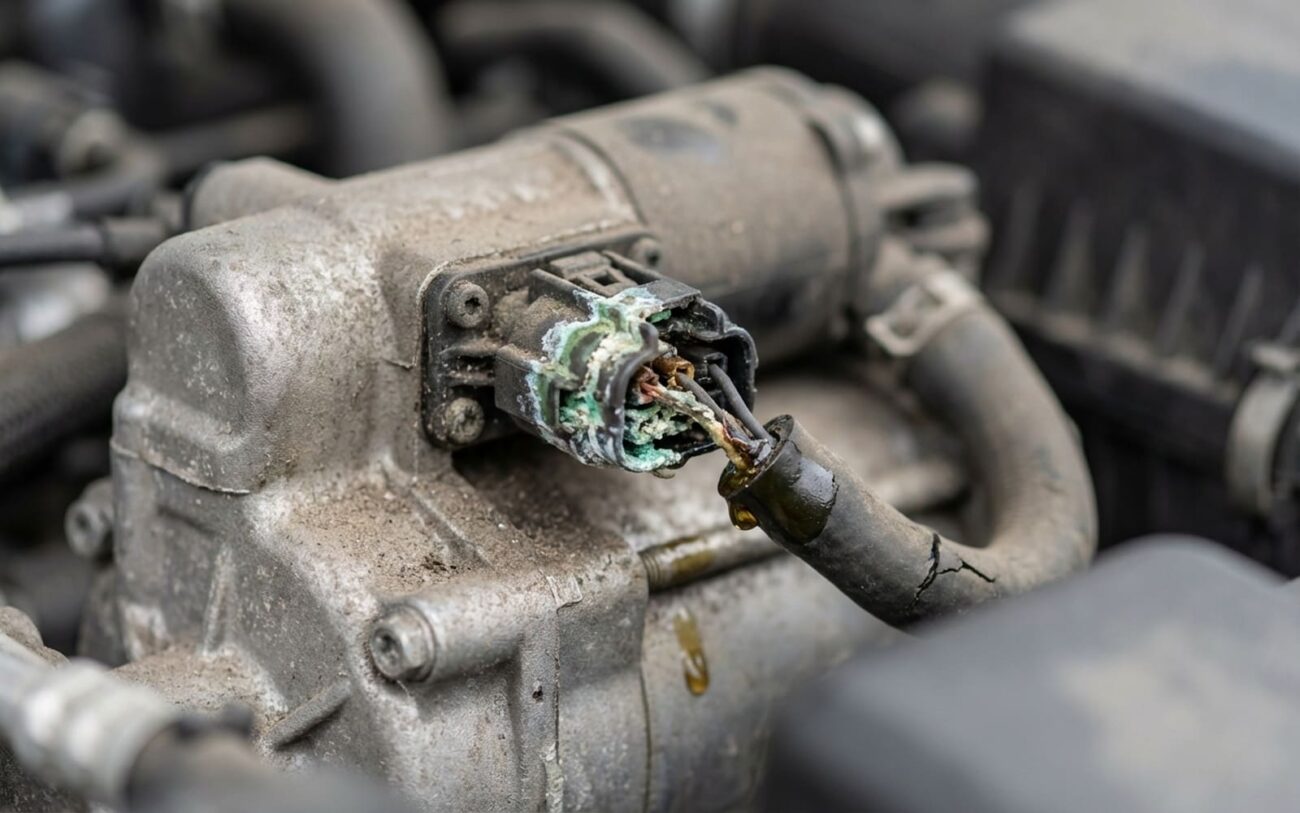
Alright, let’s talk about something that throws a lot of folks for a loop, even some experienced techs. You get a call: “My luxury car won’t start, and the dash is lit up like a Christmas tree, including an air suspension warning.” Now, your first thought, and probably the customer’s, is battery or starter, right? Makes sense. But here’s the kicker: in a lot of modern vehicles, especially those with air ride, that air suspension system can be the direct cause of your no-start. I’ve seen this scenario play out more times than I can count over my 25+ years in the shop. It’s not the most common no-start, but it’s a real sneaky one, and it gets misdiagnosed constantly. See, that air suspension compressor isn’t just a little pump; it’s a high-current electric motor. And when it goes bad, it can pull enough juice to completely collapse your car’s entire electrical system.
The Two Ways Air Suspension Kills Your Start
When an air suspension compressor goes south, it usually manifests in one of two distinct ways that prevent your engine from firing up. Knowing which one you’re dealing with is half the battle.
No-Crank, No-Start (Electrical System Collapse)
Crank, No-Start (Communication Breakdown)
How I Diagnose It: Isolating the True Source
Alright, so you’ve got one of these symptoms. How do you confirm it’s the air suspension and not something else? This is where the real diagnostic work comes in. We need to rule out the usual suspects and then perform a definitive test.
For a No-Crank, No-Start with an Air Suspension Warning:
Your mind might jump to a dead battery, corroded terminals, or a failed starter. And yes, those are common. But if that air suspension warning is glaring at you, here’s my go-to test:
-
Verify Battery Voltage: First, always check your battery. It should be above 12.4V. If it’s low, charge it up and retest. A truly dead battery can mask other issues.
-
The Compressor Disconnect Test: This is the big one. Locate the electrical connector for your air suspension compressor. It’s usually under the vehicle, often near one of the wheel wells or tucked under the chassis. Carefully disconnect it. Now, try to start the car.
- If it starts: Bingo. The compressor itself (or its integrated module) is the culprit. It was drawing excessive current, preventing the starter from engaging. This is a classic internal short in the motor windings or the control module.
- If it still doesn’t start: Then you’re likely dealing with a more traditional battery or starter issue, or perhaps a different electrical problem. But at least you’ve ruled out the compressor as the primary cause of the no-crank.
For a Crank, No-Start with an Air Suspension Warning:
Here, the engine spins, so we know the starter and main battery circuit are mostly okay. Common mimics here are a bad crank sensor, fuel pump issues, or an immobilizer fault. But with that air suspension light, we look deeper:
-
Scan for U-Codes: The first thing I do is hook up my scan tool and check for Diagnostic Trouble Codes (DTCs), specifically looking for ‘U-codes.’ These are communication codes, and if the air suspension module is flooding the CAN bus, you’ll see a bunch of them. You might see codes indicating lost communication with the air suspension module, or even general network errors.
-
Module Isolation Test: If you’ve got a pile of U-codes pointing to the air suspension module, the next step is to isolate it. Find the air suspension control module (its location varies wildly by vehicle — sometimes it’s under a seat, sometimes in the trunk, sometimes integrated into the compressor assembly). Disconnect its electrical connector.
- If the engine now starts: You’ve pinpointed it. The module was either shorting internally, corrupting the CAN bus, or just failing to communicate correctly, preventing the ECM from allowing a start.
- If it still doesn’t start: The air suspension module might be bad, but it’s not the reason for your crank-no-start. You’ll need to chase other diagnostic paths, like fuel pressure, spark, or other sensor inputs.
Root Cause Analysis: Why These Compressors Actually Fail
Alright, so we’ve identified the air suspension as the problem. But why did it fail? Understanding the root cause helps prevent a repeat failure, and frankly, it’s just good practice. Here’s what I typically see in my shop:
Insulation Breakdown
Thermal Overload
Internal Corrosion
Mechanical Seizure
Resolution Pathways: Getting It Fixed Safely
Okay, you’ve diagnosed it. Now, how do we fix it? This isn’t a job for just any DIYer, especially when it comes to safely handling the system.
Critical Safety Alert: High Pressure System!
Let me be absolutely clear: the air suspension system operates under very high pressure, typically between 150 and 200 PSI. You cannot just start disconnecting lines. If you release this pressure uncontrolled, you risk serious injury or damage to components. You MUST use a capable scan tool to safely depressurize the system before you disconnect any air lines or remove components. If you don’t have the right tools or experience, this is a job for a professional shop.
Full Compressor Assembly Replacement Recommended
Emergency Fuse or Relay Isolation Temporary Fix Only
After the Repair: Don’t Skip Validation!
-
Vehicle starts normally with no crank/no-start issues.
-
Compressor runs a brief initialization (30–90s) and shuts off.
-
Vehicle achieves and maintains correct ride height at all corners.
Cost & Prevention: Saving Your Wallet (and Your Sanity)
Let’s talk brass tacks: what’s this going to cost, and how can you avoid it happening again?
The Cost of a Compressor Failure:
A complete compressor replacement isn’t cheap. You’re typically looking at parts costs ranging from $500 to $1,500 for the assembly itself. If you’re doing it yourself and have the right tools (especially that scan tool for calibration), that’s your ballpark. If you take it to a professional shop, expect the total bill, including labor and diagnostics, to be anywhere from $1,200 to $3,000, depending on the vehicle and the shop’s rates. And remember, if that crucial calibration step is skipped, you’re just setting yourself up for another expensive failure down the road, and you might even mess with other safety systems.
My Best Prevention Tip: Listen to Your Car!
This is the big one, folks. The air suspension compressor rarely fails out of the blue. It’s usually the last component to give up after being overworked. The number one cause of an overworked compressor? Leaks in the air springs or lines. If your compressor runs for more than a minute after you unlock the car or open a door, or if it cycles on and off frequently, that’s a red flag. If you notice one or more corners of your vehicle sagging after it’s been sitting overnight, you’ve got a leak. Catching and fixing a leaking air spring early – which might be a few hundred bucks – will prevent that $2,000+ compressor failure later. Trust me on this; I’ve seen too many people ignore the early warnings and pay a much bigger price.
