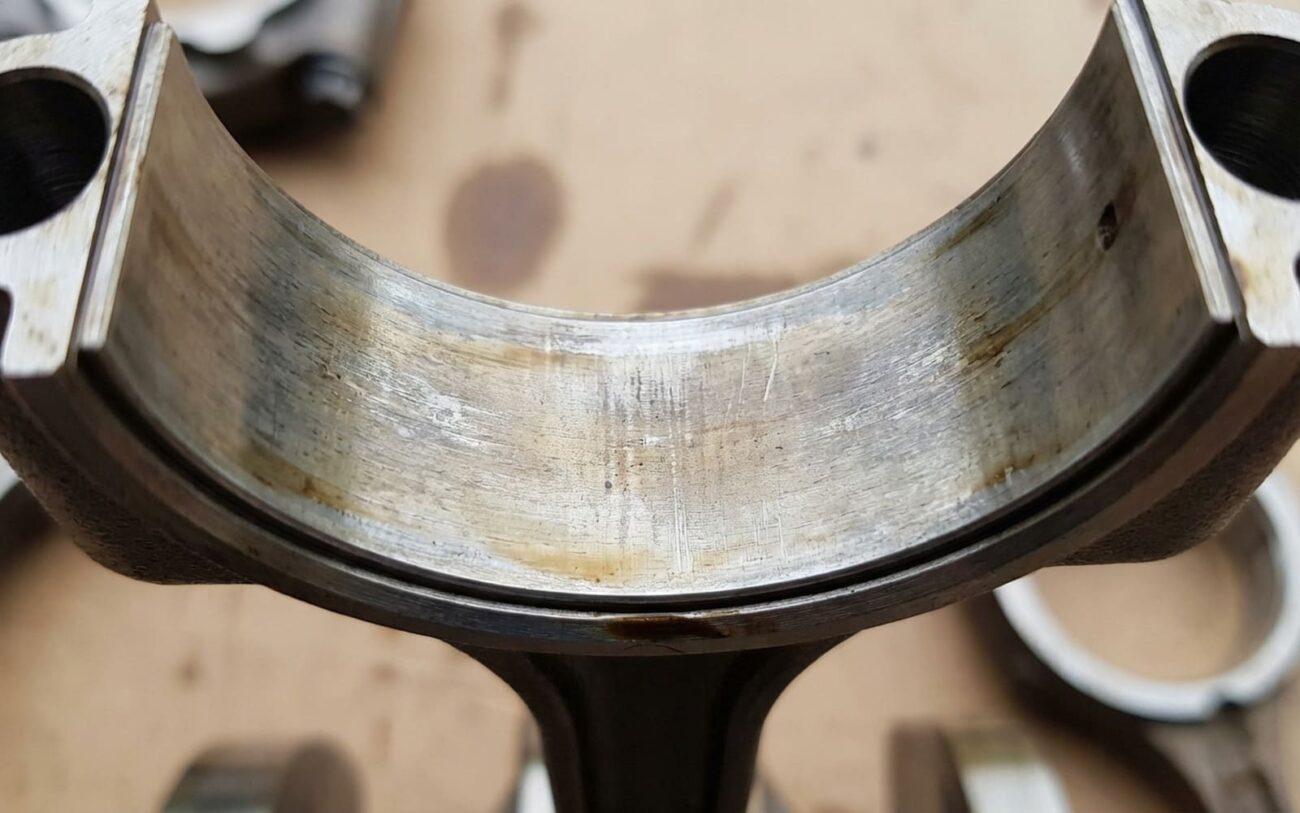
That Cold Start Knock on Your Mazda SkyActiv-G: What I’ve Learned Over 25 Years
You know the sound I’m talking about. That sharp, metallic clack-clack-clack the second you hit the key, especially after the car’s been sitting all night or all day. It only lasts a second or two, then it’s gone. On a lot of engines, you might write it off. But on these Mazda SkyActiv-G engines, particularly the 2.5L, that noise is rarely harmless. In my experience, what you’re hearing is often metal-on-metal contact between the crankshaft and its main bearings. It’s happening because the oil pressure isn’t building up fast enough.
Think about it: when the engine’s cold, the oil is thick. And when the car sits, a lot of that oil drains back into the pan. So, on startup, the oil pump has to work extra hard to push that thick oil through all the passages and get a proper film onto those bearings. If those bearing clearances have worn a bit wider over time, that brief lag becomes critical. The crankshaft makes contact with the bearing surface without a proper oil cushion, and that’s the knock you hear.
Diagnosing the Knock: My Process
First thing’s first: not every tick or knock means your bottom end is failing. There are plenty of other noises these engines make. The trick is telling the difference between a sound coming from deep inside the block and something external.
For example, piston slap. That’s usually a higher-frequency “rattle” that can last 10-15 seconds on a cold start. It fades as the pistons warm up and expand. It’s common in high-compression aluminum-block engines like the SkyActiv-G, and while it’s not ideal, it doesn’t typically come with oil pressure issues.
VVT (variable valve timing) actuators can also rattle on startup, especially if the oil control valve is gummed up. That noise is rhythmic, and you’ll often see cam timing codes pop up, like P0011 or P0016. And don’t forget the direct injection fuel injectors—they make a loud, consistent ticking that’s perfectly normal and has nothing to do with mechanical wear.
So, how do I confirm it’s the main bearings? You need real diagnostics, not just guessing. Here’s my approach:
Step 1: Mechanical Oil Pressure Test
Forget the dashboard light or the sensor readings—those can lie. I always start by installing a mechanical oil pressure gauge directly into the engine’s oil pressure port. On a cold idle, around 800 RPM, you should see at least 11 psi. If it’s below that, you’ve got a mechanical issue, plain and simple.
Step 2: Listen Closely with a Stethoscope
Next, I grab my electronic stethoscope or a good old mechanic’s listening probe. I’ll put it on the lower engine block, especially near the oil pan. A deep, low-frequency knock coming from that area points straight to the main bearings. If it’s higher up, or a lighter tap, I start looking at other components.
Step 3: The Definitive Plastigage Test
The only way to know for sure is to drop the oil pan and measure the clearance between the crankshaft journals and the main bearing shells using plastigage. Factory specs for these SkyActiv-G engines are incredibly tight—usually between 0.0008 and 0.0016 inches. Any reading over 0.002 inches is a red flag, and in my book, it’s time for some serious work. I’ve seen too many mechanics skip this step, assume it’s piston slap, and then the engine seizes a month later. Don’t be that guy.
| Symptom | Likely in Block/Bearing System | Common External Mimics | My Go-To Test to Confirm |
|---|---|---|---|
| Cold start knock | Excessive main bearing clearance from wear or bore distortion. | Piston slap (higher-pitched rattle), VVT actuator knock (rhythmic), fuel injector tick (constant). |
1. Mechanical oil pressure test (11+ psi cold idle).
2. Stethoscope on lower block. 3. Plastigage bearing clearance. |
| Low oil pressure light | Actual low pressure from worn bearings or oil pump issues. | Faulty oil pressure sensor, clogged oil pickup, stuck relief valve. | Always verify with a mechanical gauge. Good pressure means electrical issue. Low pressure means mechanical fault. |
| Metallic debris in oil | Bearing material (copper-lead alloy) in filter or pan. | Camshaft wear, timing chain guide fragments, piston skirt chunks. | Cut open the oil filter. Bearing debris looks like fine, non-magnetic “glitter.” A lab oil analysis can confirm the metal type. |
Why These Engines Fail: The Root Causes I See
This isn’t some minor gasket leak or a carbon-clogged intake valve. We’re talking about structural wear in the engine’s rotating assembly—specifically, the crankshaft main bearings. On the Mazda 2.5L SkyActiv-G, I’ve seen a few factors come together to create this failure mode.
First, there’s the oil drain-back issue. When the car sits for hours, oil drains from the upper engine passages back into the oil pan. On the next cold start, that oil pump has to refill all those galleries before adequate pressure reaches the main bearings—especially the front one, which is furthest from the pump. That delay means milliseconds of dry running. Multiply that by hundreds, even thousands, of cold starts, and you’ve got cumulative wear. It’s like sandpaper, slowly grinding away.
Then, you add in fuel dilution. This is a known issue in direct injection engines. Unburned fuel washes past the piston rings and thins the oil, significantly reducing its film strength. Combine that with extended oil change intervals—some owners stretch beyond 10,000 miles, which is just asking for trouble—and the oil loses its ability to protect critical surfaces. I’ve pulled oil samples from SkyActiv engines with over 15% fuel contamination. With oil that thin, it’s no wonder the bearings wear out.
Mazda themselves acknowledged some of this in a service bulletin (TSB) that affected certain 2018–2019 CX-5 and Mazda6 models. It pointed to a PCM calibration that allowed aggressive cold-start timing, which increased cylinder pressures before oil pressure had fully stabilized. The fix was a PCM reflash to delay valve timing slightly during startup, reducing stress on the bottom end. In severe cases, Mazda recommended short block replacement. So, even the factory knows there’s a problem here.
And yes, sometimes failures do stem from manufacturing variances. A crankshaft journal that wasn’t perfectly ground, or a main cap bolt that didn’t achieve proper clamp load during assembly, can certainly create uneven wear. But honestly, those are pretty rare. Most of the time, it’s the combination of oil drain-back, fuel dilution, and marginal lubrication at startup that does the damage over time.
Your Repair Options: From Band-Aid to Full Fix
Precision Engine Work Only
If your plastigage confirms the bearing clearance is out of spec, but the crankshaft journals are still smooth and perfectly round—and that’s a big “if”—a main bearing replacement is technically possible. But don’t underestimate this job. You’re not just swapping out a few parts; you’re disassembling the bottom end of the engine. That means either pulling the entire engine or dropping the subframe to get proper access to the crankshaft. Either way, you’re looking at a solid 15–20 hours of labor, minimum. This isn’t a DIY job for the inexperienced.
Main Bearing Replacement Advanced Repair
Short Block Replacement Factory Fix
Thicker Oil “Quick Fix”
Making Sure the Fix Actually Worked
Reassembling the engine isn’t the finish line—validation is. The repair isn’t truly done until you’ve confirmed two things: your oil pressure is back to spec, and that knock is completely gone.
On the very first cold start after reassembly, I always hook up a mechanical oil pressure gauge. You need to see at least 11 psi at idle when that engine is cold. If it’s lower, something’s wrong. It could be incorrect bearing clearance, a faulty oil pump, or even an oil gallery that wasn’t properly cleaned. Don’t ignore it.
Then, you listen. The knock should be completely absent for at least five consecutive cold starts, ideally in cool conditions (under 50°F). Use your stethoscope on the lower block to confirm. If that noise comes back—or if your pressure drops—don’t drive it. You’ll need to tear it down again. I’ve seen rebuilt engines fail within days because the main caps weren’t torqued properly or some tiny piece of debris was left in an oil gallery. It’s a painful lesson to learn twice.
Weighing the Cost Against the Car’s Value
This is where practicality meets emotion, and it’s a conversation I have with customers all the time. A main bearing job, done right at a reputable shop, will typically cost $2,500 to $4,000 in labor and parts. A short block replacement? You’re looking at $6,000 to $9,000, depending on your specific model and local labor rates. The PCM reprogramming per Mazda’s service bulletin is much cheaper—around $150 to $300—but that only helps in early-stage cases where wear isn’t advanced. It won’t fix existing damage.
| Repair Type | DIY Cost (Parts Only) | Shop Cost | My Expected Success Rate | Secondary Risk if Failed |
|---|---|---|---|---|
| Main Bearing Replacement | ~$500 | $2,500–$4,000 | High (if crank/block are truly undamaged) | Catastrophic engine seizure if clearance or torque is incorrect. |
| Short Block Replacement | N/A | $6,000–$9,000 | Very High | Repeat failure due to improper installation or residual contamination. |
| PCM Reprogramming (per TSB) | N/A | $150–$300 | Moderate (only for early cases) | Does absolutely nothing for existing mechanical damage. |
My rule of thumb is this: if the repair cost is going to exceed half the car’s current market value, you need to think long and hard. A $9,000 repair on a $10,000 vehicle rarely makes sense, unless it’s a low-mileage example that you’re deeply, emotionally attached to. In many cases, a used or remanufactured long block swap might be more economical. Or, depending on the rest of the car’s condition, it might honestly be time to consider replacing the vehicle entirely. It’s a tough call, but sometimes it’s the right one.
How to Prevent This From Happening Again
Whether you’re rebuilding an engine or just trying to protect the one you have, maintenance is everything. Don’t skimp. Stick to Mazda’s recommended oil change interval—that’s 7,500 miles or 12 months, whichever comes first. And for crying out loud, don’t cut corners on oil quality. Use only API SP-certified 0W-20 full synthetic oil. It’s specifically formulated to resist fuel dilution and low-speed pre-ignition, both of which are common issues in direct injection engines like the SkyActiv-G and other GDI platforms.
My Proactive Maintenance Checklist
-
Make cold start listening part of your routine. That first three seconds after ignition? That’s the most telling. If you hear a new metallic tap, don’t ignore it.
-
Get an oil pressure test done right away if you notice any symptoms. Don’t wait for that dashboard light to come on solid.
-
During oil changes, cut open the old filter. Shine a flashlight through the media. If you see a silver sheen or metallic “glitter,” that’s bearing material. It’s a cheap way to catch big problems.
-
If your Mazda falls into the affected years for the PCM calibration issue, get that TSB update done. It won’t fix existing wear, but it can absolutely prevent further damage.
Prevention isn’t flashy, and it’s certainly not as exciting as tearing down an engine, but I promise you, it’s the cheapest repair you’ll ever make. Catching bearing wear early is the difference between a manageable repair and a total engine loss.
