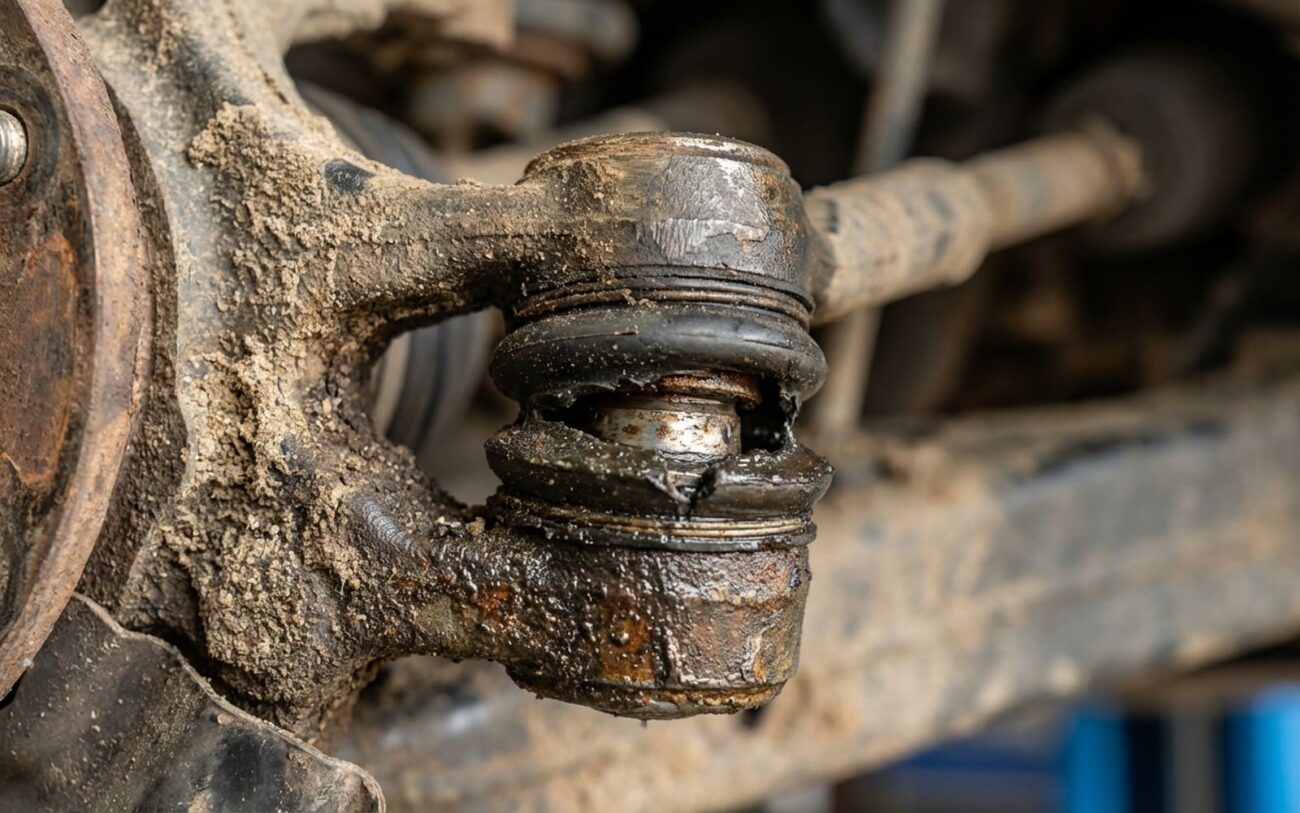
Alright, let’s talk about that sloppy front end on your heavy-duty 4×4. I’ve spent more than a few decades under these trucks, and when a customer tells me their steering feels “vague” or “loose,” especially that noticeable dead spot when they’re turning slowly in a parking lot, my first thought goes straight to the steering knuckle. That kind of slop usually means wear inside those critical king pin or trunnion bearings. These aren’t just any bearings; they’re the heavy-duty hinges that let your front wheels pivot. When they start to go, the whole front end feels disconnected, like it’s floating.
Now, I’ve seen this misdiagnosed more times than I can count. Sure, worn tie rod ends or a loose steering gearbox can give you similar symptoms, so don’t just jump to conclusions. But if you’ve ruled out the simpler stuff, and that looseness feels like it’s coming from deep inside the front axle assembly, that’s when you really need to zero in on the knuckle.
What You’ll Feel, Hear, and See
Beyond the steering feel, there are other tell-tale signs. First, check your tires. Uneven wear, especially cupping or scalloping on the inner tread edges, is a huge red flag. If you’ve just had an alignment and it didn’t fix the issue, or the tech told you they couldn’t get the camber right, the problem probably isn’t just your suspension arms or ball joints. A bent or worn knuckle spindle changes the camber angle — that’s the inward or outward tilt of the tire — and no amount of alignment adjustment can correct that if the spindle itself is compromised.
Then there are the noises. I’m talking about a deep “clunk” or a “pop” when you’re turning sharply, like in a tight parking lot, or when you hit a bump mid-turn. That’s often metal-on-metal contact happening inside the knuckle, usually because the grease has dried out or been washed away. A lot of guys assume it’s a failing CV joint or a wheel bearing, and those are common, don’t get me wrong. But the sound from a dry knuckle bearing is usually a lower pitch, and it’s directly tied to your steering movement, not just the wheel rotating.
How I Confirm It’s the Knuckle (and Not Something Else)
The front end of a 4×4 has a lot of moving parts, and plenty of them can cause similar headaches. The trick is to pinpoint exactly where that movement or noise is coming from. Here’s how I break it down in the shop to make sure I’m not chasing ghosts:
| Symptom | Points to Knuckle | Common Mimics | My Go-To Confirmation Test |
|---|---|---|---|
| Excessive steering play | Wear in the king pin or trunnion bore. | Worn tie rod ends, a loose steering gearbox. |
Jack up the front axle so the wheels are off the ground. Get a buddy to rock the steering wheel back and forth, just enough to take up the slack. You need to watch the knuckle arm where it connects to the axle housing. If you see any movement there, more than about 0.5mm, that’s your wear. |
| Front axle “clunk” | Dry or worn king pin bearings. | Failing CV joint, worn wheel bearing. |
With the truck on the ground, try prying between the knuckle arm and the axle housing. Any clicking or movement here points to bearing wear. For noises that are hard to isolate, I’ll often use a chassis ear or a mechanic’s stethoscope while someone else drives and turns the wheel under load. |
| Abnormal tire wear | Bent or worn knuckle spindle messing with camber. | Bent control arm, severely worn ball joint. |
Get a full alignment done. If the camber is still out of whack and can’t be adjusted into spec, and you’ve already confirmed all your other suspension components are solid, then you’re looking at the knuckle. You can also measure spindle runout directly – anything over 0.05mm is bad news. |
Why These Knuckles Give Up the Ghost
The steering knuckle is a seriously high-stress component, especially on a heavy 4×4 that sees off-road action. It’s not just holding your wheel; it’s the main pivot point for steering, and it takes a beating. Over time, all that constant articulation, shock loading from bumps, and exposure to mud, water, and grit just grinds down those precision-machined king pin or trunnion bores.
What usually happens is the lubrication breaks down or gets washed out. Once that grease is gone, you get metal-to-metal contact. That quickly leads to what we call adhesive wear — basically, galling or scoring of the bearing surfaces. This creates more clearance, which means more play. And once that starts, it accelerates fast, especially when you’re putting the truck under load.
A Quick Note on Some Designs:
I’ve seen a few specific designs, like certain Nissan Patrol models, that have internal grease passages. If water or mud gets into these and isn’t flushed out, it can corrode and block the flow, starving the bearings further up. I’ve even seen cases where these passages didn’t get enough grease from the factory, leading to premature wear. It’s a design flaw you gotta watch for.
Impact damage is another big one. If you hit a rock at speed, or you’re yanking the steering hard during a recovery, you can easily bend or crack that spindle. And here’s the critical part: since the spindle is usually cast or forged right into the knuckle, you can’t safely straighten it. Trying to bend it back will compromise the metallurgy, leaving it weak and just waiting for a sudden, catastrophic failure. Don’t even think about it.
Your Options for Repair (From Simple to Major)
Safety First, Always.
Look, rebuilding a knuckle involves critical preload settings and press-fit bearings. If you’re not comfortable with precision measurements, using a dial indicator, and torquing fasteners to exact factory specs, this isn’t a job to learn on. Leave it to a professional. Your life, and others’, depends on it.
Preventative Lubrication DIY Feasible
Full Knuckle Rebuild Professional Only
Knuckle Assembly Replacement
Emergency Field Fix Last Resort
How I Know the Fix Actually Worked
After any repair, you’ve got to validate your work. For a simple grease service, I’ll cycle the steering lock-to-lock a few times with the wheels off the ground. It should move smoothly, no binding, no popping. You should see a little bit of fresh grease squeezing out at the seal – just enough to confirm flow. That tells me the new grease is where it needs to be.
After a full rebuild, I use a dial indicator and a pry bar to measure any deflection. Anything under 0.3mm is generally acceptable, but I always aim for as little as possible. And most importantly, get a full wheel alignment. The real proof is seeing those camber and caster angles fall right within factory specifications. If they’re still off, something’s still wrong – maybe the preload isn’t quite right, or you missed a damaged component.
What This All Costs (and Making a Smart Decision)
Here’s a rough breakdown of what you can expect to pay for these repairs. Remember, these are estimates, and shop rates vary wildly.
| Repair Type | DIY Cost (Parts) | Shop Cost (Est.) | Success Rate |
|---|---|---|---|
| Preventative Grease Service | $50 | $150 | 98% (if caught early) |
| Full Knuckle Bearing Rebuild | $400 (kit) | $1200 – $1800 | 95% (Pro) / 70% (DIY) |
| Knuckle Assembly Replacement | $800 – $1500 | $2000 – $3000 | 100% |
As you can see, catching this early with a grease service is by far the cheapest option. Waiting until you need a full rebuild or, worse, a complete knuckle replacement, gets expensive fast. It’s a classic case of an ounce of prevention.
How to Keep This Problem Off Your Truck
After all these years, I can tell you that prevention is always cheaper and safer than repair. Treat your steering knuckle like any other critical off-road component. Here’s what I tell my customers to keep their front ends tight:
My Maintenance Checklist
-
Grease those knuckles every 30,000 miles, minimum. If you’re doing deep water crossings or serious mud runs, do it immediately after. Don’t wait.
-
Use the right stuff: NLGI GC-LB rated molybdenum disulfide grease. Your regular chassis grease just won’t cut it for these heavy-duty applications.
-
Every time you rotate your tires, give those wiper seals a good look. Check for cracks, tears, or muddy sludge built up around them. If they’re compromised, water and grit are getting in.
-
When you’re doing recoveries, avoid shock-loading the front end. Use steady winching, not jerking. That sudden impact can bend or crack components.
A Little Extra Protection
For the serious off-roaders out there, especially if you’re running something like a Toyota Land Cruiser or a Nissan Patrol, consider some aftermarket trunnion armor. These steel plates bolt on and shield the bearing areas from direct rock impacts. It’s cheap insurance against expensive structural damage.
