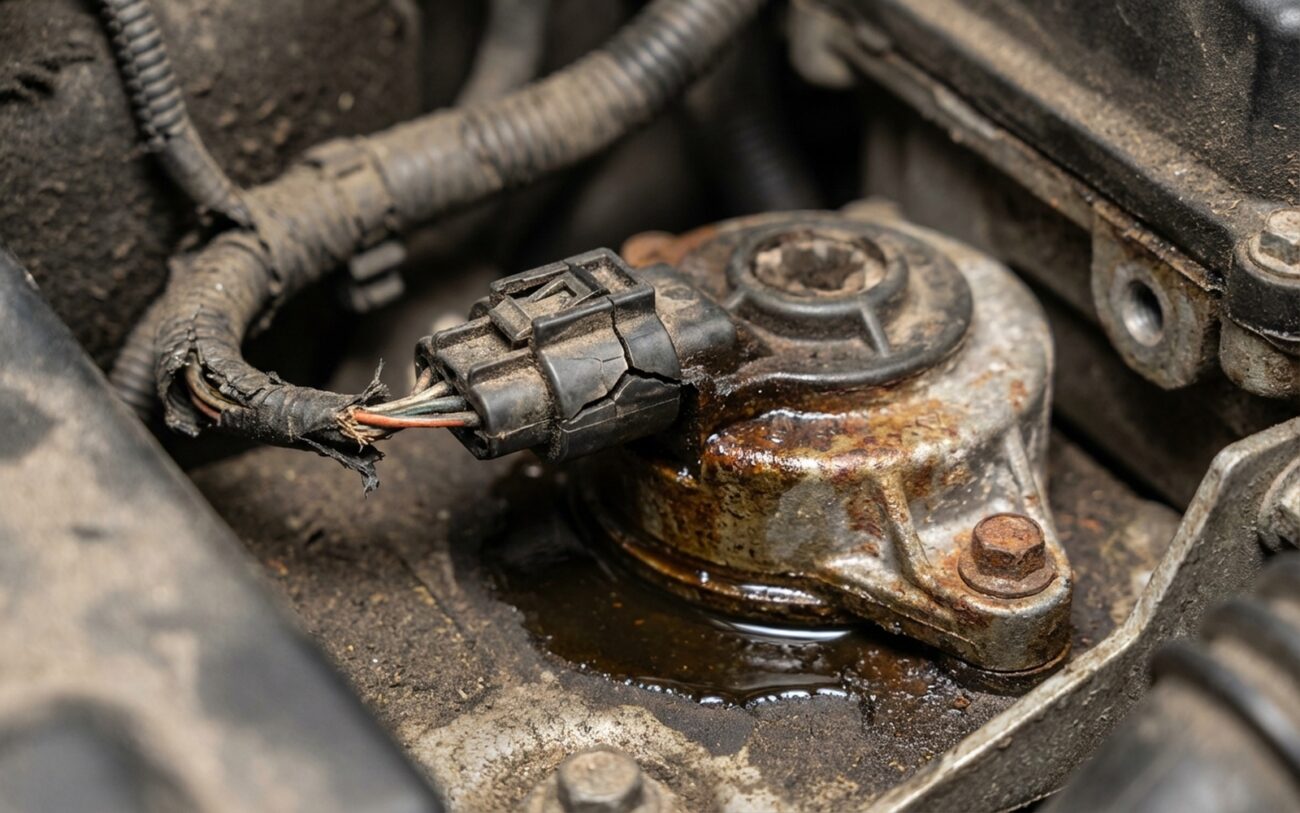
When Your Steering Fights Back: Diagnosing a Bad Torque Sensor
After 25 years under the hood, I’ve seen just about every steering issue you can imagine. But when an electric power steering (EPS) system starts acting up, especially with weird, unpredictable behavior, my first thought often goes to the torque sensor. This isn’t just a minor annoyance; it can seriously mess with how your car handles. The sensor’s job is simple: it tells the computer how much effort you’re putting into the steering wheel, and in what direction. The EPS module then uses that data to command the electric motor to give you the right amount of assist. When that signal goes haywire, you feel it immediately, and it’s rarely a pleasant experience.
Think of it like this: if the sensor is sending bad or erratic information, the power steering motor doesn’t know what to do. It might give you too much assist when you don’t need it, or not enough when you really do. It’s like trying to have a conversation with someone who keeps cutting out on the phone – you miss crucial bits, and the whole thing gets frustrating and unreliable.
I’ve seen drivers describe it in all sorts of ways, but it usually boils down to the steering feeling “off.” It’s not just heavy; it’s inconsistent. And that’s where the real problems start.
Variance: ±2.4Nm
The Symptoms I Typically See
The most common complaint I hear is “notchy” or “grabby” steering, especially at low speeds. You’ll really notice it when you’re trying to park or maneuver in a tight spot. You turn the wheel, and it feels like there’s a slight hesitation, a bit of stickiness, and then suddenly the assist kicks in with a jolt. It’s not that smooth, proportional feel you expect. It’s jerky and just feels unnatural. Over time, this makes low-speed driving frustrating and imprecise.
Another telltale sign, which can be pretty unnerving, is when the car seems to steer itself on the highway. It feels like the power steering is fighting you, almost trying to correct itself when you’re trying to hold a straight line. This usually points to the sensor sending false torque readings even when the wheel is centered.
Safety First
The most serious symptom, and frankly, a dangerous one, is a complete and sudden loss of power steering assist. One moment you’re turning easily, the next it feels like you’re trying to steer a truck with no power assist at all. This can happen without warning, especially at parking speeds, and it’s a huge safety risk, particularly in an emergency. When this happens, you’ll almost certainly see a warning light on the dash – usually a yellow or red steering wheel icon.
My Approach to Pinpointing the Problem
When a customer comes in with these symptoms, my job is to confirm it’s the torque sensor and not something else. It’s easy to jump to conclusions, but a good diagnosis means ruling out other possibilities first. I’m not in the business of replacing parts that aren’t broken. Here’s how I break it down:
| Symptom | Likely Root Cause | Common Mimics (and why we check them) | How I Confirm It’s the Sensor |
|---|---|---|---|
| Intermittent Loss of Assist | Worn potentiometer tracks or dead spots inside the sensor. | Corroded connector pins, poor ground, or a failing EPS motor. (These are simpler fixes, so check them first.) |
I monitor live data on my scan tool for the torque sensor signal. I’m looking for flat spots or sudden, unnatural jumps in the reading as I slowly turn the wheel lock-to-lock. |
| Grabby/Jerky Low-Speed Steering | Internal sensor noise or signal fluctuations. | Binding U-joints in the steering shaft, worn intermediate shaft, or mechanical wear within the steering rack itself. (These can feel similar, so don’t skip inspecting them.) |
I’ll break out the oscilloscope to check the analog waveform from the sensor. A healthy sensor should show a clean, linear signal as the wheel turns. Noise or spikes indicate an internal issue. |
| Highway Drift / Self-Correction | Biased sensor sending false torque readings even when the steering wheel is centered. | Misalignment, tire pull, or an uncalibrated steering angle sensor. (Always check alignment and tire condition first; they’re common culprits for wander.) |
I’ll monitor live torque sensor values while driving straight on a flat road. If the sensor is biased, it will show a non-zero torque value even when the wheel is perfectly centered and the car is going straight. |
Why These Sensors Fail (and What Doesn’t Cause It)
Here’s the tough truth: torque sensors aren’t designed to be repaired or replaced on their own. They’re typically integrated right into the steering rack assembly, sealed up tight and calibrated at the factory. So, when they fail, it’s almost always due to internal wear or, less commonly, a manufacturing defect.
The most common culprit is the degradation of the resistive track inside the sensor. Every time you turn the wheel, even slightly, a small wiper moves across this track. Over years and countless turns, this causes microscopic wear. Eventually, you get high-resistance spots or even open circuits, which leads to those signal losses or the “noise” we see on the oscilloscope. It’s a lot like an old stereo volume knob that crackles when you turn it – same principle, just a lot more critical in a car.
Service Bulletin Alert:
Keep an eye out for Technical Service Bulletins (TSBs). Manufacturers often issue them for known issues like this. For instance, I’ve seen several TSBs for certain GM crossovers, like the Equinox and Terrain, specifically citing internal torque sensor failure as the root cause for EPS warning lights. The prescribed fix is almost always to replace the entire steering gear assembly.
It’s also important to understand what doesn’t cause a torque sensor to fail. Things like misaligned wheels, worn tie rod ends, or a bad wheel bearing won’t directly damage the sensor. Sure, a bad wheel bearing can cause vibration, and worn control arm bushings can lead to highway wander, but those are suspension issues. A torque sensor failure is an internal, electrical, or mechanical breakdown within the steering rack itself.
The Fix: Options, Costs, and What Comes Next
When it comes to fixing a torque sensor, your options are pretty limited. Since it’s not a standalone part you can just swap out, we’re usually looking at a more involved repair. Here’s what’s typically on the table:
Reinitialization & Calibration Professional Only
Steering Rack Replacement Professional Only
Post-Repair Validation: Don’t Skip This!
Once that new rack is in, my work isn’t done. These steps are critical to ensure everything is working as it should:
-
Perform a full EPS module reset and relearn procedure using an OEM-level scan tool. This tells the new module how to behave with the rest of the car.
-
Verify the steering angle sensor calibration. This is crucial for stability control systems (like ESC or ABS) to function correctly. Without it, your car might think it’s turning when it’s going straight.
-
Conduct a thorough test drive on various road surfaces and at different speeds. I’m looking to confirm that the “notchy” feel is completely gone and that the steering is smooth and predictable throughout its range.
What You Can Expect to Pay
The cost for this repair can vary quite a bit depending on your vehicle make and model, and whether you go with an OEM part or a quality aftermarket remanufactured unit. Here’s a general idea:
Diagnostic & Initial Reset
This covers the scan tool diagnostics and any potential software reinitialization. If this fixes it, you got lucky (but it’s usually temporary if the sensor is truly worn).
Full Rack Replacement (Most Vehicles)
This includes the cost of the new steering rack, typically 4–6 hours of labor, and the mandatory four-wheel alignment afterward. Prices vary widely based on the part cost for your specific vehicle.
Luxury Brand EPS Systems
For high-end vehicles (BMW, Mercedes, Audi, etc.), the parts are often more expensive, and the systems can be more complex, sometimes requiring specialized coding or programming, pushing the total cost higher.
My Final Word
Don’t ignore that warning light or those weird steering symptoms. Getting a clear diagnosis from a reputable shop can save you a lot of grief and unnecessary repairs down the line. If it is the torque sensor, get it addressed promptly. There are no effective workarounds – you can’t lubricate it, clean it, or adjust it. The only reliable solution is replacing the faulty component to ensure safe, predictable steering. Your safety, and the safety of others on the road, depends on it.
