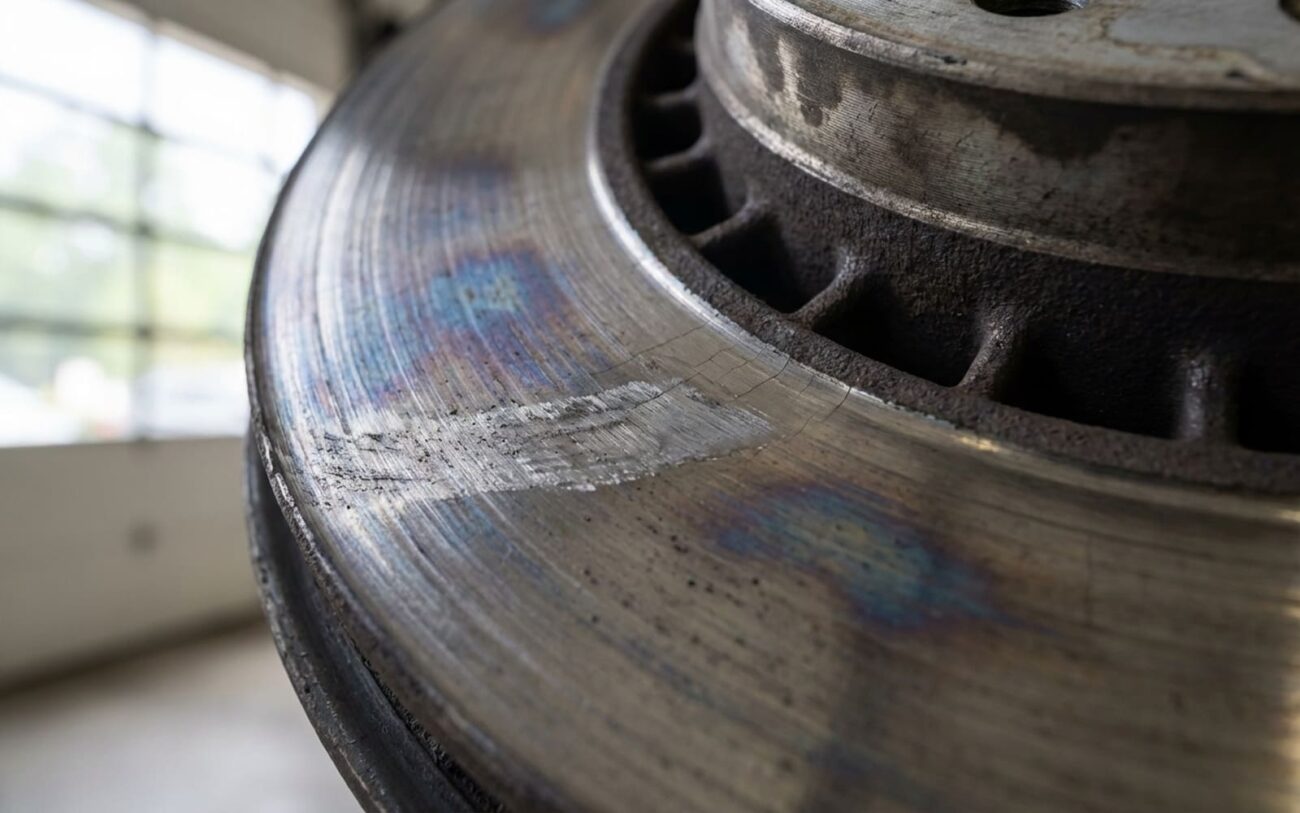
Alright, let’s talk about that irritating shudder or pulse you feel when you hit the brakes. For years, folks called it “warped rotors,” and honestly, it’s a term that’s stuck around even though it’s not always the full story. But whether you’re driving a BMW F30 or an Audi A4 B8, if you’re feeling that vibration, especially through the steering wheel or the brake pedal, your front brake rotors are usually the main culprits. And based on my 25+ years under the hood, it’s a common complaint on these European cars, sometimes as early as 30,000 miles.
What You’re Feeling & What It Usually Means
When a customer comes into my shop with this issue, the first thing I ask is, “When do you feel it?” The classic sign of a rotor problem is a vibration that only shows up when you’re braking. It’s usually most noticeable when slowing down from higher speeds, say between 50 and 70 mph. If your steering wheel is shaking all the time, even when you’re not touching the brake pedal, that’s a different animal—we’re talking tire imbalance, worn control arm bushings, or a failing wheel bearing. Those problems don’t wait for you to apply the brakes.
Now, the type of vibration gives us a big clue:
- Steering Wheel Shudder: If the steering wheel is shaking, you’re likely dealing with Lateral Runout (LRO). Think of it as the rotor wobbling slightly as it spins. As it pushes against the pads and caliper unevenly, that pulse gets transferred right through the steering knuckle and into your hands.
- Brake Pedal Pulsation: A rhythmic throb right through the brake pedal itself usually points to Disc Thickness Variation (DTV). This means the rotor isn’t uniformly thick all the way around. As the pads grab, they’re encountering thick spots, then thin spots, then thick spots again, and you feel that directly in the pedal.
A quick note on “warping”: Most times, what people call “warped” isn’t actually the rotor itself twisting out of shape like a potato chip. It’s usually one of two things: either localized overheating causing metallurgical changes (blue spots) or, more commonly, uneven deposits of pad material on the rotor surface. These deposits create high spots that mimic DTV, but the rotor itself might still be structurally sound. A sticking caliper can also cause this by overheating one side of the rotor, leading to localized distortion.
My Approach to Diagnosis: No Guesswork
I’ve seen too many technicians (and DIYers) replace rotors only to have the shudder return a few thousand miles later. Why? Because they didn’t confirm the real root cause. A worn wheel bearing or a corroded hub interface can mimic rotor issues perfectly. Misdiagnosis wastes time and money, and frankly, it makes you look bad. Here’s how I isolate the true source:
| Symptom | Likely Rotor Cause | My Definitive Test |
|---|---|---|
| Steering wheel vibration under braking | Lateral Runout (LRO) – rotor wobble as it spins |
Mount a dial indicator to the steering knuckle and measure rotor lateral runout. I’m looking for less than <0.05 mm. Anything more, and that rotor's got issues. |
| Brake pedal pulsation under braking | Disc Thickness Variation (DTV) – uneven rotor thickness |
Use a micrometer to measure rotor thickness at 8–12 evenly spaced points around the rotor. If the variation is greater than <0.02 mm, it's out of spec. |
| Blue spotting or discoloration on rotor face | Localized overheating leading to metallurgical changes |
Visually inspect for hot spots. For a more precise check, scan the rotor surface with an infrared temperature gun. A difference of more than 50°C between spots suggests thermal warping or uneven pad material transfer. |
Critical Hub Inspection: Before I even think about new rotors, I always clean the hub mating surface to bare metal. This is non-negotiable. Even a thin layer of rust, dirt, or old anti-seize can prevent the new rotor from seating perfectly concentric and parallel. Just 0.01mm of debris at the hub can translate to significant runout at the outer edge of the rotor, and your new parts will be “warped” before you even leave the driveway. I use a wire brush attachment on a drill, followed by a quick wipe-down.
Why Rotors Go Bad (It’s Not Always Aggressive Driving)
So, why do front brake rotors on vehicles like the BMW F30 and Audi A4 B8 seem to wear prematurely or develop these issues? It’s not always about how hard you drive. In my experience, it’s a combination of engineering choices, material limitations, and assembly precision.
- Material Choices: Many OEM rotors today use a cost-effective cast iron formulation. While lighter for reduced unsprung weight, this metallurgy often has a lower carbon content, making it more prone to heat-induced distortion and less resistant to thermal fatigue.
- Thermal Stress: These cars are relatively heavy, and modern designs often feature thinner-cast rotors. This combination means the rotors are working harder to dissipate heat. Repeated hard braking without adequate cooling can push the rotor past its thermal limits, leading to those localized metallurgical changes or uneven pad material transfer.
- Hub-to-Rotor Interface: This is huge, and I mentioned it earlier. If the hub face isn’t perfectly clean and flat, the rotor won’t sit concentrically. Even a tiny bit of corrosion or debris forces the rotor into a non-parallel position from day one. Then, every time you brake, it’s unevenly loaded, and problems develop quickly.
Your Options for a Fix
Once we’ve pinpointed the problem, we’ve got a few ways to get you back to smooth stops:
Resurfacing (Turning) the Rotors Professional Lathe Recommended
Full Rotor and Pad Replacement
System Upgrade
After the Repair: Don’t Skip This!
A repair isn’t complete until it’s verified. After resurfacing or replacing your rotors, I always recheck the lateral runout with a dial indicator. The reading should be 0.03 mm or less. If it’s not, you’ve got to figure out why before the car leaves the bay.
Then, and this is non-negotiable, you must perform a proper brake bedding procedure. This isn’t just for performance cars; it’s crucial for any new pads and rotors to ensure they mate correctly and perform optimally.
The Bedding Procedure I Use:
Find a safe, open road. Make 5–6 controlled, firm stops from 60 mph down to about 10 mph. The key here is not to come to a complete stop. Allow about 30 seconds of driving between each stop to let the brakes cool slightly. This process evenly transfers pad material onto the rotor surface, creating a uniform friction layer that’s absolutely essential for smooth, quiet, and effective braking.
Making the Call: Cost vs. Longevity
When it comes to fixing brake judder, you’ve got options, and they come with different price tags and success rates. Here’s how I typically break it down for my customers:
Resurface Rotors
This usually has a 60-70% success rate for long-term fixes. It’s a good budget option, but there’s a higher risk of the problem coming back if the underlying hub corrosion or other issues aren’t perfectly addressed. It’s often a temporary band-aid.
OEM Replacement
This is the standard approach for BMW/Audi axle sets, including new pads. When done correctly, I see an 85-90% success rate. You’re getting fresh components designed for your vehicle, and with proper installation, they should last.
Performance Upgrade
For those who want superior longevity and heat resistance, especially if they’re hard on their brakes, this is the way to go. Expect a >95% success rate. You’re investing in better materials and engineering, which pays off in performance and durability.
Keeping It Smooth: Prevention & Monitoring
My Top Maintenance Habits to Prevent Judder:
-
Clean the hub mating surface every single time the wheels come off. Get rid of that oxidation and debris. This is probably the most overlooked step.
-
Choose quality pads. I recommend ceramic or low-metallic pads designed for street use. They minimize deposit buildup and are generally quieter.
-
Always follow the bedding procedure after any pad or rotor replacement. Seriously, don’t skip it.
-
Avoid holding the car still with the brake pedal after aggressive driving. If your brakes are hot, use the parking brake instead. This prevents pad material from transferring unevenly onto a hot rotor surface.
For related brake and steering concerns, see: Why Do High-Pressure Power Steering Hoses Leak on Older BMWs (E39, E46)? and Electric Power Steering (EPS) vs. Hydraulic Power Steering (HPS): How It Works and Key Differences.
