Alright, let’s talk about that rotten egg smell from your exhaust. If you’re catching a distinct sulfur odor, especially when you’re idling or letting off the gas, don’t just wave it off. That’s hydrogen sulfide (H₂S), a natural byproduct of burning gasoline, and it means your catalytic converter isn’t doing its job. A healthy cat should convert that stinky H₂S into odorless sulfur dioxide (SO₂). When you smell it, the converter’s failing. And usually, this comes with a Check Engine Light, throwing codes like P0420 or P0430, which tells us the catalyst efficiency is below threshold.
Now, this isn’t going to leave you stranded on the side of the road tomorrow, but it’s a serious warning. I’ve seen it countless times: a misfire or a rich fuel condition dumps unburned fuel into the exhaust, superheating the converter and melting it from the inside out. What really grinds my gears is when a tech just replaces the cat without fixing that underlying issue. Guess what? The new one fails in a few weeks, and the customer is out thousands of dollars for nothing. Don’t be that guy.
Diagnosing the Rotten Egg Smell & P0420/P0430: It’s Not Always the Converter
So, you’ve got the smell, maybe a P0420 or P0430 code. Your first thought is “bad cat,” right? Not so fast. While those are strong indicators, a lot of other things can either mimic the smell, trigger those codes, or even cause the converter to fail prematurely. You gotta dig deeper.
I’ve seen temporary rotten egg smells from a tank of bad gas – high sulfur content, simple as that. Or maybe the engine’s been burning oil or leaking coolant into the combustion chamber, slowly poisoning the catalyst. And sometimes, the converter itself is fine, but an exhaust leak or a faulty oxygen sensor is tricking the computer into thinking it’s dead. It’s like replacing a clogged cabin air filter without realizing the duct is full of debris – you’re just putting a band-aid on a bigger mess.
My Analogy
“It’s like replacing a clogged cabin air filter without realizing the duct is full of debris.”
Here’s how I break down the common symptoms and what tests I go for:
| Symptom | Likely Root Cause | Common External Mimics | Definitive Test (What I Do) |
|---|---|---|---|
| Rotten egg smell from exhaust | Catalyst poisoning (from sulfur, phosphorus, or silicone) or thermal degradation (substrate melted from excess heat) | High-sulfur gasoline, excessive oil consumption, coolant entering combustion chamber |
First, I’ll run a 4- or 5-gas exhaust analysis. A working converter will show near-zero HC and CO downstream. Then I’ll check fuel quality (if suspicious) and always verify oil/coolant levels and consumption. |
| DTC P0420 / P0430 | Degraded catalyst coating, cracked or collapsed substrate | Exhaust leak before converter, faulty downstream O₂ sensor, engine misfire, vacuum leak |
I’ll use a scan tool to watch the O₂ sensor waveforms. A healthy downstream sensor should show a slow, dampened signal, not mirroring the upstream. For leaks, a smoke test is definitive. I also check for misfire codes (P030X) and fuel trim issues. |
The bottom line here? Don’t just bolt in a new catalytic converter because you see a P0420 code. That’s a band-aid fix, and it’s a quick way to lose a customer’s trust. You have to diagnose the entire system. I’ve pulled converters that looked perfectly fine inside—only to find the real problem was a cracked manifold gasket upstream, dumping false lean signals into the downstream O₂ sensor circuit. Or maybe a failing injector was causing a slight misfire the customer barely noticed, but it was slowly killing the cat.
The Real Killers: Why Catalytic Converters Fail Internally
Once we’ve confirmed the converter itself is indeed faulty, it’s usually because of one of these internal mechanisms. Understanding which one helps me figure out what else might be going wrong with the engine, because remember, the cat is often a victim, not the perpetrator.
Catalyst poisoning is probably the most common. The precious metals—platinum, palladium, rhodium—that do all the work get coated and deactivated. Sulfur comes from low-quality fuel; I see this more in areas with less stringent fuel regulations. Phosphorus and zinc are from engine oil additives, so if your car’s burning oil, those elements are slowly coating the catalyst. Silicone poisoning usually points to coolant leaks, often from a head gasket or intake manifold leak that’s letting coolant into the combustion chamber. I’ve had cars come in with a P0420, and a quick sniff of the exhaust tells me it smells sweet, not just rotten eggs – that’s coolant.
Thermal degradation is another big one. This happens when raw, unburned fuel gets into the exhaust and ignites inside the converter. Think misfires, leaking fuel injectors, or a faulty fuel pressure regulator. All these can dump too much fuel downstream. That causes localized temperatures to spike, sometimes over 1600°F (870°C), which is hot enough to melt the ceramic substrate into a solid, restrictive mass. Not only does this kill efficiency, but it creates a blockage that chokes engine performance, sometimes making the car barely run.
Thermal shock is less frequent but it happens. Imagine a super-hot converter, say after a long highway drive, suddenly hitting a deep, cold puddle. That rapid temperature change can cause the ceramic substrate to contract violently and crack. If I suspect this, I’ll listen for a rattle when the car’s off—that’s usually broken pieces of substrate moving around inside the shell.
And then there’s substrate erosion. This is pretty rare, but I’ve seen it on high-mileage or poorly maintained engines. Abrasive particles, maybe from a failing turbocharger or even internal engine wear, can physically wear down the catalyst coating. It’s not common, but it’s a possibility to keep in the back of your mind.
Some engines are definitely more prone than others. Certain V6 and turbocharged inline-4 engines—especially in some European models like BMWs and Mercedes-Benz—have known sensitivities to fuel sulfur content and oil consumption, which leads to recurring P0420 codes. I’ve checked service bulletins for specific model years addressing these sulfur-related issues, so it’s always worth a look. But here’s the critical part: a misfire isn’t a converter failure. Oil burning isn’t a converter failure. Those are engine problems that cause the converter to fail. Always diagnose the root, not just the result. That’s my mantra.
Fixing a Failed Converter: Your Options (and What I Recommend)
Let’s be absolutely clear: there’s no magic field-repair for an internally failed catalytic converter. If that substrate is melted, cracked, or poisoned, replacement is the only reliable fix. Period. But let’s break down the options based on what I typically see.
This Is Professional Territory
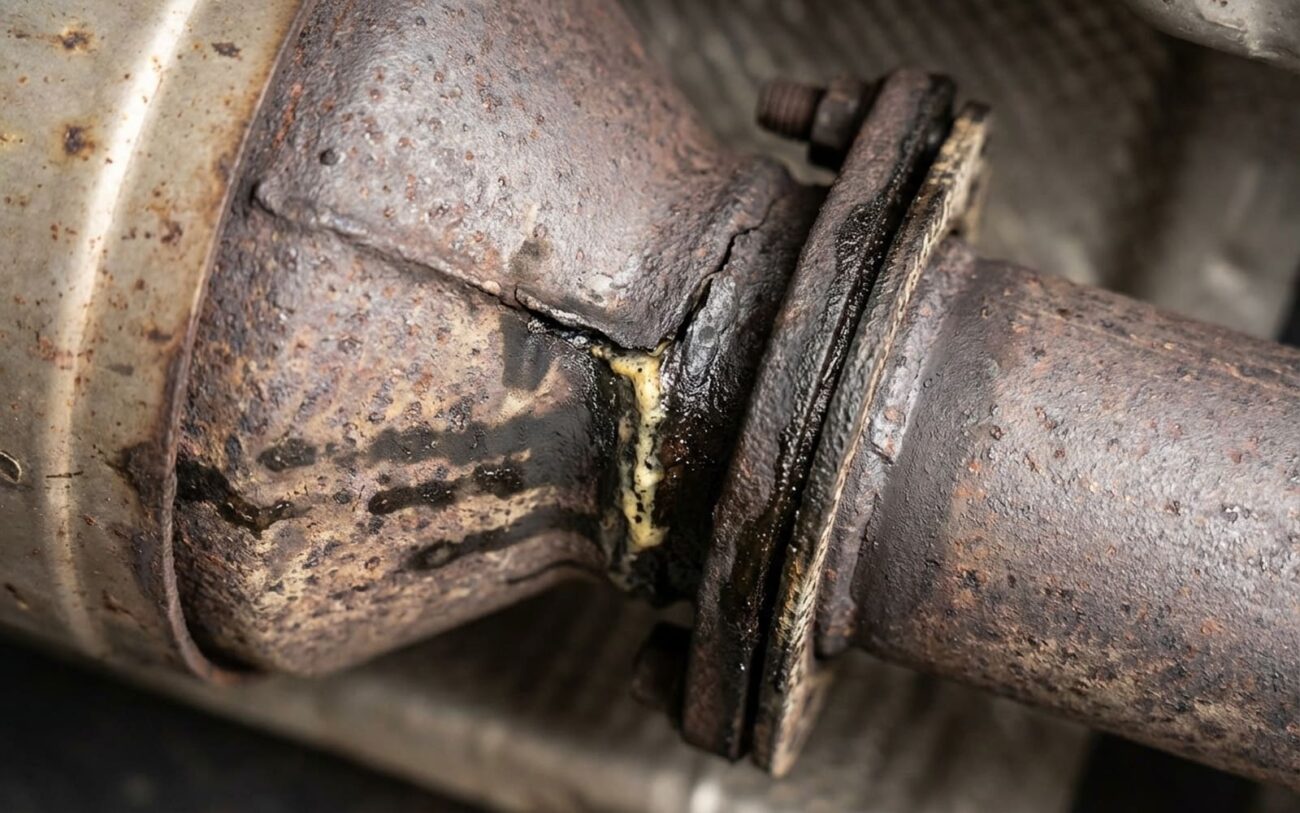
Now, external damage, like a cracked weld on the stainless steel housing, can sometimes be repaired. But this is [PROFESSIONAL-ONLY]. You’ll need a TIG welder, argon shielding gas, and the correct stainless steel filler rod. Trying this with a MIG or stick welder often leads to warping, and then you’ve just made things worse.
Internal Failure: Replace Only Non-Repairable
The Replacement Procedure Professional Recommended
How I Verify the Repair Was Actually Successful
Replacing the converter isn’t the finish line; it’s just the starting point for validation. First thing I do is clear all diagnostic trouble codes and then perform a full OBD-II drive cycle. The goal is to get all emission monitors, especially the Catalyst Efficiency monitor, to display “Ready” status without that pesky P0420 or P0430 code returning. This can take several drive cycles, sometimes over a hundred miles, so don’t assume it’s fixed just because the light is off after the first drive.
Exhaust Gas Targets (at 2500 RPM, engine hot)
-
Hydrocarbons (HC): less than 100 ppm
-
Carbon Monoxide (CO): less than 0.5%
-
Oxygen (O₂): 0.5–2%
-
No detectable hydrogen sulfide (H₂S)
If those numbers are clean and the rotten egg smell is gone once the engine is hot, you’re on the right track. A good scan tool with live data is absolutely essential here. I’ll monitor the downstream O₂ sensor behavior. A properly functioning converter will show a slow, steady signal—it shouldn’t be fluctuating rapidly like the upstream sensor. If it’s bouncing around like the upstream, that new cat isn’t working, or you’ve still got an issue upstream causing it to fail.
Cost, Value, and When to Walk Away
Look, this repair can be expensive, and you need to go in with realistic expectations. Here’s what I typically see for costs and risks:
| Repair Type | DIY Cost | Shop Cost | Success Rate | Secondary Risk |
|---|---|---|---|---|
| Catalytic Converter Replacement | $500–$2,000 (EPA-compliant part) | $1,000–$3,000+ (parts and labor) | >95% (if root cause fixed) | New converter failure if engine issue persists; manifold warping or stripped bolts; emissions test failure with cheap parts. |
The biggest variable is always the part cost. Some vehicles have single, easily accessible converters that aren’t too bad. Others—especially performance or luxury models—have multiple cats, sometimes integrated right into the exhaust manifold. That makes replacement far more labor-intensive and expensive. My rule of thumb? If the quote for the repair exceeds 60% of your vehicle’s private-party value (check Kelley Blue Book or similar) and you’re not legally required to pass emissions, it’s really worth considering if investing in the repair makes financial sense. I’ve seen people spend $2,800 on a cat for a car worth $4,000—that’s a tough pill to swallow, and sometimes, replacement just isn’t the smart move.
How to Keep Your Converter Healthy (Prevention is Key)
Preventing catalytic converter failure comes down to one core principle: keep your engine running clean and efficiently. Seriously, that’s it. The number one thing you can do is address engine problems immediately. A misfire (P030X codes) means raw fuel is entering the exhaust—that’s the leading cause of thermal meltdown, and I see it weekly. Don’t drive with a flashing Check Engine Light; that means a severe misfire is happening right now. Same goes for excessive oil consumption. Burning a quart every 1,000 miles? That phosphorus is coating your converter, slowly killing it. Tackle the root cause—worn piston rings, valve seals, or PCV system issues—before it costs you more down the road.
My Maintenance Best Practices
Always use the correct oil specification. Modern oils like API SP or Dexos1 are specifically formulated to limit harmful additives that can poison your cat. Fill up at reputable gas stations—consistent fuel quality reduces the risk of sulfur spikes. And always use the octane rating recommended in your owner’s manual. Lower octane can cause knock and misfires, especially in today’s turbocharged engines, and that’s just asking for trouble.
