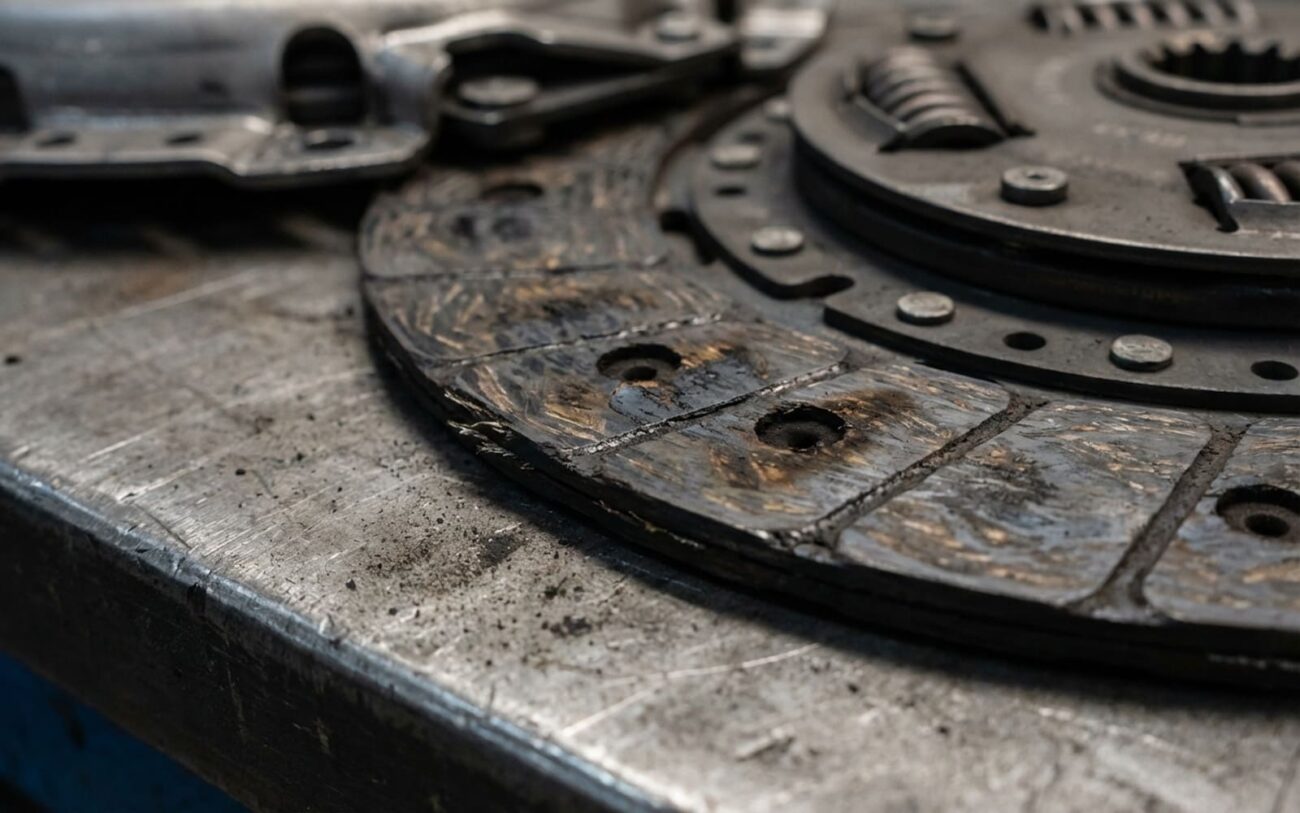
That sharp, acrid smell after you’ve really leaned on the accelerator? Like burnt hair or scorched paper? Yeah, I know that smell. I’ve diagnosed it hundreds of times in my 25+ years in the shop, and more often than not, it means your manual transmission’s clutch disc is getting cooked. It’s slipping, overheating, and literally burning up.
What That Burning Smell Really Means
When you smell that distinct odor, it’s the friction material on your clutch disc breaking down. This material, usually organic resins, isn’t built for sustained high heat. When it gets too hot from excessive slippage—say, during a hard launch, aggressive shifting, or trying to pull a heavy load uphill—those resins start to burn. That’s the smell. It’s a clear sign that power isn’t transferring efficiently from the engine to the wheels.
Beyond the smell, your senses are key. If the engine revs climb quickly but the car doesn’t accelerate proportionally, especially during hard acceleration or when going uphill, you’ve got slippage. In a manual, RPM and road speed should be directly linked in each gear. If they’re not, power isn’t getting to the ground, and the clutch is the prime suspect. And if you see blue-gray smoke near the bellhousing or transmission tunnel, don’t ignore it. That’s likely clutch dust igniting, or oil from a rear main seal leak hitting hot metal. Either way, it’s bad news.
How I Pinpoint the Problem: Clutch or Something Else?
That burning smell is a strong clue, but it’s not definitive proof. Plenty of other things can produce a similar odor, and jumping to conclusions will cost you time and money. Here’s how I differentiate what’s actually burning:
First, consider the symptoms:
- Burning smell after hard acceleration, with performance loss: This is classic clutch slippage. The engine revs up, but the car doesn’t pick up speed like it should. The smell is often described as acrid, like burnt hair or toast.
- Smoke from the bellhousing area: This is a serious red flag. It could be burning clutch dust, or even oil from a leaking transmission input shaft seal or engine rear main seal hitting the hot clutch or flywheel.
- Burning smell without performance loss: If your car is still pulling strong, it’s highly unlikely to be the clutch. A slipping clutch always results in power loss. This usually points to something external.
Next, let’s rule out the common mimics:
- Dragging brake pad or seized caliper: This often smells like hot metal or burning rubber, and you might feel the car pulling to one side or notice a hot wheel. An infrared thermometer is your friend here.
- Debris on the exhaust manifold: Leaves, plastic bags, or even spilled oil can burn off on a hot exhaust, creating various unpleasant smells. This is usually temporary.
- Melted wiring insulation: This has a very distinct, sharp electrical burning smell. You might also notice electrical issues in the car.
- Overheated serpentine belt or failing accessory bearing: These can produce a rubbery, burning smell, sometimes with a squeal or whine. A mechanic’s stethoscope can help isolate bearing noise.
- Rear main seal leaking oil onto the flywheel/clutch: This can mimic a burnt clutch smell and even cause smoke. The difference is the oil contamination is the cause of the slip, not just the clutch material failing on its own. UV dye in the engine oil can confirm this.
My Go-To Diagnostic Tests:
I don’t guess in the shop; I test. Here are the definitive steps I use:
- The Clutch Slip Test: Find a safe, open road. Get into 3rd or 4th gear at about 25–30 mph (around 2,000 RPM). Then, floor the throttle. If the engine RPMs jump significantly without a corresponding increase in road speed, your clutch is slipping. This is the most reliable test for a failing clutch disc.
- Infrared Thermometer Check: If I suspect brakes, I’ll use an infrared thermometer to check the temperature of each brake rotor. A dragging brake will be significantly hotter than the others. A cheap one, maybe $30-40, is a must-have tool.
- Borescope Inspection: If I see smoke or suspect an internal leak, a basic borescope ($50–$100) through the bellhousing inspection port can often give me a peek at the flywheel and clutch components without dropping the transmission. It’s not always perfect, but it can save hours of labor.
- Mechanic’s Stethoscope: For accessory noise or bearing issues, a stethoscope helps pinpoint the exact source of a squeal or grind.
- UV Dye for Leaks: If I suspect an oil leak is contaminating the clutch, I’ll add UV dye to the engine oil (or transmission fluid if I suspect the input shaft seal), run the car, then check with a black light. It makes leaks glow bright.
A quick note: If you’re also having electrical issues, especially if the car struggles to start, rule out battery or charging system faults first. Sometimes a weak electrical system can cause weird symptoms that distract from the real problem. That’s a whole different can of worms, covered in detail here: How to Tell If Your Battery Is Dead or If You Have a Charging System Problem.
Why Clutches Fail (It’s Not Always Your Fault)
A burnt clutch isn’t always about aggressive driving or riding the clutch. While those are common culprits, internal failures can happen even with good habits. Here’s what I typically see:
- Thermal Degradation (Pyrolysis): Most OEM clutch facings use organic resins. These have a hard limit on heat tolerance. Once surface temperatures exceed about 300°C (572°F), those resins literally start to break down and carbonize. This process, called pyrolysis, turns the material brittle and glazed. It loses its grip, leading to more slip, which creates even more heat. It’s a vicious cycle that quickly destroys the clutch. You’re not just wearing it out; you’re chemically destroying it.
- Mechanical Fatigue: Inside the clutch disc are cushion springs (sometimes called marcel springs) that help smooth out engagement. Over time, these can weaken, sag, or even break. When that happens, the pressure distribution across the clutch disc becomes uneven. This creates hot spots, accelerating wear in specific areas. You might not notice obvious slip at first, but the damage is definitely underway.
- Contamination: This is a silent killer. If gear oil seeps past a worn transmission input shaft seal, or engine oil drips through a faulty rear main seal, it soaks into the friction material. Oil drastically reduces the coefficient of friction—think trying to stop on ice. Even normal driving loads can cause slip, which then leads to heat and burning. In my experience, oil-contaminated discs are often misdiagnosed as driver abuse, but the root cause is a leaking seal.
It’s important to differentiate: a burning smell from a seized brake or an overheated belt is not a failing clutch disc. Same goes for a hydraulic failure—like a collapsed clutch master cylinder—that prevents full disengagement. The disc might get damaged as a result of these issues, but the primary failure isn’t the clutch material itself.
The Fix: What It Takes to Get Back on the Road
Once you’ve confirmed the clutch disc is burnt or contaminated, the repair path is clear: you replace the entire clutch assembly. That means a new clutch disc, pressure plate, and release bearing at minimum. The flywheel must be inspected—if it’s cracked, heat-checked, or glazed, it needs resurfacing or replacement. Installing a new clutch against a damaged flywheel is a recipe for rapid failure; it just won’t seat properly.
Professional Territory Only
I’ll be honest with you: for most modern front-wheel-drive or even many rear-wheel-drive passenger cars, this is a PROFESSIONAL-ONLY job. Removing the transmission usually requires a lift, a specialized transmission jack, and precise alignment when putting it back together. It’s not a job to rush or tackle without the right equipment. That said, some older rear-wheel-drive trucks or cars with good access might be DIY-FEASIBLE if you have the right tools, a sturdy workspace, and plenty of patience.
If you’re tackling this yourself, here’s what you’ll need: a transmission jack, a calibrated torque wrench, a clutch alignment tool (which usually comes with the kit), and possibly a flywheel holding tool. Parts-wise, you’ll need a complete OEM or high-quality aftermarket clutch kit, new flywheel bolts (many are torque-to-yield and should never be reused), and a new pilot bearing if your model uses one. Torque specs are absolutely critical—follow the OEM service manual to the letter. Pressure plate bolts usually torque between 15–25 ft-lbs in a star pattern, and flywheel bolts often require specific angle-tightening procedures after an initial torque. Don’t skip these steps.
How to Confirm Your Repair Actually Worked
After all that work, don’t just drive off and hope for the best. You need to validate the repair under load. The test is simple: on a safe, open stretch of road, get into 3rd or 4th gear at around 2,000 RPM and floor the throttle. The engine should pull smoothly with the vehicle speed—no sudden RPM spike, no hesitation, and certainly no chatter. The clutch should engage firmly and consistently, just like a new one should.
Also, listen for any new noises. Grinding could mean a bad release bearing, while a chirping might point to a dry or improperly installed pilot bearing. If you replaced a leaking input shaft seal, keep an eye on transmission fluid levels. And always confirm the clutch master cylinder reservoir stays full—no drops mean no hydraulic leaks.
Cost, Warranty, and Long-Term Outlook
Let’s talk real numbers. Clutch replacement isn’t cheap, and costs vary widely based on your vehicle and where you get the work done. Here’s a general idea:
| Repair Type | DIY Cost (Parts) | Shop Cost (Parts & Labor) | Success Rate | Secondary Risk if Repair Failed |
|---|---|---|---|---|
| Clutch Kit Replacement (Standard) | $300 – $800 | $1,200 – $2,500 | >95% | Flywheel not resurfaced: vibration, rapid wear. Misaligned clutch: input shaft damage. |
| Clutch Kit + Flywheel Replacement | $500 – $1,500 | $1,500 – $3,500 | >98% | Incorrect flywheel bolt torque: risk of catastrophic failure under load. |
There’s also the financial reality. If the repair cost approaches 40% or more of the car’s private-party value—especially on a high-mileage commuter vehicle—it’s worth asking whether the repair makes sense long-term. A clutch is a wear item, so on an aging car, this could be the first of several major repairs. Weigh that investment carefully.
How to Avoid This in the First Place
Prevention comes down to two things: driving habits and early detection. The biggest enemy? Riding the clutch. Keep your foot off the pedal unless you’re actively shifting. Don’t rest your foot on it while driving—that applies constant pressure, wears out the release bearing prematurely, and promotes slippage.
Make shifts clean and decisive. Don’t “feather” the clutch longer than necessary, especially when starting on hills or in heavy traffic. If you drive a turbocharged or tuned car with increased torque, know that the stock clutch may not be up to the task. In those cases, upgrading to a performance clutch with higher heat tolerance and better friction material is a smart move—not overkill. I’ve seen too many stock clutches get smoked in modified cars.
