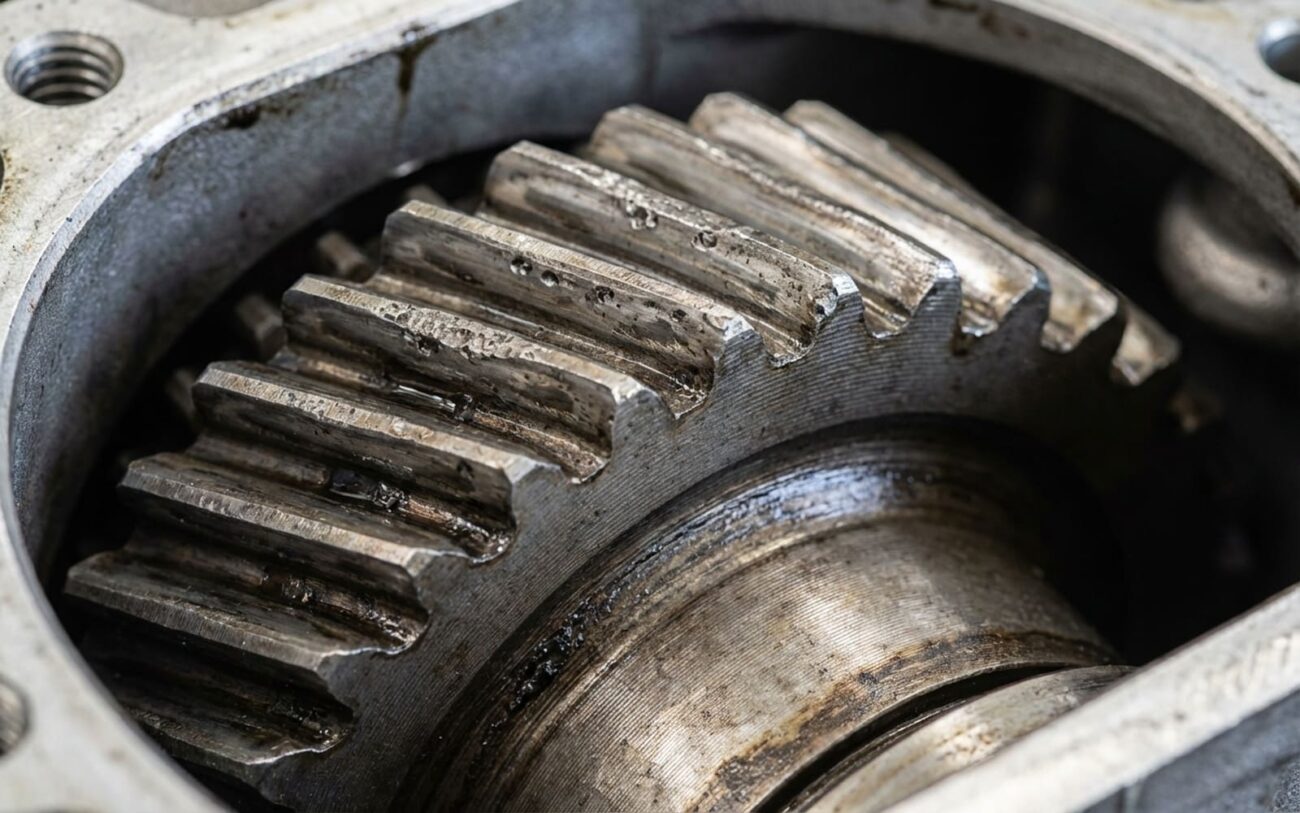
Alright, let’s talk about that whine. You’ve got a Lada Vesta (VAZ 2180 manual transmission), and you’re hearing a distinct, mechanical whine that kicks in somewhere between 3rd and 5th gears. It’s not just road noise; it’s a warning. And after 25+ years turning wrenches, I can tell you exactly what that sound means and how to deal with it.
Diagnosing That Whine: Where It’s Coming From
First things first: that whine being isolated to your higher gears (3rd, 4th, 5th) is your biggest clue. On the VAZ 2180, those gears are designed for efficiency and higher RPM cruising, and they handle load differently than your beefier 1st and 2nd gears. When a noise shows up selectively in those upper gears, it screams wear or damage to the components specific to those gear sets. We’re talking output shaft assembly, the 3rd-5th synchronizers, or their supporting bearings.
Now, here’s the critical part of the diagnosis: does the noise track with road speed or engine RPM? If you put the car in neutral and rev the engine, does the whine follow the tachometer? If it doesn’t, and it only appears under load, changing pitch as you accelerate through those gears, then you’ve narrowed it down significantly. That tells me the issue is downstream of the clutch, spinning at output shaft speed. It’s almost certainly internal to the transmission itself.
I’ve seen a lot of what sounds like a gear whine turn out to be something simpler, but the gear-specific nature is key. Here’s how I rule out the usual suspects:
-
Clutch Pedal Test: If the noise disappears when you depress the clutch pedal, that points away from the transmission internals and more towards the input shaft bearing or the clutch release (throw-out) bearing. If the noise stays with the clutch depressed, it’s definitely further downstream.
-
Neutral Rev Test: As I said, if you rev the engine in neutral and the whine doesn’t change, your engine and clutch assembly are likely innocent.
-
Swerve Test (for wheel bearings): If you suspect a wheel bearing (which often mimics gear noise), find a safe spot and gently swerve the car left and right at speed. If the noise gets louder when turning in one direction (loading one side), it’s a wheel bearing. Transmission noise won’t care about cornering load.
-
Mechanic’s Stethoscope: This is your best friend. Get the car safely on a lift, put it in gear (if possible and safe), and use the stethoscope on different parts of the transmission case. A whine from the mid-to-rear housing, especially when in 3rd-5th, points directly to those gear sets and bearings.
From my experience, if that whine is tied to specific gears and changes with road speed, you can bet your last dollar it’s inside the gearbox. External components like wheel bearings or the differential don’t pick favorites; they’ll make noise regardless of which gear you’re in.
The Usual Suspects: What’s Failing Inside
Once we’ve confirmed the transmission is the source, it’s time to talk about what’s actually failing inside. The VAZ 2180 gearbox isn’t immune to wear, and for a 3rd–5th gear whine, I’ve got a few likely culprits:
-
Output shaft bearing failure: This is probably the most common cause I see. The output shaft supports those higher gears and spins at road speed. When that bearing wears out, it allows the gear to run slightly off-axis, and that misalignment creates a harmonic whine.
-
Synchronizer wear (3rd–5th gears): The brass synchronizer rings are designed to equalize speed between the gear and the shaft for smooth shifts. Over time, they wear down, especially if the driver has a habit of short-shifting or forcing gears. When the synchro can’t do its job smoothly, it can create a grinding or, yes, a whining noise.
-
Gear tooth pitting or misalignment: The constant mesh gears for 3rd–5th can develop surface fatigue—pitting, in other words—especially if the transmission has run low on oil or been abused. This pitting disrupts the smooth mesh of the gear teeth, causing that high-pitched whine.
-
Input shaft or laygear bearing wear: While less common for gear-specific noise, a failing input shaft or laygear bearing can indirectly affect the 3rd–5th gear mesh by allowing the shafts to misalign. It’s usually more of a general transmission noise, but worth considering if other culprits are ruled out.
On a related note, I don’t have a factory Lada TSB (Technical Service Bulletin) on file for this exact issue, but I’ve seen enough user reports from forums like Lada-Vesta Club and Drive2.ru to know there’s a pattern of premature synchro and bearing wear in some 2015–2017 models. Some folks point to early production units being filled with suboptimal mineral-based gear oil instead of the recommended synthetic GL-4. That kind of shortcut can really shorten a transmission’s life.
Fixing It: Your Options Explained
This is Professional Territory, Folks.
Let’s be clear: there’s no quick fix for a gear-specific whine in the VAZ 2180. This isn’t a fluid leak or a loose mount you can just tighten up. Every likely cause—bearings, gears, synchros—requires full transmission disassembly. That means pulling the gearbox from the car, which is a two-person job at minimum, and you’ll need specialized tools. Don’t try to “additives” your way out of this; it won’t work.
Path A: Isolated Bearing Replacement
Path B: Gear and Synchronizer Replacement
Path C: Catastrophic Failure – Full Assembly Swap
And one last thing I want to drill into you: no, a transmission additive or fluid change won’t fix this. I’ve seen countless people try “miracle” oils hoping to quiet the whine. They don’t work. Once metal is worn, it’s gone. Driving it longer just spreads the damage and turns a fixable problem into a much more expensive one.
Post-Repair Validation: Did You Actually Fix It?
Reassembly and reinstallation are only half the job. You need to confirm the repair actually worked. Here’s how I do it in my shop:
-
Road test under load: Drive through all gears, paying extra attention to 3rd–5th. The transmission should shift smoothly with no whine, grinding, or hesitation. Listen closely under both acceleration and coast-down. Any lingering noise means you missed something or didn’t fix it completely.
-
Break-in inspection: After about 400–500 km (250-300 miles), drain the gear oil or at least remove the magnetic drain plug. You’ll likely see some fine clutch dust, which is normal. What you absolutely don’t want to see is metal shavings, chunks, or a glittery sheen in the oil. If you do, you’ve got problems.
-
Stethoscope check (again): Use chassis ears or a mechanic’s stethoscope on the transmission case, especially near the output shaft and bellhousing. Compare sound levels to what a known-good unit sounds like if you have access to one. It should be quiet.
Cost, Risk & When to Walk Away
Let’s talk numbers. These are real-world estimates based on parts availability and labor rates in markets where the Lada Vesta is common. Your costs may vary depending on your location and shop, but the proportions usually stay the same.
| Repair Type | DIY Cost (Parts Only) | Shop Cost (Est. Labor + Parts) | Success Rate | Secondary Risk |
|---|---|---|---|---|
| Transmission R&R + Bearing Replacement | $150–$300 | $800–$1,500 | High (>90%) | Secondary bearing failure if misassembled |
| Transmission R&R + Gear/Synchro Replacement | $400–$800 | $1,500–$2,500+ | Moderate-High (80%) | Incorrect backlash leads to rapid re-failure |
| Used Transmission Assembly Swap | $600–$1,200 | $1,800–$3,000 | Variable (50–80%) | Unknown wear may lead to repeat failure |
Here’s the rule I use with customers: if the repair cost exceeds 50–60% of the car’s current market value, you need to seriously consider the total cost of ownership. If you’re putting $2,500 into a $4,000 car, you’re upside down in equity, and that money might be better spent on a different vehicle. In that case, a used transmission swap might buy you some time, but it’s still a gamble. Sometimes the smarter move is just to cut your losses and move on.
Prevention & Monitoring: Keep It Healthy
To Prevent Recurrence
-
Use the correct gear oil: This is non-negotiable. Always use GL-4 75W-80 or whatever the manufacturer specifically recommends. GL-5 oils, while common for differentials, contain sulfur-based additives that will attack brass synchronizers over time. I’ve seen it happen.
-
Change oil on schedule (or sooner): If the manual says 60,000 km, change it at 50,000. Fresh oil keeps bearings properly lubricated and washes away microscopic wear particles before they can do real damage. It’s cheap insurance.
-
Drive smoothly: Avoid slamming gears or riding the clutch. Aggressive shifts accelerate synchronizer wear, especially in 3rd–5th where the synchros are often smaller and work harder. Be gentle.
-
Inspect for leaks: During routine maintenance, always check the transmission case, axle seals, and filler/drain plugs for any signs of leaks. Low fluid level is a fast track to bearing and gear failure.
-
Listen early: The first faint whine is your best warning. Don’t wait for it to get worse or change into a grind. Diagnose it now, before internal damage spreads and turns a manageable repair into a full-blown catastrophe.
