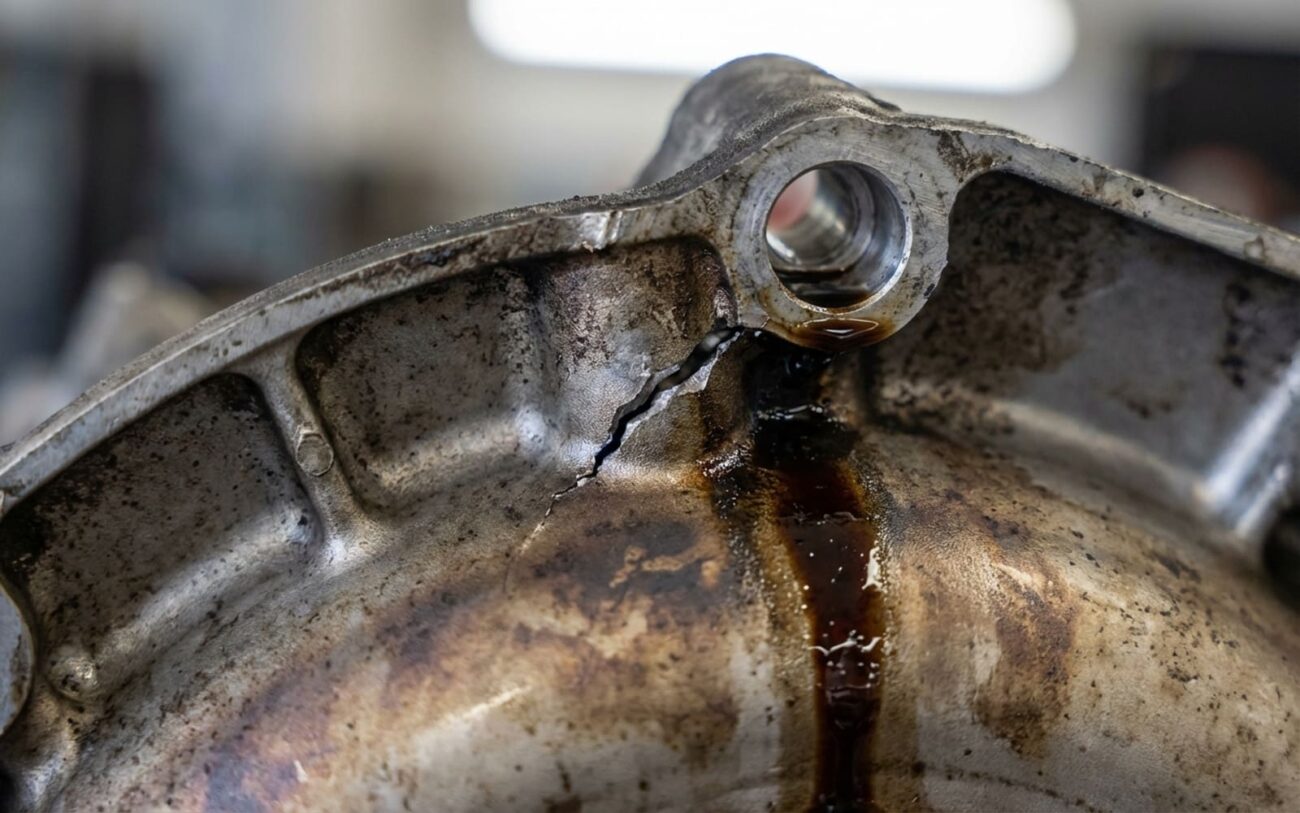
Alright, let’s talk about the Jatco RE5R05A 5-speed automatic transmission. If you’ve got a Nissan Maxima, Pathfinder, or one of those other mid-2000s to early 2010s models, chances are you’ll eventually run into torque converter trouble. I’ve pulled more of these units out of Nissans than I care to count, and I can tell you, the symptoms are pretty distinct if you know what you’re looking for. This isn’t a light repair, so getting the diagnosis right upfront is critical.
What It Feels Like: Common Symptoms
The number one complaint I hear is a rhythmic shudder or vibration. It usually kicks in under light acceleration, typically between 40 and 60 mph. Folks describe it like driving over rumble strips or a washboard road. It’s not a misfire, and it’s not a driveline vibration in the usual sense. What you’re feeling is the torque converter clutch (TCC) failing to engage smoothly.
See, the TCC is supposed to lock the engine directly to the transmission at cruising speeds. It’s like a mini-clutch inside the converter. When that friction material wears out, glazes over, or starts delaminating, it can’t hold. Instead, it grabs and releases rapidly, causing that distinct shudder. And trust me, that repeated shock isn’t doing your transmission any favors.
Another telltale sign is an elevated idle RPM when you’re stopped in Drive. If your engine is revving 150-300 RPM higher than normal—say, 900 RPM instead of the usual 700-750—that often points to internal pressure loss within the converter. This means the converter isn’t efficiently transferring power, and the fluid inside is getting sheared under high stress, generating a lot of heat.
Speaking of heat: if you’ve got a scan tool that can read live transmission fluid temperature, keep an eye on it. Anything consistently above 230°F during normal driving is a big red flag. These transmissions typically run between 175-220°F. Sustained overheating just cooks the fluid and accelerates wear on everything.
And then there’s noise. A whirring, grinding, or growling sound coming from the bellhousing area (where the transmission bolts to the engine) is serious. If that noise changes with engine RPM but not with vehicle speed, it’s often the converter. This usually means a failed stator one-way clutch or, worse, internal blades breaking off and contacting the housing. If that stator clutch seizes, it can prevent fluid flow the moment you start the engine, leading to instant pump cavitation and a catastrophic transmission failure. That’s a bad day.
What’s Failing Inside the Converter
When I’ve got a converter on the bench, there are usually four main culprits for internal failure:
-
Lock-up Clutch Delamination: This is the most common. The friction material on the TCC separates from its metal backing. Almost always, this is due to chronic overheating—towing too much, driving aggressively, or just neglecting fluid changes past 60,000–100,000 miles. High heat breaks down the adhesive, and once it fails, the clutch can’t hold. Contaminated fluid (from clutch wear elsewhere or using the wrong type) makes it happen even faster.
-
Stator One-Way Clutch Failure: The stator is a critical component that redirects fluid flow to multiply torque. Its one-way clutch (a sprag or roller-type) lets it freewheel in one direction. When fluid breaks down into varnish or metal debris gets into the system, that sprag can wear, jam, or fracture. A failed stator means poor efficiency, noise, and overheating. A seized stator, as I mentioned, can instantly destroy the transmission pump on startup. It’s a nasty failure.
-
Hub Bushing Wear: The converter hub rides on the transmission input shaft and drives the pump. Over time, abrasive particles in degraded fluid wear out the internal bushings, creating excessive clearance. This leads to internal leakage, reduced pressure, and poor converter performance. I usually find this alongside other signs of fluid contamination.
-
Internal Weld Failure: This is less common but still happens. The turbine inside the converter is welded to its hub. Sustained vibration—say, from an engine misfire that’s been ignored—can fatigue these welds, causing them to crack. This leads to imbalance, noise, and eventually, the converter disintegrating internally.
Don’t Guess: Differential Diagnosis & My Testing Approach
Every shudder is NOT a bad torque converter.
I’ve seen too many shops skip proper diagnostics, replace a converter, and then find out the real problem was something else entirely. The RE5R05A’s symptoms can easily mimic valve body faults, engine misfires, low line pressure, or simply incorrect fluid. That’s why you have to test, not guess.
Here’s how I go about isolating the true source:
-
For TCC Shudder (40–60 mph, light throttle): This is the classic symptom. While it usually points to a delaminated or glazed lock-up clutch, it can also be a faulty TCC solenoid, worn valve body bore, or even an engine misfire. I use a bidirectional scan tool to command TCC engagement. Then, I’ll verify the pressure rise with a transmission pressure gauge. If the command works but the pressure doesn’t rise or the shudder persists, it’s converter time. If the solenoid isn’t responding, that’s where I start.
-
For High Stall Speed (engine revs too high before moving): This means the converter isn’t multiplying torque effectively. It’s often due to slipping impeller/turbine blades or a failed stator one-way clutch. But it can also be low line pressure from the pump, a worn forward clutch pack, or just degraded fluid. My go-to here is a stall test with a transmission pressure gauge. I compare the RPM at stall to the line pressure. If RPM is too high, but line pressure is good, the converter is slipping internally. If both are low, I’m looking at the pump or valve body.
-
For Transmission Overheating (fluid temp >230°F): Internal slippage is the biggest heat generator. However, you also need to check for a clogged cooler or lines, a failed thermostat (if equipped), or poor airflow to the cooler. I use an infrared thermometer on the cooler lines, checking the temperature drop from inlet to outlet. A significant drop (30-50°F) means the cooler is working. No drop, or a very small one, means a blockage or flow issue. If the cooler is fine, but it’s still overheating, then I suspect internal slippage, likely in the converter or clutch packs.
-
For Bellhousing Grinding/Whirring (engine-speed-dependent): This sound is usually a failed stator one-way clutch or broken internal blades. But don’t forget to check for a cracked flexplate or a worn crankshaft pilot bearing—they can make similar noises. I’ll drop the pan and inspect the fluid for metal debris. Sometimes, I can even rotate the converter hub by hand (with the transmission out, of course) to feel for grinding.
It’s also worth remembering that some Nissan models had service bulletins addressing shudder issues with a specific fluid exchange using Nissan Matic S or J fluid. That’s a fluid compatibility or varnish issue, not a hardware fix. If the converter is already damaged, a fluid change won’t magically fix it.
The Fix: Replacing the Converter
This is Professional Territory Transmission Removal Required
There’s no magic bullet or external repair for a failed torque converter. It’s a sealed, welded unit. To get to it, you have to pull the transmission. This is a big job, not for the faint of heart or the inexperienced DIYer, but it’s standard procedure for a seasoned technician.
The most reliable fix is to replace the converter with a new or high-quality remanufactured unit. I generally lean towards reputable remanufactured converters—many are rebuilt with upgraded friction materials or Sonnax-style components that actually make them more durable than the original. Always, and I mean always, use the correct Nissan Matic S or J fluid specified for your vehicle. Using the wrong fluid, like generic ATF or Dexron, can cause immediate shudder and drastically shorten the life of your new converter.
Before you put anything back together, flush or replace the transmission cooler lines. Old fluid and any debris lurking in there will contaminate your shiny new converter and lead to a repeat failure. Also, install a brand-new front pump seal—never reuse the old one. Torque specifications are critical here: flexplate-to-converter bolts typically need 35–43 ft-lbs, and bellhousing bolts should be tightened in sequence to 65–83 ft-lbs, depending on their size. Don’t skip these steps; they matter.
The single most important step?
Ensuring the converter is fully seated into the transmission’s pump gears before you bolt the transmission to the engine. If it’s even slightly proud, you’ll destroy both the transmission pump and the new converter the instant you start the engine. After installation, turn the converter by hand—it should rotate freely with no binding. If it binds, it’s not seated right. Pull it back out and try again.
Some specialty shops do offer converter rebuilds—they cut it open, replace the clutch, stator, and bushings, then re-weld it. This can be cost-effective, especially for rare or discontinued models. But if the converter housing is cracked, ballooned, or warped from heat, it’s not worth rebuilding; just replace it.
Post-Repair Validation: Don’t Skip This
Just because the transmission is back in doesn’t mean the job’s done. You absolutely need to verify everything is working correctly and that you haven’t introduced any new issues.
First, perform a stall test. Hold the brakes firmly, shift into Drive, and rev the engine to the point of maximum resistance (no more than 5 seconds, seriously). Note the RPM, then repeat in Reverse. The stall speed should be within 50 RPM of the factory spec—typically 2000–2400 RPM for the RE5R05A. A higher reading suggests internal slippage, which could mean improper converter seating or other internal damage.
Next, road test the vehicle with a scan tool that supports bidirectional controls. Command the TCC to lock up at 40–60 mph. The engagement should be smooth, with a clear 200–300 RPM drop, and absolutely no shudder. While you’re at it, monitor line pressure at idle and stall; it should be within 10% of manufacturer specifications.
Use your infrared thermometer again to check the transmission cooler lines. You should see a 30–50°F drop from the inlet to the outlet. No drop, or a very small one, means you still have a blockage or low flow in the cooler system, which will lead to another failure.
Finally, listen carefully. There should be no new whirring, grinding, or buzzing from the bellhousing at any engine speed. Any unexpected noise means something isn’t right—don’t ignore it. Proper validation requires the right tools: a scan tool with TCC control, a transmission pressure gauge, a tachometer, and an IR thermometer. Skipping these steps is a surefire way to get a customer comeback.
The Hard Truth: Cost & When to Walk Away
Let’s talk real-world economics. The decision to repair often boils down to the cost versus the vehicle’s actual value. Here’s a rough breakdown of what you’re looking at:
| Repair Type | DIY Cost (Parts Only) | Shop Cost (Parts & Labor) | Typical Success Rate | Key Risks If Not Done Right |
|---|---|---|---|---|
| Converter Replacement (with trans R&R) | $800–$1,500 | $1,800–$3,000+ | 95% | Improper converter seating destroys the new converter and pump. Old debris in the transmission can cause repeat failure. |
| Transmission Overhaul + Converter Replacement | $2,000–$3,500 | $3,500–$5,000 | 98% | Assembly errors or contamination can lead to immediate clutch or seal failure. |
Here’s my rule of thumb: if the repair cost exceeds half the vehicle’s fair market value—especially on a high-mileage Pathfinder or Maxima that also needs suspension work, engine mounts, or exhaust—it’s time to seriously reconsider. Spending $3,000 on a transmission for an $8,000 SUV that also needs struts, brakes, and potentially an engine rebuild might not be the smartest investment. Sometimes, you just have to cut your losses.
That said, if the car is otherwise solid, well-maintained, and you catch the converter issue early, replacing it can absolutely add years of reliable service. The key is that early diagnosis and not cutting corners on fluid or installation.
Prevention & Monitoring: Keep It Healthy
Maintenance is Everything
The best repair is the one you never have to do. For the Jatco RE5R05A, maintenance is paramount. You absolutely must use only the fluid Nissan specifies—Matic S or Matic J—depending on your model year. This isn’t optional; it’s non-negotiable.
I tell all my customers to treat the “severe service” maintenance schedule as their default. That means changing the transmission fluid every 30,000 miles, even if you’re not towing or driving off-road. The wrong fluid, or old, degraded fluid, just doesn’t provide the proper friction characteristics or heat resistance, leading directly to shudder and premature wear.
For early detection, get yourself an OBD-II scanner that reads live data. Monitor your transmission fluid temperature. If you’re consistently seeing readings above 220°F on normal drives, something’s brewing—either a slipping component, a partially clogged cooler, or a converter issue getting ready to surface.
Pay attention to the very first sign of shudder. If you catch it early, a fluid change with the correct specification might stop the progression. But don’t wait until it’s violent or happening every day; by then, the damage is likely already done.
Once a year, check your fluid condition. If your vehicle has a dipstick, pull it. The fluid should be clear red or pink, not brown or black. If it smells burnt, that’s a very bad sign. If you don’t have a dipstick (many Nissans don’t), you’ll need to drop the pan or pull the drain plug to check the color and look for debris. Any metallic glitter means internal wear—address it before it gets worse, because it will get worse.
Finally, remember: transmission health isn’t just about fluid changes. It’s about driving habits, load, and temperature management. Avoid prolonged idling in Drive, minimize aggressive launches, and make sure your engine’s cooling system is always working perfectly. A well-maintained RE5R05A can easily last well beyond 200,000 miles. But neglect it, and you’ll be facing a torque converter shudder—and a hefty repair bill—long before then.
