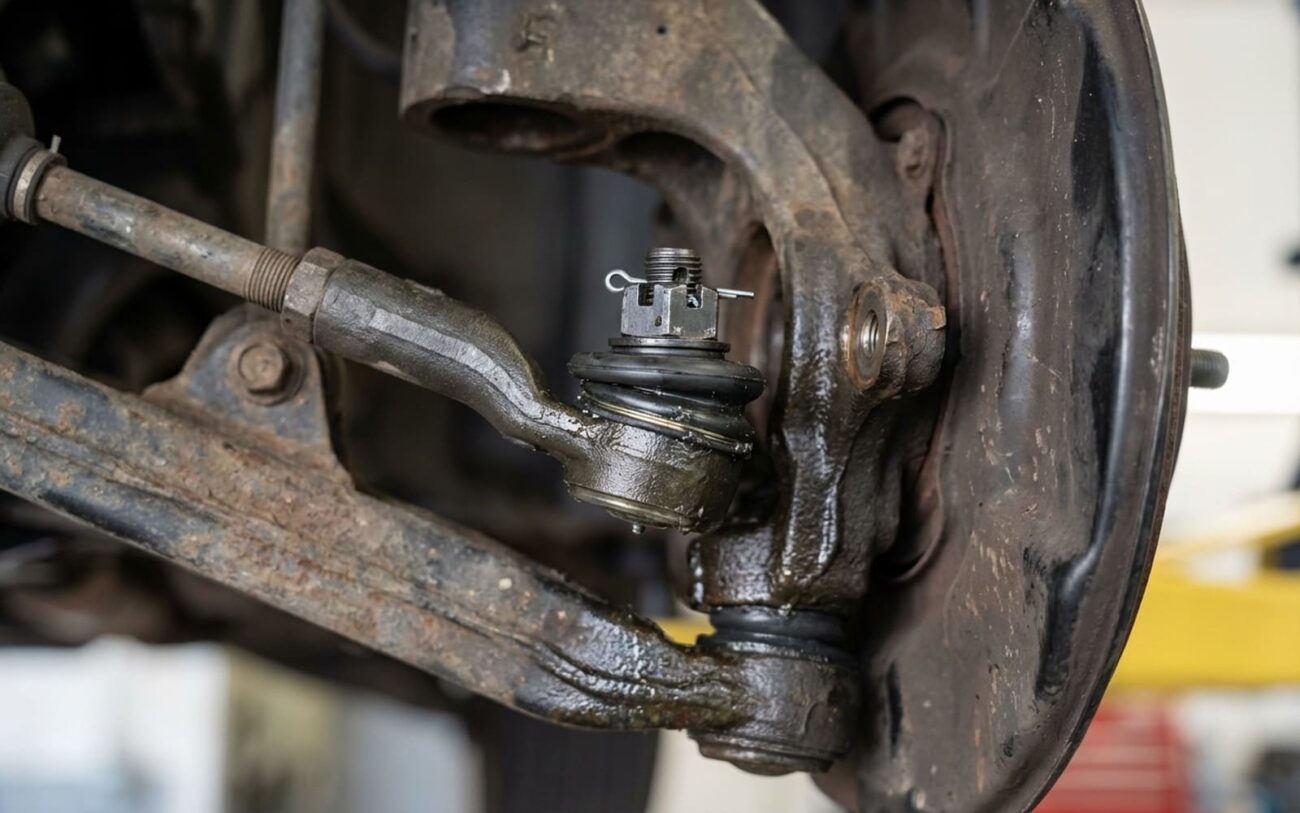
So, you just had your tie rod ends replaced, and now the steering feels like you’re wrestling a bear, especially at low speeds like when you’re trying to park. Trust me, you’re not imagining things. That’s not normal, and in my 25+ years turning wrenches, when stiffness shows up right after this job, it’s almost always a direct result of the work that was just done.
How I Pinpoint the Problem: Diagnosing Stiff Steering
Before you start pointing fingers at a bad part, we need to figure out exactly where that resistance is coming from. While the new tie rods are the prime suspects after this repair, I’ve seen binding intermediate steering shafts or even a seized U-joint in the steering column mimic these symptoms. You gotta isolate it.
| What You Feel/Hear | How I Diagnose It |
|---|---|
| Steering feels stiff, especially at parking speeds |
This is a dead giveaway for excessive friction in the tie rod itself. I’ll get the car up, disconnect the tie rod end from the steering knuckle, and grab that ball joint stud. It should rotate smoothly with light, consistent resistance. If it’s notchy, binds, or takes real effort, that tie rod end is overtightened or damaged internally. |
| Steering wheel doesn’t return to center |
Another classic sign of internal friction. I’ll lift the vehicle to unload the suspension, then turn the wheel slowly from lock-to-lock. It should feel smooth and consistent. If it binds or feels heavy in spots, there’s resistance somewhere in the steering system—could be the tie rod, rack, or steering column. |
| Vehicle pulls to one side |
If the car pulls hard after a tie rod job, your first thought should be alignment, specifically the toe setting. The only way to confirm this is on a proper alignment rack. I’m looking for toe settings within OEM specs, usually within a tenth or two of a degree. (Also check for brake drag or uneven tire pressure, but alignment is primary here.) |
| Clunking noise when hitting bumps |
A clunk usually means something’s loose, not tight. The most common culprit after a tie rod replacement is an under-torqued jam nut or a loose tie rod end. I’ll get under the car, grab the tie rod, and try to shake it up and down, side to side. Any play or clunk, and you’ve found it. (Don’t forget to check control arm bushings or sway bar links too.) |
Why This Happens: The Common Screw-Ups I See
Most of the time, it’s not the part that’s bad; it’s the person installing it. I’ve seen shops rush this job, and that’s when problems start. Here are the big ones:
Overtightened Ball Joint Stud Nut: This is a huge one. Every tie rod end has a specific torque spec for that castle nut or prevailing torque nut – usually somewhere between 30-50 ft-lbs, sometimes with an additional turn. If you just crank it down with an impact gun until it feels “tight,” you can compress the internal polymer bearing or deform the ball socket. That creates excessive preload, damages the internal components, and boom – stiff steering. It’s like trying to turn a seized bearing.
Overtightened Jam Nut: The jam nut locks the outer tie rod to the adjustment sleeve. If that gets overtightened, it can distort the threads or bind the sleeve itself. Then, every time the steering rack tries to move, you’re fighting that bind. It creates a “notchy” or heavy feeling.
Cross-Threading During Reassembly: If the inner and outer tie rods aren’t started perfectly straight when screwing them together, you can cross-thread them. Even if you manage to get them tight, that misalignment creates a mechanical bind that feels terrible through the steering wheel.
Incorrect Alignment Setup: This is probably the most common. After replacing tie rods, the toe will be off. If the shop skips the alignment or does a quick-and-dirty job, you’ll have excessive toe-in or toe-out. This forces the tires to constantly scrub sideways. Not only does it make the steering heavy, but it’ll eat your tires alive in a few thousand miles. I’ve seen tires worn bald on the inside edge in less than 5,000 miles because of a botched alignment.
A Note on Other Components:
Now, let’s be clear: things like worn wheel bearings, a binding rack-and-pinion, or failing ball joints can also cause stiff steering. But if those were the problem, you’d likely have felt it before the tie rod replacement. When stiffness appears immediately after the repair, we’re looking at the new parts or the installation process.
Okay, So How Do We Fix This Mess?
Safety First
First off, don’t ignore it. Driving with stiff steering from a binding component is just asking for more trouble, potentially damaging other steering components or causing premature wear. The fix depends on what we found during diagnosis.
Overtightened Ball Joint Stud Nut Professional Only
Jam Nut & Thread Correction Professional Only
Precision Toe Alignment Professional Only
How I Verify the Job Was Done Right (And How You Can Too)
Once the work is done, you shouldn’t just take their word for it. There are clear, objective ways to tell if it’s actually fixed:
-
Mechanical Inspection: Get the car back on the lift. Disconnect that tie rod end from the knuckle again. Grab the stud and rotate it by hand. It should move smoothly, with a light, consistent resistance. If it’s still stiff or notchy, they didn’t fix the problem.
-
Torque Verification: Every critical fastener – the ball joint nut, the jam nut – needs to be torqued to spec. Ask the tech if they used a calibrated torque wrench. If they say “I just impact it till it’s tight,” find another shop. There’s no guessing on these parts.
-
Alignment Report: Demand a printed alignment report. It should show all the front-end angles: toe, camber, and caster. All those numbers should be within the manufacturer’s specified range, usually highlighted in green on the printout. If they can’t give you one, or if it’s all red, walk away.
-
Road Test: This is the final exam. On a flat, straight road, at around 35-45 mph, the car should track straight with minimal input from you. More importantly, after you turn the wheel, it should return smoothly to the center position without you having to help it. If it doesn’t, or if it still feels heavy, the problem isn’t solved.
Cost, Risk, and Long-Term Considerations
Let’s talk brass tacks. What’s this going to cost you? Here’s a general idea of what I see in my shop and what you might pay elsewhere:
| Repair Type | DIY Cost (Parts) | Shop Cost (Est.) | Success Rate | Risks if Repair Fails |
|---|---|---|---|---|
| Replace one tie rod end & align | $50 – $150 | $250 – $400 | 95%+ | Premature tire wear, poor handling, high steering effort. |
| Replace inner/outer tie rods & align | $150 – $300 | $400 – $700 | 95%+ | Ongoing binding if threads or sleeve aren’t addressed. |
| Diagnose binding intermediate shaft | $0 (diag only) | $100 – $300 | 90%+ | Continued stiff steering, possible damage to rack. |
Now, a quick word of advice: if you’re looking at a repair bill that’s pushing 30% or more of your car’s market value, especially on an older, high-mileage vehicle, you need to think hard. You might be pouring money into a steering system that’s just going to have another issue next month. Sometimes, it’s a financial decision more than a mechanical one.
My Advice: How to Avoid This Headache Next Time
-
Always use a torque wrench. Seriously, never let anyone use an impact gun to tighten a ball joint stud nut or a tie rod jam nut. Torque specs exist for a reason – they ensure the right preload without damaging the part.
-
Check for smooth operation before the car leaves the lift. After everything’s tightened, I’ll turn the steering wheel lock-to-lock a few times with the wheels on the ground. I’m feeling for any binding, any notchiness. If it’s there, I stop and find it.
-
Insist on a professional alignment process. This means centering the steering wheel, “jouncing” the suspension to settle everything, and using calibrated equipment. An “eyeball” alignment is no alignment at all, and it will cost you tires.
-
Remember: stiff steering isn’t the only sign of trouble. If your car feels loose, wanders, or sways in the wind, that’s often a different beast entirely – usually shocks, struts, or worn control arm bushings. Don’t confuse the two. Learn more: Why does my car wander or sway in crosswinds?
