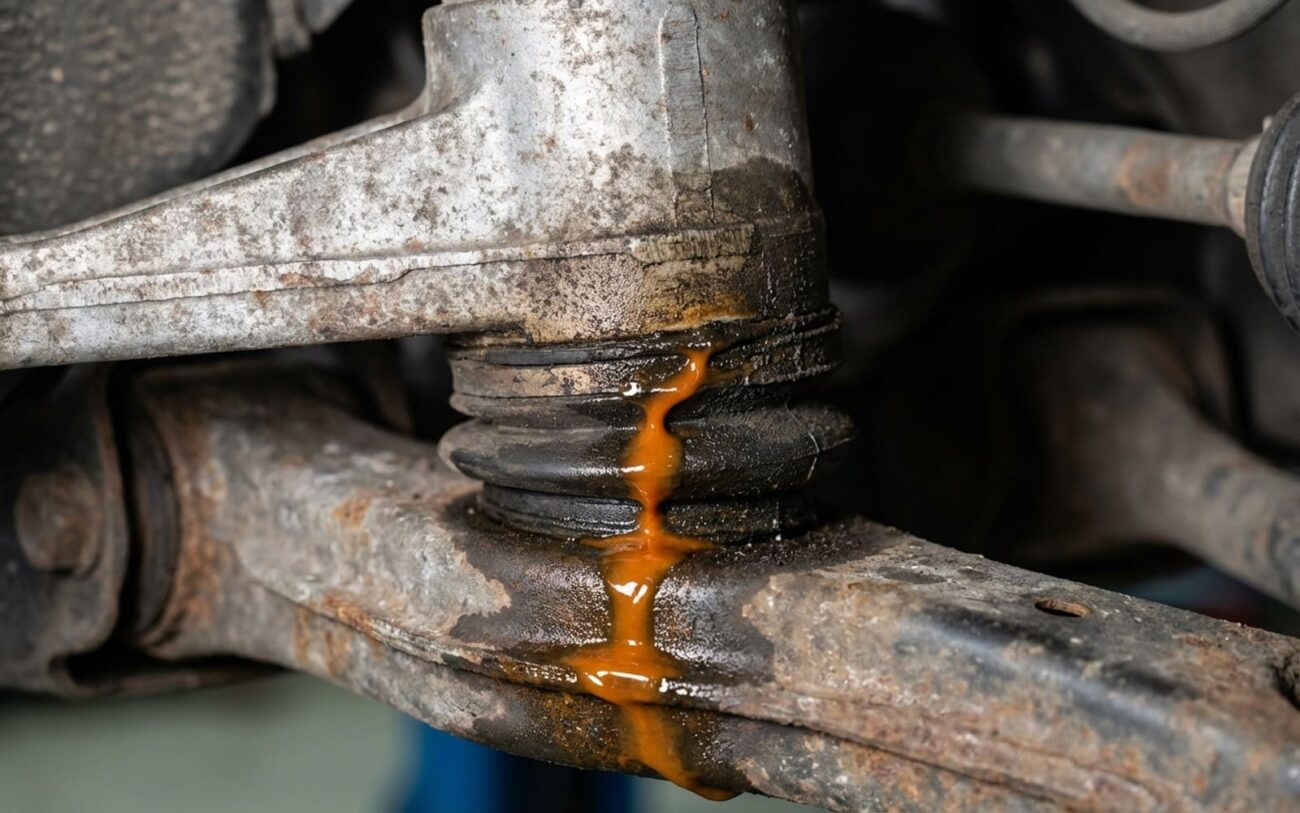
Alright, let’s talk about hydraulic strut leaks on your Citroën. If you’re seeing that tell-tale green fluid, you’re not just dealing with a messy suspension problem. You’re looking at a potential failure in a system that’s tied into your brakes, steering, and keeping the car off the ground. I’ve seen too many folks ignore this, and trust me, it never ends well.
How I Spot a Real Strut Leak (and Not Just a Drip)
The dead giveaway for a strut leak, specifically, is that dark green LHM (Liquide Hydraulique Minéral) fluid weeping right down the polished steel body of the strut itself. I’m talking about the main cylinder, usually between the top mount and that big rubber dust boot at the bottom. It’s not just a little mist you can wipe away once.
Here’s what I do: Clean the strut thoroughly with some brake cleaner. Get it bone dry. Then, cycle the suspension a few times – take it from its lowest to highest setting, then back to normal. Let the car sit for a bit, or even drive it around the block. If fluid reappears, seeping from under that dust seal and running down the strut body? That’s your internal seal gone, or worse, a compromised cylinder wall.
Another strong indicator is if that specific corner of the car sags quickly after you shut the engine off – I mean, within minutes. Now, sag can be other things too, like a height corrector acting up or an anti-sink valve failing, but if you’ve got that visible fluid on the strut body, the strut itself is usually the problem.
Is It the Strut, or Just Another LHM Leak?
Now, just because you see green fluid under the car doesn’t automatically mean the strut itself is toast. I’ve seen plenty of shops misdiagnose this, costing owners a lot of money and frustration. This hydropneumatic system uses LHM everywhere, so leaks can crop up at fittings, hoses, the height corrector valve, the anti-sink valve, or even where the sphere mounts. All of these can make it look like the strut is leaking.
To really nail it down, here’s what I do: Clean the area around the strut thoroughly with brake cleaner. Get it bone dry. Then, add some UV dye to the LHM reservoir. Drive the car for a bit, cycle the suspension through its height settings a few times, and then get under there with a UV light. If that glowing green fluid is coming directly from under the strut’s dust seal and running down the body, then yes, it’s the strut. If it’s glowing at a fitting, a hose, or the sphere, you’ve got a different, usually simpler, problem.
This distinction is crucial. A leak from the strut body often means a rebuild or replacement. A leak at the strut – like a loose fitting or a perished O-ring – is usually a much cheaper, easier fix. Taking the time to properly diagnose saves you headaches and prevents comebacks.
Why These Struts Give Up the Ghost
When a hydraulic strut fails internally, it’s almost always one of three things: corrosion, the seals just giving up, or some kind of physical damage. Knowing which one it is helps you decide if a repair is even worth attempting.
First up, corrosion: These steel cylinders are out there, exposed to road salt, moisture, and all sorts of crud. In places with harsh winters, that protective coating eventually wears off, and rust starts eating through the metal. Once you’ve got a pinhole or a crack from corrosion, that strut is done. You can’t safely weld or patch a high-pressure component like this; it’s a recipe for disaster. I’ve seen this a lot on Xantias and C5s, especially cars from up north where they salt the roads heavily.
Then there’s seal failure. The main piston seal, what we often call the “gland seal,” just wears out. It’s a combination of age, constant heat cycles, and sometimes, contaminated LHM fluid. If the LHM isn’t changed regularly, or if water gets in there, it degrades, and those seals get hard, brittle, and lose their elasticity. I’ve noticed cars that sit for long periods are particularly susceptible – the seals dry out, and then boom, they fail the first time they’re put under pressure again.
And finally, impact damage. A nasty pothole, a curb strike, or even a flying stone can dent or gouge the polished rod or the cylinder wall. Even a tiny imperfection there is enough to compromise the seal’s ability to hold pressure. It’s like trying to seal a leaky faucet with a nick in the pipe.
Important Diagnostic Note:
Citroën’s service literature for models like the C5 and Xantia has documented these failure modes for years. But remember my earlier point: not every green drip is a strut. If the fluid is coming from the sphere mounting flange or a flexible hose connection, you’re looking at a different repair entirely – usually a simpler, cheaper one.
So, You’ve Got a Leaking Strut: What Are Your Options?
Professional Territory Only
Working on high-pressure hydropneumatic systems demands specialized tools, hydraulic safety training, and proper procedure. Sudden depressurization can cause serious injury. Don’t take chances.
Strut Replacement My Recommendation
Professional Rebuild Specialist Territory
Stop-Leak Additives Temporary, Last Resort
How I Confirm the Fix (No Guesswork Here)
Post-Repair Validation Checklist
-
No Visible Leaks: After 24 hours of normal driving, and letting the car sit for a while, get under there and inspect the strut body and all those connections. There should be absolutely no sign of green fluid. None.
-
No Rapid Sag: With the engine off, the car should hold its ride height for at least an hour, preferably longer. Cycle the suspension from its lowest to highest settings a few times, then park it and watch. If it drops quickly, you’ve still got a problem.
-
Correct Ride Height: Grab a tape measure. Measure from the fender lip to the center of the wheel hub on all four corners. They should be consistent and within factory specs. Don’t just eyeball it.
-
Quiet Pump Operation: The hydraulic pump shouldn’t be running excessively when the car is parked or idling. If it’s cycling on and off more often than usual, it’s a huge red flag. It means it’s working harder to maintain pressure – and that means there’s still a leak somewhere, internal or external.
The Hard Numbers: What This Repair Really Costs (and if it’s Worth It)
Let’s be real: hydropneumatic repairs aren’t cheap. The age of these cars means parts aren’t always easy to find, and the labor is specialized. The numbers can sting, especially when you look at the car’s market value.
DIY Parts (Pair)
This is just for two struts and fresh LHM. Remember, you’ll need specialized hydraulic tools, and if you’re asking about this, you probably don’t have them.
Shop Replacement
This covers professional installation, a full fluid flush, and proper system bleeding. It’s a significant chunk of change, but it’s done right.
Success Rate
When done correctly, these repairs are solid. But fail to fix it, and you’re risking a complete loss of brake assist – something I wouldn’t wish on my worst enemy.
Here’s my rule of thumb: If the repair bill is going to be more than 50% of what the car is actually worth, you need to seriously weigh your options. For an enthusiast who loves their C5 or Xantia, or someone who’s put a lot of care into a well-maintained example, it might be worth it. But for a high-mileage daily driver, it might be time to look at other options. It’s a tough call, I know.
Keeping That Green Fluid Where It Belongs (Prevention)
Maintenance Discipline
Always, always use the correct LHM+ or equivalent mineral-based fluid. I’ve seen synthetic or incompatible fluids absolutely destroy rubber seals in these systems within months. It’s not worth the shortcut. And fight that corrosion! Wash the undercarriage regularly, especially if you live where they use road salt. Pay extra attention to the lower strut bodies where all that crud collects.
Beyond that, make visual inspections a habit every few months. Look for any fresh weeping, new rust spots, or pitting on the strut body. Listen to your car. If that hydraulic pump starts running longer or more often than usual when it’s leveling the car, it’s a huge red flag. It means it’s working harder to maintain pressure – and that means there’s likely a leak developing somewhere.
And if you own other vehicles with complex suspension – like air or hydropneumatic systems – learn the specific signs of failure for those too. Similar sagging symptoms on a Mercedes, for example, could point to accumulator issues, but the diagnosis and fix are different: Hydropneumatic Suspension Sagging and Won’t Lift? (Citroën, Mercedes).
