When Your Car Won’t Align: It Might Be the Subframe
You know the drill: your car’s pulling, tires are wearing out way too fast, or the steering just feels… off. Most folks, and even a lot of younger techs, jump straight to the usual suspects: worn tie rods, bad ball joints, maybe a bent control arm. And yeah, a lot of the time, that’s exactly what it is. We fix it, do an alignment, and the car’s good to go.
But what happens when you replace all those parts, get a fresh alignment, and a week later, the problem’s back? Or worse, the alignment tech tells you they can’t even get the numbers into spec? That’s when I start looking deeper. Way deeper. Because what you’re probably dealing with is a compromised subframe.
The Foundation
Think of your car’s subframe as the foundation of a house. You can adjust the windows and doors all you want, but if the foundation is shifting, that house is never going to be truly square. Same goes for your suspension.
The subframe is a big, beefy piece of metal—steel or aluminum, depending on the car—that bolts directly to your vehicle’s unibody. It’s the anchor point for almost everything critical up front (or sometimes in the rear, too): the engine, transmission, steering rack, and every single major suspension component like your control arms, struts, and sway bar. If that foundation is bent, cracked, rusted out, or just plain loose, no amount of tweaking tie rods or camber bolts is going to hold a stable alignment. It’s just not possible.
How to Spot a Subframe Problem (and Rule Out Other Stuff)
Subframe issues rarely hit you all at once. They’re sneaky. They start small, maybe a slight pull, then it gets worse. You might find yourself replacing tires every 10,000 miles, or constantly fighting the steering wheel to keep the car straight. Here’s what I look for, and how I confirm it’s the subframe, not something simpler:
| The Symptom | Why I Suspect the Subframe | What Else It Could Be | My Go-To Diagnostic Check |
|---|---|---|---|
| Alignment Can’t Be Set | The mounting points for control arms or struts on the subframe itself are worn out or elongated. The holes are just too big now. | Bent control arms, seized adjustment cams, or worn strut mounts. |
With the car on the alignment rack, try to adjust camber/caster. If the numbers don’t move or max out too soon, I’ll use a dial indicator on the mounting bolt and rock the wheel. Any play there points to the subframe. |
| Alignment Drifts Quickly | The main subframe-to-body mounts are shot or loose, letting the whole subframe shift around under driving loads. | Loose subframe bolts (rare but happens), or severely worn control arm bushings. |
After an alignment, I’ll mark the subframe bolt heads and the subframe itself with a paint pen. Drive it for a week or 100 miles. If those marks don’t line up anymore, the subframe moved. |
| Clunking on Turns or Braking | Mounting holes are ovaled out, or there’s a cracked weld allowing the subframe to move laterally. | Worn strut mounts, bad ball joints, or loose sway bar links. |
Get the car on a lift. With a helper, try to pry the subframe against the chassis. Listen for the clunk. Then, I’ll remove one subframe bolt at a time and inspect the hole for ovaling or metal shavings. |
| Visible Leak or Rust Seepage | Corrosion has eaten through the boxed sections of the subframe, allowing fluids (like power steering fluid or trapped water) to seep out. | A leaking power steering rack, oil pan, or transmission pan dripping onto the subframe. |
Clean the area thoroughly. Drive for a bit, then re-inspect. If the fluid is seeping from within the metal structure of the subframe, you’ve got internal corrosion. |
Why These Things Go Bad
Subframes are built tough, but they’re not indestructible. In my 25+ years, I’ve seen three main culprits for failure:
- Wear and Fatigue: Over 150,000 miles, metal stretches, bolts loosen, and mounting points can wallow out. It’s just simple physics and time.
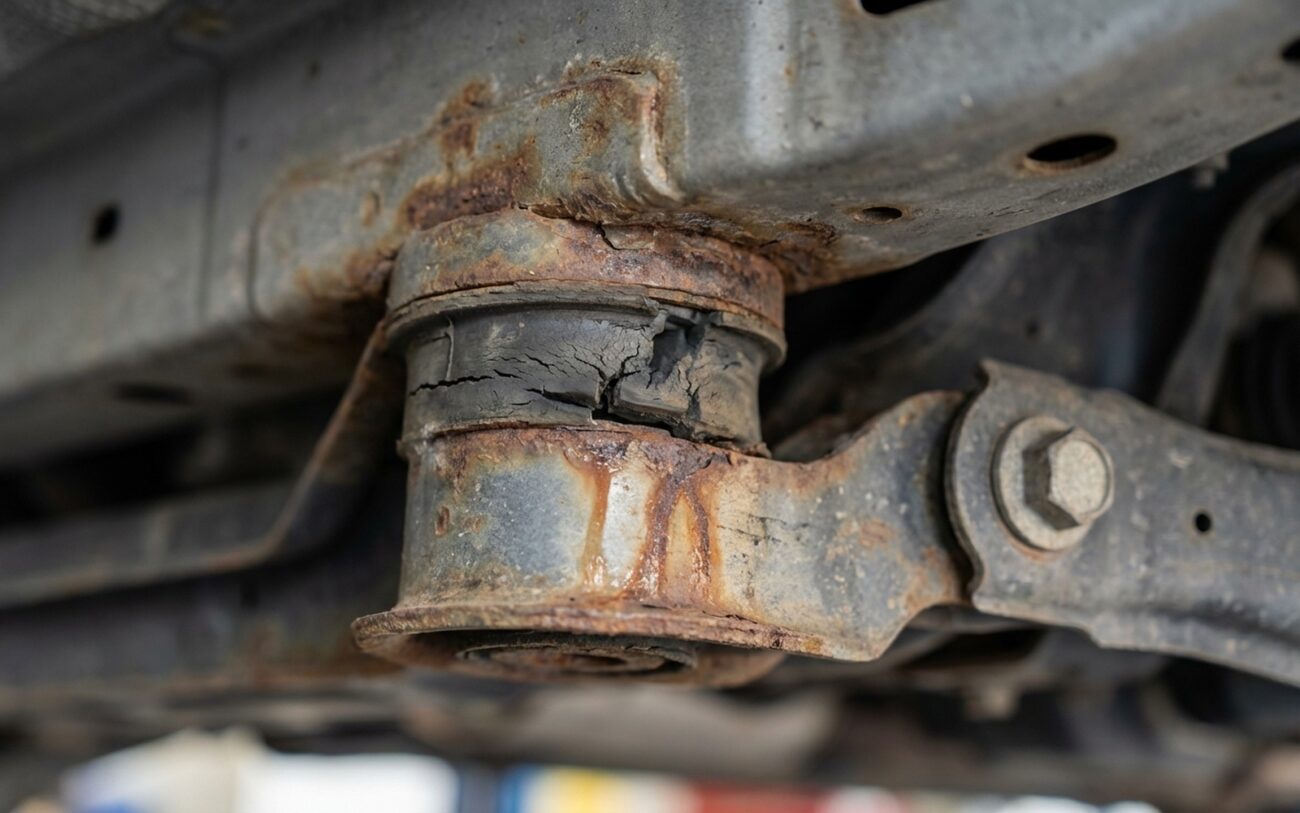
- Corrosion: This is a huge one, especially in areas with road salt. Water and salt get trapped inside those boxed sections, and it just eats away at the metal from the inside out.
- Impact Damage: Hitting a massive pothole, curb, or getting into a fender bender can bend or crack the subframe. Sometimes the damage isn’t obvious from a quick glance.
Don’t Misdiagnose the Subframe Itself
Here’s a common mistake I see: a tech condemns the whole subframe because a part mounted to it failed. A worn control arm bushing? Replace the arm. A leaking power steering rack? That’s a seal problem. The subframe is just the mounting point. Don’t replace the entire foundation if only a brick is loose. Always confirm the subframe structure is the problem, not just something bolted to it.
Your Options for Repair (and Why This Isn’t a DIY Job)
This is Pro Territory, Period.
Look, I’ve seen a lot of DIY attempts go sideways. Structural repairs to a subframe demand absolute precision. Even a tiny deviation in drilling a new hole or a little too much heat from a welder can permanently mess up your suspension geometry. Unless you’ve got a full shop, specialized tools, and years of experience, this isn’t a job you should tackle at home.
Oversize Bolt Repair Professional Only
Welded Reinforcement Professional Only
Full Subframe Replacement
Temporary Epoxy Patch Last Resort
Costs, Risks, and Making the Tough Call
So, what’s this going to cost you? It varies a lot by vehicle and the extent of the damage, but here’s a general idea of what I see in my shop:
Oversize Bolt Repair
Pretty good success rate if done by someone who knows what they’re doing. The main risk is a misaligned hole leading to bolt shear or continued alignment issues.
Welded Reinforcement
The outcome here depends heavily on the welder’s skill. The biggest risk is heat distortion, which can warp the subframe and make a stable alignment impossible.
Full Replacement
This is the only real solution for severe corrosion or major impact damage. It’s labor-intensive, but it’s also the only way to fully restore factory geometry and safety. Prices can climb much higher on some luxury or complex vehicles.
Making the decision to repair or replace can be tough. I always tell my customers: if the repair costs start creeping up to half the car’s market value, it’s time to seriously think about putting that money towards a different vehicle. Sometimes, it’s just not worth pouring thousands into an old car with a compromised chassis.
Prevention and Catching It Early
-
Annual Undercoating: If you live in a rust-prone area (like I do here in the Northeast), get an oil-based undercoating like Fluid Film. Make sure they get it inside the boxed sections of the subframe. That’s where corrosion often starts.
-
Visual Inspections: Every time you’re under the car for an oil change, take a good look at the subframe. Check for flaking paint, bubbling rust, or any damp spots around the bolt heads.
-
Listen Closely: Pay attention to any new clunks, especially during tight turns, braking, or slow-speed maneuvers.
-
Ask Your Tech: When you get an alignment, specifically ask the technician to check for subframe movement or any signs of damage. A good tech will do this anyway, but it doesn’t hurt to ask.
The Real Cost
Catching subframe wear or damage early can save you a fortune. A $200 repair to an elongated bolt hole is a whole lot better than a $3,000 full replacement. Ignore it, and you’re not just throwing money away on tires; you’re driving a compromised, potentially unsafe machine.
