What Low Transmission Fluid Really Feels Like (From the Driver’s Seat and Mine)
When a customer tells me their automatic transmission is acting up, “jerking” or “shifting hard,” my ears perk up. I’ve been doing this for over 25 years, and there’s a very distinct feel to a transmission that’s running low on fluid. It’s not just a little rough; it’s a specific kind of bad.
Most of the time, you’ll feel it during gear changes. The classic complaint is a sharp, jarring “clunk” or “bang” when the transmission tries to shift from first to second, or second to third, especially under light to moderate acceleration. This isn’t normal wear and tear, folks. This is the hydraulic system—the very heart of your automatic transmission—struggling to build and maintain consistent pressure. It’s starving for fluid.
Think of it this way: your transmission fluid isn’t just a lubricant. It’s the working medium. It’s what pressurizes those clutch packs and bands to engage gears smoothly and precisely. When the fluid level drops, that pressure gets erratic. Instead of a smooth, firm shift, you get a sudden, harsh engagement. It feels like someone just slammed the gear home, not guided it. You can’t miss it.
HYDRAULIC MONITOR
PSI: 42 psi
Another dead giveaway I often hear about is delayed engagement. You put the car in Drive from Park, or into Reverse, and for a second or two—nothing happens. The engine might rev a bit, almost like it’s in neutral, and then, clunk, it finally grabs. This delay happens because the transmission pump is trying to draw fluid to fill all the internal circuits, but there just isn’t enough volume in the pan to do it efficiently.
And then there’s slippage. This is the big one, the symptom that screams “pull over now!” You’re accelerating, maybe passing someone or climbing a hill, and the engine RPMs surge way up, but the car doesn’t speed up to match. It feels like the transmission briefly disengages before catching again. What’s happening is the clutch packs aren’t getting enough pressure to lock up properly. When they slip, they generate a tremendous amount of heat—way more than the remaining, insufficient fluid can dissipate. This heat then breaks down the fluid even faster, making the problem worse in a hurry. It’s a nasty spiral.
My analogy for you
“It’s like trying to prime a dry water pump. It takes time, a lot of effort, and makes a racket before it finally catches. And if it keeps running dry, that pump is going to burn out.”
Is It Really Low Fluid, or Is Something Else Going On? My Diagnostic Approach
Now, jerky or rough shifting isn’t always low fluid. I’ve seen these symptoms stem from all sorts of issues—electrical faults, internal mechanical wear, even engine problems that mimic transmission trouble. That’s why proper diagnosis is critical. You don’t want to just grab a funnel and start pouring without knowing what you’re dealing with.
My first step, always, is to check the fluid level and condition. It’s the easiest, cheapest diagnostic you can do, and it rules out the most common and preventable cause. You need to do this with the engine running, the transmission at operating temperature, and usually in Park (though some manufacturers specify Neutral, so check your owner’s manual or service data). If the fluid is at the correct level and still looks bright red or pink and doesn’t smell burnt, then we can start looking elsewhere.
| Symptom | Likely with Low Fluid? | Common Other Causes | How I Pinpoint the Source |
|---|---|---|---|
| Harsh 1-2 Upshift | Yes – due to erratic hydraulic pressure | Faulty shift solenoid, sticking valve body valve, worn accumulator | After checking fluid, I’d scan for Diagnostic Trouble Codes (DTCs). Then I’d use a professional scan tool to command specific solenoids or monitor their electrical activity. Sometimes, a line pressure test will show if the valve body is struggling. |
| Delayed Reverse Engagement | Yes – especially if consistent in both Drive and Reverse | Worn reverse clutch pack, damaged reverse servo seal, failing pump | A line pressure test is definitive here. If I see low pressure readings in both Forward and Reverse gears, it strongly points to the pump itself or, again, critically low fluid. |
| Slippage in a Specific Gear (e.g., 3rd) | Possible, but not typical as the sole cause | Worn clutch pack, leaking piston seal, failed one-way clutch | If the fluid level and condition are good, this usually means internal mechanical failure. I’d perform a controlled stall test to check the torque converter and clutch packs. This is where things start getting expensive. |
So, the bottom line here is: always start with the fluid. It’s the cheapest, fastest check. If it’s full and looks good, then you’re probably looking at something more involved—maybe a solenoid pack, a valve body issue, or actual internal component wear. But you’ve ruled out the easy stuff first, and that’s how a good mechanic works.
Why Your Transmission Fluid Gets Low or Goes Bad
Transmission fluid doesn’t just disappear into thin air. If it’s low, it’s either leaking out or it’s degraded so badly it’s no longer doing its job effectively. Often, these two paths to failure go hand-in-hand.
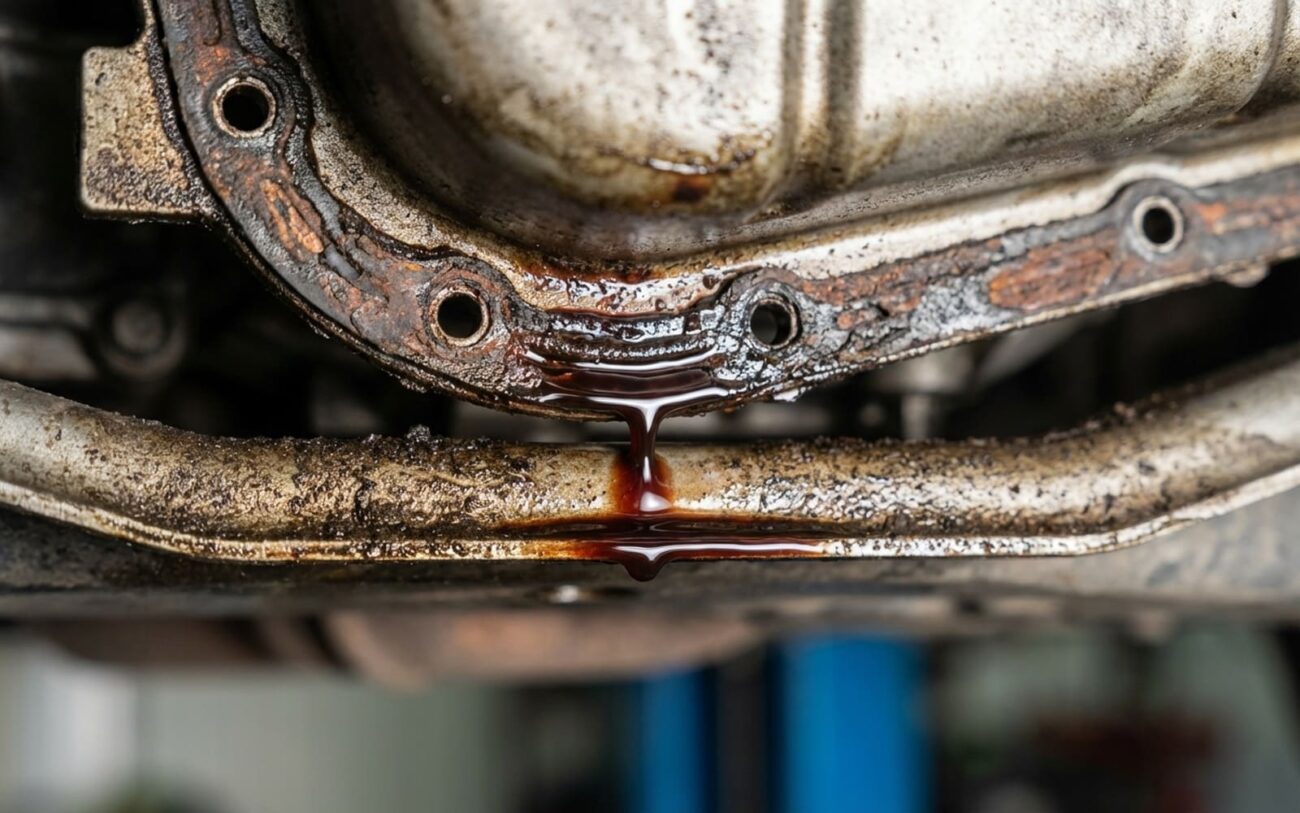
The most straightforward reason for low fluid is a physical leak. I’ve seen them everywhere: a weeping transmission pan gasket (very common), a cracked or loose transmission cooler line, or failing output shaft or front pump seals. These are hardware failures, pure and simple. If you’re seeing red or brownish-red spots on your driveway—especially after the car has been parked for a while—you need to investigate that leak immediately. It won’t fix itself, and it will only get worse.
The “Burnt Toast” Test:
I’ve diagnosed countless “hard shifting” complaints where the dipstick actually showed a full fluid level. But then I’d pull the dipstick, and the fluid would be black and smell distinctly like burnt toast. In those cases, the fluid itself has completely oxidized and lost all its friction-modifying properties. It’s just junk fluid at that point. No amount of “topping off” will ever fix fluid that’s degraded this badly. It needs to be replaced, yesterday.
It’s also important to understand what adding fluid (or even fresh fluid) can’t fix. If your Transmission Control Module (TCM) is sending incorrect shift signals, or you have a mechanical failure like a cracked valve body or a broken internal component, fresh fluid isn’t going to magically make it better. The fluid is the messenger in your transmission’s hydraulic system; it can’t correct a broken command or repair a physical defect. That’s a common misconception I hear.
Your Repair Options: From Simple to “Time for a New Car?”
Safety First, Always
Look, transmission fluid gets hot—easily over 200°F—and it’s flammable. If you’re working under the car, always use proper jack stands. Wear eye protection. And be extremely careful around a running engine. I’ve seen too many preventable accidents.
Simple Fluid Top-Off DIY Feasible
Pan Gasket & Filter Replacement DIY Feasible
Complete Fluid Exchange Professional Only
Internal Overhaul or Replacement Professional Only
Stop-Slip Additives NOT RECOMMENDED – AVOID AT ALL COSTS
Confirming the Fix, Understanding the Costs, and Preventing Future Headaches
How to Know if Your Fix Worked
After any transmission repair, the job isn’t done until you’ve verified it. You’re not just putting tools away; you’re making sure the transmission behaves normally again. If you simply topped off low fluid, take the car for a good drive under various conditions—city, highway, hills. Shifts should be smooth, timely, and without any clunks or delays. If you fixed a leak, park the car over clean cardboard overnight and check for drips. Also, recheck your fluid level after 50–100 miles, just to be sure.
For more involved repairs, especially after a fluid exchange, I always use a scan tool to monitor the Transmission Fluid Temperature (TFT). Normal operating temperature is typically between 175°F and 225°F (80–107°C). If you’re consistently seeing temps above that range, something’s still wrong. It could be a clogged cooler, or the transmission might still be slipping internally, generating excessive heat. High temps are a death sentence for ATF.
The Cost Reality and When to Consider Your Options
Look, nobody wants to hear “transmission problem.” The costs can swing wildly, and sometimes, especially on older vehicles, it makes more sense to cut your losses. Here’s a rough idea of what you’re looking at, based on what I see in my shop:
| Repair Type | DIY Cost (Parts) | Shop Cost (Typical) | My Success Rate (Estimate) | Risk if it Fails |
|---|---|---|---|---|
| Fluid top-off only | $20 – $60 | $50 – $100 | High (if caught early) | Minimal. It’s the first step to rule out simple issues. |
| Pan gasket & filter | $100 – $200 | $250 – $400 | High (for pan leaks) | Moderate. The leak might be from an internal seal, not just the pan. |
| Overhaul / Internal Repair | $1,500+ (if you’re brave) | $3,000 – $6,000+ | Medium (depends on damage) | High. If it fails again, a full replacement might have been the better call from the start. |
How I Recommend Preventing This Headache Altogether
After all these years, I can tell you that most transmission problems related to fluid can be avoided with some simple, proactive maintenance. Don’t wait for symptoms to appear.
My Proactive Maintenance Checklist
-
Forget the “lifetime” fluid intervals. That’s marketing talk, not mechanic talk. If you tow, haul, or do a lot of stop-and-go driving, I recommend changing your transmission fluid every 30,000 to 50,000 miles. For lighter duty, maybe 60,000-75,000. It’s cheap insurance.
-
Always use the exact OEM-specified fluid type. I cannot stress this enough. Using the wrong fluid, even if it says “multi-vehicle,” can lead to immediate shift quality problems and long-term damage. Don’t cheap out here.
-
Check your fluid level and color at every oil change. Or at least every other. Look for bright red/pink. If it’s black, brown, or smells burnt, it’s time for a professional fluid exchange.
Pro Tip: Monitor Your Temps
If you have an OBD-II scanner, monitor the Transmission Fluid Temperature (TFT) regularly. Sustained temps above 225°F mean that fluid is breaking down fast. Remember: a failing thermal management system (like a radiator or cooling fan issue) can also overheat critical components, even if it’s not the transmission itself causing the heat. It’s all connected.
