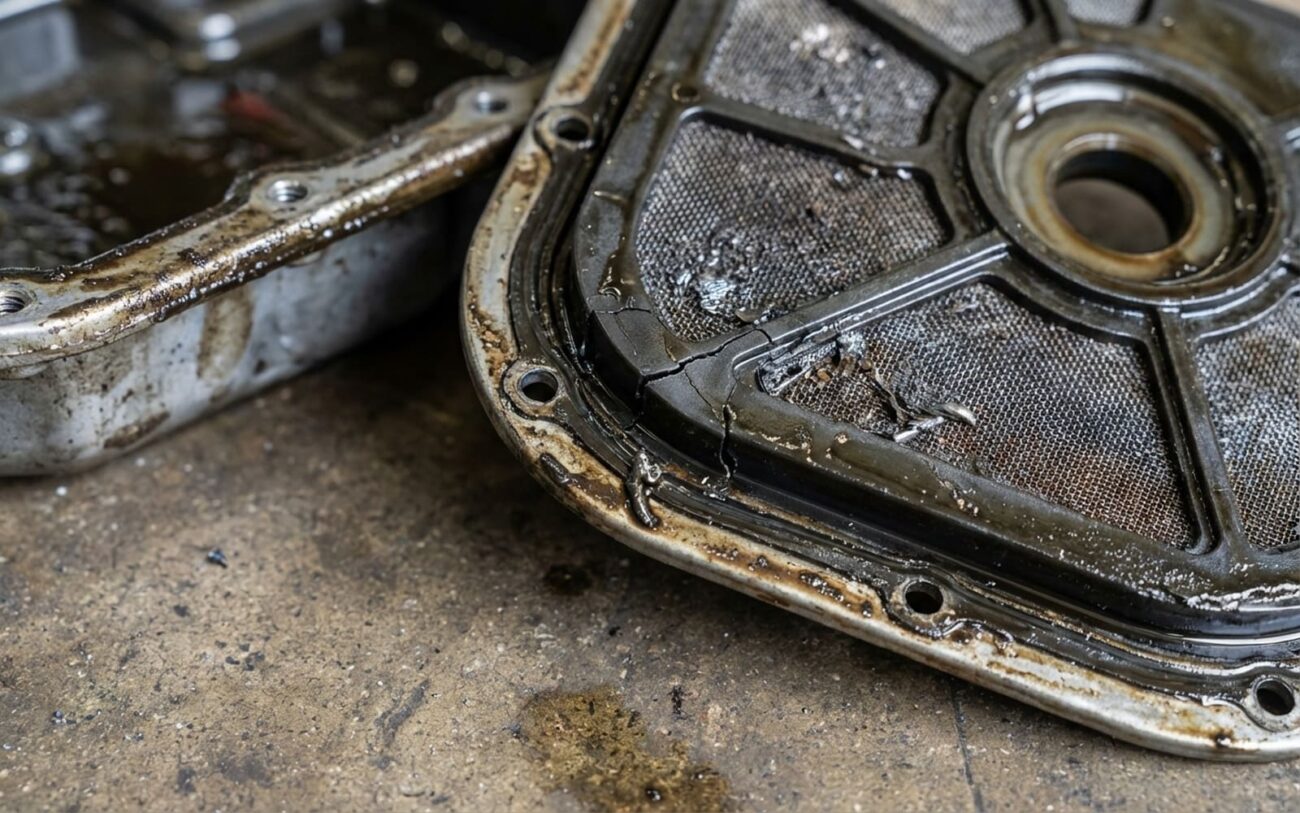
Alright, let’s talk transmissions. If you’ve got an automatic that starts acting funny only after it’s warmed up, you’re likely staring down a hydraulic issue. And in my 25+ years turning wrenches, that usually boils down to one of two things: a clogged transmission filter or a sticky valve body. This isn’t some vague electrical gremlin; it’s a real, physical restriction of fluid flow, and it’s a problem that gets worse, not better, if you ignore it.
The Tell-Tale Signs: When Your Transmission Gets Hot and Bothered
The classic signature of a clogged filter or valve body is thermal dependency. Your car might shift perfectly fine when you first start it up in the morning. But after 15 or 20 minutes of driving, once that transmission fluid gets up to operating temperature, that’s when the trouble starts. This “cold good, hot bad” behavior is a huge red flag for internal clogging, not an electrical fault. If it was electrical, it’d usually act up all the time, or throw a code.
What you’ll typically notice first is a significant delay when you try to shift into Drive or Reverse after the transmission has warmed up. You’ll put it in gear, wait a few seconds, and then BAM! — a harsh, clunky engagement. It’s not smooth at all. Then, while driving, you might experience erratic shifts: the transmission hesitates, “hunts” for the right gear, or suddenly downshifts for no reason. It feels confused, like it can’t make up its mind.
In the worst cases, and I’ve seen plenty of these, the transmission will lose all forward and reverse gears when it gets hot. The engine revs freely, but the car just won’t move. You pull over, let it sit for a few hours to cool down, and lo and behold, it drives normally again for a bit. This on-again, off-again behavior is almost always a dead giveaway for fluid flow issues caused by debris or a collapsed filter. It’s like a clogged artery in your car’s circulatory system.
What Causes These Headaches in the First Place
It’s rarely a sudden thing. Most clogs are a slow build-up of contamination and wear. The transmission filter, typically sitting inside the pan, is designed to catch all that crud before it gets to the delicate valve body. But if you don’t change your fluid regularly, that filter gets overloaded. It fills up, then it can’t flow enough fluid. In older transmissions, or ones that have been run hot, the filter media itself (often paper or composite) can actually degrade and collapse, blocking flow just as effectively as a clog. I’ve pulled pans where the filter looked like a deflated balloon.
Inside the valve body, the problem is usually tiny bits of debris — clutch material, bushing wear, or even microscopic metal shavings — getting lodged in those precision-machined valve bores. These are spool valves, and they need to slide freely to direct fluid. When one sticks, it messes up the hydraulic circuit for a specific gear or function. It’s important to remember this isn’t a solenoid failure; the solenoid might be electrically perfect, but it can’t move a valve that’s mechanically jammed.
A Quick Word on Contamination:
Using the wrong transmission fluid is a recipe for disaster, leading to varnish buildup or corrosion. And coolant mixing with ATF (usually from a failed transmission cooler inside the radiator) creates a milky sludge that gums up everything. I’ve seen several GM 6L80 and Aisin units come into my shop with this kind of damage after a radiator leak went unnoticed. It’s a mess.
Some vehicles even have known design flaws. For instance, certain Ford transmissions, like the 5R55S in 2005–2011 models, have documented issues with servo bore wear that sends debris right into the valve body separator plate. That’s not speculation; it’s a known failure mode, even covered in service bulletins. But look, not every shifting issue is valve body related. A cracked cooler line is a fluid leak. A corroded connector on a shift solenoid is electrical. You’ve got to distinguish between hydraulic, electrical, and mechanical failures to avoid a costly misdiagnosis.
My Diagnostic Approach: Pinpointing the Real Problem
Before you even think about dropping the pan or tearing into the transmission, you need to confirm what’s actually wrong. Jumping to conclusions is the quickest way to waste time and money. I’ve seen too many DIYers, and even some less experienced techs, replace parts that weren’t the problem. My approach is always systematic.
First, I always check the basics: Is the fluid level correct? Is it clean? Does it smell burnt? Are there any external leaks? (Yes, a low fluid level can mimic a lot of these symptoms.) Then, I hook up a professional scan tool. Not just to check for codes, but to monitor live data. I’m looking at input/output speed sensors, throttle position, and how the solenoids are being commanded. If the computer is telling a solenoid to shift, but the transmission isn’t responding, that tells me it’s likely a hydraulic issue, not an electrical one.
But the most definitive test for internal hydraulic issues? A main line pressure test. This is non-negotiable for me. You need the right gauges for your transmission, and you need to perform the test at operating temperature (180–200°F is ideal). I’ll check pressure in Park, Neutral, Drive, and Reverse. Low or unstable pressure, especially when hot, is a smoking gun for a restriction, whether it’s a clogged filter or a stuck valve in the valve body. If you’re seeing zero pressure, you’ve got a major internal leak or a completely collapsed filter.
This table reflects the process we follow in the shop to isolate whether the fault lies in the valve body/filter or somewhere else. It’s a roadmap to avoid chasing your tail.
| Symptom | Likely in Valve Body/Filter | Common External Mimics | Definitive Test to Confirm Source |
|---|---|---|---|
| Delayed/Harsh Engagement When Hot | Flow restriction due to a clogged filter or a spool valve stuck in the valve body. | Low ATF level, worn torque converter clutch, failing TCM, or internal clutch seal leaks. |
Perform a main line pressure test at operating temperature. Low or unstable pressure in Drive or Reverse points to a restriction. |
| Erratic Shifts When Hot | Debris interfering with shift valve or governor valve movement inside the valve body. | Faulty input/output speed sensors, throttle position sensor, wiring issues, or solenoid electrical faults. |
Monitor transmission PIDs with a professional scan tool. If solenoids are commanded correctly but shifts don’t follow, the fault is hydraulic. |
| No Movement When Hot | Severe clog blocking flow or a main regulator valve stuck open, dumping system pressure. | Broken torque converter, stripped input shaft, or major external fluid leak. |
Run a hot main line pressure test. Zero pressure confirms internal loss. Drop pan and inspect filter for collapse. |
Your Repair Options: From Simple to Serious
Once you’ve diagnosed the problem, you’ve got a few paths forward. They range from a relatively simple DIY job to a full-blown professional repair. Here’s how I break them down.
Filter & Fluid Service DIY Friendly
Professional Territory Only
Anything beyond a filter and fluid change usually requires specialized tools, precision cleaning, and strict adherence to torque sequences. Missteps here can lead to permanent transmission failure. This is where you call a reputable transmission shop.
Valve Body R&R / Cleaning Professional Only
Valve Body Replacement
Full Transmission Rebuild or Replacement
Confirming the Fix: Don’t Just Assume It’s Done
Never, ever assume the job is done once you’ve bolted everything back together. You need to verify that the repair actually worked under real-world conditions. For a simple filter and fluid change, a thorough test drive is usually enough. Does it engage smoothly now? Are the shifts crisp when it’s hot? If so, great.
But for a valve body service or replacement, you need more than just a test drive. I always go back to my professional-grade scan tool. I’ll monitor key PIDs: commanded gear versus actual gear, solenoid states, and shift adaptation values. These numbers should be within factory range and stable. Any lingering discrepancies point to an unresolved issue.
And if you performed a line pressure test before the repair, you absolutely need to re-run it when the transmission is fully hot. Use an infrared thermometer to confirm that 180–200°F operating temperature. The pressure should now meet or exceed the manufacturer’s specification and rise appropriately with engine RPM. If pressure is still low, you’ve got a deeper issue – like a worn pump or an internal leak elsewhere – that the valve body service didn’t address. This validation step is critical. I’ve seen too many cases where a valve body was cleaned and reinstalled, only for the problem to come back because the root cause, like contaminated fluid from a failing torque converter, was never truly fixed.
Costs, Risks, and Making the Tough Financial Decision
Repair costs can swing wildly, depending on your vehicle, the extent of the damage, and whether you’re doing it yourself or taking it to a shop. Here’s a realistic breakdown based on what I see in the trade:
| Repair Type | DIY Cost (Parts) | Shop Cost (Est.) | Success Rate | Secondary Risk |
|---|---|---|---|---|
| Filter/Fluid Service | $50–$150 | $200–$400 | High | Low; beneficial maintenance. |
| Valve Body R&R/Clean | $100–$300 | $800–$1,500 | Moderate to High | High if reassembled incorrectly. |
| Valve Body Replacement | $400–$1,200 | $1,500–$2,500 | High | Low if using quality parts. |
The big question, especially on an older vehicle, is always: is it worth it? A good rule of thumb I’ve always used in the shop is that if the repair cost exceeds 50% of the vehicle’s current running value, you really need to pause and reconsider. For example, spending $2,200 to fix a car that’s only worth $3,500 might extend its life, but you’re not building any equity. You have to weigh that repair against potential future issues, especially on high-mileage vehicles. Sometimes, a good used transmission or even a different vehicle is the smarter long-term move. It’s a tough call, but one you need to make with your eyes wide open.
Prevention: Keep Your Transmission Healthy
Preventing these issues is simple in theory, but it’s often the most ignored part of vehicle maintenance. It all comes down to one thing: clean, correct fluid. Seriously, that’s 90% of it.
Here’s what I tell all my customers:
- Follow the severe service schedule: If you tow, carry heavy loads, or drive in hot climates or stop-and-go traffic, don’t wait for the “normal” interval. Change that fluid and filter every 30,000 miles, or even sooner. It’s cheap insurance.
- Always use the OEM-specified fluid: “Universal” ATF is a marketing gimmick, not a solution. Different transmissions have different friction modifiers and viscosity requirements. Using the wrong fluid can lead to varnish buildup, premature wear, and clogging. Just don’t do it.
- Check your fluid regularly: Pull that dipstick (if your car has one) when the transmission is hot and running. It should be clear and red, maybe a little brownish with age, but never dark brown or black. And it shouldn’t smell burnt.
- Don’t wait if you notice hesitation: At the very first sign of a delayed shift or a clunk, get it checked out. Early intervention with a fluid and filter change can often save the entire transmission from a much more expensive repair down the road.
