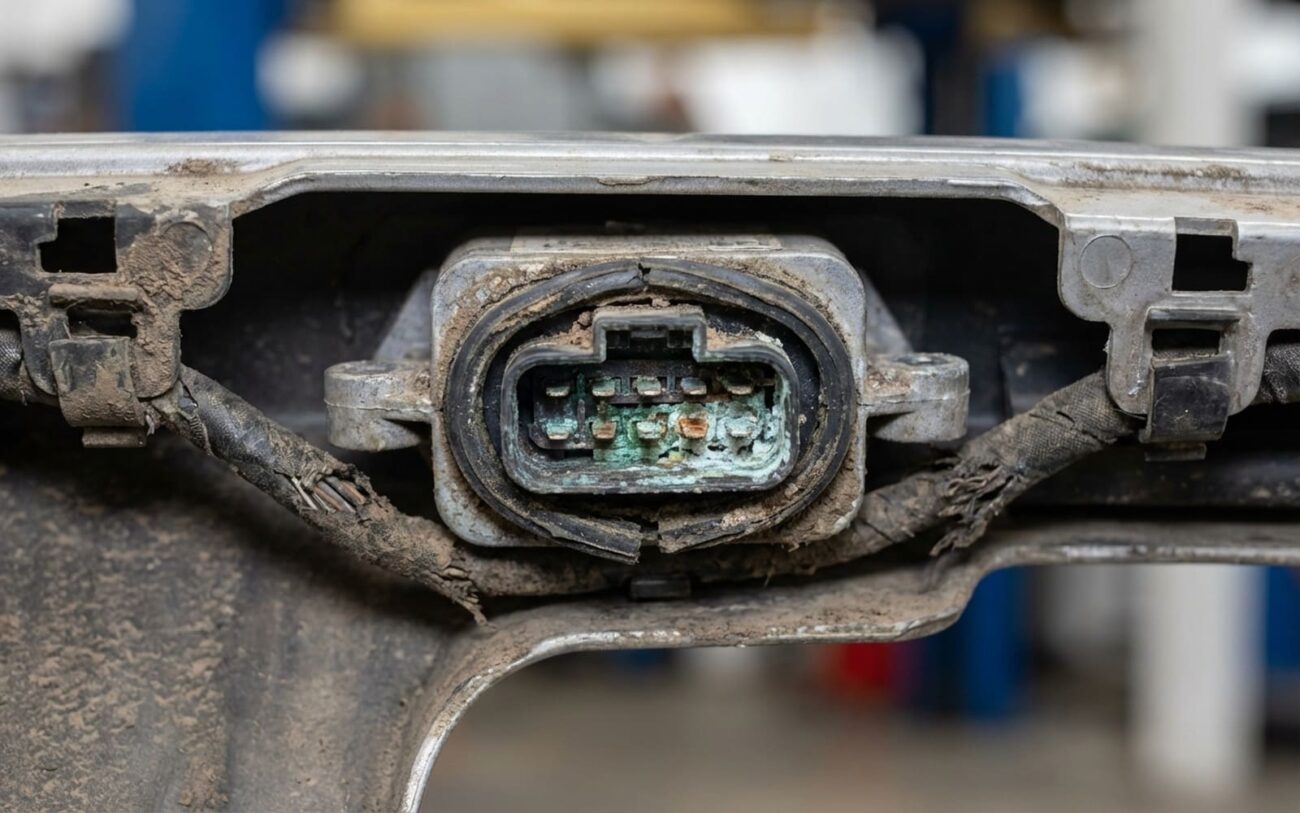
Alright, let’s talk about that flashing blind spot monitor (BSM) light. When it starts blinking at you constantly from your side mirror or instrument cluster, especially when there’s no other car even close, that’s not just a little hiccup. It’s the system throwing up its hands, telling you it’s failed a self-check and gone offline completely. I’ve seen it countless times in the shop, and trust me, a properly working BSM only lights up steady or pulses when it actually detects a vehicle in your blind spot. That constant flashing, usually with a message like “Blind Spot System Fault” or “Side Assist Unavailable,” means it’s logged a diagnostic trouble code (DTC) and shut itself down for safety.
What I typically see is a completely dead system: the light flashes nonstop, and you get zero alerts, even when a car is clearly sitting right where it should be. That tells me the problem isn’t just a temporary sensor blockage; it’s something deeper, internal to the system itself. While things like a damaged radar sensor or a cut wire can definitely trigger codes, that persistent flashing with total system failure usually points me straight to the Blind Spot Monitor Electronic Control Unit (ECU) itself. Now, driving without your BSM isn’t going to affect your engine or how the car drives, but it does take away a valuable safety net. Until it’s fixed, you’re back to good old-fashioned mirror checks and shoulder glances every single time you think about changing lanes.
Figuring Out the Real Problem: ECU or Something Else?
Before you even think about replacing parts, you absolutely have to pinpoint where the fault is. The symptoms can look pretty similar for a lot of different failures, but the root cause changes everything about how you fix it. Just throwing an ECU at it without proper diagnosis is a surefire way to waste a lot of money, and I’ve seen plenty of folks do it. You need a scan tool that can talk to the body or chassis control modules—those cheap OBD2 readers from the auto parts store usually can’t read the BSM-specific codes we need.
Here’s how we break it down in a professional shop. The trick is to separate an actual ECU failure from external issues that are just making the ECU unhappy and report a fault.
| What You See | Often Points to the BSM ECU | Common External Lookalikes | How I Confirm It |
|---|---|---|---|
| Continuous flashing light with a DTC stored | Internal ECU processor or power regulation failure | Faulty radar sensor, poor sensor calibration, wiring damage, blown fuse |
Plug in a professional scan tool. If you see U-codes (like U3000), that’s usually a communication or network issue. C-codes (e.g., C0000 series) often mean the module itself has an internal fault.
|
| System completely dead, light flashing, no communication with the ECU at all | ECU internal fault disabling network communication | Blown fuse, open circuit in the CAN bus wiring, power supply interruption to the module |
Grab your multimeter. Check for proper power and ground at the ECU connector. If you’ve got good power and ground, but the module still won’t talk to the scan tool, the ECU itself is almost certainly toast.
|
| Only one side (left or right) of the BSM system is inoperative | Highly unlikely to be the ECU alone—most systems use a single ECU for both sides | Radar sensor failure on that side, misaligned sensor bracket (maybe from a fender bender), damaged wiring in the door hinge area or rear bumper |
This is where a sensor alignment check with factory equipment comes in. I also compare live data from both sensors using the scan tool; a missing or static signal from one side clearly points to a problem on that specific side.
|
In my experience, about 60% of those flashing BSM lights actually trace back to wiring problems, sensor alignment issues, or a simple blown fuse. But when the diagnostics show absolutely no communication and I’ve confirmed power and ground are good, the ECU is usually the culprit. I see this misdiagnosed a lot, with technicians assuming it’s just a sensor when the real issue is much deeper in the system’s brain.
Why BSM ECUs Fail: Inside the Box
If your diagnostics confirm the fault is truly inside the BSM ECU, it’s worth understanding what actually breaks in there. These aren’t random failures; they follow pretty predictable patterns based on how they’re designed and where they live in the car.
The most common internal failure I see is in the power supply circuit. These ECUs often sit in hot, vibration-prone areas—think behind a rear quarter panel or under some trim. All those repeated heat cycles can degrade tiny surface-mount capacitors or voltage regulators. When those go bad, the main microprocessor doesn’t get stable voltage, leading to all sorts of erratic behavior or a complete shutdown. Another frequent failure point is the CAN bus transceiver chip. This is the component that lets the ECU talk to the rest of the car’s network. If that chip fails, the module becomes completely invisible to your scan tool, even if it’s getting good power and ground.
Cracked solder joints are also a real issue. They’re especially common on larger components like connectors or shielding. Years of thermal expansion and contraction from driving can create microfractures that break electrical continuity. And yes, software glitches do happen. I’ve seen manufacturers, like Nissan and Toyota on certain model years, issue service bulletins where a software anomaly causes the BSM light to flash without any hardware fault. In those cases, a simple reprogramming is all it takes—no parts needed, which is always nice.
But let’s be absolutely clear: a dirty sensor, snow buildup, or a misaligned radar unit because of some minor bodywork isn’t an ECU failure. Those are external conditions that trigger a warning, and the ECU is just doing its job by reporting a problem. It’s just not the problem you might initially assume.
Getting It Fixed: Your Options
This Isn’t a DIY Job. Seriously.
Look, working on modern vehicle electronics, especially something as integrated as a BSM system, demands specialized tools, safety training, and very specific procedures. There’s no safe shortcut here, and you can easily make things worse trying to tackle this yourself.
Software & Firmware Reprogramming Professional Only
Module Replacement Professional Only
Specialist Board Repair Specialist Only
After the Fix: Don’t Skip the Validation
The repair isn’t truly complete until you’ve verified the fix. After any reprogramming or module replacement, I always clear all DTCs and cycle the ignition. The BSM light should illuminate briefly during startup, then go out. If it stays on or keeps flashing, either the flash failed, or there’s still another underlying issue.
Next, you absolutely need a road test. The system usually activates around 20 mph (30 km/h). I’ll often have a helper drive alongside me in the blind spot zone—the mirror indicator should light up steadily. For a full ECU replacement, calibration is mandatory. Most systems require a precise sensor alignment procedure using a target board placed at a specific distance and angle behind the vehicle. Skipping this step is just asking for false alarms or, worse, missed detections.
The tools for validation are the same ones you used for the repair: a capable scan tool to monitor live data, check for any lingering codes, and confirm calibration status. But nothing beats a real-world test with another vehicle. Don’t just rely on the light being off; the system has to perform correctly under actual driving conditions.
Cost, Risk, and Making the Right Call
Let’s be realistic here: fixing a failed BSM ECU isn’t cheap. You’re paying for specialized parts, expensive software access, and skilled labor. Here’s a rough breakdown of what you might be looking at:
ECU Reprogramming
Definitely not a DIY job. High success rate (over 95%) if done with the correct equipment and procedure. Low secondary risk, meaning if it fails, it usually just means you try again.
ECU Replacement & Programming
Again, not a DIY job. This has a very high success rate (over 98%) when done correctly. Medium secondary risk: incorrect coding or a failed flash can easily disable a brand new module, turning it into a very expensive paperweight.
Specialist Board Repair
Not DIY; you’ll typically ship the module out. Moderate to high success rate (80–90%) for specific, known faults. Low-to-medium secondary risk: a repaired module might have a slightly reduced lifespan compared to a new one, as other components could still be aging.
Always, always check your vehicle’s warranty status before authorizing any repairs. You might be covered!
Here’s my advice: if the repair cost starts to climb past 40% of your car’s current market value, you really need to weigh that investment carefully. For older vehicles, it might make more sense to just drive without the BSM and rely on proper mirror adjustment and diligent lane discipline. You absolutely can live without it, but don’t ignore the reason it’s there—make sure your mirrors are set perfectly to minimize those blind spots. On the other hand, if you’re planning to keep the car for a long time or you do a lot of highway driving, restoring full function is usually worth the cost for the added safety and peace of mind.
Keeping Your BSM Healthy: Prevention and Monitoring
While you can’t stop electronic components from aging, you can certainly prevent premature failure. The biggest threat to your BSM ECU—and really, all sensitive modules in your car—is an unstable vehicle electrical system. A failing alternator that’s sending voltage spikes through the network can slowly but surely fry delicate circuitry over time. If your battery or charging system warning light ever comes on, get it checked immediately. Clean, stable voltage is absolutely critical for all your electronics.
For early detection, pay close attention to any intermittent warnings. If that BSM light flashes once, then doesn’t come back for weeks, don’t just assume it was “just a glitch.” Plug in a scan tool that can read chassis codes. Even if the light is off now, a stored DTC could reveal a developing wiring issue or a sensor that’s starting to fail. Catching a problem early, like a chafed wire or a weak ground, can prevent a much larger cascade failure that takes out the ECU itself.
My Top Tips to Avoid Recurrence
-
Keep your electrical system stable: Address any battery or alternator warnings the moment they appear.
-
Watch for intermittent warnings: Use a capable scan tool to check for stored chassis codes, even if the warning light isn’t currently on.
-
Maintain your cooling system: While not directly BSM-related, chronic overheating puts stress on all electronic components in your vehicle.
And speaking of maintenance, keeping your cooling system in good shape helps overall electrical reliability. Things like air in the system or a clogged heater core won’t directly kill your BSM, but chronic overheating just stresses every electronic component in the vehicle. Stay on top of all your maintenance—it really all ties together.
