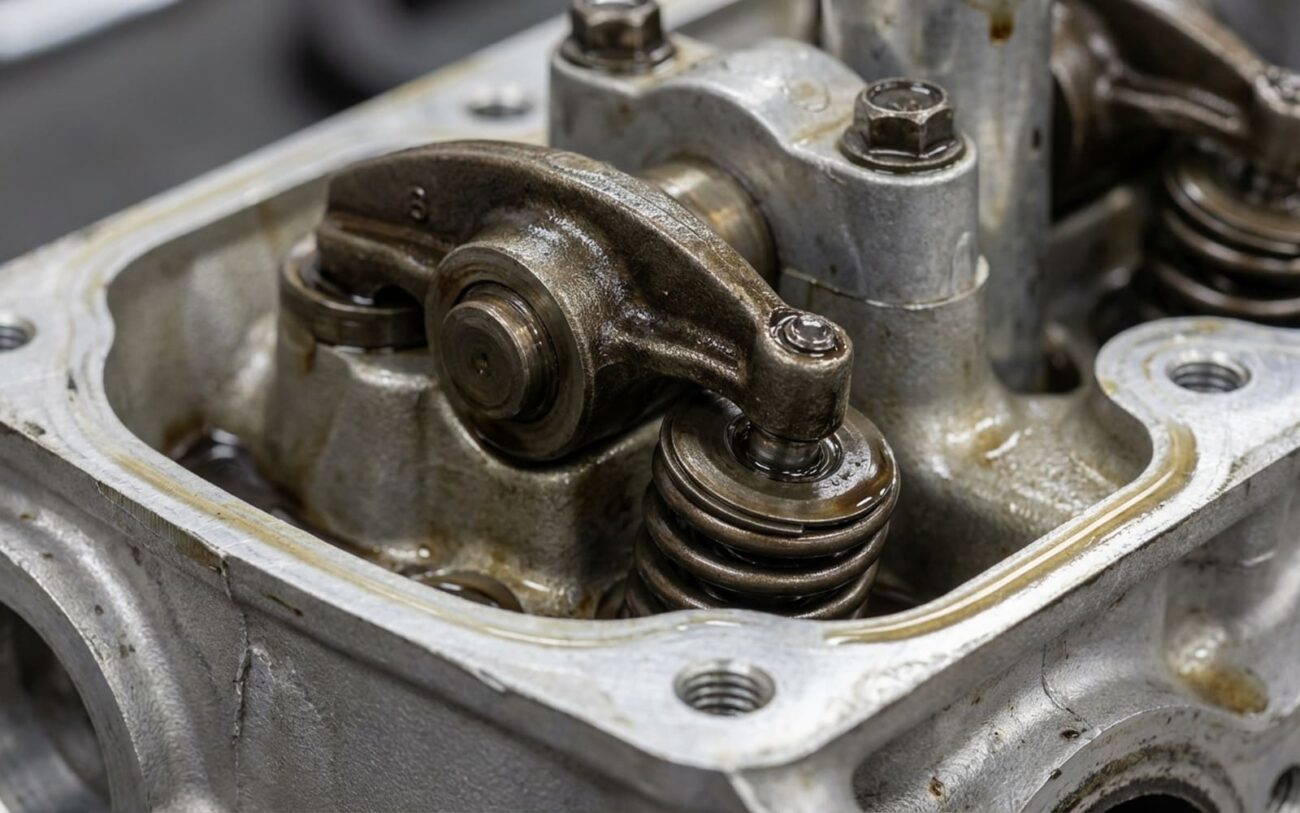
Alright, let’s talk about that rhythmic tapping noise coming from your engine. That steady, persistent tick that follows the RPMs, whether the engine’s cold or warmed up – in my 25+ years turning wrenches, that’s usually the sound of a hydraulic lifter (or Hydraulic Lash Adjuster, an HLA, as some manufacturers call ’em) calling it quits. It’s not just an annoying sound; it’s a warning, and one you shouldn’t ignore.
What’s That Tick, and Why Does It Matter?
A hydraulic lifter’s job is pretty straightforward but absolutely critical: it uses engine oil pressure to automatically take up any slack between the camshaft and the valve. This keeps everything quiet, precise, and ensures your valves open and close exactly when they’re supposed to. When one of these lifters starts failing internally, it can’t hold that oil pressure. What you hear then is a distinct metallic tap – that’s the cam lobe smacking against a collapsed lifter body, or the rocker arm clattering because there’s too much clearance.
This isn’t just noise, though. That oil cushion is gone, meaning you’ve got metal-on-metal contact with every single revolution. I’ve seen too many engines come in with a camshaft lobe completely wiped out because a ticking lifter was ignored. If multiple lifters go bad, your valves won’t open fully, leading to misfires, poor combustion, and unburned fuel washing down your cylinder walls. That can contaminate your oil, damage your catalytic converter, and eventually, spiral into much more expensive internal engine damage. Trust me, it’s a slippery slope.
Why Do These Things Fail Anyway?
Understanding what goes wrong inside these little guys helps you avoid unnecessary repairs. They’re precision components, and they rely on super tight internal clearances and a steady flow of clean oil. Most failures I see boil down to three main culprits:
First, and probably most common, is clogging. Over time, sludge and varnish from degraded oil can gum things up. This debris gets trapped under the internal check valve or blocks the tiny metering orifice. When that happens, the lifter can’t pump up or hold pressure. I’ve seen countless cases where extended oil change intervals – sometimes way beyond what the manufacturer recommends – led to hardened deposits that no amount of additive could ever dissolve. It’s like trying to clean concrete with dish soap.
Second, you’ve got mechanical wear. Contaminated oil, or even just poor lubrication over hundreds of thousands of miles, can score the lifter’s plunger surface or its bore. Once that happens, oil leaks past under pressure, and the lifter “bleeds down” too fast. The check valve seat inside can also erode, letting pressure escape even if the plunger looks okay. This kind of wear is irreversible – once it’s worn, it’s worn.
Third, though less common, are material or manufacturing defects. Sometimes, it’s just a bad part from the factory. I’ve seen engines with known issues, like certain Subaru FB-series engines that have a documented pattern of cold-start lifter tick due to marginal spring tension in the HLA. These aren’t wear issues; they’re design or production flaws that tend to show up fairly early in the vehicle’s life. But here’s a critical point: if you’ve got low oil pressure across the board, and multiple lifters are collapsing, those lifters are a symptom, not the root cause. Always, always rule out a failing oil pump or a clogged oil pickup screen first. I’ve seen guys chase lifter ticks for weeks when the real problem was a $100 oil pump.
My Approach to Pinpointing That Tick
Before you even think about tearing into an engine, you need to be absolutely sure that tick is actually a hydraulic lifter. I’ve seen too many misdiagnoses over the years – a leaking exhaust manifold, a worn rocker arm pivot, even a rod knock can mimic a lifter tick. Just relying on sound alone is a recipe for throwing parts at a problem. Here’s how I narrow it down with confidence in my shop:
Initial Sound Check & Localization
First, I start the engine cold and listen. Is the noise rhythmic? Does it follow engine RPM? Does it stay consistent whether the engine is cold or warm? If it’s a lifter, it usually will. Then, I grab my mechanic’s stethoscope. This is your best friend here. I’ll carefully touch it to different spots on the valve cover, trying to isolate the sound to a specific cylinder or even a specific valve. A lifter tick is usually pretty localized right there under the valve cover.
Now, if the noise sounds more like it’s coming from the bottom end of the engine, or if it’s a deeper, duller knock that gets worse under load, then we’re talking about something far more serious, like a rod bearing. That’s a whole different ballgame.
Checking Oil Pressure
This is a critical step, especially if the noise is widespread or seems to lessen (but not disappear) after an oil change. I’ll install a mechanical oil pressure gauge directly at the oil sender port. Don’t trust the dash gauge – it’s often just a switch, not a true pressure reading. I’ll check the pressure at idle and at operating temperature, comparing it to the OEM specifications. If the pressure is low, then you’re looking at a bad oil pump, a clogged pickup screen, or excessive bearing clearances, not just a bad lifter. If the pressure is good, that tells me the problem is likely internal to the lifters themselves or their specific oil galleries in the head.
Visual Inspection (Valve Cover Off)
If the stethoscope points to a specific area and oil pressure is good, the next step is usually pulling the valve cover. This lets you visually inspect the valve train. With the valve cover off, I’ll carefully bump the engine over (or rotate it by hand if it’s accessible) and watch the rocker arms. A collapsed lifter will often show excessive play compared to the others. You might even be able to push down on a rocker arm and feel the slack. On some engines, you can even use a borescope to inspect the lifter oil feed holes in the cylinder head for blockage or debris, though that’s a bit more advanced.
Cylinder Balance Test
Finally, if I’m still not 100% sure, or if I suspect a lifter is causing a performance issue, I’ll perform a cylinder balance or contribution test using a good scan tool. If a noisy cylinder shows a loss of contribution, it strongly suggests poor valve actuation – meaning that lifter isn’t letting the valve open correctly. This is a definitive way to link the noise to an actual performance problem.
Your Repair Options: From DIY to “Call a Pro”
Alright, so you’ve confirmed it’s a lifter. Now what? The repair path depends heavily on your engine’s design and how many lifters are affected. Don’t assume all lifter jobs are the same; access varies wildly.
DIY Territory: Older Pushrod (OHV) Engines
If you’re dealing with a single bad lifter on an older pushrod engine – think a classic Ford V8, an old Chevy small block, or even a modern GM LS engine – this job is often DIY-feasible for someone with solid mechanical experience. You’ll usually need to remove the intake manifold and possibly a valve cover. In many cases, you don’t even need to pull the cylinder head off. You’ll use a magnetic pickup tool to extract the old lifter. A few critical tips from my experience:
- Always install a new, OEM-spec lifter. Don’t cheap out here.
- Pre-prime the new lifter: Submerge it in clean engine oil and depress the plunger repeatedly until it feels solid. This prevents immediate bleed-down on startup and ensures it pumps up quickly. Skip this, and you’ll have a tick right after the repair.
- Use assembly lube on the cam lobe and the face of the new lifter. This provides critical lubrication during that first start-up.
- If you did remove the cylinder head (which isn’t always necessary for a single lifter on an OHV), make sure you torque the head bolts in the correct sequence and to the exact specification. There’s no shortcut here; getting this wrong means warped heads or blown gaskets.
Professional Territory Only: Overhead Cam (OHC) Engines
On most modern engines – your four-cylinders, V6s, and inline-sixes with overhead cams – replacing lifters is a professional-level job. The camshaft sits directly over the lifters, which means you’re getting into serious engine surgery. You’ll have to remove the timing belt or chain, the camshafts, and the cam caps. This requires absolute precision. Camshaft caps are often position-specific and must be torqued in multiple stages with very low, specific values (I’m talking 7-9 ft-lbs in three steps, for example). One over-torqued bolt can warp the cylinder head or damage the cam bore, and that’s a mistake that costs thousands. If you find camshaft wear, you’ll almost certainly need to replace both the cam and the lifters. Don’t even think about reusing a worn cam with new lifters; you’ll just be doing the job again soon.
The Worst-Case Scenario: Blocked Oil Gallery
This is rare, but I’ve seen it. If the oil feed passage inside the cylinder head that delivers oil to the lifters is clogged, no amount of lifter replacement will fix that tick. A shop might try to clear it with a borescope and specialized tools, but honestly, the only reliable fix is often a replacement cylinder head. This usually happens in engines with a long history of poor oil maintenance, where sludge has solidified deep in the oil passages.
Making Sure the Repair Actually Worked
Don’t call it fixed until you’ve verified it. A successful repair means the engine starts quietly and, more importantly, stays that way. Pay close attention to both cold and hot restarts. A healthy hydraulic lifter should pump up and quiet down within 1-2 seconds. Anything lasting 5 seconds or more is a big red flag.
After reassembly, I always start the engine and let it idle. I grab my stethoscope again (or a long screwdriver, handle to my ear, tip on the valve cover) and scan each lifter location. The sound should be uniform and smooth, like a sewing machine, not a jackhammer. I’ll gently rev the engine; the noise shouldn’t return under load. Then, I take it for a good 20-30 minute drive to get it to full operating temperature. After that, I shut it off, wait about 20 minutes for things to cool and oil to drain down, then restart. If the tick comes back, that lifter isn’t holding pressure – either it wasn’t primed correctly, it’s defective, or there’s still an oil supply restriction. For final validation, I’ll run another cylinder balance or contribution test with the scan tool. All cylinders should be firing evenly. A weak cylinder under load with a persistent lifter noise points to incomplete valve opening, which means either a faulty lifter, a damaged cam lobe, or something wasn’t installed correctly.
The Cost Reality and When to Cut Your Losses
Repair costs for lifters vary dramatically, and you really need to weigh the investment against the vehicle’s overall value and condition. Here’s a quick breakdown of what I typically see:
| Repair Type | DIY Cost (Parts) | Shop Cost (Est. Labor + Parts) | Success Rate | Secondary Risk if Failed |
|---|---|---|---|---|
| Replace single lifter (OHV) | $50 – $150 | $300 – $500 | High | Repeating disassembly; potential for cam lobe damage if delayed further. |
| Replace all lifters & camshaft (OHC) | $500 – $1200 | $1800 – $3000 | Very High | Catastrophic engine damage if timing is incorrect or cam bolts are over-torqued. |
Here’s my rule of thumb, based on over two decades in this business: if the repair estimate exceeds half the private-party value of the car – especially if that vehicle has over 120,000 miles – you need to seriously consider if it’s worth it. You could be putting $2,500 into an engine that’s already nearing the end of its life, and then something else goes next month. On the other hand, if the rest of the car is solid, and you’re mechanically inclined, a DIY lifter fix on an OHV engine can absolutely extend its life for years. But for those complex OHC engines with multiple failures, the labor cost is often just too hard to justify on an older, higher-mileage vehicle.
How to Keep That Engine Quiet (Prevention)
Prevention is always, always cheaper than repair. And for lifter issues, it all comes down to oil discipline. Use the exact viscosity grade specified in your owner’s manual – no exceptions. Thinner oil might flow faster at startup, but if it’s not rated for your engine, it won’t maintain proper pressure under heat and load. And thicker oil? It won’t get where it needs to go fast enough, especially on cold starts.
My Maintenance Best Practices
-
Change your oil frequently. I tell my customers to follow the “severe service” schedule in their owner’s manual, even if they don’t think they qualify. If you drive in stop-and-go traffic, tow, or make a lot of short trips, you’re putting more stress on that oil than you realize.
-
Use a high-quality oil filter. Look for one with a reliable anti-drainback valve. This keeps oil in the upper engine, so oil pressure builds quickly at startup, minimizing dry starts.
-
Develop the habit of listening during cold starts. A brief tick for 1-2 seconds is normal as oil pressure builds, but anything lasting 5 seconds or more is a definite warning sign that something’s not right.
Catching these lifter issues early can literally save you from needing a new camshaft, or even a whole engine. For more on diagnosing other startup noises, you might want to check out articles like White Smoke from Exhaust Smells Like Coolant: Causes and Diagnosis or How to Check Crankshaft End Play Without Disassembly.
