Stiff Brake Pedal on Your Turbo Engine? I’ll Bet It’s a Vacuum Leak.
You’re driving your modern turbocharged car – maybe a VW with that TSI engine, or a Ford EcoBoost – and suddenly, that brake pedal feels like you’re pushing a brick. It takes serious leg strength just to slow down. After more than two decades wrenching on cars, I can tell you, nine times out of ten, that’s a loss of vacuum assist to your brake booster.
I see this issue weekly in my shop. Drivers come in thinking they’ve got a major brake problem, when the real culprit is usually a small, often hidden, leak in the engine’s vacuum system. See, older, naturally aspirated engines generate plenty of vacuum right from the intake manifold. But with a turbo? When that boost kicks in, your intake manifold is under positive pressure, not vacuum. So, these vehicles rely on a dedicated, complex vacuum system with check valves, reservoirs, hoses, and sometimes even an electric vacuum pump to keep your brakes working right. Any failure in that system, and you’re suddenly back to the old days of manual brakes.
Status: UNDER BOOST
The Symptoms I Look For (And Why They Matter)
That stiff brake pedal is your primary warning, no doubt about it. You’re relying solely on leg strength to push hydraulic fluid through the master cylinder, and that’s not just tiring, it’s downright dangerous in an emergency stop. But don’t think for a second that’s the only issue. This vacuum system is tied directly into your engine’s air management, so a leak affects a lot more than just your braking performance.
The Concept
Think of a vacuum leak like trying to drink through a straw with a hole in it. You’re working twice as hard for half the result, and the engine’s struggling to breathe properly.
What I typically see next is the engine starting to act up. Listen for a high or unstable idle – that’s often caused by unmetered air sneaking into the intake system past your MAF or MAP sensor. The engine control unit (ECU) doesn’t know this extra air is there, so it can’t adjust fuel delivery properly. The result? A lean air-fuel mixture. On a turbocharged engine, where cylinder pressures are already high, this is a recipe for disaster. Over time, that lean condition increases combustion temperatures and significantly raises the risk of detonation.
My Diagnostic Approach: How I Find the Exact Source
Alright, so you’ve got the symptoms. Now, how do we pinpoint that leak? First, let’s be smart. A stiff pedal could be a failing brake booster diaphragm or a master cylinder, but if you’ve also got a rough idle, lean codes, or poor fuel economy, then the vacuum system is almost certainly involved. Here’s the approach I use in the shop:
| Symptom | Likely Culprit | Common Mimics | My Go-To Test |
|---|---|---|---|
| Stiff Brake Pedal | Brake booster vacuum hose, check valve, or booster diaphragm failure. | Internal master cylinder failure, collapsed brake hose (rare). |
I’ll use a hand-held vacuum pump (like a Mityvac) on the booster’s vacuum port. Pull 18–20 inHg and monitor for 10–15 minutes. If it drops, you’ve got a leak. |
| High or Fluctuating Idle | Cracked vacuum hose, leaking intake manifold gasket, or damaged plastic tee. | Failed PCV valve, leaking injector O-rings, stuck throttle body. |
My go-to here is a smoke test. With the engine off, I’ll seal the intake and introduce low-pressure smoke. It’ll show you exactly where that unmetered air is getting in. |
| Hissing Under Boost | Leaking intercooler hose, intake manifold gasket, or vacuum line. | Failing turbocharger compressor seal, leaking bypass valve (BOV). |
For boost-related issues, I’ll perform a boost leak test. Pressurize the intake system to 10–15 psi and listen for escaping air. This catches leaks that only show up under positive pressure. |
Why Turbo Vacuum Systems Are So Prone to Failure
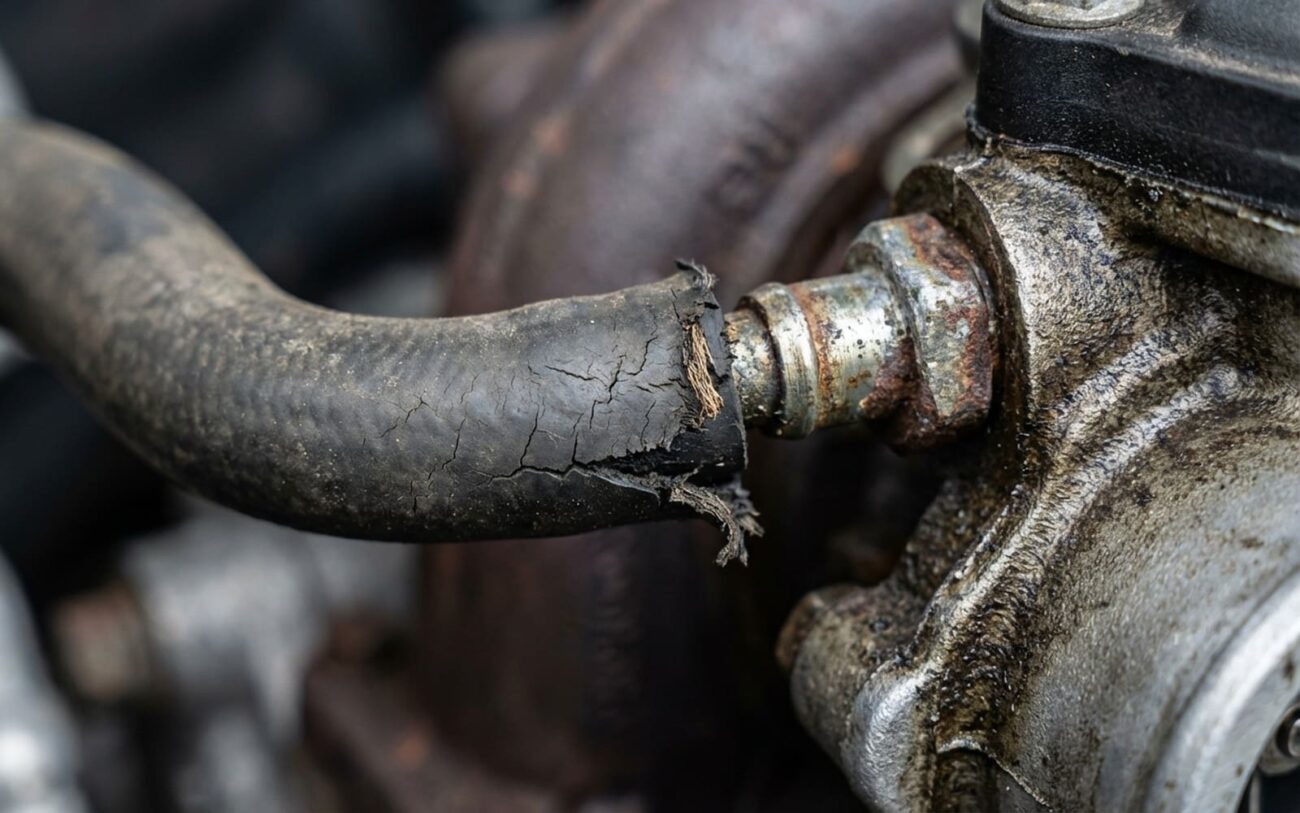
It really comes down to the design. Turbo engines don’t have that constant, reliable vacuum source like an old V8. They rely on those one-way check valves to hold vacuum in a reservoir for the brake booster. And sometimes, they even have an electric vacuum pump to supplement it. These components, especially the plastic hoses and check valves, just get brittle and crack over time with all those heat cycles under the hood. I’ve seen plenty of service bulletins (TSBs) on Ford EcoBoost and VW TSI engines for exactly this – cracked vacuum tees and PCV system leaks that cause both brake assist loss and rough idle. Always keep an eye out for those specific issues when you’re diagnosing.
Pro Tip: Check for TSBs!
There are known service bulletins for certain model years of Ford EcoBoost and VW TSI engines addressing cracked vacuum tees and PCV system leaks that cause both brake assist loss and rough idle. I always inspect the entire system when diagnosing these cars.
Fixing It Right: From Simple to Serious
Safety First, Always.
Look, vacuum repairs on turbo systems often involve high-heat areas, critical safety components, and sometimes tricky access. If you aren’t comfortable with precise torque-to-yield sequences or high-pressure testing, please, consult a professional. I’ve seen too many DIY attempts lead to bigger, more expensive problems.
DIY-Friendly (Hoses & Tees)
Professional-Only (Gaskets & Boosters) Professional Only
Non-Repairable (Replacement)
Temporary / Last-Resort
Verifying the Repair: Don’t Guess—Test.
You’ve done the repair? Great. But don’t just assume it’s fixed. You have to verify the system is truly sealed. This is where a lot of folks miss a step. For minor hose or tee replacements, here’s what I check:
-
A stable idle, within 50 RPM of factory spec.
-
Long-Term Fuel Trim (LTFT) between -10% and +10% at idle, checked with a good scan tool.
-
No visible smoke during a smoke test (if you have access to one).
-
A smooth brake pedal with full assist restored.
What’s This Repair Going to Cost You?
So, what’s this going to set you back? It really depends on what we find. Here’s a ballpark of what I typically see in my shop for these kinds of repairs:
Hose/Tee Fix
Shop cost including labor. DIY parts are often under $100.
Intake Gasket
Labor intensive. Success depends on surface prep and torque specs.
Full Replacement
For cracked manifolds or failed boosters. High risk if misdiagnosed.
If the repair cost starts creeping up past 60% of your car’s private-party value, it’s always worth considering if investing in these repairs still makes sense versus looking for a different vehicle.
My Best Advice: Catch It Early!
Every now and then, pop that hood with the engine idling and just listen. Get a flashlight and look for cracked hoses, especially around tight bends or where they connect to plastic fittings. Catching a small hiss or a hairline crack early can mean replacing a $30 hose fix instead of a $1,000 manifold job, or worse, dealing with serious engine damage down the road.
