When Your Steering Wheel Won’t Come Home: Diagnosing Poor Return
Alright, let’s talk about a steering issue that drives folks crazy and can be a real head-scratcher if you don’t know where to look: when your steering wheel doesn’t want to come back to center after a turn. I’ve been turning wrenches for over 25 years, and this symptom, what we call ‘poor steering return’ or ‘memory steer,’ is a clear sign something’s binding up. It’s not just an annoyance; it’s a safety concern, and it almost always points to friction deep inside the steering system.
You’re making a turn, maybe pulling out of a parking spot or going around a corner, and when you let go of the wheel, it just… stays there. Or it comes back painfully slow, forcing you to manually straighten it out. That’s the symptom. It feels like the wheel is dragging, especially noticeable at slower speeds. In my experience, the root cause is usually internal friction within the steering gear itself, preventing that smooth, natural reset after input.
The Concept
“Think of it like a sticky door hinge: it should swing freely, but instead, it catches and binds.”
That binding is what we’re fighting. If the wheel drags or requires extra effort to return, especially after slow-speed maneuvers, you’re likely dealing with internal resistance in the rack and pinion. While external issues like a seized strut bearing or a binding steering column joint can mimic this, the combination of high return effort and incomplete centering strongly points toward the steering rack—whether it’s a hydraulic or electric power-assisted unit.
My Diagnostic Approach: Don’t Guess, Isolate the True Source
Over the years, I’ve seen plenty of folks (and even some less experienced techs) jump straight to replacing the steering rack for this issue, only to find the problem still there. That’s a costly mistake. My first rule: you must always rule out the external stuff first. Misdiagnosing a simple ball joint issue as a failed steering rack leads to unnecessary cost and frustration. The key is isolating the steering system step by step.
| Symptom | Likely Internal Rack Issue | Common External Mimics | My Definitive Test |
|---|---|---|---|
| Steering wheel does not return to center after turn | Worn internal rack bushings, damaged pinion teeth, or swollen/degraded seals causing drag. | Binding lower control arm ball joint, seized strut top mount bearing, or a binding U-joint in the intermediate shaft. |
I’ll disconnect the intermediate shaft at the rack input. Then, manually turn the steering wheel lock-to-lock. If it centers freely, the fault is the gear. |
| Increased steering effort and poor return | Excessive preload on the rack guide, internal corrosion or scoring, or a collapsed valve spool in hydraulic units. | Low tire pressure, a failing power steering pump, or contaminated fluid. (I’d also check for cold stiffness, which can be a pump issue.) |
I perform a “dry park” test with a pull scale. If effort exceeds 5–8 lbs after verifying fluid pressure (if hydraulic), it indicates internal friction. |
| Vehicle pulls or wheel remains off-center after turn | Incorrect internal rack centering due to slipped preload or a worn centering detent. | Improper toe alignment, mismatched tire pressures, or unequal caster from bent control arms. |
I’ll complete a 4-wheel alignment. If specs are correct but the wheel is still off-center, then the mechanical center of the rack is faulted. |
What Fails Inside the Rack: Root Cause Analysis
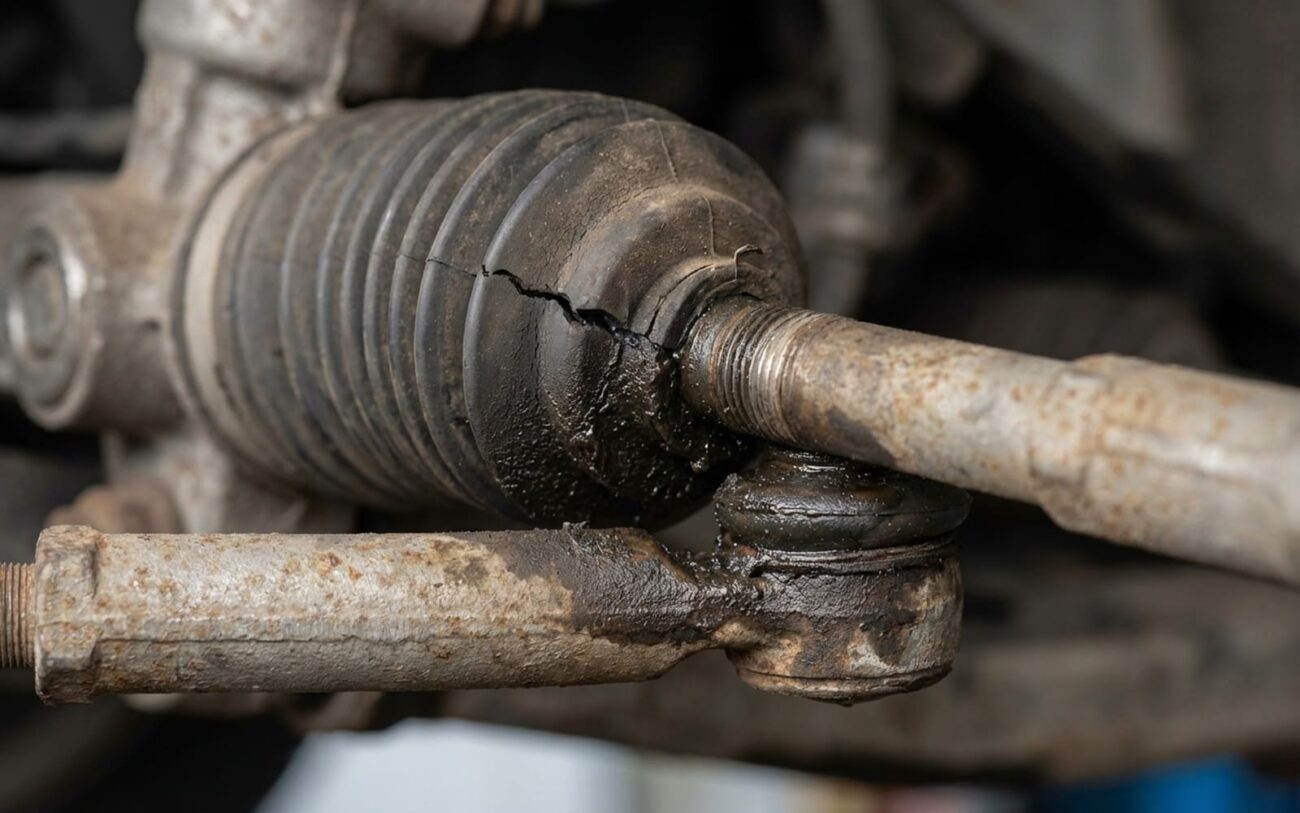
So, we’ve isolated it to the rack. What’s actually going on in there? First, mechanical wear: just like any moving part, the pinion gear and the rack teeth themselves wear down over time. Lack of proper lubrication (maybe from a torn boot that let grease out and dirt in) or contaminated fluid can accelerate this. This wear creates excessive lash and prevents that smooth, natural return. It’s not always a fluid issue, but using the wrong or degraded power steering fluid accelerates internal wear significantly.
The “Stick-Slip” Phenomenon:
This is a big one, and I’ve seen it countless times. Inside the rack, you have Teflon or rubber seals that help the piston move smoothly. With heat, age, or especially the wrong power steering fluid, these seals can harden, swell, or even tear. When they swell, they create excessive drag on the rack piston, leading to that sticky, jerky return feel – what we call “stick-slip.” I’ve seen this repeatedly where non-OEM fluid was used—especially ATF in units designed for synthetic hydraulic fluid. Always use OEM-specified fluid, no exceptions.
Corrosion is a serious concern, particularly in aluminum-housed racks. If a bellows boot tears (which is why I check them so often) or a cooler line springs a leak, moisture gets in. That moisture, combined with road salt or other contaminants, can corrode the rack bore. In severe cases, the rack shaft can literally seize in place. Road damage is another real-world cause: a hard impact—hitting a curb or a big pothole—can dent the housing, distorting the internal bore and causing a mechanical bind.
Rarely, you’ll encounter factory defects—like incorrect pinion-to-rack mesh preload—but these usually show up early in the car’s life. Importantly, worn outer tie rods cause looseness and clunking, not poor return. If a properly aligned system doesn’t self-center, the problem isn’t alignment—it’s the rack.
Getting It Fixed: My Approach to Resolution
Precision Required
Steering is a safety-critical system, plain and simple. When we’re working on it, precision isn’t just a good idea, it’s non-negotiable. Even a few degrees of over-tightening on an adjustment can bind the whole thing up and make it dangerous.
Rack Preload Adjustment Professional Only
Steering Gear Replacement
Temporary Fluid Flush
After the Work: Don’t Skip Post-Repair Validation
Replacing parts isn’t the end of the job; proper validation is. After a preload adjustment, I’ll always recheck steering effort with a pull scale during a dry park test. Effort should be balanced side-to-side (within 10%) and well below OEM maximums. After a full rack replacement, the real test comes on the road and, critically, on the alignment rack.
The vehicle must track straight on a level surface with your hands off the wheel. And here’s my golden rule: after a 90-degree turn at about 15 mph, the steering wheel should return to within 2 degrees of true center on its own. There should be no groaning at full lock, no play, and absolutely no binding. Skipping this step is asking for a comeback or, worse, missing a safety issue.
The Dollars and Sense: Cost, Risk & Economic Decision Framework
Let’s talk money, because that’s always a factor. Here’s a rough idea of what you’re looking at:
| Repair Type | DIY Cost (Parts) | Shop Cost (Parts + Labor) | Success Rate | Secondary Risk |
|---|---|---|---|---|
| Rack Preload Adjustment | $0 (+$150 tool) | $150–$300 | ~60% | Over-tightening can permanently bind the rack. |
| Steering Gear Replacement | $500–$1500 | $1200–$2200 | ~95% | Improper installation can cause leaks or vibration. |
My advice on the economic side: if the repair estimate for a steering rack replacement starts to creep up past 40% of your car’s current market value, you really need to weigh the overall condition of the vehicle. Steering is a safety-critical system, so you absolutely cannot cut corners here. But it’s also not wise to sink $2,000 into a car that’s got a failing transmission or a rusted-out frame. Be realistic.
Keeping Your Steering Healthy: Prevention & Monitoring
Maintenance Checklist
-
Use OEM Fluid Only: I cannot stress this enough. Using generic ‘universal’ power steering fluid or, even worse, the wrong type of ATF, is a death sentence for your rack’s seals and internal components. Stick to what the manufacturer specifies.
-
Inspect Bellows Boots: This is huge. Torn boots allow water and grit to enter, accelerating rack shaft corrosion. I recommend checking them during every oil change and replacing damaged boots immediately.
-
Monitor Return Feel: You drive your car every day. You know how it should feel. If the wheel starts to hesitate on return, or feels sticky, don’t ignore it. Early detection of “stick-slip” can sometimes save the rack.
-
Check Mounting Bushings: During suspension work, I always verify rack bushings aren’t cracked or deteriorated, as this affects alignment and can impact return.
Expert Advice
Most rack failures are preventable. I recommend checking bellows boots during every oil change—just pop the wheel off and take a quick look. Catching a torn boot early can save you $2,000 in replacement costs. It’s saved countless customers a lot of grief in my shop.
