What Your ABS Should and Shouldn’t Feel Like
That heart-stopping thump in your brake pedal when you stomp on it, especially on a wet road or gravel? Most folks think something just broke. But after 25 years under the hood, I can tell you, nine times out of ten, that’s your Anti-lock Braking System (ABS) doing exactly what it’s supposed to do.
See, your ABS is designed to prevent your wheels from locking up. When it senses a wheel losing traction—like on ice, snow, or a sudden hard stop—it rapidly cycles the brake pressure to that wheel. You feel that as a quick, sometimes noisy, pulsation in the pedal. It’s doing this many times a second, letting the wheel slow down just enough to regain grip, then applying pressure again. That’s good. That’s control.
Even worse, if you get that pulsation along with a soft, spongy, or sinking brake pedal, that’s a serious concern. That combination often means an internal hydraulic leak within the ABS modulator itself. Fluid is bypassing where it shouldn’t, and that’s going to degrade your braking performance. I’ve seen cars come in with warped rotors that weren’t from aggressive driving, but from a dragging caliper caused by a slow internal leak in the ABS unit, constantly applying slight pressure.
Figuring Out What’s Actually Wrong
So, you’ve got this weird pedal feel. Is it the ABS unit, or is something else trying to fool you? In my shop, we don’t guess. We isolate the problem. Here’s how I typically break it down:
Constant Pedal Pulsation on Dry Pavement
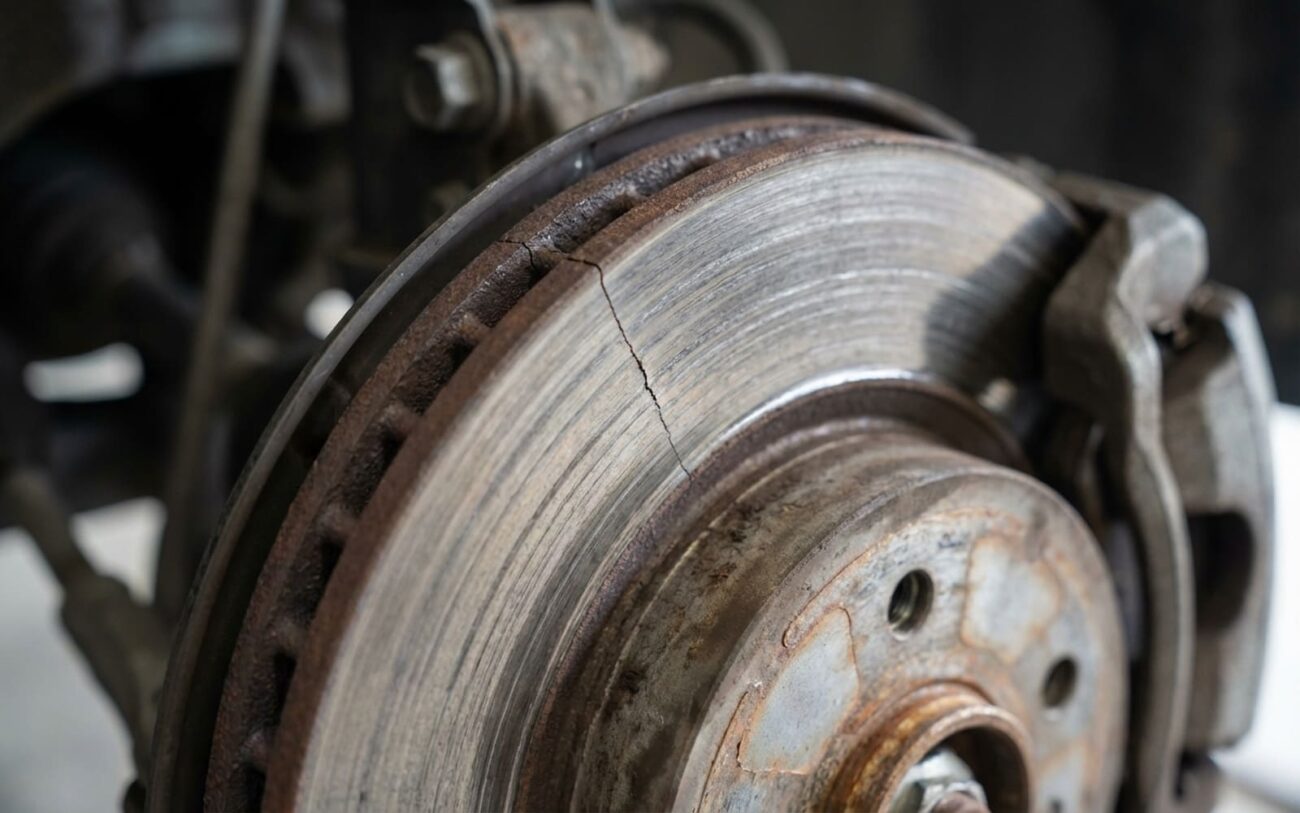
This usually points to a stuck solenoid valve in the ABS modulator, cycling when it shouldn’t be. But—and this is a common mistake—it can also feel like severely warped brake rotors (what we call excessive disc thickness variation, or DTV).
To tell the difference, I hook up the scan tool. First, I run an ABS solenoid function test. If it’s activating when it shouldn’t, that’s a strong indicator. I also check live wheel speed sensor data, even at a standstill. If one sensor is reading erratically or showing speed when the car isn’t moving, that’s a clue. For warped rotors, a dial indicator is the only way to be sure; anything over 0.003 inches of runout, and you’ve got a rotor issue.
Soft Pedal with Pulsation
This screams internal hydraulic leak within the ABS modulator’s valve block. But it could also be a failing master cylinder, air in the lines, or even a collapsed flexible brake hose.
My go-to here is a pressure bleed and an isolation test. I’ll clamp off all four flexible brake hoses one by one. If the pedal suddenly firms up after clamping a specific line, the problem is downstream from there. If I clamp all four and the pedal still feels soft, then the issue is upstream—either the master cylinder or, more often in this scenario, an internal seal failure in the ABS modulator itself. You’d be surprised how often a modulator can fail internally and mimic a master cylinder problem.
ABS Activates at Very Low Speed
This one usually means the ABS computer thinks a wheel is locking up when it isn’t. Could be a faulty brake pressure sensor, or the ECU logic is just confused. But it’s often something simpler: an incorrect gap on a wheel speed sensor, or a damaged reluctor ring (that toothed wheel the sensor reads).
Again, the scan tool is essential. I monitor all four wheel speed sensors in real-time, especially when driving under 10 mph. If one sensor is dropping out, reading zero, or showing a wildly different speed than the others, that’s my target. If all signals are stable and equal, then I’m looking deeper into the modulator or its internal sensors.
Why the ABS Modulator Itself Fails
So, what actually kills these things? In my experience, the number one culprit is neglected brake fluid. People forget that brake fluid is hygroscopic—it’s like a sponge for water. Over time, it absorbs moisture from the air, and that water causes internal corrosion and swells the rubber seals inside the solenoid valves. When those seals swell or the internal passages get corroded, the valve plungers stick. I’ve opened up modulators that were just full of sludge and rust, especially on vehicles that haven’t had a fluid flush in a decade.
Less often, I’ll see a crack in the aluminum housing or an integrated electronic control unit (ECU) failure. Those ECU failures usually come from thermal stress or voltage spikes, and they’re almost always non-repairable because the electronics are sealed in resin. It’s crucial to figure out if the modulator itself is bad, or if it’s something else affecting the ABS, like a bad wheel speed sensor. That distinction saves a lot of time and money.
Your Options for a Fix
Professional Territory Only
Look, when you’re dealing with an internal ABS modulator issue, you’re squarely in professional territory. This isn’t a DIY brake pad job. You need specialized tools, specifically a scan tool that can perform manufacturer-specific ABS bleed sequences. We’re talking about tools like GM’s GDS2 or Ford’s IDS. Without those, you simply can’t purge all the air from the complex internal passages of the modulator, and you’ll end up with a spongy pedal and a still-faulty system.
Modulator/ECU Assembly Replacement
External Fitting Repair DIY Possible
System Flush Diagnostic Only
Making Sure the Repair Actually Worked
After any ABS repair, especially a modulator replacement, validation is absolutely non-negotiable. I don’t let a car leave the shop until I’ve done a thorough road test. The ABS warning light must stay off, and the brake pedal needs to feel firm, with zero abnormal pulsation during normal braking. And yes, you have to complete the automated ABS bleed procedure with the scan tool. There’s no way around it; otherwise, you’ll have air trapped in those tiny internal passages, and you’ll get a soft pedal every time. If we tried a flush, I’d want to see the pulsation gone for at least three drive cycles under different conditions before I’d call it a success.
The Cost and the Hard Decision
Let’s talk money. Here’s a general idea of what you’re looking at:
| Repair Type | DIY Cost (Parts) | Shop Cost | Success Rate |
|---|---|---|---|
| Full Modulator Replacement | $800 – $1,500 | $1,200 – $2,200 | ~98% |
| Professional Flush | $50 (fluid) | $150 – $300 | ~40% |
This is where it gets tough. I always tell my customers to consider the ‘40% rule.’ If the repair cost starts creeping past 40% of your car’s current value, you really have to weigh your options. ABS is a critical safety system, no doubt about it. But spending $2,000 on a car that’s only worth $5,000 might mean it’s time to put that money towards a down payment on something newer. It’s a judgment call, and one I’ll help you make with all the facts.
How to Prevent This Headache
Maintenance is Key
Want to avoid this headache entirely? It’s simple: maintenance. The biggest thing you can do is replace your brake fluid every 2-3 years. I know, it’s often overlooked, but that invisible moisture buildup is a killer. I’ve tested fluid that was over 5% water content—that’s basically water, not brake fluid, and it’s a ticking time bomb for your ABS unit. Always use the specified fluid type for your vehicle, and during regular brake services, I always give the ABS unit a quick visual check for any dampness. Catching a small leak or contaminated fluid early can mean a simple, inexpensive flush instead of a $1,500 replacement down the road.
