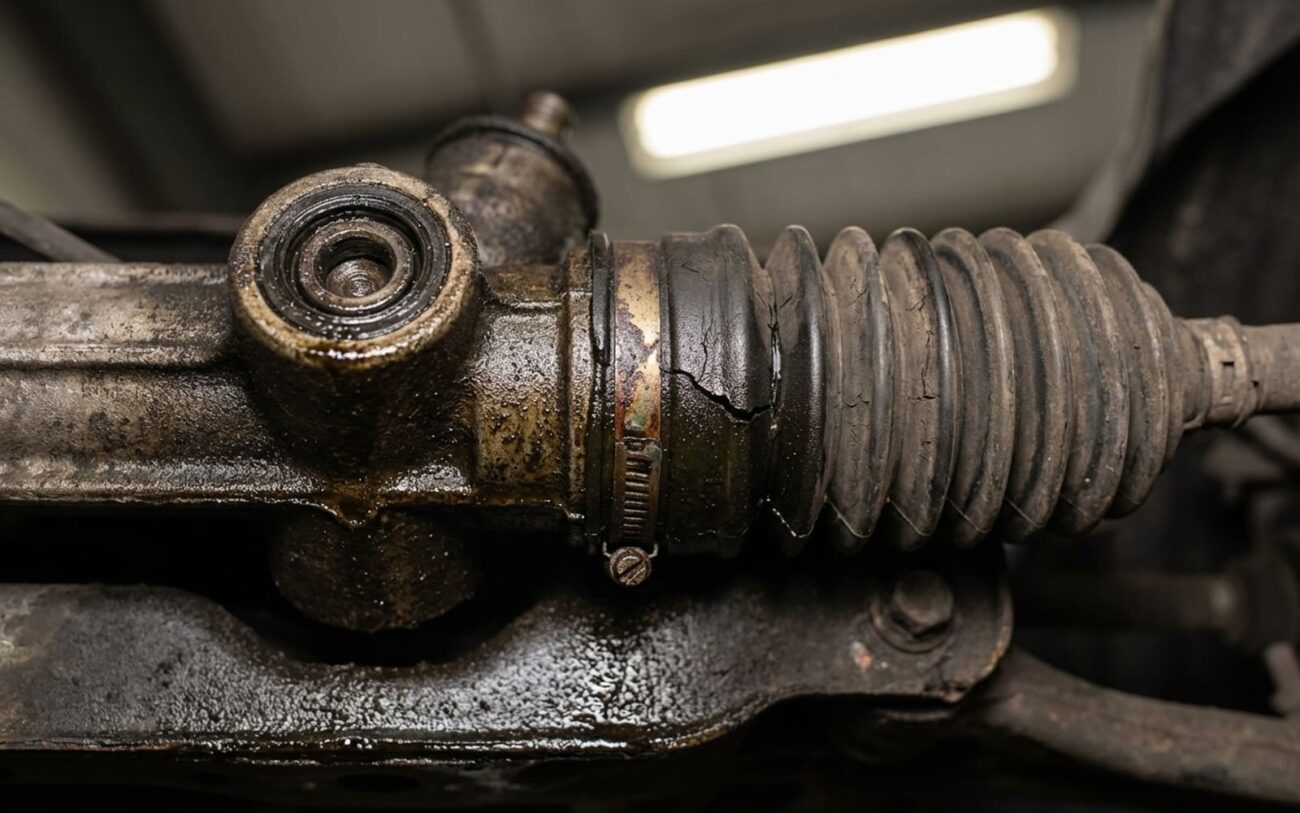
Is Your Steering Rack Worn? Here’s How I Figure It Out.
After more than 25 years under the hood, I’ve seen just about every steering issue you can imagine. When a customer tells me their steering feels “off”—vague, noisy, or they’ve spotted a leak—my mind usually goes straight to the steering rack. It’s the heart of your steering system, the component that translates your hands’ input into the wheels’ movement. Think of it like a translator: if the translation is garbled, the car won’t know where to go.
A worn rack can manifest in a few distinct ways, but the symptoms often get mistaken for other front-end problems. That’s where a good diagnostic approach comes in. I’m going to walk you through the real indicators, how I confirm them in the shop, and what your options are once you know for sure.
Symptoms: What Your Car Is Trying to Tell You
There are three main red flags that scream “steering rack” to me. If you’re seeing even one, it’s time for a closer look. Two or more, and I’d bet money the rack is on its last legs.
When I see multiple symptoms like excessive mechanical lash (play in the gears) and fluid leaks, it points to the whole assembly nearing the end of its service life. It’s rarely just one isolated issue inside the rack.
1. Excessive Free Play in the Steering Wheel
This is probably the most common complaint. You turn the wheel a bit, and nothing happens—the front wheels don’t react right away. That “dead zone” in the center isn’t normal. It’s usually a sign of wear in the rack-and-pinion gear mesh or the internal bushings that keep the rack centered. Over time, those precisely machined gear teeth wear down, creating slack. This makes the car feel floaty and imprecise, especially at highway speeds where small corrections should be smooth and direct. It’s like trying to steer a boat with a loose rudder.
2. Knocking or Clunking During Low-Speed Turns
Ever pull into a parking spot and hear or feel a solid clunk through the steering wheel when you start turning, or when you change direction? That’s not just a noise; it’s mechanical impact happening inside the rack. It often comes from too much lash between the pinion gear and the rack, or a worn thrust bearing that allows the rack to move axially. The sound is usually sharp, metallic, and directly tied to your steering input. It’s a clear indicator of internal wear.
3. Power Steering Fluid Leaks
This is often the most visible clue. If you’ve got a hydraulic system, seeing red or brown fluid pooling under the front center of the car—especially near the inner tie rod ends—is a big red flag. The most common leak points are the pinion input shaft seal or the rack piston seals. These are rubber or composite seals that harden and crack over time due to heat cycles and fluid degradation. For electric power steering (EPS) systems, you might see gear oil instead.
My Diagnostic Approach: Is It the Rack or Something Else?
Just because it feels like a rack problem doesn’t mean it is. Many other components can mimic rack wear, especially on older vehicles. The trick is isolating the problem before you throw money at a costly replacement. For instance, a worn intermediate shaft in the steering column can cause free play. A bad outer tie rod end can clunk just like a failing rack. Even strut mount bearings or CV joints can make similar noises during turns. Here’s how I narrow it down:
| Symptom | Often Points to Rack | Common Imposters | My Definitive Test |
|---|---|---|---|
| Steering Wheel Free Play | Internal gear wear (rack-and-pinion), worn rack bushings. | Intermediate shaft U-joint, steering column coupler, tie rod ends. |
With the engine off, have an assistant gently rock the steering wheel back and forth, just enough to take up the slack. I watch the steering input shaft (where the column connects to the rack) and the inner tie rods. If the input shaft moves but the inner tie rods don’t respond immediately, that play is inside the rack. If the shaft doesn’t move, the play is higher up the column. |
| Knocking/Clunking (Low Speed) | Excessive pinion-to-rack lash, worn internal thrust bearing. | Worn outer tie rod end, loose subframe bolts, failed strut mount bearing, CV joint. |
I put the car on a lift, engine running, and have an assistant turn the wheel slowly lock-to-lock. I use a stethoscope directly on the rack housing. A sharp, metallic tap or clunk heard directly from the rack confirms internal wear. While they’re turning the wheel, I also grab the outer tie rods and try to wiggle them to check for play there. |
| Fluid Leak from Rack Area | Pinion input shaft seal, rack piston seals, end seals. | Leaking high-pressure lines, faulty pump gasket, deteriorated remote reservoir hose. |
First, I clean the suspected area thoroughly with brake cleaner and let it dry. Then, I run the engine and turn the wheel lock-to-lock a few times to build pressure. I shut it off and inspect immediately, and then again after 30 minutes. If I see fresh seepage from the pinion input shaft or, critically, if the inner tie rod boots are swollen with fluid, that confirms a rack internal seal failure. |
Why Racks Fail: The Root Causes
When a steering rack gives up the ghost, it’s almost always due to one of these three internal wear mechanisms:
-
Gear tooth wear: The pinion and rack teeth are constantly meshing. Contaminated fluid, high loads (like hitting curbs), or just plain old mileage will wear them down, leading to that backlash and free play you feel.
-
Seal degradation: Those rubber O-rings and lip seals inside the rack just don’t last forever. Heat cycles and fluid degradation make them harden and crack. Once they lose their elasticity, they can’t hold pressure, and that’s when you get leaks.
-
Bushing and bearing wear: Internal bushings and bearings keep the rack shaft centered and moving smoothly. When they wear out, the rack can shift axially inside the housing, creating that knocking noise under load.
Important Distinction:
A whining power steering pump is a pump issue, not a rack issue. A leaking high-pressure hose is a fluid line problem. Worn outer tie rods are replaceable components attached to the rack—they don’t mean the rack assembly itself is bad. We cover how to inspect tie rod ends here. Don’t confuse these; it’ll save you a lot of money.
Repair Options: What Can (and Can’t) Be Fixed
Professional Territory Only
Let’s be clear: rebuilding a rack properly takes factory-level tooling, specialized presses, and precise alignment jigs. Most modern shops, including mine, opt for complete assembly replacement. It’s the safest, most reliable way to go, and frankly, it often saves time and money in the long run compared to a partial repair.
Minor External Seal Leaks Professional Only
Internal Wear Non-Repairable
Minor Seepage Temporary Fix
Post-Repair Validation: Don’t Skip This Step
After any steering rack service—whether it’s just a seal or a full replacement—validation is absolutely critical. A missed step here can lead to premature failure or, worse, unsafe handling. Trust me, you don’t want to do this job twice.
If you replaced a seal or the entire rack, my first step is always a thorough leak check. I run the engine, turn the wheel lock-to-lock a few times to build pressure, then let it sit for 30 minutes. No fresh drips should appear. Then, I listen carefully for any new noises—hissing, groaning, or knocking—especially during full turns. The steering wheel should return to center smoothly after a turn, which tells me there’s proper caster and no binding.
Cost, Risk, and How to Avoid It
Here’s a general idea of what you’re looking at for steering rack repairs. Keep in mind, prices vary wildly by vehicle and region.
| Repair Type | DIY Cost (Parts) | Shop Cost (Parts & Labor) | My Success Rate Estimate | Secondary Risk if it Goes Wrong |
|---|---|---|---|---|
| Pinion Seal Replacement | $50–$150 | $400–$700 | 80% (if done by a pro) | Incorrect preload causes binding or accelerated wear. It’ll just fail again, or worse, seize. |
| Complete Rack Replacement | $300–$800 | $1,200–$2,500 | 95% (with quality parts & proper install) | Improper installation can lead to leaks, alignment issues, or even damage to other components. |
My Advice for Prevention and Early Detection
-
Use the correct fluid: I can’t stress this enough. Never assume any ATF is fine. Always use OEM-specified fluid to prevent seal degradation. The wrong fluid is a death sentence for seals.
-
Inspect tie rod boots: Get under there monthly and check for splits or tears. If you see fluid inside the bellows, it means the internal rack seal is failing and pushing fluid out.
-
Check fluid condition: If your power steering fluid is dark, murky, or smells burnt, that’s a sign of contamination or overheating. Flush and refill it immediately. It’s cheap insurance.
