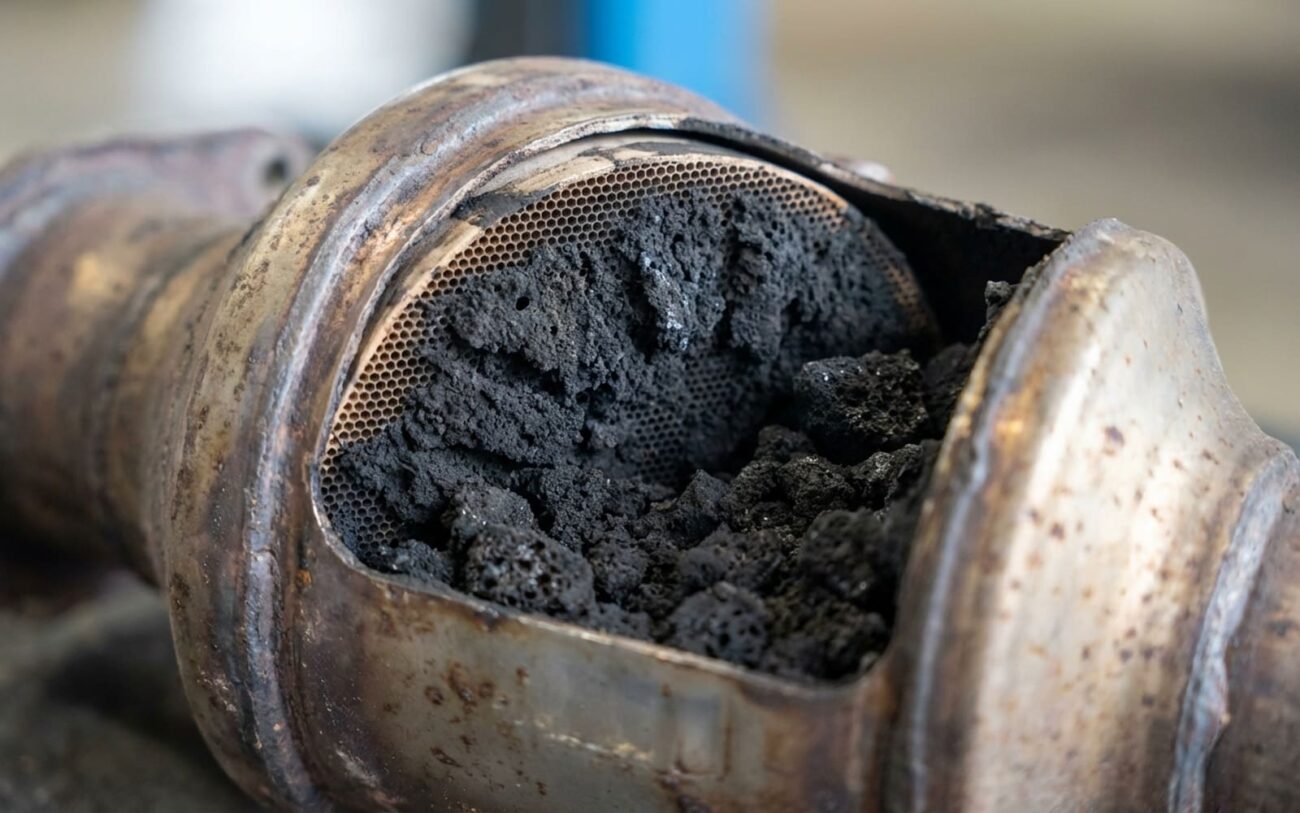
Look, if your diesel truck is acting up and you’re suspecting the DPF, you’re in good company. I’ve had more than my fair share of these come through the shop doors over the last 25 years. Some folks catch it early, some push it until it’s a real mess. The good news? A DPF clog doesn’t always mean the end of the road. But you’ve got to be smart about it, no panicking. Let’s talk about the real signs, how to actually figure out what’s going on, and what needs to be done. No guesswork, no snake oil, just what works.
First Signs of Trouble: What You’ll See and Feel
You don’t always need a fancy scan tool to know something’s off, but the symptoms can definitely throw you for a loop. The first real red flag I look for isn’t just a light coming on – it’s a pattern. If that DPF regeneration light or your check engine light pops on, stays lit for, say, half an hour or more, and then reappears within a day or two? That’s your engine telling you it’s trying, and failing, to burn off soot. That’s not normal operation. The ECU is kicking off an active regeneration, but if the exhaust isn’t hot enough, or there’s too much ash built up, it just can’t get the job done. Soot keeps piling up.
As that blockage gets worse, you’ll feel it in the seat of your pants. The engine will go into what we call derate mode, or “limp mode” as most folks know it. You’ll stomp on the throttle, and the truck will barely make 55 mph on flat ground. Understand, this isn’t usually a power problem from the engine itself. It’s a safety measure. The ECU cuts fuel and boost because that high exhaust backpressure can absolutely trash your turbo, cook other exhaust components, or even crack manifolds. Trust me, ignoring this is a fast track to a much bigger, much more expensive repair.
Diagnosing the Real Problem: Don’t Guess, Test
This is where my experience really kicks in. A clogged DPF can mimic a dozen other issues. I’ve seen faulty sensors trick the ECU into thinking there’s a blockage. A collapsed muffler or a dying turbo can cause high backpressure and power loss just like a DPF. You can’t just throw parts at it and hope for the best. You need solid data.
The number one tool in my arsenal for DPF diagnosis is a good OBD2 scanner that can read live DPF-specific parameters. You want to focus on the differential pressure sensor. This sensor measures the pressure before and after the DPF. At idle, that differential pressure should be low – usually under 10 hPa (hectopascals). Now, rev the engine up to about 2500 RPM. If that pressure spikes to 40–50 hPa or even higher and just stays there, you’re almost certainly looking at a physical restriction inside the filter itself.
Here’s a breakdown of common symptoms and how I go about tracing them to the real culprit in my shop:
| Symptom I See | Points to DPF | What Else It Could Be | My Definitive Test |
|---|---|---|---|
| Constant Regeneration Attempts | Ash has built up so much that the filter can’t clean itself properly during regeneration cycles. | Bad EGT (Exhaust Gas Temperature) sensors, a failed DPF pressure sensor, or the truck just isn’t getting enough highway time for passive regeneration. |
I’ll run a forced regeneration with a capable scan tool. I watch the upstream EGTs – if they hit 550°C (1022°F) or more, but the differential pressure doesn’t drop significantly, then that filter is clogged. A high calculated ash load (over 40g/L) on the scan tool confirms it’s not just soot. |
| High Exhaust Backpressure | A physical blockage from all the accumulated soot and ash inside the DPF’s ceramic structure. | A crushed exhaust pipe, a completely clogged muffler, a faulty pressure sensor, or even just blocked sensor hoses. |
I’ll disconnect the exhaust just upstream of the DPF and hook up a mechanical pressure gauge (0–15 PSI range). If I rev the engine to 2500 RPM and see pressure over 1.5 PSI, that tells me it’s a genuine physical restriction in the DPF, not just a sensor playing tricks. |
| Severe Power Loss & Derate | The DPF’s efficiency has dropped below the manufacturer’s threshold, triggering a safety derate, often with a P2002 code. | A failing turbocharger, a big boost leak somewhere, a completely plugged air filter, or even an EGR system fault. |
First, I’ll pull the Diagnostic Trouble Codes (DTCs). P2002 or P2452 are strong indicators for DPF issues. Then I check live boost pressure. If boost is low, I’m looking at the turbo or a leak. If boost is normal but the truck is still derated, the DPF is the prime suspect. |
Why Did it Clog? Getting to the Root Cause
So, you’ve confirmed the DPF is the problem. Great. Now, the next question is always: why did it fail? Because not all clogs are created equal, and knowing the cause is critical for picking the right repair and preventing it from happening again.
The most common long-term issue I see is ash saturation. Unlike soot, ash doesn’t burn off during regeneration. It’s basically metallic residue from engine oil additives and normal internal engine wear. Over time – usually between 120,000 to 180,000 miles, depending on the truck and how it’s driven – this ash fills up the DPF’s channels, slowly choking off exhaust flow. This is normal wear and tear, like your brake pads wearing down. Some manufacturers even build periodic ash cleaning into their maintenance schedules.
Then there’s thermal damage: melting or sintering. If a regeneration cycle goes sideways – say, from a leaking fuel injector dumping raw diesel into the exhaust – temperatures inside the DPF can skyrocket past 1200°C (2192°F). That’s hot enough to melt the ceramic substrate into a glassy, solid mass. Once that happens, no cleaning method on earth will restore flow. It’s toast. Similarly, I’ve seen DPFs get physically cracked from road impacts, or from thermal shock, like driving through a deep puddle with a scorching hot DPF. Either way, those collapsed or cracked channels block exhaust.
But here’s the kicker:
A lot of what people think are “DPF failures” aren’t actually problems with the filter itself. A bad differential pressure sensor, clogged sensor hoses, or even faulty EGT sensors can trigger false regenerations and put the truck into derate. And don’t forget engine problems – things like burning oil, excessive blow-by, or injector issues will dump way too much soot into the exhaust, completely overwhelming even a perfectly healthy DPF. You’ve got to fix that root cause, or you’ll just be replacing filters over and over again.
Repair Options: What I Recommend (and What I Don’t)
Professional DPF Cleaning
My Take on Chemical Cleaners
Alright, let’s talk about those “DPF cleaner” additives you pour into the fuel tank or spray into the intake. Honestly, they’re a long shot. They might, might, loosen up some surface soot during a regeneration, giving you a temporary drop in backpressure. But they do absolutely nothing for the hardened ash that’s the real culprit in most high-mileage DPF failures. Worse, some of these chemical concoctions can actually coat or damage your EGT sensors, oxygen sensors, or even the catalytic converter. I’ve seen more than a few customers waste good money on these, only to end up with new sensor codes on top of their original problem. At best, you’re buying yourself a little time. At worst, you’re just delaying the inevitable and potentially adding to your repair bill.
DPF Replacement
Sensor or Hose Repair
Post-Repair Validation: Prove It Works
Never, ever just assume the repair worked. You need proof. After you’ve cleaned or replaced that DPF, hook up your capable scan tool and verify these three things:
-
Differential pressure at idle: It needs to be within spec – typically under 10 hPa. If it’s still high, you either didn’t clean it completely, or you’ve got an installation issue like a leak.
-
Forced regeneration: Initiate one. It should run its course in 20–30 minutes without aborting. If it fails, you need to dig deeper – check EGTs, fuel trim, and pressure trends. Something’s still off.
-
Ash load reset: Confirm that the ECU’s ash accumulation counter has been reset back to its baseline. If you skip this, the system will keep acting like the DPF is old and clogged, even if it’s brand new.
If all you did was dump some chemical cleaner in, your only “validation” will be a temporary drop in differential pressure. That’s not a fix, it’s a delay. The ash is still in there, and the problem will come back, usually sooner rather than later.
Cost, Risk, and Making the Call
Let’s be real: DPF repairs aren’t cheap. You need to weigh the costs carefully before you dive in.
| Repair Type | DIY Cost (Parts) | Shop Cost (Parts + Labor) | My Success Rate | Secondary Risk if it Fails |
|---|---|---|---|---|
| Professional DPF Cleaning | N/A (Specialized Service) | $500 – $1,000 | 85–95% (if structure is good) | Exhaust leaks on reinstall, sensor damage, or rapid re-clogging if root cause isn’t fixed. |
| DPF Replacement (OEM) | $2,000 – $4,000 | $3,000 – $6,000 | 100% (if root cause is fixed) | Exhaust leaks, or the ECU not being reset correctly. |
| Temporary Chemical Clean | $50 – $150 | $200 – $300 | 30% (only on light soot clogs) | Sensor contamination, wasted time, false sense of security. |
Here’s my rule of thumb, and I tell this to every customer: if the total repair cost – and that includes fixing any underlying engine issues like injectors or turbo seals – starts to exceed half the current market value of your truck, you really need to question if it’s worth the investment. On older diesels, especially, a DPF replacement can quickly push you into that “not economical” territory.
Prevention: Keep That DPF Healthy
The best DPF repair, in my book, is the one you never have to do. Keeping your DPF healthy really boils down to two things: good maintenance and smart driving habits.
-
Always use the correct engine oil. I can’t stress this enough. You need low-ash, API CK-4 rated oil, or whatever your OEM specifically calls for (like Ford WSS-M1C945-B or GM dexos Diesel). Using conventional or high-ash oils will drastically accelerate ash buildup. This single choice can add 50,000 miles or more to your DPF’s life.
-
Fix engine issues immediately. If your engine is burning oil, you’ve got leaking injectors, or your EGR system is acting up, all that extra soot is going straight into your DPF. That forces more frequent regenerations, which means more thermal stress and more ash accumulation. A small problem today becomes a major DPF repair tomorrow.
-
Get yourself an OBD2 scanner that can read DPF data – soot load percentage, differential pressure, and ash accumulation. Check it once a month. Watch for trends. Being proactive here saves you big money.
-
Let regenerations finish. If you see that DPF light come on, don’t just shut the truck off after five minutes. Get it on the highway for a good 20-minute drive at around 2,500 RPM. This lets the system get up to full operating temperature. Passive regeneration only works when the engine runs hot and long enough.
