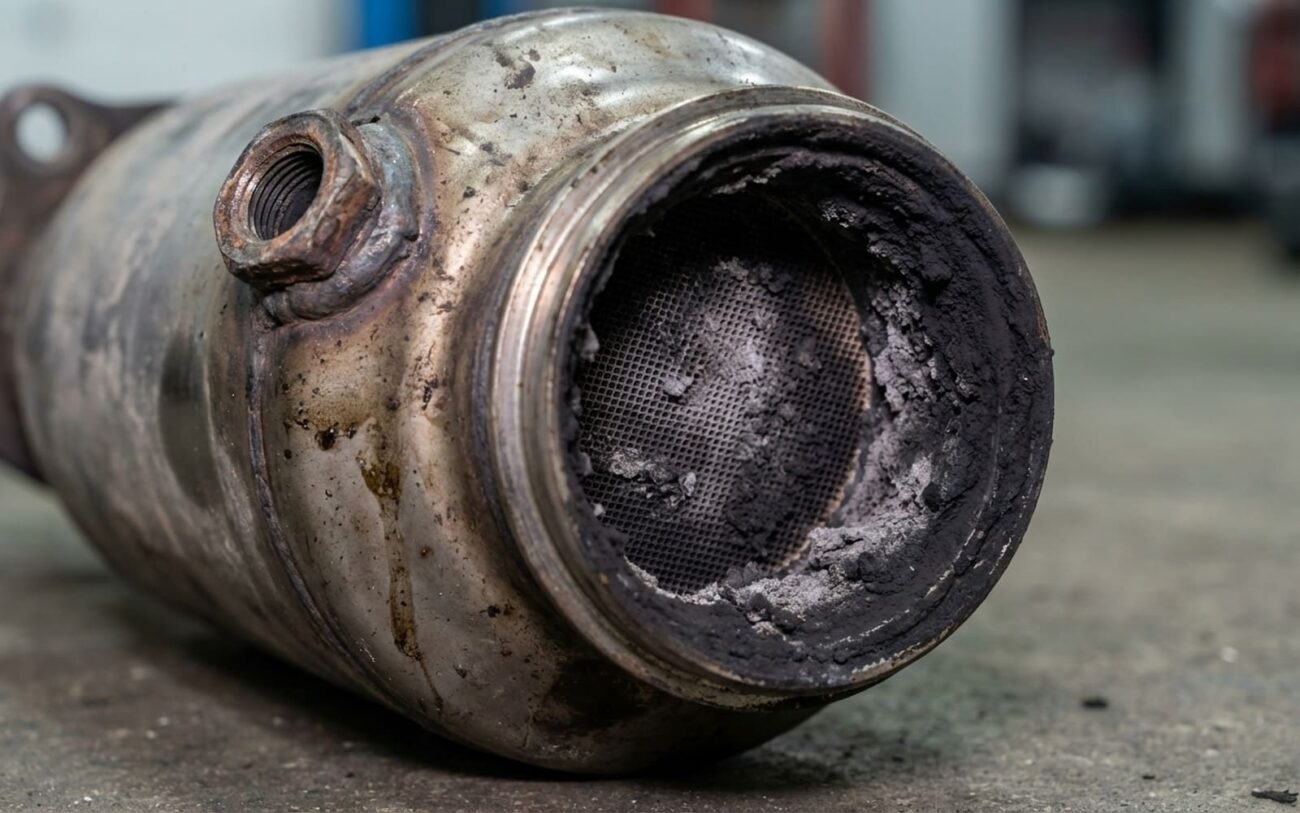
DPF Clogged? Here’s What I See (and How I Fix It)
Alright, let’s talk DPFs. I’ve been turning wrenches on diesel systems for over 25 years, and a clogged Diesel Particulate Filter is one of those calls I get weekly. The story is always similar: check engine light’s on, maybe a dedicated DPF warning, and the driver tells me the truck feels like it’s dragging an anchor. They’ve tried the highway drive, maybe another shop even attempted a forced regen with a scanner, but nothing worked. The soot load is too high, the system’s stuck, and now they’re in limp mode.
This isn’t just an inconvenience; it’s a serious problem that can quickly snowball into major engine damage if ignored. What I’m going to lay out here are the facts, the real diagnostic steps I use, and your actual repair options. No fluff, just what works.
What’s Happening Under the Hood & Why It Matters
At its core, a clogged DPF means exhaust gases can’t get out. The engine’s trying to breathe through a pillow. The Engine Control Module (ECM) knows this because it constantly monitors the differential pressure sensor, which measures the pressure difference across the DPF. When that difference gets too high, it triggers codes like P2463 (excessive soot accumulation) or P246C (ash overfill). That’s when you get reduced power, or “limp mode,” to protect the engine from damaging backpressure.
Think of backpressure like a choked airway. Too much of it kills power, makes the engine work harder (so it uses more fuel), and cranks up the exhaust gas temperatures (EGTs). If the DPF can’t regenerate — burn off that accumulated soot — the pressure just keeps building.
Often, by the time a vehicle comes to my shop, forced regeneration attempts have already failed. The ECM needs EGTs to hit 550–650°C to burn off soot, but if anything’s off – not enough heat, bad fuel dosing, faulty sensor readings – the cycle aborts. A lot of folks assume the DPF itself is the problem. But in my experience, the DPF is usually the victim, not the culprit. Replacing it without fixing the root cause is just throwing good money after bad.
The most reliable way to confirm a real restriction is with a physical backpressure test. I remove the upstream pressure sensor and screw in a mechanical gauge. Then, I run the engine at a high idle, usually around 2500 RPM. If that gauge reads over 25 kPa (about 3.6 psi), you’ve got a genuine blockage. This test cuts through any sensor errors and gives you a hard number you can trust.
Is It Really the DPF, or Something Else Playing Tricks?
Before you even think about dropping big money on a DPF, you have to rule out other system failures. Too many shops just swap the DPF and miss the real problem. Here’s how I approach separating the symptoms from the actual cause:
First, if you’re seeing those P2463/P246C codes and the vehicle is in limp mode, that could be a high soot or ash load, or even a cracked DPF. But it could also be a faulty differential pressure sensor, an exhaust leak between the sensor ports (a common one I see), wiring damage, or even outdated ECM software. My strategy here is always the same: do that mechanical backpressure test. If the pressure is normal, then the DPF isn’t blocked. You’re looking at a sensor, its plumbing, or an exhaust leak before the DPF, but after the turbo.
Next, let’s talk about failed forced regenerations. If the system tries to regen but can’t, it might be severe ash accumulation or melted channels in the DPF. But don’t jump to conclusions. I’ve seen this caused by faulty EGT sensors (they tell the ECM the temperature is higher than it is, so it stops fueling), a failed DPF dosing injector (no fuel to burn soot), low fuel rail pressure, or even an incorrect coolant temperature signal. When I diagnose this, I monitor live data during a forced regen attempt. I watch both upstream and downstream EGT sensors. I also listen for the DPF dosing injector to click. If it’s dosing but the heat isn’t building, then I start suspecting the DPF is truly saturated with ash or damaged.
Finally, if you’re seeing visible black soot from the tailpipe, that’s a red flag. It usually means a crack or hole in the DPF substrate, or failed end seals letting exhaust bypass the filter. But again, check the basics: Is the engine over-fueling? Are there exhaust leaks before the DPF (like a turbo gasket or downpipe)? A diesel engine producing too much soot will overwhelm even a healthy DPF. The definitive check for DPF damage here is a borescope. I snake it through the downstream pressure sensor port to get a direct look at the honeycomb structure. That’ll tell you if it’s cracked or melted inside.
What Actually Kills a DPF (The Real Culprits)
When the DPF itself fails, it’s usually one of three physical conditions, or sometimes a combination. But remember, these are often symptoms of a deeper problem upstream.
Thermal shock cracking is when a hot DPF, maybe right after a regen, gets suddenly cooled – think driving through deep water. The ceramic monolith contracts too fast and fractures. You won’t always see external damage, but that borescope will show you internal cracks.
Sintering or melting happens during runaway regenerations. If too much fuel is dosed, or an EGT sensor is lying to the ECM, temperatures can easily shoot past 1000°C. That’s hot enough to soften and fuse the ceramic channels, permanently blocking the filter. You might see discoloration or distortion on the outer shell.
Ash accumulation is the most common long-term killer. Ash comes from tiny trace metals in your engine oil (detergents, anti-wear additives) and fuel. Unlike soot, ash doesn’t burn off. It just builds up over time, reducing the filter’s available volume and cranking up backpressure. Most manufacturers say it’s time for replacement around 40–50 grams of ash per liter of filter volume. Once you hit that point, cleaning won’t restore full function.
And don’t forget catalyst poisoning. If you’re using oil that doesn’t meet the required low-ash specification (like API CK-4 or ACEA C-rated), the precious metal coating inside the DPF degrades. That coating is what helps with passive regeneration. When it’s gone, the system has to force more active regens, which just accelerates wear and tear on everything.
The Concept
“Replacing the filter without fixing the root cause is like replacing a flooded floor without fixing the burst pipe.”
That analogy right there is key. Most DPF failures are caused by something else. A faulty EGT sensor, a leaking fuel injector, a clogged EGR valve, or even a turbocharger not flowing enough exhaust can all prevent successful regeneration. The DPF clogs because of them. If you just swap the filter and don’t fix these upstream issues, you’ll be right back in my bay in a few months, guaranteed.
Your Real Repair Options (and My Advice)
This Ain’t DIY Territory
Let’s be clear: DPF cleaning and replacement are jobs for professionals. You need specialized tools, precise torque sequences, and manufacturer-level scan tools for ECM adaptation. Trying to DIY this usually leads to more problems and higher costs down the road.
Option A: Professional DPF Cleaning Professional Only
Option B: DPF Replacement Professional Only
Option C: Minor External Shell Repair
A Quick Word on Additives
Be careful with fuel additives. Some claim to lower soot ignition temperature, and they can help in marginal cases, but they do absolutely nothing for ash. Overuse can contaminate your SCR catalyst or foul injectors. I see them as a short-term aid, not a repair solution.
Making Sure the Fix Actually Worked
You can’t just bolt a DPF back on and assume the job’s done. Validation is non-negotiable. If you had the DPF cleaned, reinstall it and immediately perform a forced regeneration using a capable scan tool. While it’s running, monitor the differential pressure sensor reading at a steady 2500 RPM. A properly cleaned, functional DPF should show pressure below 15 hPa (or whatever the OEM threshold is for your specific vehicle).
If you replaced the DPF, you absolutely must reset the ECM’s DPF adaptation values. This tells the computer it’s now working with a brand-new, empty filter. Skip this step, and the system might think your new DPF is already full, triggering immediate regeneration requests and codes. After the reset, complete a proper drive cycle – that means getting it out on the highway for a good 20-30 minutes at sustained speeds to allow for passive regeneration and system relearn.
The Hard Truth: Cost vs. Your Vehicle’s Value
Let’s be realistic about the money side of things. DPF repairs are never cheap. The decision to fix often comes down to the cost versus the actual value of your vehicle. Sometimes, it makes more sense to cut your losses.
| Repair Type | DIY Cost | Shop Cost | Success Rate | Risk if it Fails |
|---|---|---|---|---|
| Professional DPF Cleaning | N/A | $300 – $800 | 70–90% | Wasted cleaning fee; eventual need for replacement. |
| DPF Replacement (OEM) | $1,500 – $4,000 | $2,500 – $6,000 | ~99% | High risk of repeat clogging if the root cause isn’t resolved. |
How to Keep This From Happening Again
An Ounce of Prevention…
-
Use the right oil. This is huge. Only use low-ash diesel engine oil (API CK-4 or ACEA C-rated). High-ash oils are a fast track to DPF failure.
-
Monitor soot and ash. During routine maintenance, have your technician check soot load and ash mass values. A rapid increase is a major red flag for fuel trims, injectors, or other engine issues.
-
Drive it like a diesel. These systems need sustained highway driving (20–30 minutes at 55–65 mph) to allow for passive regeneration. If you only do short trips, the DPF never gets hot enough to burn off soot, and it will clog.
-
Forget the DPF delete kits. Seriously, don’t even think about it. They’re illegal, they void warranties, and they will lead to major fines and drivability headaches.
