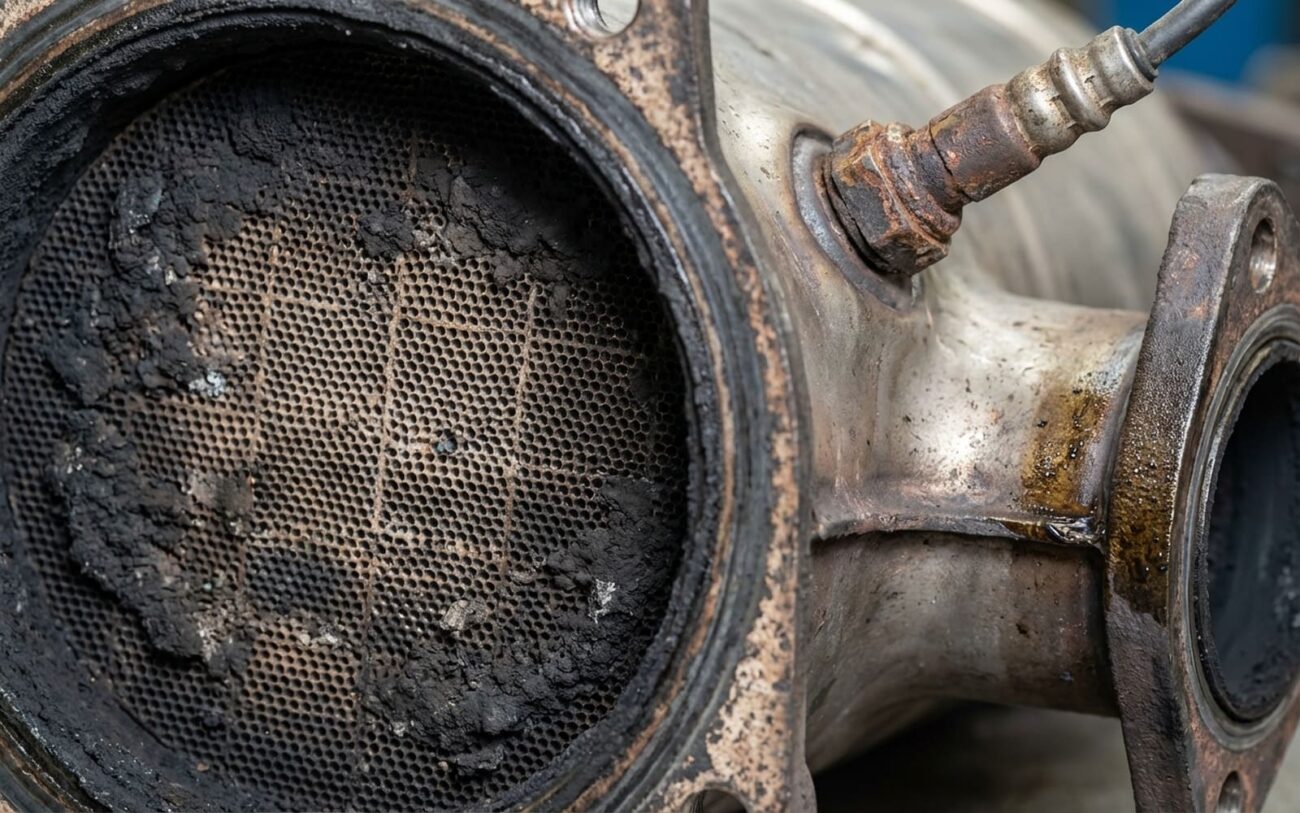
If your diesel feels like it’s dragging an anchor, or you’re watching the fuel gauge drop faster than usual, don’t just shrug it off. In my 25+ years turning wrenches, a failing Diesel Particulate Filter (DPF) is one of the most common culprits for sudden power loss and a thirsty engine. It’s not just a minor hiccup; it’s your engine telling you it’s suffocating.
The Concept
Think of your engine as a big air pump. It needs to breathe in fresh air, but it also needs to exhale spent exhaust. If that exhaust can’t get out because the DPF is clogged, it’s like trying to run a marathon with a hand over your mouth. The engine struggles, works harder, and that means less power and more fuel burned for the same work.
These symptoms usually creep up on you. You might not notice it at first, but by the time you’re actively thinking “something’s wrong,” that DPF is probably already severely restricted or even damaged.
What It Feels Like When Your DPF Is Choking (Symptoms)
The most consistent signs I see are a progressive loss of power, especially when you’re asking the engine to work hard—like pulling a trailer, climbing a hill, or merging on the highway. And yeah, your fuel economy will take a hit, often 15% or more. This isn’t just a minor efficiency dip; it’s your engine literally fighting to push exhaust through a blocked filter.
You’ll also get dashboard warnings. Messages like “Exhaust Filter Full” or “Cleaning Exhaust Filter” are common. These are the computer’s way of telling you it needs to regenerate, which means burning off accumulated soot. Usually, this requires sustained highway driving to get the exhaust hot enough. If you’re doing a lot of short trips, or you ignore these alerts, you’re preventing that regeneration and accelerating the buildup of soot and ash.
Sometimes, the engine control unit (ECU) will get desperate and try a “forced regeneration.” It does this by injecting extra fuel after combustion to really crank up the exhaust temperatures. It’s a last-ditch effort, and it’s not without risk.
Hold On: Is It REALLY the DPF? (Differential Diagnosis)
It’s easy to point the finger at the DPF, but a lot of other problems can act just like it. A clogged catalytic converter, a collapsed exhaust pipe, or even a turbocharger with a stuck wastegate can all restrict exhaust flow and make your engine feel gutless. And that poor fuel economy? Could be faulty injectors, a dirty mass airflow sensor, or a host of other things. The key here is proper diagnosis. Don’t just assume it’s the DPF and start throwing parts at it without testing.
How I Confirm a DPF Problem:
-
High Exhaust Backpressure: This is my go-to. I’ll measure the backpressure upstream of the DPF. If I see readings above 1.5 psi at wide-open throttle (WOT) under load, that’s a strong indicator of a restriction. Now, it could be a melted catalytic converter or a crushed pipe, but with DPF symptoms, it usually points right to the filter.
-
Fuel Consumption & Power Loss (Beyond Backpressure): If backpressure is confirmed, and the truck is still guzzling fuel and losing power, I’ll run a volumetric efficiency (VE) test. Low VE combined with high fuel trims and that confirmed backpressure really nails down an exhaust restriction. Other issues like faulty injectors or a clogged air filter would show different patterns.
-
Failed or Incomplete Regenerations: If the vehicle keeps trying to regenerate but can’t, or the dashboard light keeps coming back, that’s a big clue. I’ll check the differential pressure sensor and exhaust temperature sensors first – they can fail and fool the ECU. But if those check out, and the DPF is still showing high soot load, I’ll initiate a manual forced regeneration with my scan tool. If the exhaust temperatures hit that critical 600°C (or higher, depending on the system) but the differential pressure doesn’t drop significantly, then the DPF itself has failed. It’s either packed solid with ash or the internal ceramic is damaged.
What Actually Breaks Inside These Things
When I say a DPF “fails,” I’m talking about the physical filter element, not just a bad sensor. There are two main ways these things bite the dust: ash accumulation and thermal damage.
Ash is the non-combustible stuff left over from engine oil additives, mostly calcium, phosphorus, and sulfur. Unlike soot, ash can’t be burned off during regeneration. It just builds up, permanently blocking the filter channels, slowly choking the exhaust flow and increasing backpressure. This is the most common long-term DPF killer I see.
The second big problem is thermal damage. If a regeneration cycle gets too hot—often because of uncontrolled fuel injection (remember that forced regen warning?)—the ceramic substrate inside can crack or even melt. Once that ceramic is damaged, it’s game over. There’s no fixing it.
The Technician’s Insight:
I see this misdiagnosed a lot: people replace the DPF without addressing the root cause. For example, a leaking EGR cooler dumping coolant into the exhaust will absolutely destroy a DPF, but the real problem is the cooler, not the filter. Likewise, chronic oil consumption from worn piston rings or valve guides accelerates ash buildup like crazy. You’ve got to fix those underlying issues first, or your brand-new DPF will fail just as fast, and you’ll be right back in my bay.
So, It’s the DPF. Now What? (Repair Options)
Professional Territory Only: DPF Cleaning
If the main issue is ash clogging and the internal substrate is still intact, professional off-vehicle cleaning can be effective. But let me be clear: this is NOT a DIY fix. It requires specialized equipment—chemical soaking, ultrasonic cleaning, and controlled drying to avoid cracking that delicate ceramic. This only works if the filter isn’t physically damaged inside.
For a cracked steel housing, a skilled TIG welder might be able to repair it. You’ll need to replace all flange gaskets and torque the bolts to OEM specs, typically 30–50 Nm. However, if that internal ceramic monolith is cracked, melted, or collapsed, there’s no repair possible. Replacement is your only real option.
Some shops push fuel additives that claim to aid regeneration. In my experience, these can often make things worse, especially on an already compromised DPF, by sintering the ash into an even harder, more solid barrier. Overuse can also void warranties and damage sensors. I’ve seen this shortcut fail more often than not. Don’t waste your time or money on additives if the DPF is physically damaged.
Don’t Just Fix It, PROVE It’s Fixed (Verification)
Once you’ve done the repair—whether it’s cleaning or replacement—the job isn’t done until you’ve verified it. Here’s my process:
-
Clear Codes & Initiate Regeneration: First, clear any stored fault codes with a capable scan tool. Then, initiate a manual forced regeneration. This is crucial.
-
Monitor Differential Pressure: During and after that regeneration, keep a close eye on the differential pressure sensor readings. A healthy, properly functioning DPF should show less than 0.5 kPa at idle and under 2.5 kPa at 2,500 RPM with no load. If the pressure doesn’t drop significantly, or if it climbs back up quickly, that filter is still restricted, or the repair wasn’t successful.
-
Road Test: After a successful regeneration and good pressure readings, take the vehicle for a good road test. Power should be back to normal, and no warning lights should reappear.
-
Reset ECU Counters: If you’ve installed a new DPF, this step is non-negotiable. You MUST reset the ECU’s soot load and ash mass counters to zero using your scan tool. If you skip this, the ECU won’t accurately track regeneration cycles, and you’ll likely get premature warnings or the system won’t initiate passive regenerations properly, leading to another DPF failure down the road.
The Bottom Line: Costs & When to Walk Away
Let’s be real: fixing a DPF isn’t cheap. The costs can add up fast, and you need to know what you’re getting into. Here’s a realistic breakdown of what I typically see:
| Repair Type | DIY Cost | Shop Cost | Success Rate | Secondary Risk if Failed |
|---|---|---|---|---|
| Professional DPF Cleaning | Not Applicable | $300 – $600 | 70–90% | Money wasted; replacement still likely needed |
| DPF Canister Weld Repair | Not Recommended | $200 – $400 | 50% | Exhaust leaks, potential carbon monoxide exposure |
| Complete DPF Replacement (OEM) | $1,500 – $4,000 | $2,000 – $5,000+ | 100% | None, provided underlying issues are fixed |
Keeping Your DPF Healthy (Prevention)
My Maintenance Protocol for DPF Longevity:
Prevention starts with using the right oil. Always, and I mean always, use low-ash diesel engine oil that meets ACEA C3 or API CK-4 specifications. These oils are specifically formulated to minimize those ash-forming additives, which directly slows down DPF clogging. If your engine burns oil—even a little bit—you need to address it immediately. Worn valve guides or piston rings mean oil gets into the exhaust, and that oil turns into permanent ash inside your filter.
During oil changes, I recommend regularly monitoring the soot load and ash mass percentages using a good scan tool. A rising trend in how often active regenerations are happening is an early red flag that something’s building up. Also, take a quick look at the DPF housing itself. Blue or purple discoloration on the metal casing indicates past overheating events, which means the internal substrate may already be damaged, even if it’s still working for now.
Finally, give your DPF a chance to do its job. Take longer highway drives when you can. Those sustained higher exhaust temperatures are what allow passive regeneration to occur naturally, burning off soot before it becomes a big problem. Short trips are a DPF’s worst enemy.
