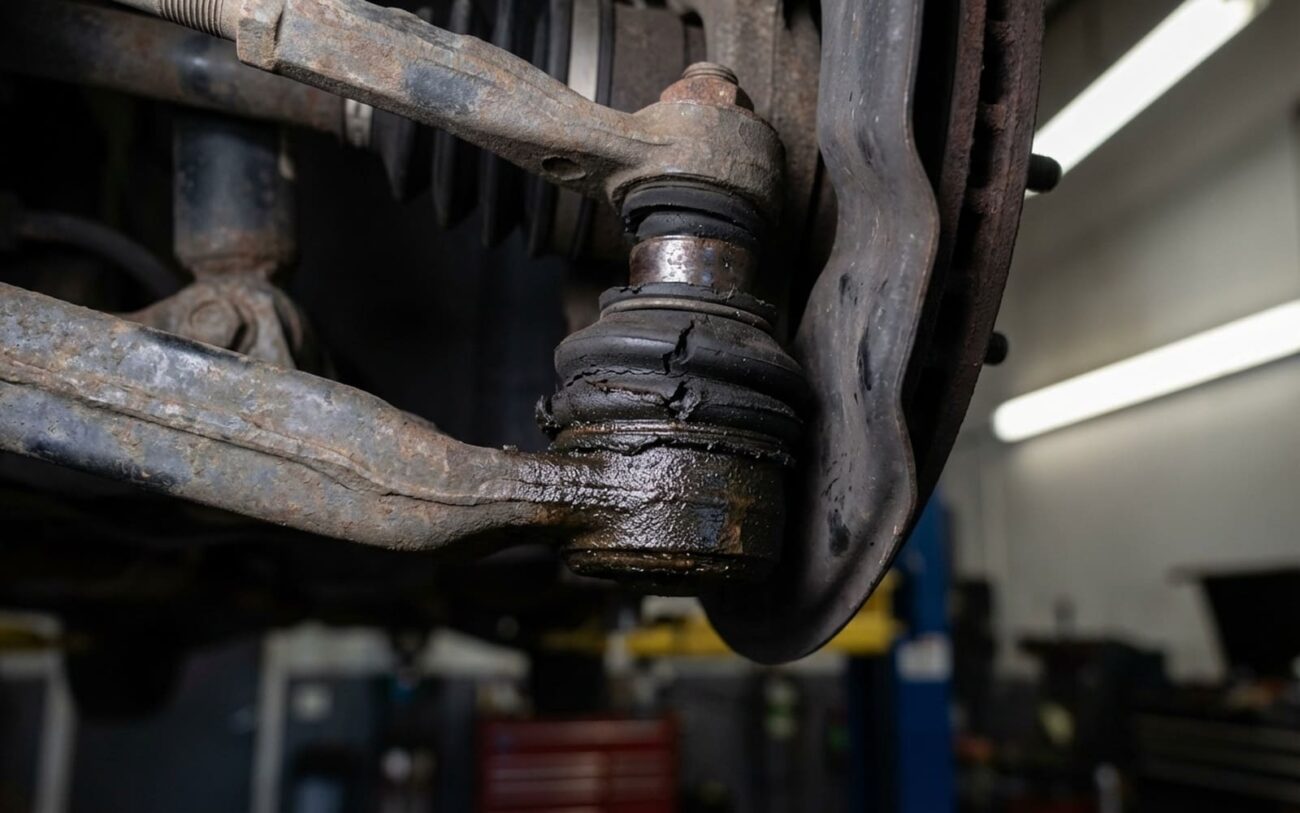
After 25 years turning wrenches, I can tell you this: when your car starts feeling “off”—loose, vague, or just not tracking straight like it used to—it’s almost always the steering or suspension. I’ve seen countless drivers shrug it off, saying “it’s just an old car,” but what they’re really doing is ignoring a component that’s probably on its last leg. These systems don’t just fail silently; they give you plenty of warning. Catch those signs early, and you’ll save yourself a lot of grief, and money, down the road.
What Your Car’s Trying to Tell You: Common Symptoms
Let’s talk about the most common complaints I hear. That “dead zone” in your steering wheel, where you can wiggle it a bit before the wheels actually respond? You’re constantly making tiny corrections just to stay in your lane. That’s usually worn tie rod ends, either inner or outer, or sometimes even internal wear in the steering rack itself. It’s not just annoying; it’s a safety issue.
Another big one is a pull to one side, especially when you hit the brakes. Now, this can be tricky because it could be a brake issue—like a stuck caliper—or it could be a suspension component that’s binding up, like a seized steering knuckle pin or a worn control arm bushing. You’ve got to be methodical to figure out which system is the real culprit here.
And then there are the noises. Clunks, pops, or creaks when you go over bumps, turn the wheel, or even just get in and out of the car. These are often the sound of metal-on-metal or a worn-out rubber bushing. Sway bar links are notorious for clunking, as are worn ball joints or strut mounts. Sometimes, on older vehicles, a strut spring can even snap, giving you a sharp TWANG and a sudden drop in ride height.
Pro Tip: Don’t underestimate tire wear patterns. They’re like a diagnostic roadmap. If you see rhythmic scalloped dips across the tread—what we call cupping—your shocks or struts are probably shot. The tire’s literally hopping down the road instead of staying planted. And if one edge of the tread is smooth while the other feels sharp, that’s feathering, a dead giveaway for incorrect toe alignment. But here’s the kicker: alignment issues are usually a symptom, not the root cause. The alignment went out because something else—like a worn bushing—shifted.
My Approach to Pinpointing the Culprit
Diagnosing steering and suspension problems isn’t about guessing. It’s a methodical process. Many issues feel similar, so you need tests that isolate the exact component. Here’s how I typically break it down:
| Symptom | Most Likely Cause | Common Mimics | My Go-To Test |
|---|---|---|---|
| Excessive Free Play in Steering Wheel | Worn inner or outer tie rod ends; internal rack wear. | Worn steering column U-joint; intermediate shaft coupler. |
Have a helper gently rock the steering wheel back and forth within the slack zone while you’re under the car, feeling for movement at each joint in the steering linkage.
|
| Vehicle Pulls to One Side During Braking | Seized steering knuckle pin; worn control arm bushings. | Stuck brake caliper; uneven pad friction; contaminated rotor. |
First, use an infrared thermometer on the rotors after a drive to check for uneven brake temps. If temps are even, then it’s time for a suspension play check with a pry bar on control arms and ball joints.
|
| Uneven Tire Wear (Cupping or Feathering) | Failed shocks/struts (cupping); worn tie rods/bushings (feathering). | Unbalanced tires; incorrect alignment; improper inflation. |
For cupping, do the “bounce test”: push down hard on each fender. If it bounces more than once before settling, the damping is gone. For feathering, check for play in tie rods and control arm bushings.
|
| Clunking or Knocking Over Bumps | Worn ball joint; failing strut mount; loose sway bar link. | Loose exhaust hanger; cracked subframe; failing engine mount. |
With the vehicle safely on jack stands, use a pry bar to check for vertical play in ball joints. Grab sway bar links and try to shake them. Listen at the strut tower while turning the wheel.
|
Why Parts Fail: The Usual Suspects
Understanding why a part failed is key to preventing it from happening again. In my experience, nearly every steering and suspension failure comes down to one of three things: wear, corrosion, or impact damage.
Wear and Tear: This is the inevitable one. Ball joints, tie rods, control arm bushings—they’re constantly moving, flexing, and absorbing abuse. Every bump, every turn, every mile adds to the fatigue. Rubber bushings dry out and crack, grease leaks out of ball joints, and metal-on-metal friction eventually wins. It’s just how it goes.
Corrosion: This is a silent killer, especially if you live in a region where they use road salt. I’ve pulled control arms that looked perfectly fine from the top, but when you flipped them over, they were paper-thin or completely rusted through. The rust eats away at the structural integrity, and one day, it just gives up. Always check those hidden spots. (You can learn more about spotting these dangers in our guide on how to spot rust damage in frame rails and suspension mounting points.)
Impact Damage: This is often the most sudden and frustrating. A single nasty pothole can bend a control arm just enough to throw your alignment way off, ruining a set of expensive tires in weeks—even if the car still feels “mostly” fine. Curbs, speed bumps taken too fast, even hitting debris on the highway can cause subtle damage that snowballs into a major problem. I’ve seen it countless times.
Your Repair Options: DIY or Pro?
Some steering and suspension work is totally feasible for a home mechanic with the right tools and a solid understanding of safety. Other jobs? Leave those to the pros. Here’s my take:
DIY-FEASIBLE Basic Tools
PROFESSIONAL-ONLY Expert Recommended
No Safe Temporary Fixes. Period.
Let me be absolutely clear: there are NO safe temporary fixes for failed structural steering or suspension components. Do not try to weld cracked control arms, clamp failing ball joints, or jury-rig anything. Bent or rusted-through components must be replaced entirely. Their structural integrity, often involving heat-treated steel, is critical for your safety. Anything less is a gamble with your life and the lives of others on the road.
Making Sure the Repair Actually Worked
Installing new parts is only half the job. For any work involving steering linkage, control arms, or struts, the non-negotiable final step is a professional 4-wheel alignment. I can’t stress this enough. This isn’t just about making the steering wheel straight; it’s about confirming that camber, caster, toe, and thrust angle are all within factory specifications. Without it, you’re just guessing, and you’ll chew through new tires in no time, or worse, have unpredictable handling.
Cost, Risk, and the Tough Financial Decision
Let’s be honest, these repairs aren’t cheap. But putting them off can lead to much more expensive problems, or even a serious accident. Here’s a general idea of what you might be looking at, keeping in mind that prices vary wildly by vehicle, region, and part quality.
| Repair Type | DIY Cost (Parts) | Shop Cost (Total) | Risks of Failure (if ignored or done improperly) |
|---|---|---|---|
| Outer Tie Rod End (pair) | $80 – $200 | $300 – $500 | Complete separation, leading to a total loss of steering control. Rapid, severe tire wear. |
| Complete Strut Assembly (pair) | $400 – $800 | $1,000 – $1,500 | Catastrophic mount failure or joint collapse under load. Poor handling, increased stopping distances. |
| Lower Control Arm (pair) | $300 – $600 | $800 – $1,400 | Ball joint separation, causing the wheel to collapse into the fender. Loss of control. |
When you’re looking at these numbers, remember: cheaper isn’t always better. I’ve seen too many people go with the cheapest parts only to be back in the shop a year later. Invest in quality components from reputable brands; they’ll last longer and perform better.
Keeping Problems From Coming Back
Once you’ve got everything fixed up, you want it to stay that way, right? Proactive maintenance is your best defense. Here’s what I tell my customers:
My Proactive Maintenance Checklist
-
If you live where they use road salt, hit the car wash regularly, especially the undercarriage. It helps prevent corrosion from eating away at your components.
-
Avoid potholes and curbs like the plague. Even a single hard impact can instantly damage bushings, bend components, or throw your alignment out.
-
When it comes to replacement parts, don’t cheap out. Stick with reputable brands like MOOG, TRW, or Beck/Arnley. They’re built to last.
-
At every oil change, or at least twice a year, do a quick visual inspection. Look for torn rubber boots (on ball joints, tie rods, CV axles), oil leaking from shocks, or any obvious signs of rust or damage. Catching a squeaky strut mount early can save you from a bigger repair later.
