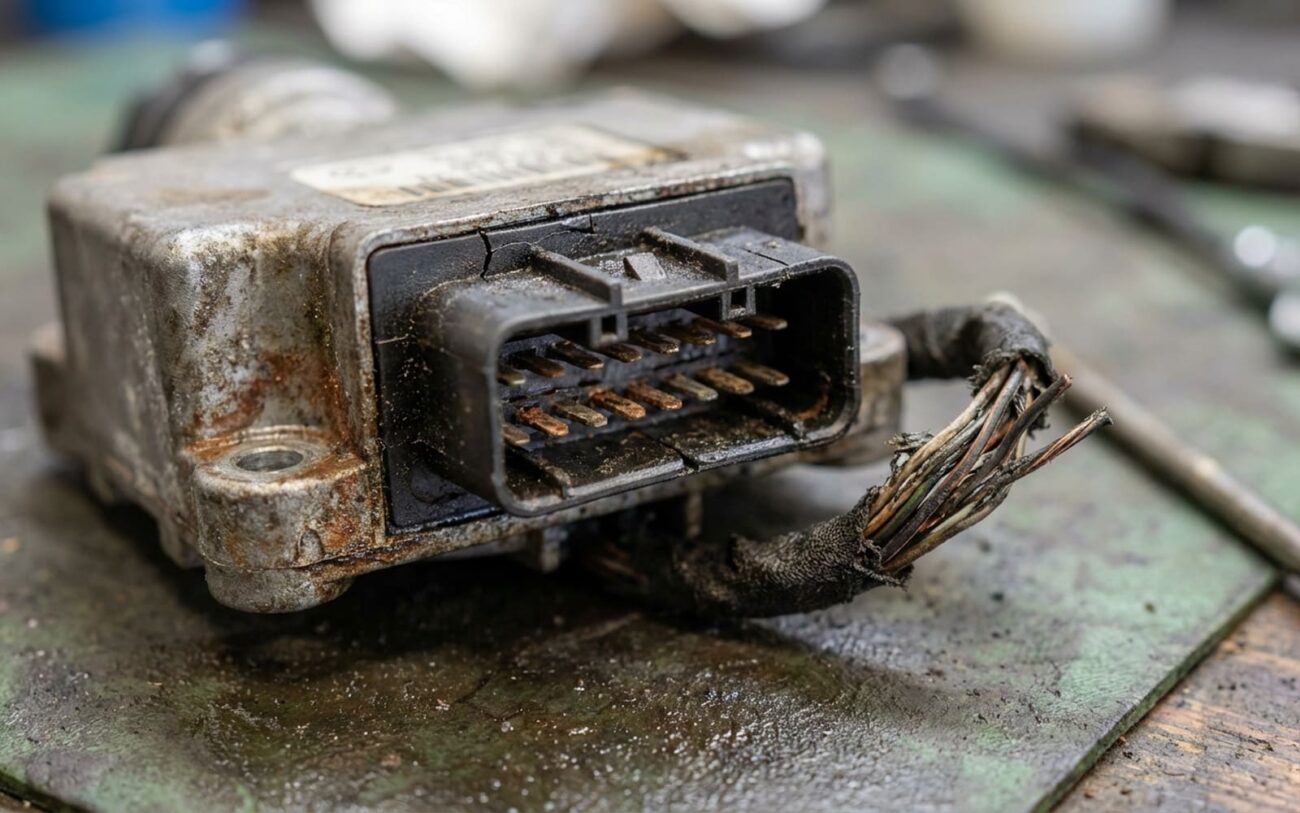
If your VW or Audi suddenly won’t start, I know the frustration. I’ve seen that look on countless faces in my shop over the years. You turn the key, and… nothing. Or maybe it cranks, but just won’t catch. Before you jump to conclusions – and trust me, a lot of folks do – you need to pay close attention to exactly what your car is (or isn’t) doing.
The Electronic Steering Lock, or ESL, is a notorious culprit in these no-start scenarios on VAG vehicles. It’s a critical part of the immobilizer system, and when it acts up, it can mimic all sorts of other problems. My goal here is to help you recognize the signs and understand what’s really going on, so you don’t chase ghosts.
What You’re Seeing (and Not Seeing): The Symptoms
When a VW or Audi immobilizer system decides it doesn’t like what it sees – often because of an ESL issue – it’s designed to shut things down. It’s a security feature, but when it fails, it feels like a nightmare. Here are the common ways an ESL problem shows itself:
1. “No Crank” – Just Silence
This is probably the most frequent one I see. You turn the key, or push the start button, and absolutely nothing happens. No click, no whirring, no starter engagement. The dash lights come on, the radio might work, but the engine doesn’t even try to turn over. It’s just dead silence.
Now, a dead battery or a failed starter can cause this too, of course. But on modern VAG cars, if you’ve got power to the dash and accessories, a “no crank” is often the car’s immobilizer system blocking the starter. It’s like the car thinks it’s being stolen and won’t let the engine join the party. This points strongly to the ESL not sending the “unlock” signal to the steering column control module (SCCM).
2. “Cranks But Won’t Start” – Spinning, No Firing
This one can be really misleading. The starter motor spins the engine over smoothly, but it just won’t fire up. You hear that familiar “whir-whir-whir,” but no ignition.
Here’s the deal: if the immobilizer system (which includes the ESL and the J518 Access/Start Authorization module) doesn’t authenticate properly, the Engine Control Unit (ECU) will disable fuel injection and spark. It’s not a fuel pump issue, it’s not a bad crank sensor, and it’s not a spark plug problem – it’s a security lockout. The car is literally preventing itself from starting.
The Concept
“Think of the ESL as a digital bouncer at the club. If he doesn’t recognize your ID (the key and its authorization), he’s not letting the engine into the party, no matter how hard the starter tries to get it in.”
3. Mechanically Locked Steering Wheel
This is pretty unambiguous. The steering wheel won’t budge, even if you jiggle it, and the key might not even turn in the ignition (or the start button won’t engage). This is usually a mechanical failure inside the ESL unit itself. I’ve seen the internal plastic drive gears strip out, or the locking bolt simply jams.
A word of warning here: I’ve had customers try to force the wheel in desperation, thinking it’s just stuck. Don’t do it. You’ll almost certainly destroy the entire steering column, turning a potentially manageable repair into a multi-thousand dollar nightmare.
4. IMMO or SAFE Light On
Keep an eye on your instrument cluster. If you see the yellow immobilizer icon – typically a car with a key symbol – light up, you’ve got an immobilizer fault. A steady or flashing light means the car’s various computers (the instrument cluster, the ESL, the ECU) aren’t talking to each other correctly, or one of them isn’t happy.
I see this misdiagnosed as a bad key too often. While a bad key transponder or antenna ring can cause it, a communication failure with the ESL module is a very common reason for this light to appear.
How I Pinpoint It: The Real Diagnosis
These symptoms can definitely mimic other failures, so you can’t afford to guess. A loose battery terminal, a bad ground, or even a faulty ignition switch can all look like an immobilizer fault. This is where a proper scan tool becomes absolutely essential. Generic OBD2 scanners usually won’t cut it here; you need something like VCDS (VAG-COM Diagnostic System) or the factory ODIS tool.
If you have a “No Crank” condition:
First, rule out the obvious: check your battery voltage (should be 12.6V or higher), ensure terminals are clean and tight, and check main fuses. If those are good, hook up your scan tool. I head straight for the “Access/Start Authorization” module (J518) and look for fault code 01426. That code specifically points to a problem with the steering column control module not receiving the unlock signal from the ESL. If you see it, you’re likely dealing with an ESL issue.
If it “Cranks But Won’t Start”:
Again, after checking basic fuel and spark delivery (though these are often disabled by the immobilizer), get on the scan tool. I’ll check the Engine Control Unit (ECU) for code 17978 – “Engine Start Blocked by Immobilizer.” Then, I go back to the J518 module and check the “Authorization State” in the measuring blocks. If it says “Engine Start Blocked” or similar, you’ve got your answer: the ESL isn’t authorizing the engine to run.
If the Steering Wheel is Jammed:
This is a mechanical test. When you insert the key (or press the start button on some models), listen very closely. A healthy ESL will make a distinct, smooth 1 to 2-second whirring or buzzing sound as the lock bolt engages or disengages. If you hear nothing, or if it’s a grinding, clicking, or struggling sound, that’s a strong indicator of internal mechanical failure within the ESL unit itself. The motor or gears are shot.
If the IMMO Light is On:
After ruling out a bad key transponder (try a spare key if you have one), the next step is often to attempt a “Key Matching” procedure using the factory-level scan tool. If this process fails specifically at the “Steering Lock Authorization” step, then the ESL is almost certainly the culprit. It’s not communicating or authorizing correctly with the rest of the immobilizer system.
Why They Fail: The Guts of the ESL
When we talk about a failed steering lock on a VW or Audi, we’re almost always referring to the Electric Steering Lock (ESL) assembly itself. It’s a sealed unit, usually mounted right on the steering column, and it’s got a few common failure modes I’ve seen thousands of times:
-
Mechanical wear in the gear train: Inside the ESL, a small electric motor drives the lock bolt in and out via a series of plastic gears. After thousands of cycles – locking and unlocking every time you start and stop the car – those plastic teeth fatigue and eventually strip. This is probably the most common failure.
-
Mechanical seizure: Sometimes, moisture gets into the unit. I’ve seen it happen from leaking windshield seals or just general environmental exposure. When that happens, the steel lock bolt can rust or get gummed up, causing it to seize. The motor tries to move it, but it can’t, eventually burning out or stripping the gears.
-
Electronic failure: The circuit board inside the ESL is a miniature computer. It can fail due to voltage spikes, thermal stress, or just plain old component degradation. When this happens, the module often drops off the CAN bus, meaning it can’t communicate with the other control units, and the immobilizer system essentially goes blind.
Getting It Fixed: Real-World Repair Paths
Security Access Required
Let me be clear: replacing the ESL unit isn’t a simple bolt-on job. It requires significant disassembly of the steering column and, critically, factory-level coding and security access. Without a proper scan tool to perform “Steering Lock Adaptation” and “Key Matching,” the car will not start, even with a brand new part.
1. Wiring or Connector Repair
If your diagnosis points to an external issue – maybe a corroded connector, a broken wire, or a poor ground to the ESL module – then a wiring repair is a viable option. You’ll need a good multimeter, depinning tools, and solid soldering skills. I always use VW-specific repair wires; they’re designed for the system and hold up. Never, ever use wire nuts on safety-critical systems like this. It’s just asking for trouble down the road. This can be an advanced DIY job if you know what you’re doing, but it’s not for the faint of heart.
2. ESL Assembly Replacement
This is the most common fix for an internal ESL failure. It involves removing the airbag, steering wheel, and column shrouds to get at the ESL unit. Once the new unit is physically installed, the critical step is using ODIS or VCDS with security login (often requiring GEKO access) to perform “Key Matching” and module synchronization. This tells the new ESL to “learn” your car and your keys, and to properly communicate with the J518 and ECU. Without this coding, the car stays dead. This is definitely a professional-only job.
3. Full Steering Column Replacement
Sometimes, if the mechanical damage is severe, or if someone has tried to force the lock and damaged the column itself, a full steering column replacement becomes necessary. This is the most expensive option, as it involves replacing a much larger assembly. It also requires extensive coding and calibration for the new column, including steering angle sensors and other modules. This is a last resort, and always a professional job.
After the Fix: Making Sure It’s Really Fixed
Swapping a part isn’t the end of the job; it’s just the beginning. You need to validate the repair properly.
For a wiring repair, after you’ve made your splices and reconnected everything, clear all fault codes. Then, use your scan tool’s output test function to command the ESL to lock and unlock. You should hear a smooth, consistent actuation. No grinding, no hesitation. Check the measuring blocks again to confirm proper communication and authorization status.
For an ESL replacement, you absolutely must complete the “Steering Lock Adaptation” and “Key Matching” procedures. Once those are successfully done – and this requires GEKO-level access or equivalent security login that generic OBD2 scanners can’t provide – you should hear the lock engage smoothly when you remove the key and disengage when you insert it. Try starting the car multiple times, cycling the key, and checking for new fault codes. A truly fixed ESL will operate silently and reliably.
Cost, Risk, and the Tough Economic Decision
Here’s the advice I give every customer in my shop: you need to be realistic about repair costs, especially on older vehicles.
| Repair Type | DIY Cost (Parts) | Shop Cost (Parts & Labor) | Success Rate | Secondary Risk |
|---|---|---|---|---|
| Wiring Repair | $20–$100 | $200–$500 | High (>95%) | Short circuits or CAN bus errors if spliced poorly. |
| ESL Replacement | $300–$800 | $1200–$2200 | Very High (>98%) | Failed coding can leave car inoperable. |
| Full Column Replacement | $1500+ | $2500–$4000+ | Guaranteed | Highest cost; requires full system recalibration. |
If the repair cost exceeds 40% of your car’s current market value, you really need to think hard about whether it’s worth it. Dropping $2,200 into a 2010 Audi A4 that’s only worth $5,000 is a significant investment, and that money might be better put towards a newer, more reliable vehicle. I always encourage my customers to be realistic about these decisions.
Prevention and Early Warning Signs
Listen to Your Car
A healthy ESL makes a smooth, consistent whirring sound when you insert or remove the key. Any grinding, clicking, or hesitation is a major red flag. Catching a mechanical or communication fault early might mean a simpler wiring repair or a less stressful module replacement, rather than being stranded.
-
Maintain battery health. I can’t stress this enough. A weak battery can cause all sorts of electrical gremlins, including intermittent immobilizer faults. If your car sits for long periods, use a battery maintainer.
-
Don’t ignore flickering IMMO or SAFE lights. Even if they go away after a restart, get a scan immediately. Intermittent issues often become permanent failures at the worst possible time.
