Alright, let’s talk steering. After 25 years turning wrenches, I’ve seen just about every way a steering wheel can decide it doesn’t want to turn. And trust me, getting it wrong at the start can turn a simple fix into a real nightmare. The first thing I teach my junior techs is this: you’ve got to know if it’s truly locked or if you’ve just lost your power assist. They feel similar if you’re not paying attention, but the causes and fixes are worlds apart.
Locked Up vs. Just Heavy: The Critical Distinction
Here’s the deal: if you hop in your car, key out or ignition off, and that steering wheel won’t budge even an inch, that’s a mechanical lock. This is usually your vehicle’s anti-theft system doing its job. A little pin engages inside the steering column, stopping the wheel cold. The problem, of course, is when that pin decides it doesn’t want to retract when you put the key in.
The other scenario is totally different. You start the engine, everything sounds normal, but when you try to turn the wheel, it feels like you’re wrestling a bear. That’s not a lock; that’s a power steering failure. The assist system—either hydraulic or electric—has quit on you. The wheel will turn, but it’s going to take some serious muscle. Think of it this way: a physical lock means zero movement, while a power assist failure means movement, but it’s just incredibly heavy.
Type: Mechanical vs Assist
The Concept
“Think of a locked door: if the deadbolt is stuck, kicking it won’t help—it just breaks the frame. You need to fix the lock.”
My Diagnostic Approach: Where to Start Looking
Diagnosis isn’t guesswork; it’s systematic. You’ve got to separate the symptoms and test things out, one by one. Jumping to conclusions or just throwing parts at it without verification is a surefire way to get comebacks and frustrated customers—or yourself, if it’s your own car.
Scenario 1: Steering Wheel Locked, Key Won’t Turn
If the wheel is absolutely solid with the ignition off and the key won’t turn, you’re almost certainly looking at the steering column lock mechanism or its actuator. This is the anti-theft system. Now, it could be a faulty ignition switch, a corroded lock cylinder, or even just a worn key, but most often, it’s the lock itself.
My first move: Insert the key, turn it to the ON position while gently wiggling the steering wheel. Sometimes, the lock pin is just under a bit of tension, and a little wiggle releases it. If that doesn’t work, I’m reaching for my scan tool. I’ll check the Body Control Module (BCM) for unlock commands. If the BCM is commanding an unlock but it’s not happening, that tells me the problem is mechanical in the column.
Scenario 2: Steering Extremely Stiff, Engine Running
This is classic power steering failure. The engine’s running, but it feels like driving a truck from the 1950s. Here’s what I’m checking:
-
Hydraulic Systems: First, check the fluid level. Is it low? Is it dark and burnt-smelling? A major leak or a completely failed power steering pump is common. I’ll hook up a pressure gauge to the pump; I’m looking for 800-1500 psi, depending on the vehicle. Anything significantly lower, and that pump is toast. Internal damage in the rack itself can also cause this, but usually, a pump is the first suspect.
-
Electric Power Steering (EPS) Systems: These are more common in modern cars. If it’s an EPS system, I’m immediately looking for a fault in the assist motor, the control module, or the steering angle sensor. My bi-directional scan tool is essential here. I’ll monitor EPS motor current and check for any diagnostic trouble codes (DTCs). A failing motor will often draw excessive current or simply show no activity.
Don’t forget the basics: Before you condemn a pump or an EPS unit, get under the car. Seriously. I’ve seen seized U-joints in the steering shaft mimic power steering failure. Check the rack boots; if they’re torn, water and grit get in, seizing the rack piston or tie rod ends. Also, a seized strut top bearing can make the steering incredibly heavy. These are often overlooked, and they’re a lot cheaper to fix than a whole steering rack. If you’re unsure about rack health, we’ve got a guide on how to tell if your steering rack is worn that’s worth a read.
Why These Parts Fail: Getting to the Root Cause
Just fixing the symptom isn’t good enough. If you don’t figure out why it failed, you’ll be doing the job again in a few months. That’s a guarantee.
The Fluid Factor is Huge:
I can’t stress this enough: using the wrong power steering fluid is a death sentence for hydraulic systems. Honda, for example, needs PSF-3, not generic ATF. The wrong fluid causes seals to swell, internal corrosion, and eventually, the pump vanes stick and break. And neglecting fluid changes? That leads to sludge buildup that absolutely kills bearings in the pump and rack.
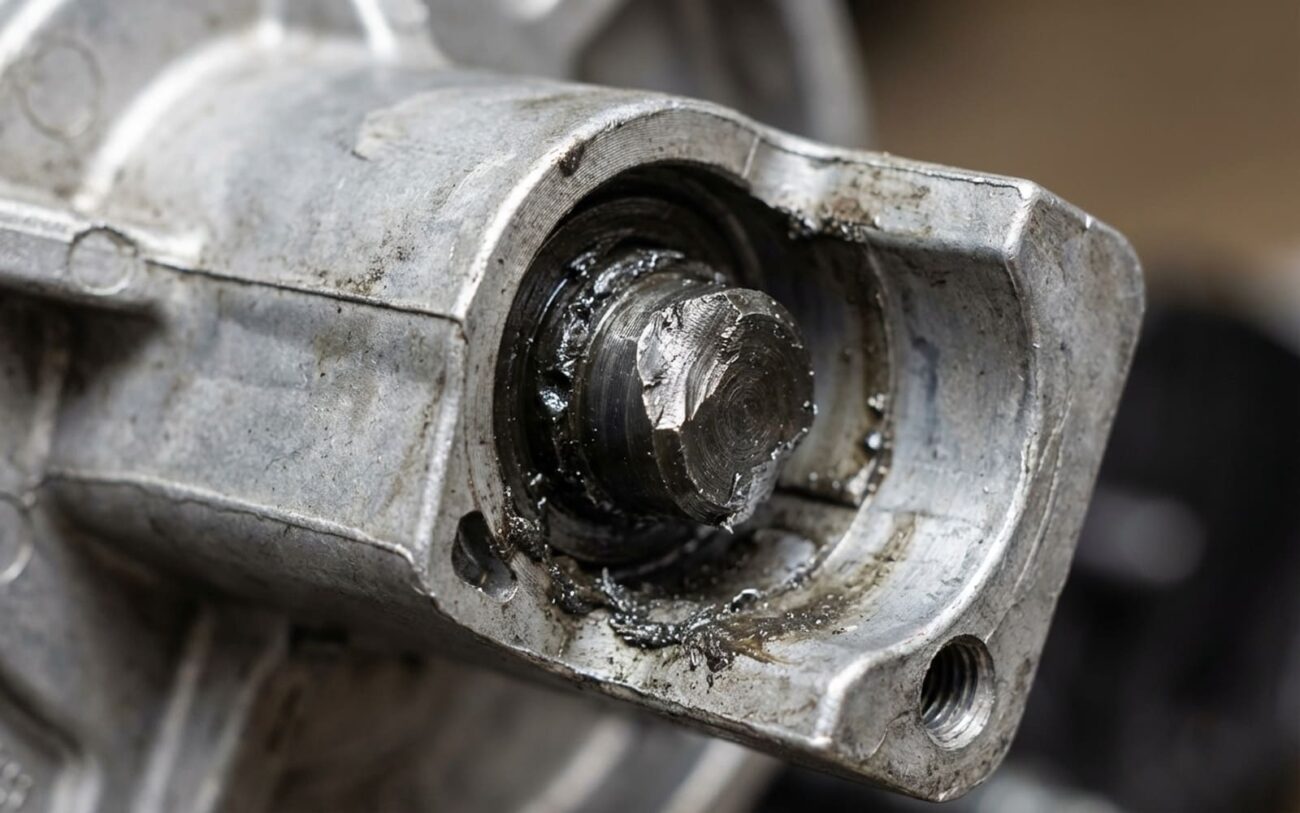
For a steering column lock failure, it’s usually mechanical fatigue. The locking pin is spring-loaded and operated by a small motor or solenoid. Over years of use, that actuator pawl can wear down, break, or just get gummed up with crud. Sometimes, it’s an electrical issue with the actuator itself, but the mechanical wear is what I see most often.
Electric power steering (EPS) motor failures are a bit different. The motors themselves are usually pretty tough, but they’re sensitive to electrical issues. I’ve seen a failing alternator, sending voltage spikes through the system, fry an EPS control module. Also, if there’s any binding in the steering gear—like a bad U-joint or a stiff rack—it forces the EPS motor to work harder, drawing more current until the windings overheat and burn out. So, sometimes the EPS motor isn’t the root cause, but a symptom of another problem.
Your Repair Options: What I Recommend
Safety Critical Systems
Look, steering repairs are not where you cut corners. Improper torque on column bolts, failing to calibrate an EPS motor, or not bleeding a hydraulic system correctly can lead to a loss of control. If you don’t have a high-end scan tool, torque wrenches, and the specific service information for your vehicle, leave this to the pros. Your life, and others’, depends on it.
Steering Column Lock Actuator Professional Only
Hydraulic Power Steering Pump DIY Feasible
EPS Motor or Rack Assembly Professional Only
Don’t Skip This: Verifying the Repair
A repair isn’t done until you’ve confirmed it actually works under real conditions. This isn’t optional; it’s how you ensure safety and avoid comebacks.
-
After a steering column lock repair: Test the full cycle. Remove the key – the wheel should lock. Insert the key, turn to ON – the wheel should unlock instantly with light pressure. Do this several times.
-
After a hydraulic pump replacement: Start the engine and turn the wheel lock-to-lock several times. This bleeds air out of the system. The system should be quiet – no whining, groaning, or gurgling. Check the fluid level again after bleeding.
-
After an EPS assembly replacement: You must use a bi-directional scan tool. Confirm zero DTCs (Diagnostic Trouble Codes) and monitor live data. The steering angle sensor should read 0° when the wheels are perfectly straight. Then, as mentioned, get that alignment done.
What’s This Going to Cost, and Is It Worth It?
This is where the rubber meets the road. I always tell my customers, you need to weigh the cost against the vehicle’s overall value and your budget. Here’s a general breakdown:
| Repair Type | DIY Cost (Parts) | Shop Cost (Total) | Success Rate | Secondary Risk |
|---|---|---|---|---|
| Column Lock Actuator | $150 – $400 | $500 – $900 | High | Security lockout, airbag warning |
| Column Assembly | $800 – $1,500 | $1,500 – $2,500 | Very High | Crash safety risk, clock spring damage |
| Hydraulic Pump | $200 – $500 | $600 – $1,200 | High | Air in system, belt misalignment |
| EPS Assembly | $800 – $2,200 | $1,500 – $3,500 | High | Erratic assist, stability control issues |
My rule of thumb: if the repair cost is pushing 50% or more of the vehicle’s current market value, it’s time to seriously consider if it’s worth putting that money into it. Especially on older cars, you might be better off putting that cash towards a down payment on something newer.
Preventing Future Steering Headaches
My Top Maintenance Tips
-
Fluid is King: For hydraulic systems, use only OEM-specified fluid. Change it every 50,000 miles, or sooner if it looks dirty. Don’t wait for it to start making noise. That’s too late.
-
Electrical Health: Keep your battery and alternator in top shape. Voltage spikes and drops are the number one killer of sensitive EPS control modules. I’ve seen it time and again.
-
Visual Inspections: Every time you’re under the car for an oil change, take a minute to look at the rack boots and steering shaft U-joints. A torn boot is an open invitation for dirt and water to destroy your rack.
And speaking of inspections, don’t forget to check for hidden damage elsewhere. Corrosion in frame rails or suspension mounting points can indirectly affect steering alignment and component life, leading to premature failures. We cover that in our guide on how to spot rust damage.
