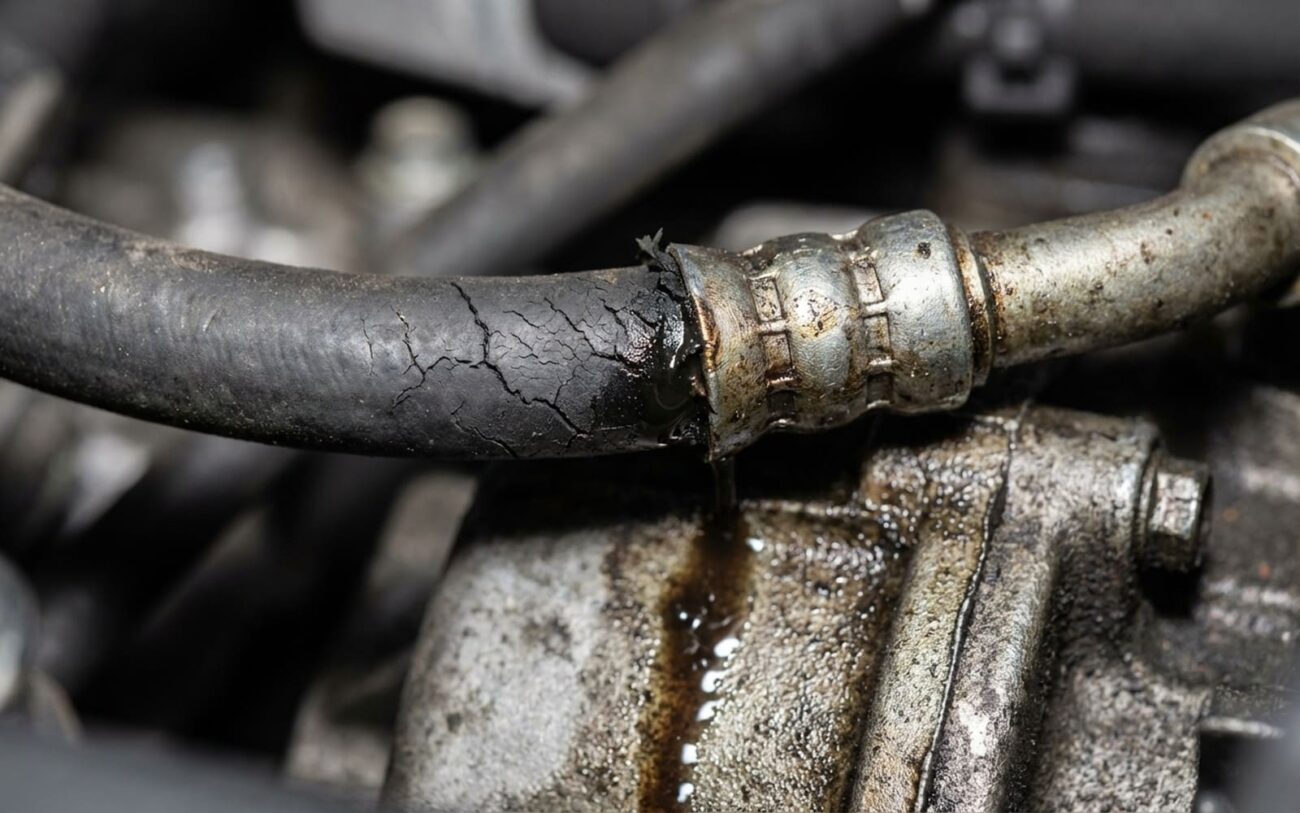
When a customer rolls in complaining about stiff steering, especially on a cold morning, my first thought isn’t “what part is broken?” It’s “is this hydraulic or electric?” After 25 years turning wrenches, I can tell you that distinction changes everything about how you diagnose, what you fix, and what it’s going to cost. You can’t start guessing until you know what system you’re even looking at.
First Look: HPS or EPS?
The quickest way to tell? Pop the hood. If you see a power steering fluid reservoir – usually a white or black plastic tank, often near the firewall, with a cap clearly marked “Power Steering Fluid” – then you’ve got a Hydraulic Power Steering (HPS) system. These systems are old-school reliable, using a belt-driven pump to build fluid pressure. In the cold, that fluid gets thick, like molasses. If the pump or the steering rack itself is a bit worn, it struggles to push that cold, thick fluid around until things warm up.
What you’ll feel with HPS is a consistent heavy steering effort for the first few minutes, almost like you’re pushing against a thick gel. You might also hear a low groaning or whining noise, especially when you turn the wheel all the way to one side. That’s usually the pump working too hard, or cavitating because the fluid’s too thick or too low.
Now, if you open the hood and there’s no fluid reservoir in sight, you’re almost certainly dealing with Electric Power Steering (EPS). These systems use an electric motor to provide assist, either mounted right on the steering column inside the car (column-assist) or directly on the steering rack (rack-mounted). Since there’s no fluid, cold-weather issues feel different. Instead of a smooth, heavy resistance, EPS problems often feel “notchy” or “stepped,” like the assist is cutting in and out in chunks. You’ll also likely see a warning light on the dash – a red steering wheel icon, an “EPS” message, or sometimes even a check engine light. And here’s the kicker: with EPS, the assist can cut out completely with little to no warning, which is a serious safety concern.
Don’t ever ignore steering problems. I’ve seen too many folks assume “it’ll get better when it warms up.” With HPS, a failing pump can seize and snap your serpentine belt, which means you lose not just power steering but also your alternator and water pump. With EPS, a motor failure can leave you with zero assist mid-turn, and that’s a white-knuckle situation nobody wants to be in.
Beyond the Obvious: Differential Diagnosis
Here’s where it gets tricky. That stiff steering in the cold can be a real chameleon, mimicking all sorts of other problems. You can’t just throw parts at it based on a hunch. A worn idler pulley can make a groaning sound that’ll fool you into thinking it’s the power steering pump. A binding strut mount bearing or a seized ball joint can make the steering feel heavy, especially when it’s cold. And for EPS, a weak battery or a dying alternator can cause intermittent issues or throw codes that make you think the steering rack is toast.
My approach is always systematic. We’ve got to rule out these common mimics before we even think about replacing major steering components. Here’s how I break it down in the shop:
Suspect: HPS Pump or Fluid Issues
Symptoms: Cold, groaning stiffness with heavy, consistent effort, often worse at full lock. The fluid might look dark, foamy, or smell burnt.
Common Mimics: A failing serpentine belt tensioner or idler pulley can make similar noises. Low fluid from a leak will also cause groaning and heavy steering.
My Go-To Test: First, check the fluid level and condition. If it’s low, top it off and look for leaks. If it’s dark or smells burnt, it needs a flush. But for internal pump wear, I grab my infrared thermometer. With the engine cold, start it up and turn the wheel to full lock. Point the thermometer at the pump body. If that pump quickly heats up past 160°F (70°C) – especially if one side is significantly hotter – that’s a strong indicator of internal bypass and a dying pump. For the gold standard, I’ll hook up a pressure gauge. At idle and full lock, I’m looking for 1200 to 1500 psi. Anything significantly below that, and the pump’s not doing its job.
Suspect: EPS Torque Sensor or Motor Issues
Symptoms: Cold, “notchy” or “stepped” stiffness, often accompanied by an EPS warning light on the dash. The assist might feel inconsistent or cut out entirely.
Common Mimics: A weak battery or a failing alternator can starve the EPS system of voltage, causing it to underperform or throw intermittent codes. Poor ground connections are also notorious for this.
My Go-To Test: This is a job for the scan tool. I’ll connect it and monitor “Torque Sensor Signal” live data. As I turn the wheel, I’m looking for smooth, consistent changes in the signal. Erratic values, sudden drops, or readings that don’t return precisely to zero when the wheel is centered are red flags. I also check system voltage and amperage draw on the EPS motor. If the voltage sags or the motor’s drawing too much current, that tells me something’s off.
Suspect: Mechanical Binding (Both Systems)
Symptoms: Consistent heavy steering effort, often worse when cold, regardless of whether it’s HPS or EPS. It might feel like the steering wheel is physically fighting you.
Common Mimics: A binding steering column U-joint, a seized strut upper bearing, or even worn control arm bushings can make steering feel heavy and stiff. I’ve even seen dry tie rod ends cause this.
My Go-To Test: To isolate mechanical drag, I’ll disconnect the power assist. For HPS, that means disconnecting the hydraulic lines from the rack (and capping them off, of course). For EPS, I’ll temporarily disable the motor (often by pulling a fuse or connector, carefully). Then, I manually turn the steering wheel. If it’s still heavy and binding, the problem is in the mechanical components – the steering column, the rack itself (internal binding), or suspension parts. I’ll then lift the vehicle and physically inspect and articulate every steering and suspension component, checking for play, rust, or stiffness. Don’t forget the steering shaft U-joints; they seize up more often than people think.
Under the Hood: Understanding the Root Cause
Diagnosing the system is one thing; understanding why it failed is another. If you’re going to fix it right, you need to know the mechanism behind the symptom.
In HPS pumps, that cold stiffness usually comes down to internal wear. The rotor vanes and pressure plate inside the pump wear down over time, increasing the internal clearances. When the fluid is cold and thick, it can’t maintain pressure across these bigger gaps, so the pump’s output drops. The pressure relief valve can also get weak, allowing fluid to bypass prematurely. I’ve seen some specific issues too; for example, certain Chrysler models from the early 2000s had documented problems with pump casting porosity – tiny voids in the housing that would suck air into the fluid, causing aeration, noise, and reduced assist, especially when cold.
For EPS systems, cold-related failures are often sensor-driven. The torque sensor, which tells the computer how much effort you’re putting into the wheel, can drift or become temperature-sensitive. Honda, for instance, issued a service bulletin for some 2014–2015 Civics where the torque sensor’s internal resistance would change with temperature, sending bad signals to the module and causing erratic assist. That’s why I always check for updated EPS module firmware before I even think about condemning hardware. Sometimes, a simple software flash is all it needs.
And then there’s the HPS rack itself. Inside, the rotary valve and torsion bar are precision-machined components. As temperatures drop, those microscopic clearances tighten up. If there’s any wear between the valve spool and its bore, the cold, thick fluid can’t flow properly. This causes delayed or reduced assist, and that stiffness you feel is the physical drag in that valve until thermal expansion loosens it up a bit.
The Fix: Professional Repairs Only
This Ain’t a DIY Job for Most
Look, I’m all for saving a buck, but steering repairs are safety-critical. We’re talking about components that control where your wheels go. These jobs demand specialized tools – pulley pullers, flare nut wrenches, torque wrenches, and for EPS, factory-level scan tools for calibration. If you don’t have the right tools or the experience, you’re risking your life and others’.
Proof It’s Fixed: Post-Repair Validation
You never, ever assume the problem is fixed just because you bolted on a new part. Cold-weather issues are intermittent by nature, so you have to test under real-world conditions. For HPS repairs, I always validate when the engine is stone cold, ideally below 50°F (10°C). Start the car, let it idle, and slowly turn the wheel to full lock in both directions. There should be no groaning, no whining, and the assist should be smooth and consistent from the very first turn. The gold standard, if you have the tools, is to connect a pressure gauge: at idle and full lock, your pressure should typically hit between 1200 and 1500 psi, depending on the vehicle spec.
For EPS repairs, the scan tool is your best friend for validation. After installation and calibration, take the car for a full driving cycle. Then, pull the codes again to verify no DTCs are stored – current or pending. Monitor live data: your torque sensor readings should be rock-solid stable at rest (zero, or very close to it) and transition smoothly and linearly as you turn the wheel. It needs to return precisely to zero when you center the wheel. The assist should feel natural, linear, and responsive, with no notchy spots or sudden drops.
The Bottom Line: Costs, Risks & When to Walk Away
| Repair Type | DIY Cost (Parts) | Shop Cost (Est.) | Success Rate | Secondary Risk |
|---|---|---|---|---|
| HPS Pump Replacement | $150 – $400 | $500 – $900 | 95% | A worn rack can prematurely wear out a new pump. |
| HPS Rack Replacement | $300 – $800 | $1,200 – $2,500 | 98% | Incorrect installation leads to alignment issues, tire wear, and poor handling. |
| EPS Rack/Column Replacement | $800 – $2,000 | $1,500 – $3,500 | 99% | Failure to perform zero-point calibration results in erratic assist or system shutdown. |
My Two Cents on the Money
Here’s a rule of thumb I’ve used for years: if the estimated repair cost is more than about 40% of your car’s current market value, you need to seriously pause and think. A $2,000 EPS rack on a $5,000 car is a huge red flag. It’s not just about fixing the car; it’s about whether it makes financial sense to do so. Sometimes, it’s better to cut your losses and put that money towards a newer, more reliable vehicle.
Keeping It Healthy: Prevention & Monitoring
My Maintenance Checklist
-
HPS Fluid Flushes: Don’t just top it off. I recommend a complete power steering fluid flush every 60,000 miles, or every 5 years, whichever comes first. This gets rid of the sludge and varnish that break down and cause problems in the cold.
-
Electrical Health for EPS: For EPS systems, your battery and alternator are paramount. A weak charging system or a dying battery puts immense stress on the EPS control module and motor. Get your battery tested annually, especially before winter, and make sure your alternator is putting out proper voltage.
-
Seasonal Checks: As the cold weather rolls in, make it a habit. Start your car cold, and turn the wheel slowly to full lock in both directions. Listen for any new groans, whines, or feel for any stiffness or notchiness. Catching these symptoms early can save you a lot of headache and money down the road.
