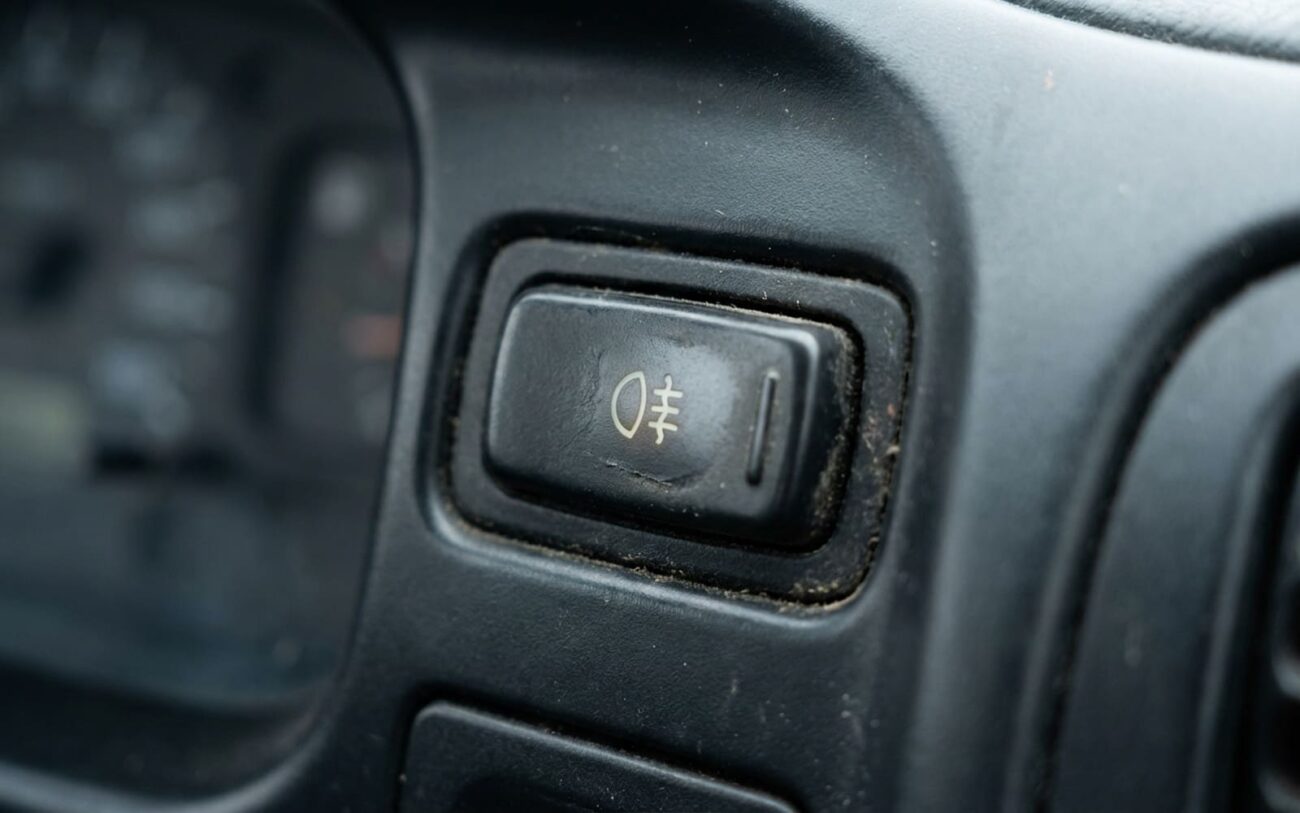
Fog lights coming on by themselves—no key, no switch press, just glowing in the driveway like they’re guarding the car—this isn’t magic. It’s a fault. And I’ve seen it more times than I can count, especially on vehicles from 2012 onward where the BCM handles nearly every lighting circuit. What looks like a minor annoyance can snowball into a dead battery, fried wiring, or worse. Let me walk you through how I diagnose this in my shop, step by step, because guessing will cost you time and money.
Symptoms That Mean Trouble
First, let’s cut through the noise. If your fog lights are on with the ignition off, that’s not “quirky”—it’s a hard failure. Power is where it shouldn’t be. That usually means one of three things: a stuck switch, a failed output driver in the BCM, or a short in the wiring harness feeding the lights.
Now, if the switch doesn’t respond—clicks but no change, or feels mushy or stuck—don’t assume it’s the switch. I’ve pulled apart switches that looked perfect but were gummed up with spilled soda or coffee. Sticky residue bridges contacts, and suddenly the circuit thinks the button is always pressed.
But here’s what most people miss: even if the switch feels fine, the signal might not be getting through. Or worse, the BCM is receiving the input but ignoring it because the output driver is welded “on” internally. That’s not software. That’s hardware failure.
Diagnosis: Cut to the Real Problem
You don’t replace parts until you know where the fault lies. That means testing—starting simple, then going deeper. Here’s my process.
First, grab a digital multimeter (DMM) and a scan tool that can talk to the BCM with bidirectional controls. A cheap OBD2 scanner won’t cut it. You need to command the fog lights on and off from the tool, not just read codes.
Now, run through this checklist:
| Symptom | Most Likely Cause | What It Might Mimic | How I Confirm It |
|---|---|---|---|
| Fog lights on, ignition off | Stuck switch or BCM output failure | Short-to-power in harness |
Unplug the BCM fog light output. Check the vehicle-side wire for voltage. If it’s hot, you’ve got a short in the harness. If not, the fault is either the switch or the BCM’s driver. |
| Switch unresponsive, lights stuck on | BCM input failure or mechanical switch issue | Failed relay (if separate) |
Swap the fog light relay. If the problem persists, use the scan tool to command the lights. No response? Likely BCM software or input issue. Lights turn off/on via tool but not switch? Then the switch or its circuit is bad. |
| Switch feels stuck or mushy | Mechanical failure or contamination | Water intrusion or debris behind panel |
Remove the switch. Test continuity across terminals while pressing the button. No change? It’s dead. Also check for sticky residue or corrosion—especially if the car has had drinks spilled near the dash. |
What’s Really Broken: Inside the Parts
A failed switch is usually mechanical. The plunger wears, the spring breaks, or liquid gets in and corrodes the contacts. I’ve seen switches where the internal contacts were fused together by sugar from a spilled energy drink. Looks fine from the outside, but electrically, it’s a closed circuit all the time.
But a failed BCM? That’s different. Most of the time, it’s a MOSFET in the fog light output circuit that’s failed “on.” These solid-state switches handle the load, but they can’t take sustained overcurrent or voltage spikes. Jump-start the car wrong, and that surge can weld the driver shut. Heat cycling over years doesn’t help either.
And yes—water gets in. On more than a few BMWs and Hondas I’ve worked on, the BCM sits low in the dash, near the cowl. If the drain tubes are clogged, water seeps in during heavy rain. Corrosion builds up on the connector, and eventually, the module shorts. I’ve pulled BCMs that looked like they’d been in a fish tank.
Software glitches? Rare, but they happen—especially after a failed update or if the battery died mid-programming. The BCM thinks the fog lights are still commanded “on” and never resets. But again: rule out wiring and relays first. A short in the harness isn’t a BCM problem. A blown fuse isn’t a BCM problem. Diagnose, don’t guess.
How to Fix It—For Real
Replace the Switch
Reprogram the BCM Professional Only
Replace the BCM Professional Only
Quick workaround? Pull the fog light fuse or relay. It stops the drain, lets you park the car safely. But don’t cut wires or bypass relays. I’ve seen too many “temporary” fixes turn into parasitic drains or fire hazards.
Did It Actually Work? Test It Right.
Never assume it’s fixed because the lights turned off. I’ve had customers come back the next day with the same issue because we didn’t validate properly.
After replacing a switch: cycle it on and off at least 10 times. Watch for flickering or lag. Then shut everything down, lock the car, wait an hour. Come back—lights still off? Good. But if they’re on again, the BCM or wiring is still at fault.
After BCM work: use the scan tool. Command the fog lights on and off. Watch the data stream. Does the BCM register the command? Does the output respond? Also check the switch input status in real time. If the BCM isn’t seeing the button press, the problem might be in the input circuit, not the output. This level of testing is what separates a real fix from a guess.
Cost vs. Value: The Hard Call
| Repair | DIY Parts | Shop Total | Success Rate | Risks |
|---|---|---|---|---|
| Switch Replacement | $20 – $150 | $150 – $300 | >95% | Broken trim clips, damaged connectors |
| BCM Reprogramming | N/A | $100 – $300 | ~60% (only if software) | None if hardware good |
| BCM Replacement | $300 – $800 | $500 – $1,200 | >98% | Immobilizer or key fob failure if misprogrammed |
| Wiring Repair | $50 | $200 – $600 | >95% | Poor splice causing new shorts |
Look—if you’re staring at a $1,000 BCM bill on a car worth $3,000, you’ve got a decision. I’ve had customers choose to pull the fuse and live without fog lights. It’s not ideal, but it’s honest. On the flip side, ignoring it could mean bigger electrical issues down the road, especially if the BCM is failing in stages.
How to Keep It From Coming Back
Prevention Tips That Actually Work
-
Keep the cowl area clean. Leaves and debris trap water, and that moisture can seep into the BCM or fuse box. I’ve traced more than one BCM failure to a clogged drain. Flush them yearly with compressed air.
-
Watch for early signs: flickering lights, slow response, intermittent operation. These aren’t random—they’re warnings. Same with other electrical quirks: slow door locks, glitchy instrument cluster.
-
If electrical issues pop up after an interior detail, think water exposure. Some detailers soak the dash. That moisture can creep into modules and cause all kinds of gremlins. See: what to do if seat and climate control functions stop working after interior detailing.
-
Never replace a blown fuse with a higher-rated one. A 10A fuse blows for a reason. Jumping to 20A can overheat wiring and start a fire. Always find the root cause.
