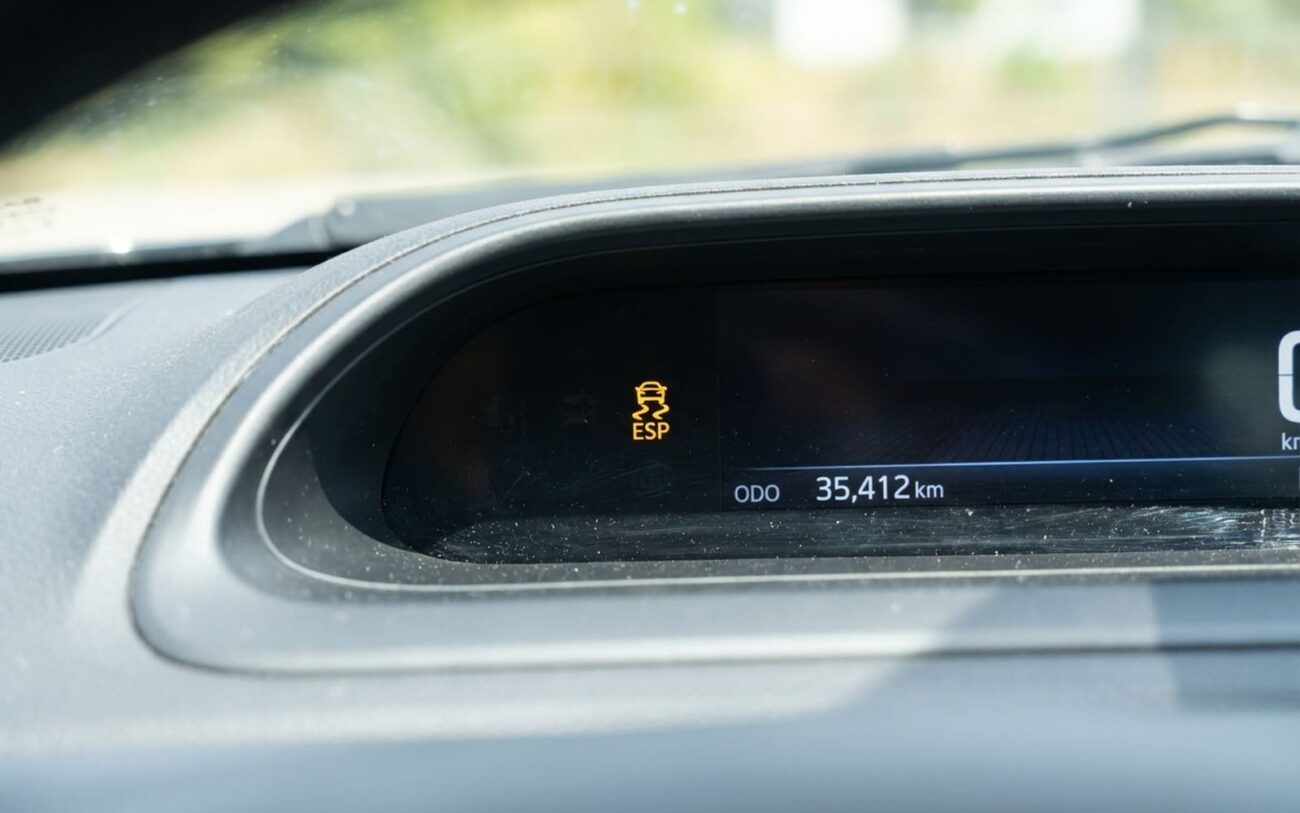
Alright, let’s talk about that Electronic Stability Program (ESP) light. When it decides to stay lit up like a Christmas tree and the “off” button does absolutely nothing, you’ve got a problem. This isn’t just a friendly reminder; it’s the vehicle’s computer telling you, “Hey, I’ve detected a serious fault, and I’m locking down the stability control system for safety.” In my 25+ years, I’ve seen this play out countless times, and it usually means we’re looking at something more than a simple sensor hiccup.
The Locked-Down ESP: What It Means
The primary symptom is pretty clear: that ESP light stays on. You might see it labeled DSC, ESC, or VSC depending on the manufacturer, but it all points to the same system. The key here is the button being unresponsive. When you press the ESP off button and nothing happens, that’s a big red flag. The system is ignoring your input because it’s in a fault state. Most of the time, it defaults to full activation as a safety measure, but I’ve also run into situations where it goes into a restricted, or “limp,” mode, giving you only partial stability functions.
What’s happening behind the scenes? The ESP control module—the brain of the operation—has detected a fault serious enough to override any driver input. It’s designed that way. It’s a safety protocol. While a simple bad switch or a wiring issue can mimic this, the more common culprits are usually an internal fault within the ESP control module itself or a critical sensor it relies on, like the steering angle sensor or one of the wheel speed sensors.
SYSTEM STATUS
Status: LOCKED
My Diagnostic Approach: Don’t Guess, Test.
Before you even think about replacing that expensive ESP module, you’ve got to rule out the simpler, less costly issues that can fool you. I’ve seen too many good modules swapped out because someone skipped a basic check. My approach is systematic, using real-time data and targeted tests to pinpoint the true source.
Symptom: Persistent ESP Lamp, Switch Inoperative
This is the classic scenario. While it screams “module fault,” it’s crucial to check the basics first. A faulty ESP switch, a broken wire, or even a CAN bus communication problem can make the module seem dead. Here’s how I check it:
-
Scan Tool Check: My first step is always the scan tool. I’m looking for any Diagnostic Trouble Codes (DTCs), obviously. But more importantly, I’ll go into the live data and monitor the “ESP Button Status” parameter. If the scan tool registers that you’re pressing the button, but the system still doesn’t respond, then you know the fault is internal to the module, or at least downstream of the switch. If the scan tool doesn’t register the press, then you’re looking at the switch or its wiring.
-
Power and Ground: Don’t overlook the basics. Chronic low voltage, a poor ground connection, or even water intrusion at the connector can cause all sorts of module weirdness. I use an oscilloscope to test power and ground at the ESP module connector. I’m looking for a stable 12–14V supply. Any significant drops or instability, and you’ve found your problem.
Symptom: Erratic, Low-Speed ESP Activation or Processor Fault DTCs
This is where things get a bit trickier, but it still doesn’t automatically mean a dead module. If the system is kicking in when it shouldn’t, especially at low speeds, or if you’re getting internal processor fault codes, consider these:
-
Sensor Calibration & Data: An uncalibrated steering angle sensor is a huge culprit here. The ESP module thinks the steering wheel is turned when it’s actually straight, leading to false activations. I always monitor wheel speed PIDs (Parameter IDs) for consistency. If one wheel speed sensor is reading erratically or differently than the others, that’s a red flag. Also, perform a steering angle sensor calibration. Sometimes, that’s all it takes.
-
Damaged Tone Rings: These are often overlooked. A cracked or damaged ABS tone ring (the toothed wheel the wheel speed sensor reads) can send corrupted signals, making the ESP module think a wheel is skidding. I’ve seen them rust, crack, or get damaged by road debris. A visual inspection, especially on older vehicles, is critical.
-
Tire Issues: Believe it or not, misaligned tires or even significantly different tire sizes (don’t laugh, I’ve seen it) can confuse the ESP system, especially if it’s trying to compare wheel speeds.
When It’s the Module: Software vs. Hardware
Okay, so you’ve done your due diligence, checked all the external factors, and you’re pretty sure it’s the ESP module itself. Now, we need to figure out if it’s a software issue or a hardware failure. This distinction matters a lot for the repair.
Software Corruption
Think of it like your home computer freezing mid-update. The hardware is perfectly fine, but the software, the logic, is stuck in an unhandled exception. It just can’t execute its commands properly.
Software corruption often stems from voltage irregularities. I’m talking about things like a jump-start with reversed cables (yes, it happens, and it’s ugly), a dying battery causing sudden power drops, or even just a weak battery during a critical module operation. These events can scramble the module’s EEPROM, making it impossible for the processor to execute its programming correctly. The good news? Sometimes, this can be fixed with a simple reflash.
Hardware failure, on the other hand, is a physical breakdown. We’re talking about microprocessors frying, voltage regulators failing, or solder joints cracking. This usually happens over time due to thermal cycling (hot to cold, over and over) and constant vibration. Once the hardware is physically damaged, reprogramming won’t help; the module needs to be replaced.
Pro Tip: Check Service Bulletins!
Manufacturers are definitely aware of these issues. I’ve seen numerous documented service bulletins for specific model years where low-voltage events trigger ESP malfunctions that only require a module reprogramming, not a full replacement. Always check for these before you condemn a module. It can save a lot of money and hassle.
Fixing It: Your Repair Options
[WARNING: PROFESSIONAL-LEVEL WORK AHEAD]
Let me be clear: these systems are intricately integrated with your vehicle’s brakes. Messing this up can lead to a complete loss of ABS, total brake failure, or dangerous unintended interventions. Specialized tools, specific knowledge, and often, OEM subscriptions are absolutely required. This isn’t a DIY job for the faint of heart.
Module Reprogramming (Software Fix)
ECU Replacement (Separate Units)
Integrated HCU Assembly Replacement (Modern Vehicles)
Post-Repair Validation: Trust, But Verify.
Once you’ve done the work, you can’t just send the car out the door. You’ve got to validate the repair thoroughly. This is where you confirm that the problem is truly solved and that the system is operating safely and correctly.
My Validation Checklist
-
Initial Check: First, ensure the ESP warning light stays off through multiple key cycles. And, just as important, verify that the disable button now functions correctly. If it doesn’t, you haven’t fixed the core issue.
-
Active Scan Tool Tests: Use your scan tool to command the ABS pump and individual solenoids. Listen for them to click and verify their response. This confirms the module can physically control the hydraulic system.
-
Functional Road Test: Take the vehicle for a good road test. Perform moderate turns and acceleration on dry pavement. The ESP should not intervene falsely. If it does, something is still wrong, likely with a sensor input or calibration.
-
ABS Verification: In a safe, controlled area, perform a hard stop to activate the ABS. You should feel the characteristic pedal pulsation, and the system should pulse correctly without locking up wheels.
Costs, Risks, and Making the Right Call
Let’s talk brass tacks. Fixing an ESP module isn’t cheap, and the complexity means there are risks involved, especially if you’re not fully equipped. Here’s a breakdown of what you’re looking at, both in terms of cost and potential headaches.
| Repair Type | DIY Cost (Parts Only) | Shop Cost (Parts & Labor) | Success Rate | Secondary Risk |
|---|---|---|---|---|
| Software Reprogramming | $300–$600 (for tool access/subscription) | $150–$400 | High (>85%) if the module is otherwise healthy. | Module “bricking” (total failure) due to voltage drop during the flash. |
| ECU Replacement (Separate) | $200–$800 | $700–$1,500 | High, assuming correct diagnosis and installation. | Incorrect coding/adaptation, air trapped in brake lines, stripped flare nuts. |
| Complete HCU Assembly | $800–$2,500 | $1,200–$3,000+ | Very High, if diagnosis is accurate and procedure followed. | Major financial loss if the initial diagnosis was incorrect, or improper bleeding leading to brake failure. |
Prevention & Keeping Your ESP Healthy
While ESP modules do eventually fail with age, a lot of failures are preventable. The biggest threat, in my experience, is electrical instability. Always, and I mean always, use a battery maintainer when the engine is off but the key is in the “on” position—especially during any extended diagnostics or programming. A stable voltage supply is critical for all modern vehicle electronics.
Don’t Ignore the Flickers
If that ESP light flickers on during startup and then goes out, don’t just shrug it off. That’s often an early warning sign. During routine maintenance, use an OBD2 scanner capable of reading chassis codes (not just engine codes!) to catch any history codes before they escalate into a total module failure. Early detection can save you a lot of grief and money down the road.
