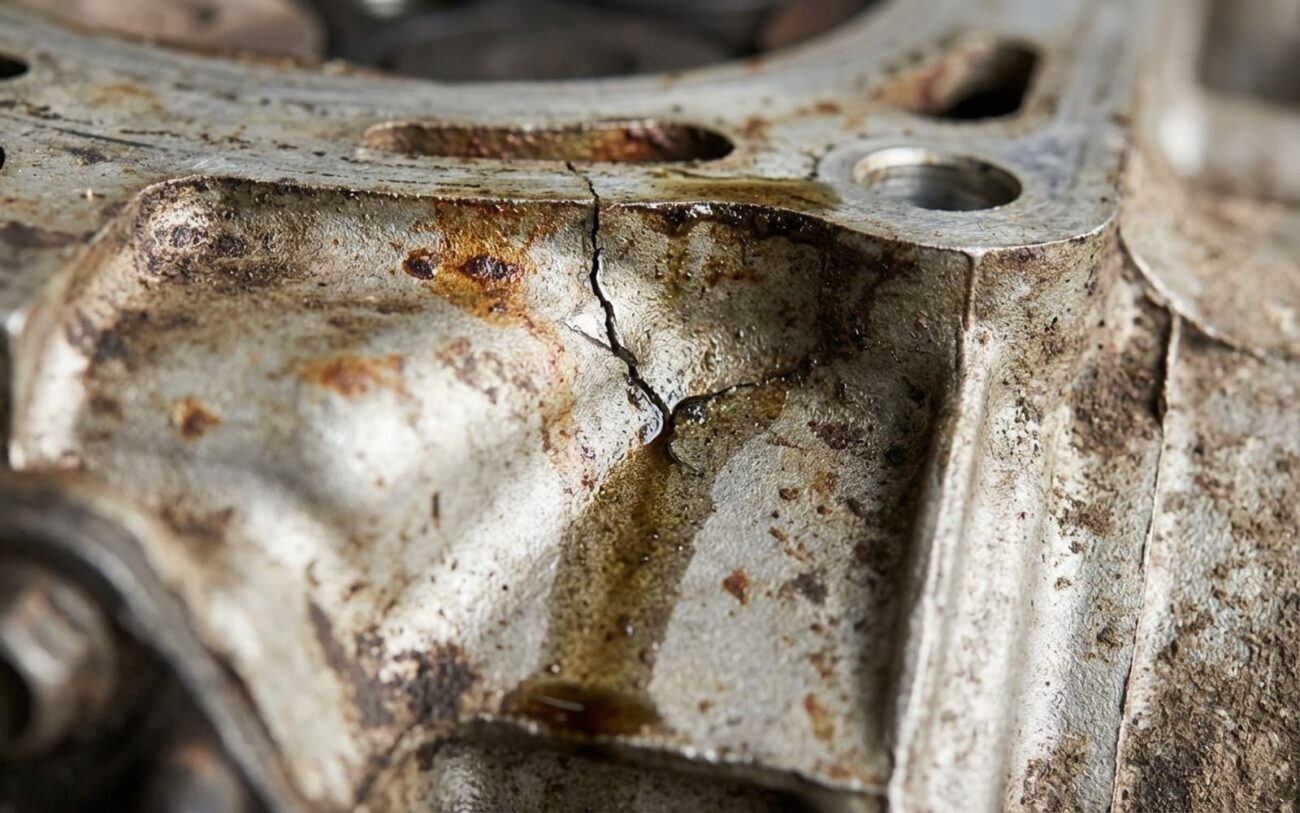
Alright, let’s talk about the Electronic Stability Program (ESP) hydraulic control unit (HCU). After 25 years turning wrenches, I’ve seen my share of these things go south, and it’s never a fun day. This isn’t just some convenience feature; it’s a critical safety system that controls your ABS, traction control, and stability. When it starts to fail, it’s not always a dramatic event right away, but it escalates fast. You need to know what to look for, how to diagnose it right, and what your options are. Trust me, guessing with your brakes is a bad idea.
When Your ESP/ABS Starts Acting Up: What I Look For
The first thing most folks notice is that dreaded ESP or ABS warning light on the dash. That’s your car telling you, “Hey, something’s wrong here.” But that’s just the start. What you feel and hear behind the wheel, or even before you start the engine, often tells a bigger story.
During key-on, before you even crank the engine, you should hear the HCU’s hydraulic pump motor run briefly. We’re talking 2 to 5 seconds, max. It’s just pressurizing the system. If you hear that pump motor running continuously, or for much longer than it should, that’s a huge red flag. It usually means the system isn’t building or holding pressure internally. In my experience, this points to internal valve leakage or a bad pressure sensor right inside the HCU.
Out on the road, the most obvious symptom is a complete lack of traction or stability control intervention. Think about it: you’re on a wet patch, one wheel spins, and the ESP light should flash as the system applies a little brake to that wheel and maybe cuts engine power. If nothing happens, if your car just slides or spins the wheel unchecked, your HCU is likely disabled due to an internal fault.
In more advanced cases – and this is where it gets dangerous – some drivers report a brake pedal that feels rock-hard with almost no travel. This happens when the solenoid valves inside the HCU get stuck closed, blocking the normal flow of hydraulic fluid to your brakes. When that happens, your stopping power is severely compromised, especially in a panic stop. That’s not just an inconvenience; it’s a major safety hazard.
State: RUN-ON
Of course, the system will always log Diagnostic Trouble Codes (DTCs). These are your best friends. We’re talking specific codes like “Inlet/Outlet Valve Circuit Malfunction,” “Pressure Sensor Implausibility,” or “Pump Motor Failure.” Before you even think about replacing the HCU, you’ve got to rule out the simple stuff: a blown fuse, a faulty relay, or maybe a bad power supply to the unit. If those check out and the codes keep coming back, then yeah, the problem is almost certainly inside that HCU.
Don’t Jump to Conclusions: Ruling Out the Easy Stuff
I’ll be honest, I’ve seen this misdiagnosed more times than I can count. A continuously running pump or a complete loss of ABS function can stem from plenty of other issues, and some of them are a lot cheaper and easier to fix than an HCU. You absolutely have to eliminate those possibilities first. Here’s how I approach it:
Persistent Pump Motor Run-On
If that pump won’t shut off, the HCU is definitely a suspect. It could be an internal pressure leak, a failed pressure sensor, or a sticking control valve inside the unit. But don’t forget the external stuff: a severe brake fluid leak from a line, a caliper, or the master cylinder reservoir can also cause the pump to run constantly trying to build pressure. Or, you might have damaged wiring to the pressure sensor itself, giving the HCU bad info.
Definitive Test: Use a good scan tool to monitor the internal pressure PID (Parameter ID). Command the pump to run. If the pressure doesn’t stabilize within 5 seconds, or if it drops off quickly once the pump stops, you’re looking at an internal HCU issue.
DTCs for Valve Circuit Faults (e.g., C1145)
These codes scream “electrical problem.” It could be a failed solenoid coil inside the HCU’s valve block, or an open circuit there. But again, check the basics. Wiring damage, corroded connector pins, or even a short in the harness leading to the HCU connector can throw these exact same codes. I always check the harness first; it’s a lot cheaper than an HCU.
Definitive Test: Disconnect the HCU connector and measure the resistance across the suspect solenoid circuit. You’re typically looking for 2–10 ohms. If it’s open (infinite resistance) or shorted (near zero), and the wiring harness tests good, then the solenoid coil inside the HCU is toast.
Loss of ABS/ESP with No Pump or Valve DTCs
This one’s trickier because the computer isn’t giving you a direct HCU fault. The problem could be internal clogging of the valve passages or a failure of the pressure accumulator within the HCU. But it’s just as likely you have faulty wheel speed sensors, or maybe a steering angle sensor calibration error. On some vehicles, even a bad brake light switch can cause this.
Definitive Test: After confirming all external sensors are good and calibrated, use your scan tool to run actuation tests on the HCU. This commands individual valves to open and close. You should feel a hydraulic pulse at the calipers. If you don’t, or if the response is weak, it points to internal HCU clogging or a mechanical valve issue.
Why These Units Fail: Inside the Box
These hydraulic units are tough, engineered to last, but they’re not invincible. Wear and contamination are their biggest enemies. Most of the core failures happen inside that sealed aluminum casting that houses the solenoid valves, the pump, and the pressure accumulator.
Solenoid coils, for example, just fail over time. Every time the system activates, those coils heat up and cool down. That thermal cycling slowly degrades the insulation around the wire. Eventually, you get an open or shorted circuit, and boom, a valve circuit fault code. The micro-valves themselves, which are precision-machined to regulate brake pressure, can get gummed up with debris or sludge from old, moisture-laden brake fluid. Even tiny bits of corrosion or pitting can stop a valve from sealing properly, leading to those internal leaks that the system can’t detect externally.
The Biggest Enemy: Moisture
Brake fluid is hygroscopic – it sucks up water from the air over time. Once that moisture content gets above 2-3%, it starts corroding internal steel components like the pressure accumulator and valve seats. Bosch, who makes a lot of these units (like their ESP 9.0 systems), explicitly states that contaminated fluid is a leading cause of HCU failure. It’s like putting rusty water through a finely tuned machine.
The pump motor itself is usually a brushed DC motor. Just like any electric motor, the brushes wear down, and the commutator can get dirty or pitted. This leads to intermittent operation or complete failure. And let’s not forget vibration. Units mounted close to the firewall or frame rails can take a beating, which can damage the small internal circuit board or solder joints. It’s a delicate piece of equipment.
Now, it’s important to differentiate: an external leak from a brake line fitting or a pump seal isn’t an “HCU failure” in the same way. That’s a seal or fastener issue, usually much simpler to fix. Also, the ABS/ESP control module – that’s the electronic brain usually bolted to the side of the hydraulic unit – is a separate component. Often, you can repair or replace just the module without touching the hydraulic part. Don’t confuse a bad module with a failed hydraulic unit; they’re different beasts.
Your Options for Repair: What Works and What Doesn’t
CRITICAL SAFETY SYSTEM
Let’s be clear: this isn’t a DIY oil change. We’re talking about your primary braking system. Mistakes here can be deadly. Always use proper procedures and factory-grade diagnostic tools. If you’re not absolutely confident, take it to a pro.
Pump Motor Seal Service Professional Only
Full HCU Assembly Replacement Professional Only
No Temporary Fixes. Period.
Proof’s in the Pudding: How I Verify the Fix
Replacing the HCU isn’t the end of the job; it’s just the beginning of the validation process. Skipping proper post-repair checks means you’re just guessing whether the system actually works, and that’s not how I operate. I follow a strict three-step process to make sure everything’s right:
-
Functional Test: First, I clear all Diagnostic Trouble Codes. Then, I run an actuation test on every solenoid and the pump motor using the scan tool. Every component should respond correctly, and no fault codes should return. This tells me the electronics are talking to the hydraulics.
-
Hydraulic Test: Next, I perform the full OEM-specified ESP bleeding procedure with a pressure bleeder. This is crucial. While bleeding, I monitor system pressure via the scan tool; the pump should only run briefly (2–5 seconds) to maintain pressure, not continuously. This confirms proper internal sealing and pump function.
-
Road Test: Finally, in a safe environment (like a deserted parking lot), I perform a hard stop to trigger ABS and a controlled swerve to activate ESP. The dash light should flash as the system applies individual brakes, and I should feel the system actively intervene. If it doesn’t, or if the pedal feels soft, something’s still wrong.
If any step fails, I go back to square one. A soft pedal or non-functional ABS/ESP after replacement almost always points to improper bleeding or incomplete coding. It’s a pain, but you can’t cut corners here.
The Bottom Line: Cost and When to Walk Away
Replacing an HCU is one of the most expensive brake-related repairs you can face, short of a complete ABS system overhaul. Here’s a realistic cost breakdown based on what I see with common vehicles like VW, Audi, and Mercedes, which often use Bosch ESP 9.0 systems.
Pump Motor Seal Service
This includes the seal kit ($30–$80) and labor. Keep in mind, the success rate is around 80% due to the risks involved in disassembly and potential underlying pump issues.
Full HCU Replacement
This is your total shop cost for the new parts, labor, coding, and the extensive bleeding process. Using OEM parts, the success rate is over 95%.
DIY Replacement (Parts Only)
This is just the cost for the HCU assembly and fluids. Remember, you’ll still need advanced scan tools for coding and proper bleeding, which aren’t cheap or easy to use.
Keeping It From Happening Again: Your Best Defense
Prevention for HCU failure is actually pretty straightforward, but it’s often ignored. The single most effective thing you can do is stick to the manufacturer’s brake fluid replacement interval. Typically, that’s every two years. That little sticker in your service manual isn’t just a suggestion; it’s there to prevent exactly this kind of expensive, safety-critical failure. Old, moisture-contaminated fluid leads to internal corrosion in the HCU, and once that damage starts, you can’t just flush it out. The damage is done.
Also, always use the correct fluid. Many modern vehicles, especially European ones, require DOT 4 LV (low viscosity) or DOT 4 ESP-rated fluid. Standard DOT 4 can be too thick and might not allow the solenoid valves to operate correctly, especially in cold weather. It’s a small detail that makes a big difference.
Pro-Active Monitoring
Get in the habit of listening for that HCU pump during key-on. If the sound changes—it runs longer, sounds different, or worse, it doesn’t shut off—you’ve caught a developing issue early. Addressing it then might save you a lot of headaches and money down the road. And hey, sometimes handling issues aren’t electronic at all; knowing how to tell if steering or suspension problems are causing your car’s handling issues can save you time and money, too.
