Alright, let’s talk about that frustrating moment on the highway. You’ve got the cruise control set, everything’s smooth, and then you hit an incline. Suddenly, your speed starts bleeding off – five, maybe even ten miles an hour below where you set it. The system doesn’t shut down; it just… gives up. You end up having to hit the gas yourself to keep moving. If you’re driving an older Toyota or Lexus, I can tell you from years in the shop: this isn’t just your car being “lazy” or “how cruise control works.” This is a symptom, and it’s telling you something’s not right in your electronic throttle or cruise control system.
My First Move: Diagnosing the Real Problem
The biggest mistake I see folks make is assuming this speed loss is always a cruise control fault. It can be, but it can also be a general engine power issue that just shows up when the cruise tries to demand more from the engine. You need to know which one you’re chasing before you start throwing parts at it.
Forget those cheap code readers. For this, you absolutely need a bidirectional OBD-II scan tool. That’s a tool that lets you not just read data, but also command components to actuate. Without live data and actuator control, you’re just guessing, and that gets expensive fast.
| Symptom | The Definitive Test I Use |
|---|---|
| Speed loss on hills only when cruise is engaged |
With the engine off, use your scan tool to command the throttle plate to open from 0% to 100%. Watch the actual Throttle Position Sensor (TPS) reading. If it doesn’t match the commanded percentage within 5%, or if the plate moves sluggishly, sticks, or doesn’t reach full open, then your problem is in the throttle system. This is your smoking gun. |
That test is gold, trust me. If the throttle plate doesn’t move freely and fully when commanded, then you’ve pinpointed the issue to the throttle body itself or the cruise control actuator. If it opens smoothly and fully, then your cruise is asking for power, but the engine just can’t deliver it. In that case, you’re looking at things like fuel delivery, ignition, engine compression, or transmission issues, not the cruise system.
If It’s the Throttle System: The Usual Suspects I Find
When that throttle plate doesn’t respond like it should, it’s almost always due to physical wear or some kind of resistance. Here’s what I typically find in those older Toyotas and Lexus models:
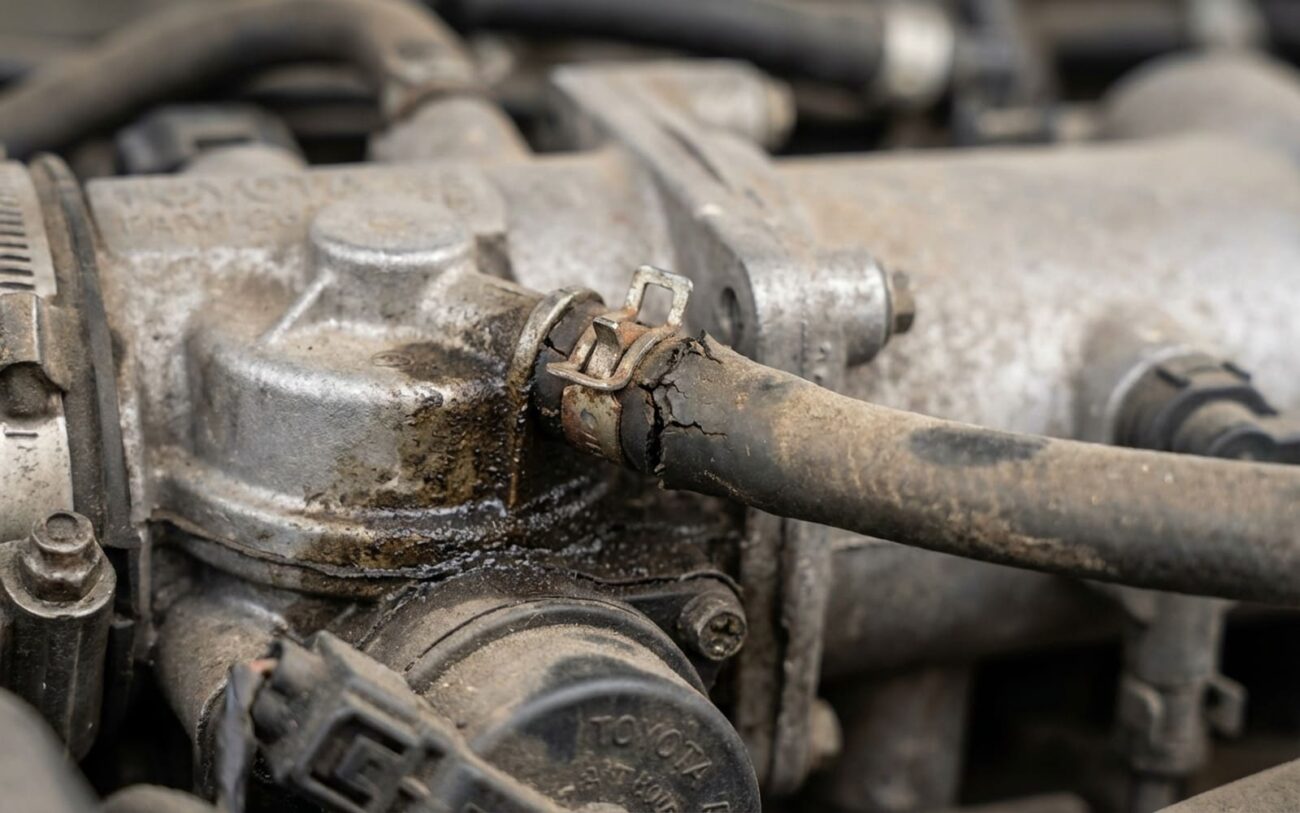
1. Carbon Buildup and Throttle Body Binding: Over time, oil vapor from the crankcase and combustion byproducts bake onto the throttle plate and bore. This creates a sticky varnish, especially at the higher throttle angles you need for hills. The TPS might still read correctly, but the motor just can’t overcome that friction. A good cleaning can often help, provided the wear isn’t too far gone.
2. Worn Actuator Motor: The little DC motor inside the throttle body (or the separate cruise servo) just wears out. The brushes degrade, the magnets weaken, and the motor’s torque drops. It might open the throttle fine at idle or under light load, but on a hill, it can’t fight the return spring and intake vacuum to get to full bore. I’ve seen plenty that’ll open to 80% but just stall out before reaching 100%.
3. Corrosion on the Throttle Shaft: This one’s sneaky. In humid or salty environments, the throttle shaft can corrode where it passes through the aluminum housing. Even minor pitting adds friction. You won’t see this without removing the throttle body, and it’s often missed during a quick visual inspection.
4. Cruise Control Actuator Wear (Vacuum or Electric): For older models, we’re talking about vacuum-operated cruise servos. Diaphragms crack, hoses leak, and vacuum reservoirs fail. Later electric actuators have motors that wear out, much like the throttle body motors. Some models, like certain 1990s Camrys, even had known torque limitations. Toyota actually issued service updates for higher-torque actuators back in the day – that wasn’t just a random fix, it was a recognized design improvement.
If It’s Not the Throttle System: Look Elsewhere for Power Loss
Now, if that throttle plate opens perfectly when you command it, then your cruise system is doing its job – it’s just asking for power that isn’t there. In that scenario, you need to shift your focus to other engine performance issues. I’ve seen these symptoms mimicked by:
- Low engine power: This could be anything from a clogged fuel injector, a restricted exhaust (like a dying catalytic converter), a faulty Mass Airflow (MAF) sensor giving bad air readings, or even an Engine Coolant Temperature (ECT) sensor sending incorrect data, causing the ECM to pull timing or limit fuel.
- Transmission issues: A slipping transmission or one that’s failing to downshift properly under load will definitely make your car feel like it’s losing power on a hill.
Again, your scan tool is your friend here. Monitor live data during a load test: if the TPS maxes out but your MAF reads abnormally low airflow, or your O2 sensors are flatlining, you’ve got an engine performance issue, not a cruise fault.
Fixing It Right: From Simple to Complex
Once you’ve nailed down the diagnosis, the repair path becomes pretty clear. Don’t skip steps; always start with the simplest and verify as you go.
Throttle Body Cleaning and Relearn DIY-FEASIBLE with caution
Cruise Control Actuator Replacement DIY-FEASIBLE to PROFESSIONAL-ONLY
Throttle Body or ECM Replacement Professional Only
Making Sure the Repair Actually Worked
Just because the check engine light is off doesn’t mean it’s fixed. You’ve got to validate your work under real conditions. I always do a two-part check:
First, grab your bidirectional scan tool again. With the engine off, command the throttle from 0% to 100% in small increments. The actual TPS reading should match your commanded percentage within 2%. The movement itself needs to be smooth and immediate – no hesitation, no stuttering, no grinding noises.
Then, it’s time for a road test. Find a consistent 4–6% grade – the exact kind of hill that used to defeat your cruise control. Set the cruise and watch your speed. It should hold within 2–3 mph of your set point. If it drops more than that, something’s still not right, and you need to go back to diagnostics.
For cruise actuator repairs, test all the functions: set, resume, accelerate, cancel. On level ground, the system should maintain speed without “hunting” – that’s when it oscillates up and down, constantly adjusting. If it’s hunting, you might still have a sensor issue or a calibration problem.
What’s This Going to Cost, and Is It Worth It?
Costs always vary, but here’s a realistic breakdown based on what I’ve seen come through my bay:
| Repair Type | DIY Cost | Shop Cost | Success Rate | Secondary Risk if Failed |
|---|---|---|---|---|
| Throttle Body Clean & Relearn | $20 (cleaner, gasket) | $150–$300 | High (if carbon is the only issue) | Improper relearn causes idle issues; harsh cleaner damages internal coatings |
| Throttle Body Replacement | $250–$600 (OEM or quality aftermarket) | $700–$1,200 (parts + programming) | Very High | Incorrect relearn or installation leads to drivability problems |
| Cruise Control Actuator Replacement | $100–$300 (part) | $400–$800 (labor varies by access) | High | Improper cable adjustment can cause throttle binding or cruise failure |
Is it worth it? For a well-maintained older Toyota or Lexus with a solid body and good mechanicals, absolutely. A $600 throttle body replacement can keep a reliable car on the road for years. But if the car is already near the end of its life, or has other major issues (like a failing engine or transmission), then the repair might not make financial sense. In those cases, just driving manually on hills is a perfectly safe and practical workaround.
Keeping It From Happening Again
Prevention starts with clean air and fuel. I always recommend using Top Tier gasoline – it has better detergents that really help reduce intake deposits. If you do a lot of short trips, consider a good quality fuel system cleaner every 15,000 miles or so. And don’t cheap out on oil and air filters; poor filtration means more contamination getting into your intake tract, which accelerates carbon buildup.
Check your air filter regularly and make sure the housing is sealed up tight. A leaky intake boot can pull in unfiltered air, and that’s just asking for trouble. For early detection, do a quick annual check: with the engine off, have someone slowly press the accelerator pedal while you watch the throttle plate. It should move smoothly, without any hesitation or grinding. And listen during cruise use – any new whine, groan, or delay in response is a red flag.
And here’s a little technician’s secret: if you’re ever working on climate control or automatic temperature regulation, remember that many modern systems share sensors with cruise control. A faulty sun sensor or outside temperature sensor can sometimes indirectly affect adaptive cruise performance on some models. It’s all connected, and sometimes the root cause is in an unexpected place.
