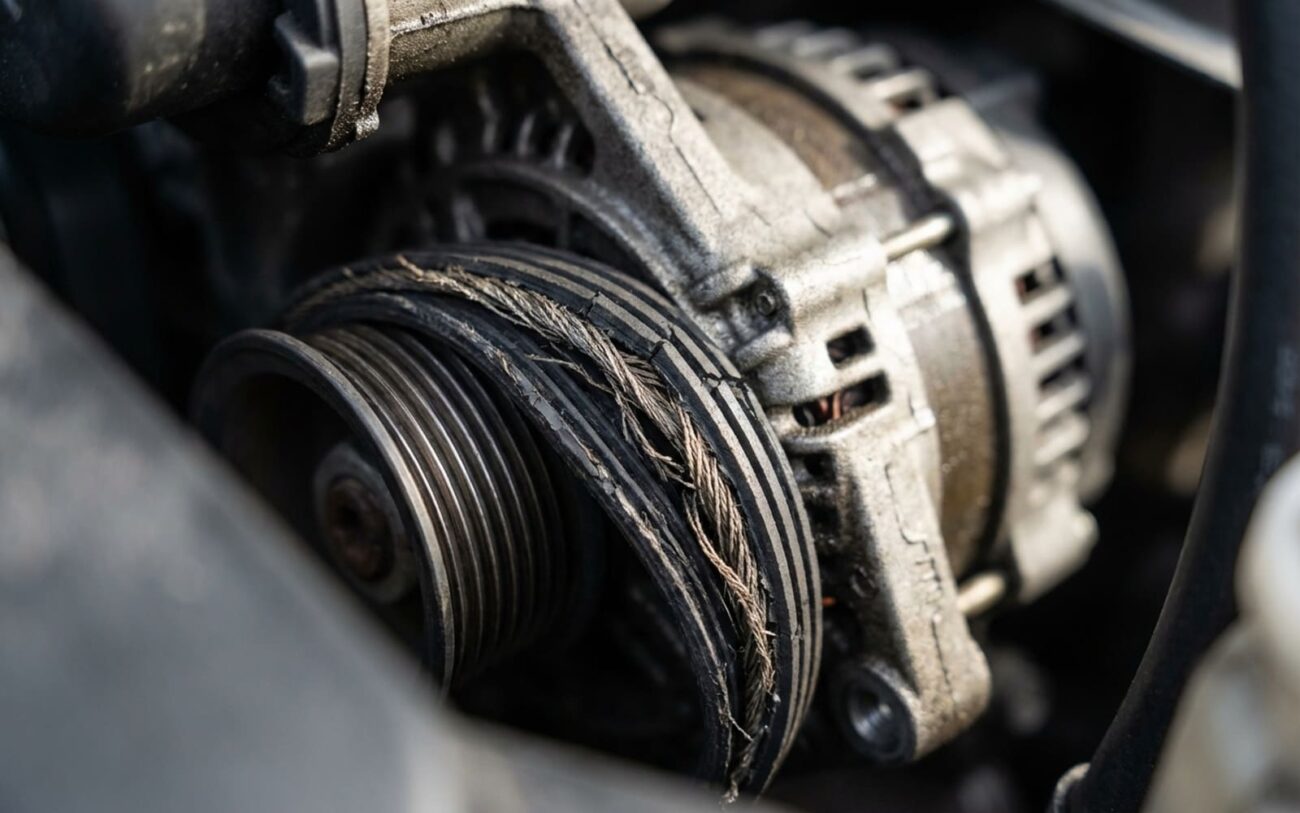
Alright, let’s talk about Integrated Starter-Generators, or ISGs. These things are showing up in more and more vehicles, especially your mild hybrids, and when they act up, they can be a real head-scratcher. I’ve been turning wrenches for over 25 years, and I’ve seen my share of strange vibrations and no-starts. The trick with an ISG isn’t just knowing it’s there, but understanding exactly what it’s telling you when it starts to fail. It’s easy to get fooled, so let’s cut through the noise.
What an ISG Problem Feels (and Sounds) Like
When a car shudders on startup, your gut reaction matters, but so does knowing what you’re actually feeling. An ISG going bad can absolutely cause some distinct engine vibration during cranking, but I’ve seen too many folks — even experienced techs — confuse it with other issues. After decades in the shop, I’ve learned to focus on the timing, the sound, and the specific feel to really nail down if the ISG is the real culprit.
The Rhythmic Shake and Grind
The most telling sign I see is a rhythmic shake or a mechanical buzz that happens only during the initial cranking phase. We’re talking the first second or two while the engine is being turned over. This vibration pulses with the crankshaft’s rotation speed, like a thumping or grinding sensation you’ll feel right through the floorboards or the steering wheel. Here’s the kicker: it disappears the instant the engine fires up and runs on its own power. That’s key. A true engine misfire or an internal engine fault will usually keep going once the engine’s running, often getting worse when you put a load on it. But ISG-related vibration? Strictly a pre-ignition event.
And you’ll often hear it, too. A sharp whine, a metallic scraping, or a grinding noise that rises and falls right with the cranking RPM. It sounds like something inside the drive system is out of balance or making contact where it shouldn’t. The noise comes from the front of the engine, usually right near the accessory belt path—exactly where the ISG is mounted. If you’re hearing that and feeling that pulse, the ISG’s mechanical or electrical guts are likely failing.
The Intermittent No-Start
Another common symptom I run into is that frustrating intermittent crank-no-start. You turn the key or hit the start button, and instead of the engine cranking, you get a single “clunk,” the dash lights might dim, or you’ll see a battery warning. The engine doesn’t turn over at all, or it turns over super slowly. Then, five minutes later, it starts up normally like nothing ever happened. This usually points to internal electrical faults within the ISG’s starter function—things like worn brushes, a sticky solenoid, or degraded windings. This is especially true if you’ve already checked the battery voltage and all your connections, and they’re solid.
My Diagnostic Approach: Don’t Guess, Test
Before you even think about replacing an ISG, you absolutely have to rule out simpler, cheaper problems that can mimic the exact same symptoms. I’ve seen too many technicians jump straight to the ISG, only to end up replacing a $1,500 part when all the customer needed was a new battery or a loose ground fixed. Use a methodical process to confirm the source. Trust me, your wallet (or your customer’s) will thank you.
Ruling Out Mechanical Noises and Vibrations
If you’re feeling that rhythmic vibration or hearing a grinding noise during cranking, the ISG’s internal bearings, rotor, or stator could be failing. But hold on. It could also be a damaged conventional starter gear (if the vehicle has one), a failed harmonic balancer, a seized A/C compressor, or even a locked idler pulley. So, how do I know it’s the ISG?
I’ll remove the serpentine belt and then try to crank the engine. If the noise and vibration persist, we’ve isolated it to something internal to the engine or the ISG itself. If they disappear, then the issue is definitely belt-driven—which means we need to check all the other pulleys and accessories, including the ISG’s external components, before condemning the whole unit.
Diagnosing Intermittent No-Start Issues
For those frustrating intermittent crank-no-start scenarios with dim lights or a battery warning, the ISG’s internal electrical starter circuit (brushes, solenoid, windings) is a prime suspect. However, it’s just as often a weak 12-volt battery, corroded terminals, a faulty relay, a poor ground connection, or even a PCM software glitch. I always start with the basics.
First, a proper battery load test, and then I perform a voltage drop test across the ISG’s power and ground circuits while attempting to crank the engine. If I see a current draw exceeding 250 amps without the engine turning over, or with very slow cranking, that’s a strong indicator of an internal short within the ISG itself.
This kind of diagnosis isn’t possible without the right tools, period. You need a good digital multimeter, a high-amp clamp meter (essential for those voltage drop tests), and—critically—a professional scan tool. And I mean professional, one that can actually access hybrid or ISG control module data. Generic code readers won’t show you the real-time PIDs (like ISG current, status flags, or torque output) that tell you what’s truly happening during startup. Without that data, you’re just guessing—and guessing wrong on a 48-volt system is not only expensive but potentially dangerous.
Under the Hood: Why These Things Fail
So, once we’ve confirmed it’s the ISG, what actually fails inside these things? Unlike traditional starters, ISG units are complex electro-mechanical devices that both crank the engine and generate power. Their failure modes are pretty specific and often traceable to internal components.
One major cause I see is electrical insulation breakdown in the stator windings. Those copper coils are coated with a thin enamel. Over time, repeated heat cycles—especially from sustained charging loads or if the cooling isn’t up to snuff—can degrade that layer. Once it breaks down, you get short circuits between windings. This creates uneven magnetic forces on the rotor, leading to mechanical imbalance. That imbalance is exactly what you feel as that rhythmic shudder during cranking.
Mechanical wear is another common issue. Many ISG units, particularly those designed for start-stop systems, incorporate a planetary gear set and a one-way clutch (sometimes called a sprag clutch) to manage torque. The bearings in these gears wear out over time, creating internal lash. When the ISG engages, that slack turns into a mechanical clunk or a harsh jerk you can feel in the chassis. In severe cases, the clutch itself can fail, preventing proper engagement or causing slippage.
Thermal stress is a silent killer for ISGs. Remember, it’s also a generator. If it’s constantly under high electrical demand—like trying to recharge a weak battery or supporting a demanding 48-volt system—it can just cook itself. In permanent-magnet rotor designs, excessive heat can partially demagnetize the magnets, which reduces efficiency and throws off the rotor’s balance. Heat can also warp internal components, leading to rotor-to-stator contact, which, as you can imagine, causes grinding and eventually, seizure.
There are known patterns, too. For example, some GM vehicles with the 3.0L Duramax diesel had a documented issue where the ISG rotor assembly could become misaligned during manufacturing. This caused a distinct grinding noise on startup. While I can’t pull up the exact TSB number off the top of my head, it’s a real-world example of a factory-acknowledged defect that matches the symptoms we’re talking about here.
But let’s be clear: not every startup shake is an ISG problem. A bad engine mount causing vibration at idle isn’t the ISG. A failing crankshaft position sensor causing a no-start isn’t the ISG. A weak battery causing slow cranking isn’t the ISG failing—it’s just doing its job under poor conditions. Diagnose carefully. Issues like hesitation under acceleration or rough idle are almost always related to fuel, ignition, or airflow—not the ISG.
The Fix: Your Options (Mostly One)
Once you’ve confirmed the ISG is definitely the problem, your options for repair depend on the type of failure and the system’s design. In most cases, the answer is a complete replacement—but how you get there, and who does it, really matters.
Professional Territory Only
Look, the most common fix is a complete ISG unit replacement. I mark this as [PROFESSIONAL-ONLY] for a very good reason. Many modern ISG systems operate on 48-volt or even higher mild-hybrid architectures. That kind of voltage can deliver a dangerous, even lethal, shock if the system isn’t properly depowered and isolated. Beyond the safety aspect, the job requires precise belt tensioning, OEM-specific torque sequences, and critically, a factory-level scan tool to register or relearn the new ISG to the powertrain control module (PCM). Without that relearn procedure, the ISG may not engage properly, or your start-stop system could malfunction, leaving you right back where you started.
Complete ISG Unit Replacement Professional Only
External Component (Decoupling Pulley) Advanced DIY
Internal Failure Non-Repairable
Temporary Workaround Last Resort
After the Repair: Don’t Skip Validation
Replacing the ISG isn’t the finish line—it’s just the starting point for verification. You absolutely have to confirm the repair fixed the original issue and that the entire system is functioning exactly as it’s designed to.
Start with a functional test: crank the engine several times. That startup should be smooth, quiet, and consistent. No vibration, no grinding, no hesitation. If the vehicle has auto start-stop, test a few automatic restarts. They should be seamless, with no engine stumble or delay. If something feels off, you missed something.
Next, perform electrical validation. Clear all diagnostic trouble codes (DTCs) using your capable scan tool, then run through the ISG relearn or registration procedure if the OEM specifies it. Check for pending or stored codes again—there should be none related to the starter, charging, or hybrid control systems. Monitor ISG-specific PIDs during cranking: commanded current, actual current, and status flags should all be within normal parameters. This is where that professional scan tool really earns its keep.
Finally, validate the charging system. With the engine running, turn on all major electrical loads—headlights, heated seats, blower motor on high, rear defroster. Use a digital multimeter to check the voltage at the battery terminals. It should remain stable, typically between 13.5 and 14.8 volts, depending on the OEM specs. Fluctuating or low voltage indicates a problem with the ISG’s generator function or another issue in the charging circuit that needs to be addressed.
The Hard Truth: Cost and When to Walk Away
Let’s be realistic here: ISG replacement is a major investment. You need to weigh that cost against the vehicle’s current value and its expected lifespan. I’ve seen too many people throw good money after bad.
| Repair Type | DIY Cost | Shop Cost | Success Rate | Secondary Risk if Failed |
|---|---|---|---|---|
| Complete ISG Unit Replacement | $800 – $2000 (part only) | $1500 – $3500 (parts and labor) | 95% | Improper installation can damage the crankshaft, shear the drive belt, or cause a no-start. High-voltage systems pose serious injury risk. |
My Economic Rule of Thumb
That shop quote can really sting—especially on a 7- or 8-year-old vehicle. Here’s a rule of thumb I use in my shop: if the repair cost exceeds 50% of the car’s current private-party market value, and the vehicle is past the 7-year mark, it’s worth seriously considering whether the repair makes financial sense. An ISG failure can also be a sign of deeper issues in the mild hybrid system—like battery degradation or control module faults. Pouring $3,000 into a car that’s only worth $4,500 might not be the smartest long-term play, even if it runs fine afterward. Sometimes, it’s just time to say goodbye.
Keeping It Alive: Prevention Tips
While some ISG failures are definitely due to inherent design or manufacturing flaws, many are accelerated by poor system conditions. You can absolutely extend the life of an ISG with some proactive maintenance. It’s all about paying attention.
The single most important thing you can do, in my opinion, is maintain the health of your 12-volt battery. It may seem unrelated, but it’s not. A weak or aging battery forces the ISG to work much harder during cranking, drawing more current and generating more heat. That extra stress wears out internal components faster than anything. Replace that 12-volt battery on schedule—don’t wait until it fails—and always use an OEM-spec or AGM battery if that’s what’s required for your vehicle.
Train your ears. Seriously. Listen to how the engine starts every single time. Does it take a bit longer to fire? Is there a new whir, grunt, or hesitation at the very beginning of cranking? These subtle changes can signal early ISG trouble—sometimes it’s just a failing pulley or a loose connection—before it escalates to a full unit failure. Catch it early, save big money.
During routine service, have a qualified shop use a scan tool to check for pending codes in the ISG or hybrid control module. These codes often pop up before a hard fault triggers a check engine light. Also, always ask about available software updates for the PCM or ISG control unit. Manufacturers frequently release updates that refine engagement timing, improve fault detection, and enhance system durability. Keeping that software current can prevent a lot of avoidable failures.
